“how the morning is greated fight for the money or fight for the soul the saying goes
but another goal is to
fight for neither. …”
Ecodeviance (Soma)tics for the Future Wilderness, CA Conrad
Happy Tuesday, Everyone! It’s that lovely time of week when we share the work of fellow poets on the last Wednesday Writing Prompt theme. Last week’s prompt was Beach Scene, July 3, which asked about times when poets felt most at one with nature. This lovely collection today is thanks to the talents of mm brazfield, Gary W. Bowers, Paul Brookes, Anjum Wasim Dar, Irma Do, Deb y Felio, Jen Goldie, Sheila Jacob, Elena Lacy, Sonja Benskin Mesher, and Clarissa Simmens. Also chiming in this week are newcomers Dick Jones and Debasis Mukhopadhyay, both warmly welcome.
Enjoy this fine read and do join us tomorrow or the next Wednesday Writing Prompt. All are welcome, beginners, novice and pro.
Beach Boy
For a boy, aged 5, newly diagnosed as autistic.
Stones and shells.
Each grey disc
or pink ellipse
is a crashed planet.
Driftwood and splinters.
Dreams tangled up
in the mystery script
on blown cartons
and vagabond bags.
He scuttles, unshelled,
under a carillon
of seagulls, drunk
on salt and ozone.
This child who fears
clouds and mirrors
for the shapes
they throw at him
is healed for a day
by the moonstruck
logic of the tides.
DICK JONES was initially wooed by the First World War poets and then seduced by the Beats. He’s been exploring the vast territories in between since the age of fifteen. His work has been published in a number of magazines, print and online, including Orbis, The Interpreter’s House, Poetry Ireland Review, Qarrtsiluni, Westwords, Mipoesias, Three Candles, Other Poetry, Rattlesnake and Ouroboros Review. In 2010 Dick received a Pushcart nomination for his poem Sea Of Stars. His first collection, Ancient Lights, is published by Phoenicia Publishing and is available from them or via Amazon. His translation of Blaise Cendrars’ influential epic poem ‘La Prose du Transsiberien…’ was published in an illustrated collaborative edition with artist Natalie D’Arbeloff by Old Stile Press in 2014.
DEBASIS MUKHOPADHYAY (between ink and inblot) has been featured on The Poet by Day Before, but this is the first time in response to Wednesday Writing Prompt. He isthe author of the chapbook “kyrie eleison or all robins taken out of context” (Finishing Line Press, 2017). His poems have appeared or are forthcoming in journals & anthologies, including Posit, Words Dance, The Curly Mind (UK), Erbacce (UK), Strange Poetry (UK), Yellow Chair Review, I Am Not A Silent Poet (UK), The New Verse News, Rat’s Ass Review :Love & Ensuing Madness, Writers Against Prejudice (UK), Manneqüin.Haüs, Algebra of Owls (UK), The Skinny Poetry Journal, Of/With : Journal of Immanent Renditions, Anapest Journal, Communicators League (Nigeria), No Tribal Dance (UK), Quatrain.Fish, Duane’s Poe Tree, Walking Is Still Honest, Leaving My Shadow : A Tribute to Anna Akhmatova, Thirteen Myna Birds, Whale Road Review, The Apache Poetry Blog (Sweden), Scarlet Leaf Review, Silver Birch Press, The Bitchin’ Kitsch, Foliate Oak, Eunoia Review, Revolution John, Fragments of Chiaroscuro, Down in the Dirt, With Painted Words (UK), The Wagon Magazine, Snapping Twig, Words Surfacing, Praxis, Apple Fruits of an Old Oak,and Voice of Monarch Butterflies. His work has been nominated for the Best of the Net. MORE
take a peak
once squaw peak
now is piestewa peak
because etymology
because war hero
it is a hunk of rock
an asteroidal embedment
of the rocky mountains
or it seems so
despite artifactual distractions
like memorial benches
and erosion-checking cement
and rails
at night it transports you
through a piece of the solar system
and when the climb harshens your breathing
it sounds like that of an astronaut
you and your rock
on the sweat-wringing trajectory
toward a magical world
enjoyed at peak’s peak
panorama of an alien civilization
its photonic array twinkling
rectilinearly below
on your back the rock drinks your sweat
and you/rock bathe
in ancient light from the everywhere
surrounded
yet you enfold
As some of you know, Gary is multi-talented, combing visual art with poetry or prose narrative. He is also a potter. A sample of his work is pictured here. Gary’s pottery is available for purchase. Further details HERE. Note the business card. We appreciate Gary’s wry humor.
peregrine
desert you look very pretty in your tender green veil
it’s been a while since i was here visiting you
inner struggle and rebirth brought me to your boulder bosom
i see my brothers the Joshua Trees have gotten taller
therefore waving more lost children toward your safety dear friend
oh and the hares and wood peckers they still look
me over with caution and pity they sense my spirit
is still shackled in some ways but they are right
i’m just a human mother Joshua but how are you
i’ve brought you great news there will be rain later
this evening that rock you say yes that will be
good shelter the tiny lizard queen is a great hostess
the breath of your slate tinged skies is beginning to
smell like wet earth just like my grandmother’s hair when
as a babe i’d grab fistfuls and put it in
my mouth yet i don’t know how i can remember
her we were both too young when she had to
go up to the silver stars above my head oh
mother Joshua did you tell Oma to come and visit
there you see she’s the one next to Venus smiling
at me hey little ants get off my cake here
i’ll place it by your hill take it to your
queen my regards to her and now my eyes focus
to see the splendor of the ocotillo fire red blossoms
held up to the peacock sky and i breathe deeply
riverbrain flows in my head
fountainbrain channels my ideas
lakebrain plays the fey
electric rivulets move earth
inside my head
waterskin neural net
circumnavigates damage
fruited hemispheres
replenish, restore, reimagine
senses water roots
springwaters in my head
well in my head.
sheflow
her flaps of the water
bride of the waveskin
her inner lips of the river,
spring and waterfalls,
fermented honey drip
not dragonfly laced stained glass
FYI: Paul Brookes, a stalwart participant in The Poet by Day Wednesday Writing Prompt, is running an ongoing series on poets, Wombwell Rainbow Interviews. Connect with Paul if you’d like to be considered for an interview. Visit him, enjoy the interviews, get introduced to some poets who may be new to you, and learn a few things.
“POETRY PEACE and REFORM Go Together -Let Us All Strive for PEACE on EARTH for ALL -Let Us Make a Better World -WRITE To Make PEACE PREVAIL.” Anjum Wasim Dar
Mother With the Green Hair
Rough brown skin scratches my cheek
I lean into your strength
My arms wrap around you
My fingers not touching
Reminding me of your age
A comfort in this short sighted world
Your willowy boughs sway in the hot breeze
But under your protective shadow
I am but one who rejoices in your giving nature.
I knew the warmth
of a man’s body
though no blood
ever surged
through my veins.
I was oak-flower,
broom and meadowsweet
conjured into woman
without flesh and bone
and beating heart.
The moon O-hed
at the smoothness
of my face.
The sun paled
at the earth-gold
of my hair.
I loved Gronw,
the lord of Penllyn.
I lay in his arms
and we plotted
to kill my husband.
Now, for my sinfulness
I am shunned
and alone
at the woodland’s edge.
I am owl.
I am beak and talons,
feathers and sharp eyes.
I wait, still as death,
in the shadow
of midnight leaves.
In Welsh legend, Blodeuwedd (Flower-Faced”) was made by magicians Math and Gwydion to be the wife of Lleu Llaw Gyffes.She and her lover Gronw Pebr attempted, unsuccessfully, to murder Lleu. Gwydion turned her into an owl as punishment.
I want to grow more poppies
like these that intoxicate
my garden and out-blaze
the sun; I’ll keep the seeds
when green wand are flowerless
and rake them into the soil
for next summer.
I’ll still remember playgrounds
of childhood and the scent
of lilac; my mouth will moisten
at the thought of home-grown
blackcurrants but I won’t
hanker to go back, sit on the grass
and blow dandelion clocks.
I’ll be busy growing poppies,
admiring petals of extravagant
scarlet silk that outlive sultry
afternoons and noisy outbursts
of evening rain: that sway
beneath a clear blue sky and cup
a day’s worth of light.
You can connect with Sheila on Facebook. A review of her chapbook will appear on this site on Thursday, July 11 along with an interview and a sampling of poems.
A Beach Poem
Follow the thin line
Between the water and the land,
Between the sky and the earth.
Follow it until you see the horizon
That lured your ancestors
To explore the thin line in search of a better life
All the way, from Africa to South America,
All the way, from Africa to Australia,
All the way from Africa to …
…love?
…compassion?
…wars?
….atrocities?
…humanity.
Humanity is a thin line
At the whim of the moody Moon
That buries it under the high tide
Or bares it by pulling the waters back.
Follow the thin line.
Keep your eyes on the horizon.
.323. the walk.
do you like the feeling, walking ahead quickly, moving forward, loosening limbs. pushing
through wind, through water, rain slanting. shouting, counting the rams, shadowing
shepherd. wee mouse on the path, beady eyed. these are the hopeful days, weak sun
aching
3.
down the back lane there are puddles, huge amounts of water fell, flooded the abbey ruins. branches blown , creaking twigs while rain stays off a while. she is a new walking partner, quite fast, no bother.
lean on the fence to look over a steep drop to the river
tears well as we speak of it openly
4.
to break the cut a pheasant comes comely all collars & spectacles walks sedately to the edge, leans forward, ambles down.
Sonja Benskin Mesher, RCA paintings (This is her Facebook page, so you can connect with her there as well as view photographs of her colorful paintings.)
I come to the pocket-sized beach
In winter only
No longer liking to be close to strangers
Alone, dreaming in Green Key Park
In the Gulf of Mexico dawn
I sit on the sand, drinking
Drive-through black coffee
Comforts more than stimulates
Birds, palms, sunrise on the Gulf
I pretend it is the sea
Here, it is warm like a bathtub
But not quite placid
Some tidal action
A bit of wave hiking up to the shoreline
Sand and negative ions
Water and fiery sun
Elemental balance
Aligning my body and soul
Entwined with Nature’s rhythm
I go inward more and more each year
Feel like Hesse’s Siddhartha on the river
He, like me, can think, can wait, can fast
Well, fasting, ok, not quite there yet
But able to do the rest
Because the inner life is best…
Recent in digital publications:
* Four poems , I Am Not a Silent Poet * Remembering Mom, HerStry
* Three poems, Levure littéraire Upcoming in digital publications: * Over His Morning Coffee, Front Porch Review (July 2019) * From the Small Beginning, Entropy Magazine (Enclave, #Final Poems)(July 2019)
* The Damask Garden, In a Woman’s Voice (August 2019)
A busy though bed-bound poet, writer, former columnist and the former associate editor of a regional employment newspaper, my work has been featured widely in print and digital publications including: Ramingo’s Porch, Vita Brevis Literature, Connotation Press,The Bar None Group, Salamander Cove, I Am Not a Silent Poet, Meta/ Phor(e) /Play, Woven Tale Press,Metho/Blog, The Compass Rose and California Woman.
I run The Poet by Day, a curated info hub for poets and writers. I founded The Bardo Group/Beguines, a virtual literary community and publisher of The BeZine of which I am the founding and managing editor. I’ve been featured on the Plumb Tree’s Wednesday Poet’s Corner, several times as Second Light Live featured poet, on Belfast Radio and elsewhere.
Email me at thepoetbyday@gmail.com for permissions or comissions.
“Every pair of eyes facing you has probably experienced something you could not endure.” Lucille Clifton
Thank you for sharing your love of words. Comments will appear after moderation.
“All of a sudden I didn’t fit in anywhere. Not at school, not at home…and every time I turned around, another person I’d known forever felt like a stranger to me. Even I felt like a stranger to me.” Wendelin Van Draanen, Flipped
There probably isn’t anyone on earth who hasn’t felt like an outsider. Sometimes the feeling is from day one and chronic. Sometimes it’s an isolated moment. This all too common experience is well captured today by poets mm brazfield, Paul Brooks, Anjum Wasim Dar, Irma Do, Jen Goldie, Sonja Benskin Mesher, Bozhidar Pangelov, and Mike Stone as well as Elaina Lacy and Pali Raj, new to our community and warmly welcome. Here are their responses to the last Wednesday Writing Prompt, Sojourner and Stranger, June 26.
Enjoy! this collection and do join us tomorrow for the next Wednesday Writing Prompt. All are encouraged to participate, beginning, emerging or pro poet.
Once
Once, as a girl, I met grass and sky on my way.
Since then, with each year, I’m longing to come closer
To their fresh smell and enveloping vastness.
There’s a thin border of questions between us
About undercurrents and the wind,
About the things I only feel
They come to me in strangest shapes
How can I recognize them.
Will they recognize me?
ELENA LACY My journey started in Estonia, continued in Russia, then Israel and, so far, I live in Kansas, USA. My interests are largely shaped by the people I meet on my way. The interest in poetry was mostly evoked by Michael Dickel (Dekel) whom I met a decade ago in Jerusalem and since then we are keeping a connection. I’ve worked as a university professor, a tour guide, an interpreter. Currently, I am a neurodiagnostic technologist at one of the hospitals in Kansas City. Who knows what is coming next? But I am looking forward to that. 🙂 You can catch up with her on Facebook.
Infiltrate
Much he tried. He kept his eyes, “May be that time is coming soon”
Brown grass. Dry lips.
She knew what he meant when
he said *refugee*
I watched a smile.
Sojourner and stranger, a poem make to next trip.
INFILTRATE
Much he tried. He kept his eyes:
Border wall ….yeah
One thing, that (he) would never hurt.
I have been to summer before
I can think of winter special
but when someone says
Come spring, a poem make to silence me.
Flaming red, Emerald green
Sort of things
I have been to summer before
I can think of winter special
but when someone says
Come spring, a poem make to silence me ….yeah
How do you know about me?
A SUDDEN CHILL BLANKETING MY SKIN
How do you know about me?
PALI RAJ lives in Patna, India and has a passion for the arts. You can catch up with him on Facebook
Aaron
when our palms met
that balmy Chinatown night
a little lost canary
from the corner pet shop
sang a melancholic cord
switching his little face
from right to left
he looked at me
and flew away
i had fallen in love
the kind of love
that makes you scrutinize
your breath your weight and even your thoughts
the kind where
you leave your beloved
friends pets and dishes
behind just to think about him
the kind of love
that makes you check your phone
fifty times at two in the morning
you know the kind you lose
your soul to in the encasing darkness
and nothing feels the same
distilled death and i churn my spirit
but you danced with me
for a few years
you are no longer Aaron
i am no longer me
i don’t recognize my smile
its erased forever in your cusp
my heart has melted away in your hypocrisy
my common sense buried under your peach tree
and Aaron he no longer lives here
and i don’t recognize
the song of the canary anymore
If you could be beside yourself,
grab the ectoplasmic umbilical
and emerge as a space cadet
on the seat beside you,
appear as a stranger who sits
down, invades your space,
for whom you politely make space,
smile quickly and absorb
yourself in your phone,
a book, a tablet,
and pray the unknown
doesn’t speak to you,
then the realisation,
that all your hesitancy
movement, smile, absorption
has been sharply mirrored
by them and you ask yourself,
are they taking the piss,
are they the one who stabbed
your wife, raped your children,
set fire to your home and sat
on the wall outside to see it burn?
And see a cord between both of you,
and wonder if you touch it,
would it get their unwanted attention.
How could you cut it and have done
with this uncalled-for connection?
And wish you still had the knife.
From Paul’s chapbook The Spermbot Blues (OpPress, 2017)
FYI: Paul Brookes, a stalwart participant in The Poet by Day Wednesday Writing Prompt, is running an ongoing series on poets, Wombwell Rainbow Interviews. Connect with Paul if you’d like to be considered for an interview. Visit him, enjoy the interviews, get introduced to some poets who may be new to you, and learn a few things.
once again a cold mist surrounds ,
once again quietude deafens the
senses, how soon the wheel comes
full circle, how soon music is silenced-
where have all the musicians gone?
so many walked the garden paths,smiled
at colored fragrances, but once, wheeled
past the rows of pansies,frail they looked
but happy, placed in the soil, enriched,
where have all the gardeners gone?
with all alike, the daffodils and carnations
all green stemmed, all in a row,all trees
brown and green all a dense shady forest
all grass a velvet blanket ,spread for rest
where have all the green forests gone?
all clouds grey dark thick soft and white,
all carry water,drop raindrops, shade,change
shapes,all birds fly and nest,all nightingales
sing, all distances vanish with friendship and love
once again I a stranger, in time, in silence
no bell rings, no more will it, so I need not
wait nor hope nor smile,distances do return
they are ever present,only the sojourn ends-
“POETRY PEACE and REFORM Go Together -Let Us All Strive for PEACE on EARTH for ALL -Let Us Make a Better World -WRITE To Make PEACE PREVAIL.” Anjum Wasim Dar
I Cannot See My Face
Whenever I enter a place
My insides search to belong
I cannot see my face
Can I take up this space?
There’s times that I’ve been wrong
And need to leave a place
Those times I’ve felt displaced
An unwanted tagalong
I paste a smile on my face
I try to handle it with grace
So the discomfort won’t prolong
When I need to stay at a place
But why can’t you embrace
The me inside that’s strong
Can you look beyond my face?
I will not be erased
I’m not one of the throng
I cannot leave this place
I cannot change my face
You brought me in hard
distancing me from the
start a cold memory
You brought me in hard
A child left alone
Crying for its mother,
You brought me in hard
I was yellow, black haired
You turned me away
You brought me in hard
No loving touches, no soft
murmuring moments.
You brought me in hard
I forever seek comfort
warily afraid.
Soon there were only cries
at night unanswered
disguised by a starlight
serenade from a radio
Rhapsody soothing my blues
Bethoven’s 5th
Op.67:1. Allegro con brio
Ravel: Pavanne for an infant
Defunte
absorbing the lesson
unintentionally taught
engraved in memory
Sonja Benskin Mesher, RCA paintings (This is her Facebook page, so you can connect with her there as well as view photographs of her colorful paintings.)
Sixty-six pounds of snarling anger
In the only path to safety
For six pounds of cold fear.
A chain squeezes suddenly around the honey-colored throat
And the anger moves on,
At first reluctantly, and then
Loping along at a goodly pace
Wet nostrils flared and quivering,
Ready to sift and scoop up
Anything of taste or interest
Along the dark and lamp-lit way.
Walking my dog Daisy
Whose name belies her vigor and strength
Barely controlled by a pact initialed
But never formally ratified,
She leads me through the valley of my loneliness
Which I measure in the scrape and echo
Of footsteps having no place to go.
Walking under an archway of sparse leaved bracken
And thick limbs of eucalyptus
Thoughts swarm around us
In no particular rhyme or meter,
Like the personal black hole
Pulling me towards an eventual horizon
In gossamer strands of infinity,
And another: at what point in our lives
Does it become reasonable
To contemplate suicide,
To feel the coolness and weight of one’s service revolver
Against the weight of continuing to be?
So this book walks into a store.
It’s dark inside after the bright sunlight of outdoors.
There are shelves upon shelves of books,
Their backs facing him impermeably.
He spots The Great Gatsby chatting up
Lady Chatterley’s Lover
In a particularly umbrous corner
And moves on into the darkness.
A thin volume sitting by herself
Catches his attention.
He sits down next to her unobtrusively,
Trying to be a fait accompli
Before the fait has been accompli.
He looks at her more than just a glance.
Haven’t I read you before, he ventures.
I wouldn’t think so, she closes his book on him.
Why wouldn’t you think so?
Because books don’t read other books, she says.
Only humans do.
Have you been read by humans? he asks.
Yes, actually, by quite a few, she answers smugly.
I’m sorry for not recognizing you,
He says softly after a while.
May I ask your name?
I’m the unabridged journals of sylvia plath, she says,
But you may call me unabridged.
I’d prefer to call you Sylvia if you don’t mind.
Haven’t you heard of me?
Almost everyone who’s anyone has.
Well, no.
Books can’t read, remember?
So you don’t know my story? she asks.
It ended in a scrumptious but silly suicide.
Don’t feel bad, she consoles him.
I guess I only know my own story, he says sadly.
They both are quiet,
Absorbing the ambiance of the musty old bookstore
For a long time.
So what’s your name, she asks brightly.
I’m The Uncollected Works of Mike Stone,
But you can call me Mike, he says.
I’d rather call you uncollected,
She says with a deficit of attention.
There is another long silence
That roars rather deafeningly.
After a while he suggests
It is getting terribly stuffy here.
Why don’t we go out into the sunlight?
She says you go ahead,
I’ll join you in just a moment.
He gets up and walks to the door,
Opens it and steps out
Into the fresh air.
He looks around him
At the shiver of tree leaves
In the thin breeze
Hopefully
Somewhat.
Time passes
As it is wont to do
But no Sylvia.
He opens the door,
Walks once more into the darkness,
And finds the thin volume of her,
Another volume beside her now,
The Great Gatsby, he thinks.
He walks outside
Once more into the sunlight
Crosses the street
Into the small garden
Made quiet by the wrought iron
Fence and gate bounding it.
He sits down on a bench
Facing the tree he had noticed
Just outside the bookstore
For the longest time
Until a young girl
Freckle-faced, he thinks,
Sits down beside him
And picks him up,
Amazed at her good luck.
Autumn crisp as crackling leaves
Slakes the thirst of summer with its rains.
Clouds portentous in their dreaming
And the tangy sweetness of green-skinned clementines.
The streets and sidewalks beside the coffee houses
Are washed and the posters on the kiosks are cleansed
The bitter coffee in the smudged glass
Slows scalding the fingers and the lips.
You sit two tables away from me
Reading a dog-eared book of poetry.
You look up, I look away,
And are unaware you are in my poem.
You will remember the first day of autumn
And I’ll remember you.
Do you know what kills me,
What really kills me?
All that beauty in this world,
That shocking totally unexpected beauty
One right after the other
Everywhere you look
Even when you’re not looking
Morning afternoon and night
Right next to you and far as you can see,
You just want to stand near it
Feel its warmth, hear its loveliness
Touch it just barely, hold it hard and long
Smell its sweet pungence, taste its tang,
But you can’t because you don’t speak its language
And you don’t have the coin to buy a ticket
To pass through that gate.
I watch you through the cage bars,
Stupid creatures pointing, throwing popcorn,
Pulling faces and taunting
From distances you think are safe,
If you think at all.
We are a captive audience,
I am the captive
And you are the audience,
But sometimes I imagine
I am also the audience.
At night after the Parc Zoologique de Paris is closed,
My imagination slips through the bars,
Floods over the iron entrance gate,
Walks through the empty Avenue Daumesnil
To the Rue de Seine and looks through
The windows of the Alcazar
Where you sit daintily cutting a slice of meat
With your little finger poised heavenward
Your teeth too dull and weak to tear the flesh apart.
No wonder you’re afraid of me –
You know my spirit can’t be caged.
Only one of you imagines me
Walking in your empty streets at night
And he sits alone at a small table
By the smudged glass window
With a pen and dog-eared notebook,
Only he imagines me uncaged.
Toward dawn I tire of you and your empty streets.
I slip back over the iron gates
Through the bars and close myself
In the dreamless sleep of tigers burning bright.
Alas the words of Donne
No man is an island
His words are done.
No longer breathed or thought
For every man is an island
Universe whose stars spiral
Slowly without purpose
Nobody served by them
With a gravity that keeps meaning
The knell of our tolling bell
From crossing its horizons.
I open the window beside my desk
To let in the breeze and children’s noise.
I take a sip of bitter coffee, cold already.
The dog comes in, as always,
And rubs black jowls against the bedspread.
There is a certain music loneliness makes
That gives rise to the thought that
Being alone is a delicate balance
Between solitude and loneliness,
The one, a turning inward,
To let the soul guide one’s hand,
To hear the Muse’s whispered words;
The other, an inability to turn outward,
To touch or be touched,
A hell we call forlorn,
A death in life
That beckons Death’s enfolding.
Call of the Whippoorwill is Mike Stone’s fourth book of poetry, just out last month I believe. It contains all new poems covering the years from 2017 to 2019. The poetry in this book reflects the unique perspectives and experiences of an American in Israel. The book is a smorgasbord of descriptions, empathies, wonderings, and questionings. It is available on Kindle and if you have Kindle Unlimited you can download it as part of your membership. I did. Recommended. / J.D.
Recent in digital publications:
* Four poems , I Am Not a Silent Poet * Remembering Mom, HerStry
* Three poems, Levure littéraire Upcoming in digital publications: * Over His Morning Coffee, Front Porch Review * From the Small Beginning, Entropy Magazine (Enclave, #Final Poems)
* The Damask Rose Garden, In a Woman’s Voice
A mostly bed-bound poet, writer, former columnist and the former associate editor of a regional employment newspaper, my work has been featured widely in print and digital publications including: Ramingo’s Porch, Vita Brevis Literature, Connotation Press,The Bar None Group, Salamander Cove,I Am Not a Silent Poet, Meta/ Phor(e) /Play, The Compass Rose and California Woman. I run The Poet by Day, a curated info hub for poets and writers. I founded The Bardo Group/Beguines, a vitual literary community and publisher of The BeZine of which I am the founding and managing editor.
“Every pair of eyes facing you has probably experienced something you could not endure.” Lucille Clifton
Thank you for sharing your love of words. Comments will appear after moderation.
…………………………………..The memories of living fall around the lives once lived, leave a hole in the pumice. The emptiness fills with words – narrative and song. That is why I write with rain drops on your windows as the train speeds by the valleys indifferently. That is why the ghosts do not speak to me or to you. That is why no one noticed
as I left the train again.
except from Return from Pompeii in Nothing Remembers, Michael Dickel
In his latest collection, Nothing Remembers (Finishing Line Press, August 2019), American-Israeli poet, writer, songwriter, photographer and artist (also husband, dad, teacher), Michael Dickel takes us with him on a wide exploration of our world in all our recollections and amnesias, a distant contemporary relative of A la recherché du temps (In Search of LostTime/Proust). It is rather noble in its observations, I think, calling us to the domain of our questions and sacred imagination, exploring the place of memory, re-visioning, and of human activity and perception in the varied landscapes of our hearts and souls and this Earth.
I found Nothing Remembers to be in effect a guided meditation on the vista and meaning of history and culture, personal and communal pathways, and the possible/probable relevance of memory, poetry, and connection: humans and their experiences as part of nature, as geologic memory, as archives of history. Recommended without reservation.
The poems from Nothing Remembers are published here today with Michael’s permission.
INTERVIEW
JAMIE: In reading the poems in this collection, I felt strong sense of their rising out of the ancient soil of Israel and other geologies of heart and soul. Would you speak to this, to what we could perhaps say is the collection’s ontological roots?
MICHAEL: I suppose exploring metaphysical questions such as memory and death (or its perceptions and effects)—main themes of Nothing Remembers—invites a metaphysical question about how these poems came to be. The title poem in particular rises out of the geography of Israel, my mother’s death, and buried in the detailed description of place, the ruins of Tel Megiddo. Tel Meggido is better known by its ancient name of Armageddon, the site of a great ancient battle that inspired apocalyptic visions down to our time.
Nothing remembers
where in our times we these rocks piled into buildings
that fell down a thousand years ago dis(re)membered from war
or earthquake raised and razed again into where nothing
recalls again the warm day anemones bloom hollyhocks
poppies forget no one and another rain day another dry day
pass hot and cold while an orvani drops blue feathers in flight
a hawk sits calmly on a fencepost and flocks of egrets
traipse toward the sea no cattle no grains all harvested
in this place we would call holy land nothing left to it but conflict
with the passing of her life that tried so hard to hang onto one
moment many moments missed so many more empty echoes
a difficult way to say goodbye to a mother watching her
evaporate like rain in the desert her mind dust that dries
lips her droned words faded as warmth from a midnight rock
meaning what the layers of history these rocks un-piled
reveal sepia photos a couple of tin-types dust school
reports cards newspaper holes the shells of bugs raised and razed
again and again into our times where nothing remembers
MICHAEL: That poem and this book as a whole, however, are more related to the archaeological term tel than to Armageddon. A tel is a place that has been built, razed, and then rebuilt on the ruins so many times that it makes a large layered mound—often a sizable hill with steep sides. Layered beneath the latest new construction, these ruins shape the base (the hill), but also the culture, legends, and of course the history of the newest “place.” In our times, many of the constructions at the top have also become historical ruins.
Memory is like this. Metaphorically, every pace has these deep layers. The human layers only make up a thin part of the geological layers. And perhaps memory has this depth too. So do our lives. And, in fact, so does death. All of these ideas have roots in geology, geography, culture, language. And from those roots, perhaps, grow (at least some of) these poems.
So from where specifically do the poems in Nothing Remembers get their being? Certainly in place, and the deep geology of place. Israel, where I’ve lived about a dozen years now, has amazing geology. Seabed thrown up to the sky. Basalt outcropping from volcanic action. The deep rift of the Jordan Valley and the Dead Sea, the Mediterranean basin, deserts, mountains. The human layers, geography (and history) go back before modern Homo Sapiens, with Neolithic sites. Flint ridges and springs of the Jerusalem mountains border the Mediterranean basin and Judean Desert, and have attracted migrating human ancestors and humans for millennia.
In addition, many of the poems started in Italy, during my sojourn there for the 100 Thousand Poets for Change International Conference, Salerno, Italy 2015. Thus Pompeii makes an appearance or two, and while only named perhaps once, the streets of Salerno, as well as the rest of the Amalfi Coast. The layers are no less deep, and the histories of Italy and Israel intertwine back to the Roman era, at least.
JAMIE: It sounds as though place is important in your writing. Are you saying that you write about place?
MICHAEL: I don’t think so. Place definitely matters to me and often place—its resonances and dissonances in particular—thus inspires and informs my writing. But always place arrives for me necessarily through its human dimension of how it shapes human perceptions and understandings. Often, especially in the last section of the book that focuses more on mortality—funerals, mourning, and again, memory—place emphasizes both the fleetingness of life and the longevity of memory. Geology is a form of memory. The limestone and its fossils reminds us of long gone seas and creatures. Perhaps we will one day be fossils, too. We spring from geology and we return to it, in the end. Several cemeteries appear in the last section. Yet, I don’t think I’m writing about the places, especially the cemeteries. I’m writing about humanity. I think.
Ultimately, of course, the poems come into being in me, from how I experience and think in the world, and my contemplations, such as what I’ve just laid out about our human place in this vast geological tel called earth. But that’s a different sense of place—where do we belong in the world, not where are we in it. Maybe, how we belong in / to the world, and how the world belongs in / to us. Belong isn’t quite right, but I’m not sure what is better. Fit? How do we fit in the world, how does the world fit in us? Perhaps this is as much about displacement as place, the displacement of memory.
I am in the end, I would say, more interested in the vast networks of relationships and associations we make with others, with this world we live in, with geography and with geology than I am interested in place itself. What you call geologies of heart and soul, that’s my “place.”
How can I paint these multiple relationships in words and images? How can I echo them in sound and rhythm? Can I even know them? Probably, I can’t know, and I can’t rely on memory to tell me.
So, I resort to images. Poetry, for me, is most about images placed in context to each other in such a way as to shift our perceptions. Place, geography, geology, the tel—these are all images standing in for where I can’t articulate what I sense in the world.
JAMIE: What is the one key thing you would like readers to walk away with from this collection?
MICHAEL: I would like people to walk away with a sense of contact with the poems, a sense of more than the surface of the world, just beyond our understanding, waiting for us to notice it. Perhaps, they might have a sense of our shared humanity, and a sense of their own depths of connection and unique perception of the imagery in the poems. I hope people walk away with a curiosity and questions to which they would like to give consideration…on their own paths, in their own journeys.
JAMIE: When does Nothing Remembers come out? Where can readers purchase it?
Nothing Remembers is due in late August. I’ve heard from the publisher that the printer has been behind schedule with other books this spring, so I’ve been saying late summer. Right now readers can place advanced orders through Finishing Line Press .
JAMIE: What’s next on your literary journey/adventure?
MICHAEL: My life journey has taken me into the medical world with a diagnosis of and treatment for non-Hodgkins Lymphoma. (Treatment has proceeded well, and my prognosis is excellent.) I am now mostly writing from the experience of cancer and incorporating that into my poetry. I am writing memoir or journals (I think Audre Lorde possibly wrote the definitive Cancer Journal)—or not yet, anyway, I should say as I don’t know where the writing will take me.
The first published piece from this work, The Crab, in The BeZine, is flash fiction that, like much fiction, captures some emotional reality of (my) having cancer (the crab). I have sent some poems out for consideration. And a folder floating on my computer cloud has more work, not all of it finished. I expect this work will be a future collection when the body of work is there. The working title is Etz Chaim (Tree of Life). As always, I continue writing about social issues, the 100TPC and The BeZine themes of peace, sustainability, and social justice.
Teachers
For my children
i
Teachers come to us again and again
and we learn from them what we will.
We give them in return only a
thin immortality. We hope for gentleness.
We dream of our old teachers often.
The bullies shout, “get the lead out”
as every muscle concentrates
on the knowledge that we cannot win this race.
ii
Teachers come to us again and again
and we learn from them what we will.
We give them in return only a
thin immortality. We hope for gentleness.
The gentle ones quietly step away,
letting go as we pedal furiously and discover
that miraculously we have found balance
while pushing forward to the next road.
iii
We sat at table eating phô, another lunch
where you ask questions that I never thought.
I try to catch these waves as they break toward shore
and wonder that you came to me last night in a dream.
In our own teaching, we find our voices
raised all too often. Yet, somehow, I step
back as you light into a world I will
not know, unless you take me along.
excerpt from Nothing Remembers
Michael Dickel
MICHAEL DICKEL (Meta /Phor (e) /Play) has won international awards and been translated into several languages. His latest poetry collection, Nothing Remembers, will come out late summer 2019 from Finishing Line Press. A poetry chapbook, Breakfast at the End of Capitalism, came out in 2017 (free PDF ). His flash fiction collection, The Palm Reading after The Toad’s Garden, came out in 2016. Previous books include: War Surrounds Us, Midwest / Mid-East, and The World Behind It, Chaos…(archived free PDF ). He co-edited Voices Israel Volume 36, was managing editor for arc-23 and 24, and is a past-chair of the Israel Association of Writers in English. He publishes and edits Meta/ Phor(e) /Play and is a contributing editor of The BeZine. He grew up in the US Midwest and now lives in Jerusalem, Israel.
Recent in digital publications:
* Four poems , I Am Not a Silent Poet * Remembering Mom, HerStry
* Three poems, Levure littéraire Upcoming in digital publications: Over His Morning Coffee, Front Porch Review From the Small Beginning, Entropy Magazine (Enclave, #Final Poems)
A mostly bed-bound poet, writer, former columnist and former associate editor of a regional employment newspaper, my work has been featured widely in print and digital publications including: Ramingo’s Porch, Vita Brevis Literature, (Meta /Phor (e) /Play, Connotation Press,The Bar None Group, Salamander Cove, I Am Not a Silent Poet, The Compass Rose and California Woman. I run The Poet by Day, a curated info hub for poets and writers. I founded The Bardo Group/Beguines, a vitual literary community and publisher of The BeZine of which I am the founding and managing editor.
“Every pair of eyes facing you has probably experienced something you could not endure.” Lucille Clifton
Thank you for sharing your love of words. Comments will appear after moderation.
“I read differently now, more painstakingly, knowing I am probably revisiting the books I love for the last time.” Nicole Krauss, Great House
These are the responses to the last Wednesday Writing Prompt, Come Spring, June 19. Aging – pending, observed, or deep into – is not the easiest thing to face, but I think all our poets have done it with a mix of affection, yearning, courage and a soupçon of humor.
Thanks to mm brazfield, Gary W. Bowers, Paul Brooks, Anjum Wasim Dar, Irma Do, Deb Felio (Deb y Felio), Jen Goldie, Shiela Jacob, Sonja Benskin Mesher, and Clarissa Simmens for the pleasure of their poetry shared here today.
Enjoy! this collection and do join us tomorrow for the next Wednesday Writing Prompt. All are encouraged to participate, beginning, emerging or pro poet.
father timebomb
she shouts from the bathroom
that she doesn’t know what to do.
her son shouts back, CLEAN YOURSELF UP. BE GENTLE.
OK. a flush. NOW WHAT?
WASH YOUR HANDS IF YOU CAN. IF YOU CAN’T, THERE ARE WIPES OUT HERE.
there is the merciful sound of water in the sink. five minutes go by.
YOU ALL RIGHT IN THERE?
NO. but she sounds curious, not distressed. then, as yesterday, THERE’S SOMEONE ELSE IN HERE.
THAT’S YOU, MOM. THAT’S YOUR REFLECTION IN THE MIRROR.
OH. And in a minute she eases herself past the hallway doorjamb, that hesitant smile on her face.
her son hears the ticking
of his own Father Timebomb,
and wonders who he will be
in twenty years.
As some of you know, Gary is multi-talented, combing visual art with poetry or prose narrative. He is also a potter. A sample of his work is pictured here. Gary’s pottery is available for purchase. Further details HERE. Note the business card. We appreciate Gary’s wry humor.
where did Opa go
accordions were not of import to me
until you were no longer there
the caramel and gray plaid La-Z-Boy chair
sat gaping at the ceiling wondering as i was
where did Opa go
we didn’t really talk no one taught me how
instinctively you knew though
that i loved your oversized navy blue trousers
and your red suspenders
except for the lederhosen not my style
regret burns hotter at night
while i sit silently on the kitchen counter
alone in the dark sometimes with pained wrists
and old cracked ribs dislocated in my youth
sit along beside me good times
where did Opa go
time rippled down your face
porcelined and freckled
both by illness and by cure
you would stare at mom’s cat
as the din of Lawrence Welk
seemed to echo from the corners of the room
where did Opa go
remember when i was 13
my socks were old and dingy
five sizes too big
and as you shook your head
you took out $50 from your wallet
and motioned me to get new socks
i just shrugged and smiled
turning my back on you
Mutta’s fancy mirror
stabbed me with
your puzzled dewey face
at my ignorant rejection
why did i let go
Opa
Grey hairs fall in tides on foreshores
Wrinkles contour into round earth.
Time’s tooth too long in the wild wars.
Grey hairs fall in tides on foreshores.
Earth’s skin gets thinner with the sores.
Ordnance survey lines huddle steep.
Wrinkles contour into round earth.
Grey hairs fall in tides on foreshores.
FYI: Paul Brookes, a stalwart participant in The Poet by Day Wednesday Writing Prompt, is running an ongoing series on poets, Wombwell Rainbow Interviews. Connect with Paul if you’d like to be considered for an interview. Visit him, enjoy the interviews, get introduced to some poets who may be new to you, and learn a few things.
She aged more,
noticed the wrinkles by the eyes,
that dropped the last tears, blurring the sight
soon smoky clouds blocked the cool moonlight,
in the window where she sat alone, unconscious of
unknown seventy years, a time called ‘age’
she ignored the sagging skin, the broader forehead
but looked for the divine mark, in vain
in a few hours, she had aged more, waiting-
waiting for just one special valued birthday wish=
“POETRY PEACE and REFORM Go Together -Let Us All Strive for PEACE on EARTH for ALL -Let Us Make a Better World -WRITE To Make PEACE PREVAIL.” Anjum Wasim Dar
Details
A Poem for my Parents
I zero in
On the cracks in the walls
The spaces between tile and grout
The layer of dust on the grand piano
The peeling Formica under 80’s sought after giveaway cups
The places where your innovative nature took precedence over getting the job done right.
I zero in
On the grays in your hair
And the spots on your hands
The slowness in your cane aided walk
Your mouth agape during your afternoon nap
The hand me up shirt you’ve been wearing for decades because it still fits
I zoom out
And see the humor and kindness in your eyes
The hands that lovingly prepare my favorite meal
The 20 year old bed that fits generations
The clock where time has stopped but happiness lives on
The struggle of remembering and honoring and forgetting and accepting.
I zoom out
And notice what you do without
What you’ve sacrificed
What you’ve preserved
What you’ve done with love
What you’ve done for love.
For seventy minutes a one man play
by a man in his fifties who memorized
multiple characters on their way
to heaven or hell, each would decide.
He changed characters’ minds and voices
debating reasons, they pleaded and cried
lured by tempting leave or stay choices
to inflate their positions and their pride.
How to break the chains and be set free
to discover our own truth deep inside
separating delusion from reality
hope is alive, it never died.
His memory used to recite the lines
continues to find new roles to ride.
Proving old folks still can shine,
I wait in the wings to make my stride
A thought within me – it might be my time
to step into the light sublime
but my body and memory long past due
on stage all I recited was an aging haiku.
Sonja Benskin Mesher, RCA paintings (This is her Facebook page, so you can connect with her there as well as view photographs of her colorful paintings.)
The World is so much more
Than Earth and the visible
Night sky
Telescopes and space cameras
Transport us to galaxies unknown
Where tarot cards were first shown
Although there were always a few souls
Who knew what was out there in the vastness
Of space
THE WORLD is the archaeology of our past
Moving us through the present
And showing us the future
Symbols on cards mimic
Symbols of everyday life
Like the day I found an engraved coin
With my name and home address
Of a place I lived before age seven
Lying in the mud near a shed of broken crates
My past zoomed in and saw myself
Winning tickets for Skee Ball
To use on the mechanical engraver
In an Atlantic City arcade
Before casinos wrecked the ambience
Of ocean and sand and fries in a paper cone
Of cinnamon donuts and black coffee at midnight
From Mammy’s with my Gran
I rediscovered the coin
After finding a feather
That pointed the way
Very small feather
From a Florida Black Vulture
Stripping the flesh
From a corpse so fresh
And so here is my future
I thought
Death
To live in the now
Would be best
So I hauled out my tenor guitar
Music,the most beautiful part of
Anyone’s present
Although old songs transport us back
To the past
The words are seared in memory
Never to go
Always with us in the current phase
This trio reminds me
Of a wedding superstition:
Something old (coin)
Something new (guitar)
Something borrowed (feather)
Uh, oh, I’m blue
Because I
Always have
Always do
Always will
Need to find images of life
And force them into
Patterns
Patterns that ease the chaos
Of my world
And like the moon
We go through the stages
Circularly
As past, present, and future
Twirls like the Earth
Orbits the sun of our existence
And tilts with the seasons
The World
The tiny world that is ours
Our personal world of elation and sadness
Of terrible regrets but moments of gladness
We dream of space and vastness
But we are the microcosm
Like symbols imitating life
We mimic the macrocosm
Because the World is us…
Recent in digital publications:
* Four poems , I Am Not a Silent Poet * Remembering Mom, HerStry
* Three poems, Levure littéraire Upcoming in digital publications: Over His Morning Coffee, Front Porch Review From the Small Beginning, Entropy Magazine (Enclave, #Final Poems)
A mostly bed-bound poet, writer, former columnist and associate editor of a regional employment newspaper, my work has been featured widely in print and digital publications including: Ramingo’s Porch, Vita Brevis Literature, Connotation Press,The Bar None Group, Salamander Cove, I Am Not a Silent Poet, The Compass Rose and California Woman. I run The Poet by Day, a curated info hub for poets and writers. I founded The Bardo Group/Beguines, a vitual literary community and publisher of The BeZine of which I am the founding and managing editor.
“Every pair of eyes facing you has probably experienced something you could not endure.” Lucille Clifton
Thank you for sharing your love of words. Comments will appear after moderation.

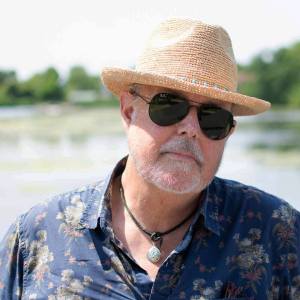 DICK JONES was initially wooed by the First World War poets and then seduced by the Beats. He’s been exploring the vast territories in between since the age of fifteen. His work has been published in a number of magazines, print and online, including Orbis, The Interpreter’s House, Poetry Ireland Review, Qarrtsiluni, Westwords, Mipoesias, Three Candles, Other Poetry, Rattlesnake and Ouroboros Review. In 2010 Dick received a Pushcart nomination for his poem Sea Of Stars. His first collection, Ancient Lights, is published by Phoenicia Publishing and is available from them or via Amazon. His translation of Blaise Cendrars’ influential epic poem ‘La Prose du Transsiberien…’ was published in an illustrated collaborative edition with artist Natalie D’Arbeloff by Old Stile Press in 2014.
 DEBASIS MUKHOPADHYAY (between ink and inblot) has been featured on The Poet by Day Before, but this is the first time in response to Wednesday Writing Prompt. He is the author of the chapbook “kyrie eleison or all robins taken out of context” (Finishing Line Press, 2017). His poems have appeared or are forthcoming in journals & anthologies, including Posit, Words Dance, The Curly Mind (UK), Erbacce (UK), Strange Poetry (UK), Yellow Chair Review, I Am Not A Silent Poet (UK), The New Verse News, Rat’s Ass Review : Love & Ensuing Madness, Writers Against Prejudice (UK), Manneqüin.Haüs, Algebra of Owls (UK), The Skinny Poetry Journal, Of/With : Journal of Immanent Renditions, Anapest Journal, Communicators League (Nigeria), No Tribal Dance (UK), Quatrain.Fish, Duane’s Poe Tree, Walking Is Still Honest, Leaving My Shadow : A Tribute to Anna Akhmatova, Thirteen Myna Birds, Whale Road Review, The Apache Poetry Blog (Sweden), Scarlet Leaf Review, Silver Birch Press, The Bitchin’ Kitsch, Foliate Oak, Eunoia Review, Revolution John, Fragments of Chiaroscuro, Down in the Dirt, With Painted Words (UK), The Wagon Magazine, Snapping Twig, Words Surfacing, Praxis, Apple Fruits of an Old Oak, and Voice of Monarch Butterflies. His work has been nominated for the Best of the Net. MORE
 As some of you know, Gary is multi-talented, combing visual art with poetry or prose narrative. He is also a potter. A sample of his work is pictured here. Gary’s pottery is available for purchase. Further details HERE. Note the business card. We appreciate Gary’s wry humor.




 Jamie Dedes' THE POET BY DAY Webzine