this photograph is of International Poet Naomi Shihab Nye at a book signing courtesy of Micahd under CC BY-SA 3.0
“Poetry calls us to pause. There is so much we overlook, while the abundance around us continues to shimmer on its own.” Naomi Shihab Nye
Naomi Shihab Nye (نعومي شهاب ناي) (b. 1952) is a poet, novelist, essayist, anthologist and peacemaker. He father was a Palestinian; her mother, an American. She started writing when she was six-years-old. The breadth of her published work encompasses poetry, young-adult fiction, picture books, essays and novels. She calls herself a “wandering poet” but refers to San Antonio, Texas as home.
Habibi [recommended and not just for teens] is her 1997 young adult novel. It’s the semi-autobiographical story of fourteen-year-old Liyana Abboud and her family, her Arab father, American mother, and brother Rafik, who move from their home in St. Louis to Mr. Abboud’s native home of Palestine in the 1970s. It was named an American Library Association (ALA) Best Book for Young Adults, an ALA Notable Book, a New York Public Library Book for the Teens and a Texas Institute of Letters Best Book for Young Readers. It received the Jane Addams Children’s Book Award, given annually to a children’s book that advances the causes of peace and social equality.Habibi deals with a range of themes including change, family values, war and peace, and love. “Habibi” is the Arabic for ‘beloved’.
“Before you know kindness as the deepest thing inside, / you must know sorrow as the other deepest thing.”
Naomi says a visit to her grandmother in the West Bank village of Sinjil was a life-changing experience.
Kindness
Before you know what kindness really is
you must lose things,feel the future dissolve in a moment
like salt weakened in a broth.
What you held in your hand,
What you counted and carefully saved,
all this must go so you know
how desolate the landscape can be
between the regions of kindness.
How you ride and ride
thinking the bus will never stop,
the passengers eating maize and chicken
will stare out the window forever.
Before your learn the tender gravity of kindness
you must travel where the Indian in a white poncho
lies dead by the side of the road.
You must see how this could be you,
how he too was someone
who journeyed through the night with plans
and the simple breath that kept him alive.
Before you know kindness as the deepest thing inside,
you must know sorrow as the other deepest thing.
You must wake up with sorrow.
You must speak to it till your voice
catches the thread of all sorrows
and you see the size of the cloth.
Then it is only kindness that makes sense anymore,
only kindness that ties your shoes
and sends you out into the day to mail letters and
purchase bread,
only kindness that raises its head
from the crowd of the world to say
It is I you have been looking for,
and then goes with you everywhere
Like a shadow or a friend.
You can listen to Naomi’s interview with Krista Tippet – including some background on this particular poem – HERE.
This year Naomi was named The Young People’s Poet Laureate, the first Arab-American to hold the position. The award is from the Poetry Foundation, among other things the publisher of Poetry. This is a $25,000 prize that celebrates a living writer in recognition of their devotion to writing exceptional poetry for young readers. The two-year-term laureateship promotes poetry to children and their families, teachers, and librarians.
Naomi Shihab Nye will serve from 2019 to 2021, aiming to bring poetry to geographically underserved, or rural communities through readings underwritten by the Poetry Foundation. In addition, every month during her tenure, which begins in August, she will recommend a new poetry book for young readers.
Nye is acclaimed as a children’s writer for her sensitivity and cultural awareness, such as in her book 19 Varieties of Gazelle: Poems of the Middle East, published just after September 11, 2001, which invites readers to reflect and explore life as an Arab-American. Also acclaimed for her work for adults, Nye’s writing moves seamlessly between ages in a way that is accessible, warm, and sophisticated even for the youngest of readers. Her poetry collections for young adults include Voices in the Air: Poems for Listeners and A Maze Me: Poems for Girls.
Naomi Nye is currently a professor of creative writing at Texas State University. She joins notable past winners of this award including Jack Prelutsky, Jacqueline Woodson, and most recently Margarita Engle.
If you are reading this post from an email subscription, you’ll like have to link through to the site to enjoy the delights of this video reading by Naomi of her poem, “When did you stop being a poet?”
This is charming and serves to remind us of how good we are at poetry when we are spontaneous and open to fancy, when we don’t try to write and edit at the same time. It reminds us too that like children, poets never stop being surprised by life. I love that Naomi’s little boy said, “Just think, no one has ever seen inside this peanut before.” Such is the wonder of childlike sensibility and vision.
Naomi’s Amazon Page U.S. is HERE.
Naomi’s Amazon Page U.K. is HERE.
This post compiled courtesy of Naomi Shihab Nye (which is not to imply I got permission – I hope sharing her work here falls under Fair Use), Wikipedia, Amazon, and Poetry Foundation.
Recent in digital publications:
* Four poems , I Am Not a Silent Poet * Remembering Mom, HerStry
* Three poems, Levure littéraire Upcoming in digital publications:
“Over His Morning Coffee,” Front Porch Review
A homebound writer, poet, and former columnist and associate editor of a regional employment newspaper, my work has been featured widely in print and digital publications including: Ramingo’s Porch, Vita Brevis Literature, Connotation Press,The Bar None Group, Salamander Cove, I Am Not a Silent Poet, The Compass Rose and California Woman. I run The Poet by Day, an info hub for poets and writers and am the founding/managing editor of The BeZine.
“Every pair of eyes facing you has probably experienced something you could not endure.” Lucille Clifton
Thank you for sharing your love of words. Comments will appear after moderation.
[On writing:] “There’s a great quote by Julius Irving that went, ‘Being a professional is doing the things you love to do, on the days you don’t feel like doing them.'” in an interview with Budd Mishkin; New York March 25, 2007.)” David Halberstam (Author, Glenn Stout (Editor), Everything They Had: Sports Writing
The last Wednesday Writing Prompt, The Bottom of the Ninth, May 29, 2019was a call to “write a poem about any sport that engages you. What delights you about it? Perhaps for you the topic lends itself to poetic memoir? Maybe you’re a soccer mom or a baseball dad. Do you see your fave game as a metaphor for life? Or, as a poet and writer, do the idioms delight you?”
I’m charmed by the responses (and you will be too) from Paul’s moving I Watched Athletics With My Mam to Anjum Ji’s cultural introduction to cricket, it is once again a rich response to Wednesday Writing Prompt. I never knew chess was considered a sport. I had to look that up. Thank you, Bozhidar. Every writer will sympathize with deb y felio’s unexpected twist and Jen Goldie’s game effort, well done. You’ll be engaged by Sonja’s signature chiseled poems, Sheila’s poem, part triumph, part homage to her dad, and the sensual elements of running in Irma’s Quiet Run.
Readers will note links to sites if available are included that you might visit these treasured poets. The links for contributors are always connected to their blogs or websites NOT to specific poems. If the poet doesn’t have a website, it’s likely you can connect with him or her via Facebook.
Enjoy this Tuesday collection and do join us tomorrow for the next Wednesday Writing Prompt, whether you are a beginning poet, emerging or pro. All are welcome – encouraged – to come out and play and to share your poems on theme.
I Watch Athletics With My Mam
I sit on her soft bed, rest an arm
on a spare pillow. Mum’s pillows
stack behind her as we watch a
tv placed where her dress mirror stood.
Chemotherapy means she does
not like reflective surfaces.
All house mirrors have been removed.
Once she cried as her hair fell out.
She cried as she gained each pound weight
because she takes the chemicals
to stop her dying, stop the spread.
Together we watch lithe bodies,
sharp muscle tone dash for the end.
Once she was ‘petite’, now Mum’s fat jowls, bingo wings slop on the bed.
Her home is spotless, a show home.
Every day we polish, scrub,
vacuum, she wants it welcoming.
She nods off half way through the
100 metres, I soft clap
the winner as she would have done.
I remember good times, and smile
at her laughter, gleam in her eyes
when she sees another winner
dash over the race finish line.
Next week she looks forward to Oakwell,
a new fan of Barnsley FC.
I never go as I don’t like
football, regret my selfishness
and time not enjoying her life.
She will sit in her hired wheelchair
yell and clap at their confidence,
vitality, their will to win.
FYI: Paul Brookes, a stalwart participant in The Poet by Day Wednesday Writing Prompt, is running an ongoing series on poets, Wombwell Rainbow Interviews. Connect with Paul if you’d like to be considered for an interview. Visit him, enjoy the interviews, get introduced to some poets who may be new to you, and learn a few things.
Crash boom ba dum ba dum ba dum boom
Drum practice or brothers wrestling?
Vroom vroom whee-ooo whee-ooo waah!
It’s mine! I got it first!
Stop annoying me!
Sister slams door
I tie shoes
Bye Hun
I
Run
Away
Quietly
Footsteps shushing
Faster to capture
The scent of mowed, mulched lawn
The feel of sunset’s soft breath
The taste of silent sanity
Glistening saltily on my cheek
I have never been a “sporty” person – I was usually one of the last people picked for teams and I was definitely the last person to finish the mile run in high school (collapsing at the end just to prove how unsporty I was!). I didn’t even know my high school had a football team until I started dating one of the players. And I only learned about the rules of the game when I started watching football in college.
My first foray into sports was running which I discovered in my early 30’s. I figured if I could walk, then I could run since putting one foot in front of the other didn’t seem to require that much coordination or other athletic ability. Yeah, right. Still, I was smitten by the race medals and the opportunity to have some “quiet me time” when I ran. As my family can attest – I am a much nicer person after a run!
Why can I still smell the glove,
feel the smoothness of the leather.
Why does the sound of the crack of
the bat still linger, the joy I felt hitting
one for the team as a child.
Why does running so fast I might fall
just to catch a ball, excite memories.
Why are these things in my bones?
Why are these memories so strong?
Perhaps we build our confidence by way
of those things that give us strength.
The things that gave us self- esteem.
There’s no strength, as powerful as a team.
These are childhood memories,
joyful memories of comradeship,
friendships, bonds and trust.
Childhood memories I can still taste.
Visions that still linger in my mind as
a warm summers day, the sweet
odor of the grass and the laughter
rising from the delight of my friends.
I am not a professional, nor do I still
play Baseball, but I can still smell,
feel and forever linger in the joy of baseball.
I chose to try using idioms.
Using sport idioms to work together
isn’t as easy as I thought.
Each has there own special meaning
and is designed to be an expression of
that particular sport.
I gave it a shot,
but I’m throwing in the towel.
So here’s what I’ve got.
*****
It was par for the course,
he was in a sticky wicket,
Had to take it on the chin,
He wouldn’t take a dive
Or throw in the towel
Or even run interference,
He’d roll with the punches,
And be first past the post
No desperate Hail Mary passes
Could help him go the distance
He was down for the count,
Down and out, and sidelined,
Until someone in his corner
And in a ring side seat,
Threw his hat in to the ring,
Then the punch drunk
Sunday Morning Quarterback
Got off his padded couch,
And In his boxers and sport T,
Began to dance and sing,
Take Me Out To The Ballgame,
I’m the Slam Dunk King!
As a child and teen, I did participate in Sports. Five-pin
Bowling gave me a start. My parents were avid bowlers
and bowled in league play. I went along. I was quickly
lured into the game and was coached by a wonderful
Woman named Doris Luke who ran a Young Peoples
League for the Youth Bowling Association. Starting at
3 years of age gave me an edge and I competed with
The seniors, still racking up the crests and trophies. When
I think back it was the comradery, not the competition.
It was my Dad taking me to tournaments and consoling
me when, as they say, I froze and didn’t give it my best
effort. It’s o.k. he’d say, next time. I still have most of those
crests but somehow the box of trophies disappeared.
I still have the bowling shirts and wonder, when I was so
small.
It was the closest I came
to flying as I sped down
the right wing. Wind keened
across the playing field,
teased the flimsy flap
of my wrapover skirt
and whipped my hair
into a chestnut tail.
I made the school team,
used the new stick
Dad proudly bought me;
tapped, flicked or swung
the ball to the striker,
heard the clash of wood
against wood and cheered
when she scored a goal.
We paused for breath
at halftime, sucked segments
of orange and shivered,
our arms goose-pimpled.
We didn’t always win-
finished bottom of the league
one season. Bad luck,
Dad said, keep trying.
After he died I tried
harder; leaned forward,
stick poised, impatient
for the bully-off.
Then I ran with a sting
in my eyes, mud on my shins
and morning’s wind
in the small of my back.
Sonja Benskin Mesher, RCA paintings (This is her Facebook page, so you can connect with her there as well as view photographs of her colorful paintings.)
I like the chess.
The figures are equal
and clear the rules
(with a little superiority
after all of the white).
And various gambits
the Queen’s and
the King’s ones
are the beauty.
And in the Sicilian
Defense
the dagger is hidden
but perks up
(it is only
the ancient game).
I am not interested in
the result
and all sorts of the ratings
(boring)
but the pulsating Insight.,
now:
Мate for the Queen!
Queen for the King!
Clarification – according to chess rules mate is given only to the king.
‘ Sports’~ Is it Cricket ?
کھیل موقع مقابلہ شروع ھویؑ اک جنگ
Match game chance, be it anywhere on any land
be it sword, spear, bat ball, gun or lance, forces have fought in thicket and on wicket dauntless , fearless , songs sonorous have
been sung, arms raised , aimed and swung, pride and steadfast hate, in arenas Greek
or green grounds, what mighty contest up rising For no reason just or sound, no crime no blast no war no treason, just another cricket season, But this game is a combat on war like footing padded gloved helmeted , ready for the shooting
thick as autumnal leaves head to head like sedge police and crowd together will watch the match, all around the fence, circled, from edge to edge, how many will hold, stare and breathe their last , as wickets fall, bails fly or hands miss a catch,
all eyes on London the final battle ground a place eternal justice ordained and bound no Trojan horse or Aegean sea, no ship or gift or gun, just a velvet green, a white orb, three to three, twenty two yards of hit and run,
to be weak on it, is unthinkably miserable no contestant spared, no mistake forgivable, who will the new possessor be, of a cup, some say the blues, some say the greens, yellows, reds, maroons, blacks, or carmine
result anxiously eagerly excitedly awaited whatever it may be, millions are awake, hearts beating, hands together in prayers, the best will soon be , what odds are at stake aim is، protect the wicket’ and make a high score
game of skill, strategy entertainment, a fight the rest is with umpires two and the third it should be honest fair play, all skill no check no tampering trick it or else it would be war and ‘Not Cricket’،may the best team win،
تلوار نیزہ گیند بلا تیر ےا بندوک خوب چلے گا کھیل بے باک بے خوف نغمے بہادری کے گاتے ھوےؑ بازو گھماتے ھوےؑ نشانہ لگاتے ھوےؑ فخر سے اکھاڑے میں اترے جیسے یو نانی شمشیر زن ، سبز میدان میں جمے گا
کسی زمیں پر شروع ھویؑ اک جنگ
مقابلہ زبردست، بے وجہ ،نہ جرم نہ دھماکہ خونی اک کھیل کا موسم جاری،سماں ایسا،پہنے ٹوپی عوام پولیس مانند خزاں کی پت جھڑ کے ڈھیر چارون اطراف میداں کے کھڑے دعکھیں گے میچ
دستانے پیڈ ہلمٹ بھاری شروع ھویؑ اک جنگ
کتنے آیں گے اور جایں گے دوڑیں گے بھاگیں گے گریں گے گرایں گے وکٹیں اور پکڑیں گے کیچ سب نظریں دنیا کی لندن شہر انصاف کی جگہ ھے نہ بحیرہ نہ بیڑہ نہ کاٹھ کا گھوڑا نہ تحفہ نہ دھوکہ
چاندی کے کپ کہ لیے شروع ھویؑ اک جنگ
سبز مخملی گھاس پہ سفید گیند تین تین وکٹوں کے بیچ لگایں گے بایسؑ گز کی دوڑ ، مار اور بھاگ کمزور کی جگہ نہیں یہ نا ہی ڈرپوک کی نہ غلتی کی گنجا یشؑ نہ معافی نہ زمانت ، کون جیتے گا یہ رنگ
رنگیں لباس میں شروع ھویؑ اک جنگ
نیلا سبز میرون پیلا یا کالا تیز یا نرالہ کس کی کٹے گی پتنگ کون ھوگا بے رنگ کون بچاےؑ گا وکٹین اور بناےؑ گا بڑا سکور کون کرے گا سب کہ بور، جاگ رھے ھیں لاکھوں نتیجے کے انتظار میں ھاتھ جوڑے دعاوؑں میں
سچا کھیل کرنا نہ فراڈ کویؑ نہ دینا دھوکہ نہ کویؑ چکر ورنہ کھیل نہ کہلاےؑ گا یہ کرکٹ نہیں یارا جو محنت
کرے بنے وہ چمکتا ستارہ شروع ھویؑ اک جنگ
A Preamble
Respected G Jamie Dedes Sports Prompt this week has coincided with the opening of ICC World Cup International Cricket Competition 2019 being held in England.
For me the prompt was like the drop of a silver stone in a clear water pond creating ripples of fond nostalgic memories of life in the early years when sports events were followed almost with near religious sanctity. Radio and newspapers were the main source of information. Listening skills were sharpened and newspapers helped in creating scrapbooks of key players of national and international teams. Collecting and compiling and organizing data was the best learning activity. Before I share my poem I would like to share a few pages from my memoirs with my readers. I am sure this would be an interesting addition to the growing variation of contributions to Respected Jamie Ji’s exciting thought provoking and thoroughly enjoyable weekly prompts. Thank you Jamie Ji for creating these wonderful writing opportunities.
Indoor or outdoor ‘Sports’ had a sacred place in daily activities as a favorite hobby and leisure time occupation at home in the early years of life in the new country.The 1950s and 1960s reflect high standards of national team performances in the games of field hockey,tennis, cricket, squash, and athletics.The whole family was deeply involved in each match tournament or international competitions.My interest in Sports was the result of the high enthusiasm at home specially manifested by my loving father. He himself was a good hockey and tennis player. Indoors the games played with family members were Bridge (a card game) Carom and Chess. In fact the truth was the ‘absence of digital technology and television which left ample spare time for healthy sport activities. An occasional classic movie like ‘The Cruel Sea’ ‘Gone With The Wind’, To Kill a Mocking Bird’, ‘The King and I’ and specially the comedy series of Laurel and Hardy were a treat enjoyed at the local Cinema Houses.
Here one can see father in his white sports shorts black blazer and white socks and sports shoes , commonly called then, the ‘PT Shoes’. He is holding my younger sister, his third daughter. Almost every evening a couple of tennis games in the nearby GHQ Tennis Courts were part of the weekly routine. The weekends would be set aside for home affairs.
An ideal personality for many friends and family my Father’s smoking style would always be captured too. During the International Cricket matches of Pakistan with either England Australia or India (these were the top teams in those years) after office hours listening to the running commentary of the match on the radio was not missed.
>
Field hockey was another favorite.I remember when Pakistan was playing the quarter final match with Germany in the Olympics in Rome in the 1960’s. When Germany scored the equalizer goal father was quite disturbed. Listening to the commentary he would remark, ‘Oh No, why give a back pass, there is no back pass in hockey, one needs to play forward , attack the opponents goal’ Pakistan won by 2-1 score and later also won the Gold medal by defeating India in the final by a single goal.The historic goal was scored by Nasir Bunda. The excitement and anxiety of the match involved everyone at home. The game was fully enjoyed by all and we learnt much about sportsman’s spirit and how to accept defeat bravely. Other important lessons were following rules, sharing and making efforts as a team. Over the years sports has undergone tremendous change, from white dress and a red ball to multi colored clothes and a white ball and from the radio to live digital internet / telecasts.
I still believe old times had a special charm in sports and to top it all Pakistan has a former cricket team captain and a world cup winner as its Prime Minister. The Political party symbol being none other than the ‘cricket bat’, obviously…
“POETRY PEACE and REFORM Go Together -Let Us All Strive for PEACE on EARTH for ALL -Let Us Make a Better World -WRITE To Make PEACE PREVAIL.” Anjum Wasim Dar
Recent in digital publications:
* Four poems in I Am Not a Silent Poet
* Remembering Mom in HerStry
* Three poems in Levure littéraire Upcoming in digital publications:
“Over His Morning Coffee,” Front Porch Review
A homebound writer, poet, and former columnist and associate editor of a regional employment newspaper, my work has been featured widely in print and digital publications including: Ramingo’s Porch, Vita Brevis Literature, Connotation Press,The Bar None Group, Salamander Cove, I Am Not a Silent Poet, The Compass Rose and California Woman. I run The Poet by Day, an info hub for poets and writers and am the founding/managing editor of The BeZine.
“Every pair of eyes facing you has probably experienced something you could not endure.” Lucille Clifton
Thank you for sharing your love of words. Comments will appear after moderation.
“Prayer is said Standing A Barechu, a call to Worship We have not bothered, we are weak We are too weak to even Speak Every day is our Yom Kippur” Reading the Tao at Auschwitz, VII, DeWitt Clinton, At the End of War (Kelsay Books, 2018)
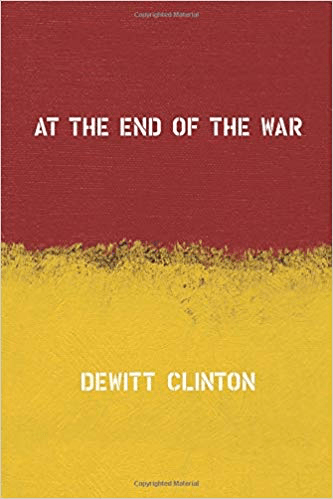
DeWitt Clinton’s At the End of War moves with a graceful precision weaving Old Testament stories with contemporary life, visits to the opera or cafe. Here and there are notes of humor as in On Leaving Socrates with His Jailer and hints of middle-America folksy, as in On the Way to Church Camp, Mother Meets the Devil. He speaks in many voices, blending the perspectives of Judaism and the Tao, slowly moving into the unspeakable tragedy of World War II and the Jewish Holocaust. This is the main event, if you will, of the collection, the obscenity of it layered with sacred ritual and text, an unflinching attempt to come to terms, to find identity, to rise above, to move past. The collection derives its name from the closing poem, which is after Wislawa Szymorska’s The End and the Beginning.
Wislawa Szymorska begins her poem with:
“After every war
someone has to clean up.
Things won’t
straighten themselves up, after all.”
DeWitt Clinton closes his collection with:
“Brooms. everybody, find all the brooms.
Can anyone send a letter? We need to let
someone know this has happened.
“Tomorrow we can start burning our families.
Surely someone will see the smoke.
Surely someone will come.”
We are in tears as we close the book. We are at once bathed in despair and hope. How many brooms will we need to clean up after all the wars and genocides? Do we finally grasp the futility of war? Will there ever be an end to the genocides of which twenty-four are happening as we “speak”? / J.D.
The excerpts from At the End of War are published here with permission. This book is recommended. / The quotation from The End and the Beginning is from Miracle Fair by Wislawa Szymborsk, translated by Joanna Trzeciack (W.W. Norton and Company Inc., 2001), also recommended.
ON LEAVING SOCRATES ALONE WITH HIS JAILER
(for my students of The Symposium, The Apology,
Crito and Phaedo)
What started out as a sex wine party turned into a major
Mind concussion for my students, but still, we waded
Through the prose, hopeful they’d find out why
He insisted on so many questions, so many questions,
So many disillusioned Athenians. Yet toward the end,
We could only face the charges, something about impiety
And influencing the youth, both trumped up, of course,
Mostly as a ruse to run him out of town, if he would go.
But we knew he would not go. We voted to acquit,
Even invoking Johnny Cochran’s “if it doesn’t fit,”
But sadly they were only seven at the time, more up
On Paris’s short sojourn than old football stars facing
Bogus trials. Late in the day, we even considered assisting
Our friend out into the dark, but as you must know,
He trusted in the Laws even if the Laws never assumed
It would go this far. We talked about “Prison Break,”
But few even had time to watch that, so busy chewing
The dense prose of friend/reporter Plato late on the scene.
Most of us were quite done in by all the “soul talk”
Of those last pages, and then, we had to leave, some students
Actually having lost their speech, some needing crutches,
Some on life support, leaving our friend wandering
Through the underground calling out for Homer or Orpheus
Or anyone who wouldn’t mind sitting down for a very long
Conversation about nearly everything, since time is now
Beyond even Infinity. That’s when I left, too, our poor
Cave-like classroom a faux jail cell, wondering if any of us
Could have comforted our gadfly, our inquirer, who is
Just now lifting his cup, resigned, cheery even. Au revoir,
Old friend, let’s hope your students do well on their final.
JAMIE: I think it takes enormous courage to visit Holocaust sites – even to visit the museum in Los Angeles – and then to relive the experience through your writing. Would you speak of that?
DeWITT: One of the more provocative statements about art and The Holocaust is Theodor Adorno’s comment, “To write poetry after Auschwitz is barbaric.” This remark can be taken several ways, including any poetry about anything after Auschwitz, or as I take it, poetry written about Auschwitz after Auschwitz is barbaric. And why is that? Perhaps because for all who died, and the few who survived at Auschwitz, and at all the other work and death camps, there was nothing “artistic” about it.
Ralph Fiennes, playing the character of Michael Berg, in the film, “The Reader,” asks a child survivor of Auschwitz, “Did you learn anything?” The now aging daughter, played by Lena Olin, replies, “People ask all the time what I learned in the camps. But the camps weren’t therapy. What do you think these places were? Universities? We didn’t go there to learn.” She continues by saying, “Nothing comes out of the camps. Nothing.”
The death camps were neither schools, nor artistic experiences, but it is through art that we can at least remember some of what happened, even if it did not happen to the artist. I’ve been writing about historical events for a number of decades now, and while the art is anachronistic, I think it is also an extension of that history as well. I recall writing about the Spanish conquistador wars against the native Maya, Aztec and Incan tribes, (The Conquistador Dog Texts, and The Coyot. Inca Texts, New Rivers Press, o.o.p.) and the poetry is certainly not “accurate,” as a historian might write, but it is an artistic rendering of the horrible inflictions the native tribes experienced. The same may be true for writing about the Holocaust.
I’ve read historical renderings of the Holocaust, and read poetry and plays and memoirs about the Holocaust as well, and the latter are far more interesting to me as an artist. While studying the Tao de Ching with my undergraduate students, I began to consider a new path that I might take in trying to remember my experience of visiting Auschwitz I and II camps several years ago. The result is an unusual fusion, and quite anachronistic, but I hope readers will ponder the insights of Lao Tzu as they read “Taoist like” poems of what the prisoners might have thought about as they were starving to death, or what they might have wondered as tens of thousands were marched to the gas chambers and crematoriums.
I have read a number of artistic renderings of Holocaust experiences, and I hope anyone who reads “Reading the Tao at Auschwitz” will be open to considering a new lens to consider the horrors experienced by all who died, or survived. I can also appreciate how survivors, or children, or grandchildren of survivors, might be appalled by such artistic renderings of mine. It’s a long and difficult to absorb poem, but I hope it is also a valuable contribution to Holocaust literature.
JAMIE: As a writer, what drew you to poetry instead of other literary options?
DeWITT: I’ve always imagined writing screen plays, novels, stage plays, short stories, novellas, and an array of other genres of imaginative writing, but I’ve been drawn to poetry ever since a college professor asked me to rewrite a prose piece to poetry. Then I enrolled in a poetry writing workshop with the same professor my last semester, and though I can’t or don’t want to remember what I wrote in that class, the experience was quite wonderful, especially the instructor’s wife’s cookies. I’ve been drawn to poetry workshops, classes, conferences, and retreats for quite some time now, and do I know why I’m still drawn to poetry? No I don’t, even though I am still poking around for images and lines. It’s just a huge joy to be able to still compose poetry, no matter what evolves from a writing session.
JAMIE: As a beginning writer, what poetry most inspired you and why?
DeWITT: I took a copy of Coney Island of the Mind with me to Vietnam in late 1969 and read it over and over, but not when we were being shelled or fired upon. I may have taken other poetry collections, perhaps The Wasteland, but I’m not sure about what I read. But I did enroll (by correspondence) in an extension class from the University of Kansas at Lawrence. The course was a fairly traditional reading class of modern poetry, and though I enjoyed it, I soon asked the professor if I could send him some scraps of poetry I’d been writing on a 105 howitzer firebase in Vietnam which would later become “The Spirit of the Bayonet Fighter,” published in Harper & Row’s Winning Hearts and Minds.
By the end of my tour, I was hoping to enroll in grad school at Wichita State University which offered a M.A. in English & Creative Writing, and later an M.F.A. and a Ph.D. in English and Creative Writing at Bowling Green State University (Ohio). By then, and then was a long time ago, I was interested in what would later become a career of teaching English and creative writing, and hopefully, writing more poetry, and finding a few kind hearted editors. The teaching career is over, but I still look forward to writing new poems, and I’m still sending out a few now and then.
JAMIE: What’s next on the agenda for you?
It occurred to me only a few days ago that I may have a third collection of poems (a second collection is in production with Michael Dickel, Gary Lundy, and Is a Rose Press, an adaptation of Kenneth Rexroth’s 100 Poemsfrom the Chinese) as I’ve been writing much more since I retired from teaching a few years ago. I’m not quite sure it’s ready for submission as a book, but I’d like to keep working on it. One press has a deadline in late August, and I’m hoping to aim for that as a possible submission. Poetry isn’t everything in my life, as I also appreciate the benefits of Iyengar Yoga, and training for races and triathlons. The next big one is in Berlin, one of the 6 world major marathons. I certainly did not qualify to be in the race because of my lightning speed, but instead I earned a “lottery” ticket, which was a random selection of thousands of hopeful participants. Sightseeing a few days after, including a short trip to the Wannsee chateau where during a luncheon in early 1942, high ranking Nazi Party and military officers designed what was known as “The Final Solution.”
“From this place
Ashes rising from this place
Ashes circling as far as one could see
Ashes circling over All
Over Everyone over Everything
Circling a constant circling
A rink forever circling
a constant ringing s’hma Israel”
Reading the Tao at Auschwitz, XVIII, excerpt from At the End of War
Sh’ma Yisrael Adonai Eloheinu Adonai Ecḥad
Hear, O Israel: the Lord is our God, the Lord is One
Photo by Meredith W. Watts, “For Good” Photography
DeWITT CLINTON is the author of three books of poetry: The Conquistador Dog Texts and The Coyot. Inca Texts (New Rivers Press), At the End of the War (Kelsay Books, 2018), and a fourth collection is coming out in late 2019 or 2020: On a Lake by a Moon: Fishing with the Chinese Masters, (Is A Rose Press). His poems and essays have appeared inThe Journal of Progressive Judaism (with co-author Rabbi David Lipper), Journal of Inter-Religious Dialogue, Cultural Studies< => Critical Methodologies, Storytelling Sociology: Narrative as Social Inquiry, and Divine Inspiration: The Life of Jesus in World Poetry (Oxford U Press).
A few recent publications includeThe Last Call: The Anthology of Beer, Wine & SpiritsPoetry, Santa Fe Literary Review, Verse-Virtual, New Verse News, Ekphrastic Review,Diaphanous Press, Meta/Phor(e)Play, The Arabesques Review, and The New Reader Review. He is Professor Emeritus of English at the University of Wisconsin—Whitewater, and lives with his wife, Jacqueline, in Shorewood, a small village one street north of Milwaukee.
DeWitt’s Amazon Page U.S. is HERE. DeWitt’s Amazon Page U.K. is HERE.
A homebound writer, poet, and former columnist and associate editor of a regional employment newspaper, my work has been featured widely in print and digital publications including: Ramingo’s Porch, Vita Brevis Literature, Connotation Press,The Bar None Group, Salamander Cove, I Am Not a Silent Poet, The Compass Rose and California Woman. I run The Poet by Day, an info hub for poets and writers and am the founding/managing editor of The BeZine.
“Every pair of eyes facing you has probably experienced something you could not endure.” Lucille Clifton
Thank you for sharing your love of words. Comments will appear after moderation.
what’s seen and what remains unrelated. time an error sign warning. nothing falls loudly in snowfall. pronouns lock up favor in a room filled with promises. the most beautiful numbered in group of tens. synthesis sewn into bunches of colored thread. to list brings forth a kind of living. tongue tied along with arms and legs. to find a modicum of stability. happiness a terrorist slogan. unless children playing. the anonymity that accompanies sorrow. never trails in the fresh snow covering. bound backwards in an unintentional circuitous pleasures. enlighten in a beyond what’s meant. intention a rousing crowd noises.
a conversation moves across the boundaries of years
no. those interruptions are part of it. how abstraction innervates the painting. when sets of eyes follow from several heights and distances. why imagine their clothing marked by unexamined biology. or agreed upon genitalia. not everyone stands the same height. or the strength of mobility weakens. how an other coughs and pukes in the alley. privacy a construct of entitlement. they already. get over it. as the lover refuses birthed name. notorious in a broad circle of strangers. the gun used in a high school shooting belongs to someone. carries with it the fatality of not looking back. according to community standards. which is another private property sign. who but those intimates will even stop to grieve. and the hot water’s off once again.
a serious question then. what to do with the excessive immediacy inundating consciousness. as easy as turning on and skimming surfaces. locked within screen time. along side an apparent necessity to for once gain notoriety. be finally seen. how simply breathing exercises little in the way of memorable. of more importance is being noticed by an unexpected glance. how not to be impressed by such a shocking occurrence. flattery imbibes a momentary elevated sensibility. or when hiding under books to avoid gunfire. often there’s a thoughtless need to protect others. concern then reverts to counter intuitive action. walk out. displace. argue over semantics. over noun and pronoun choices. volume as sound resists capture and redistribution.
the intimacy of a shared cigarette or gin on rocks. lock lips within narrow boundaries. again indentation separates one body from another. impossible to get close enough to be a part of individual insights. and the rising sound of surrounding voices turn into a storm of thunder. and violence. quite naturally possessions belong to the outside others. heavy base lines a snow speckled fence. guaranteed to keep what’s original outside the boundaries demarcating one from another. or the many flooding the town violently. arguing about every perceived errancy. waiting word from someone for days. then forgetting that time itself companions. repetition may be a sure sign of pleasurable moments entwined.
headlines useful only to reduce the size of turmoil
bodies dumped in a winter ocean. color barriers and marching drums. dozens of missed opportunities vanish in the ether. beauty is when faced reflection. some appear so comfortable in their bodies. while many others resist the encampment of pronouns. lighten the barriers to authenticity. stiffening neck in refusal. while rubbish shredded an alley away. break out into flailing body parts. such rapid departures within a single cellular event. all the while identities reside within frequent arguments. arms and legs painted red swelling. held in the collective unexamined violence. among the fear of hurt feelings. of pronouncing certainties.
when temperature is below zero chill grows customary. even when framed otherwise transparent entitlement rules. few see themselves as inherently wrong. through fault lines another image unfolds. pronouns aren’t a recognized sport. yet listen to the bullying exchange. threat level perceived as high for the one committed to thought of how it’s always been. not on our watch the chorus disrupts. have gun will travel bravely. synchronized blame game. where tickets are distributed freely. whether sought after or not. the negative rising to a height witnessed as governing. actions retreat into a darkened room. where light cannot penetrate. deep in the refuse of the closed minded. where choice of colors might have liberated. each contradiction its own typo.
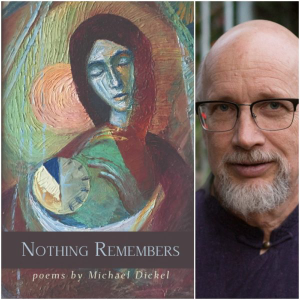
Preorder HERE. [Recommended] Ships August 2019MICHAEL DICKEL a poet, fiction writer, and photographer, has taught at various colleges and universities in Israel and the United States. Dickel’s writing, art, and photographs appear in print and online. His poetry has won international awards and been translated into several languages. His chapbook, Breakfast at the End of Capitalism came out from Locofo Chaps in 2017. Is a Rose Press released his most recent full-length book (flash fiction), The Palm Reading after The Toad’s Garden, in 2016. Previous books: War Surrounds Us, Midwest / Mid-East, and The World Behind It, Chaos…He co-edited Voices Israel Volume 36(2010). He was managing editor for arc-23 and arc-24. With producer / director David Fisher, he received an NEH grant to write a film script about Yiddish theatre. He is the former chair of the Israel Association of Writers in English. Meta/ Phor(e) /Play is Michael’s blogZine. Michael on Social Media: Twitter | FaceBook Page | Instagram | Academia
A homebound writer, poet, and former columnist and associate editor to a regional employment newspaper, my work has been featured widely in print and digital publications including: Ramingo’s Porch, Vita Brevis Literature, Connotation Press,The Bar None Group, Salamander Cove, I Am Not a Silent Poet, The Compass Rose and California Woman. I run The Poet by Day, an info hub for poets and writers and am the founding/managing editor of The BeZine.
“Every pair of eyes facing you has probably experienced something you could not endure.” Lucille Clifton
Thank you for sharing your love of words. Comments will appear after moderation.

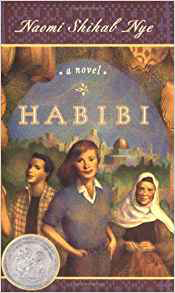 Habibi [recommended and not just for teens] is her 1997 young adult novel. It’s the semi-autobiographical story of fourteen-year-old Liyana Abboud and her family, her Arab father, American mother, and brother Rafik, who move from their home in St. Louis to Mr. Abboud’s native home of Palestine in the 1970s. It was named an American Library Association (ALA) Best Book for Young Adults, an ALA Notable Book, a New York Public Library Book for the Teens and a Texas Institute of Letters Best Book for Young Readers. It received the Jane Addams Children’s Book Award, given annually to a children’s book that advances the causes of peace and social equality. Habibi deals with a range of themes including change, family values, war and peace, and love. “Habibi” is the Arabic for ‘beloved’.
 A homebound writer, poet, and former columnist and associate editor of a regional employment newspaper, my work has been featured widely in print and digital publications including: Ramingo’s Porch, Vita Brevis Literature, Connotation Press, The Bar None Group, Salamander Cove, I Am Not a Silent Poet, The Compass Rose and California Woman. I run The Poet by Day, an info hub for poets and writers and am the founding/managing editor of The BeZine.





 Jamie Dedes' THE POET BY DAY Webzine