Page 55 of 61

THREE by the mighty Aprilia Zank
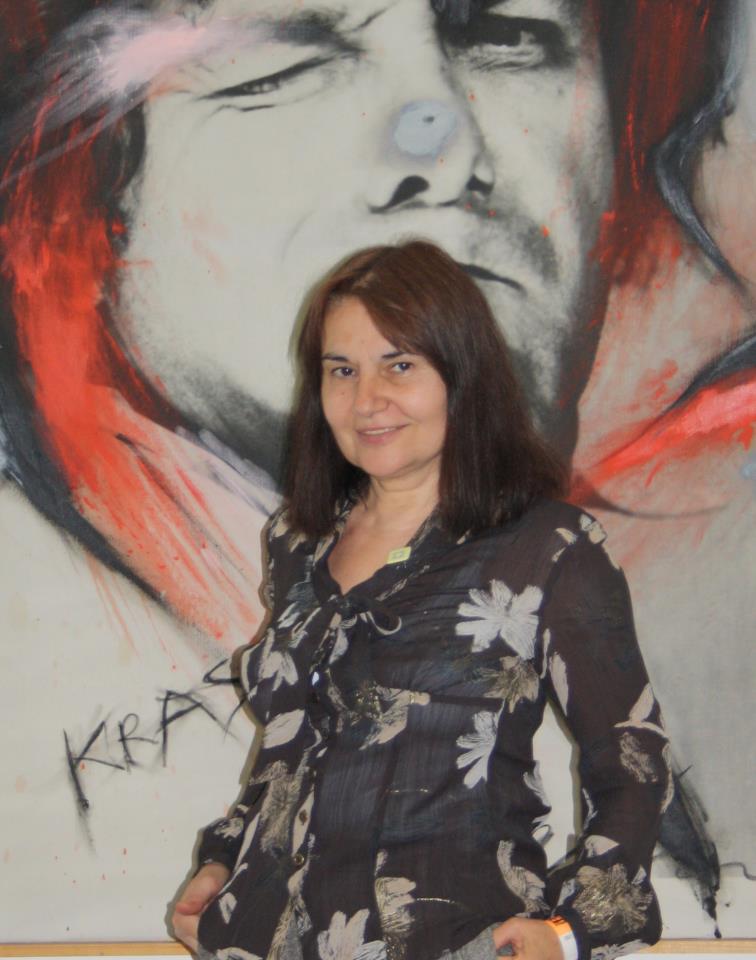
Poet, Writer, Linguist, Photographer and Educator, Aprilia Zank at play

Malajusted

I had put on
my reddest dress
to spread brightness
on my arrival
but these women were rabid
had crawled to the drug locker
with their pee bags
trailing behind
and their white gowns
open at the back
for ease of examination
I tried to stop them
screamed for the nurse
but they were already
devouring
the coloured pills
and celebrating
their ephemeral victory
over doomed
maladjustment

untitled

this is an ugly poem
this is a wicked poem

this is a poem
about corpses lined up
in antiseptic bags
in the basement

this is a poem
about weary customers
drawing numbers
for refundable purgatories
on the ground-floor

this is a poem
about a young girl
on the third floor
pulling tight
at the pink of her hoodie
to conceal
the baldness of her head

this is a poem
about an old titan
on the ninth floor
reading instructions
how to grow titan vertebrae
from his Phoenix wings

this is a poem
about the twelfth floor
where hurrying visitors
carry intricate flower bouquets
for newborn cherubs

this is a poem
about hell and heaven
this is a love poem

Tintagel refunctioned

King Arthur’s men
having reached a certain age
are sitting
in the renovated Tintagel
two or three at a table
not round but square

flipping
through glossy magazines
peeping
at anorexic models
unaffordable sports cars
fitted zen gardens

considering
past steps
in hard to reshape dust
decisions not taken
missed opportunities
acts
that could have been done better

trying
to tame becquerels
to conceal
intimations of diapers

having fought
so many battles
against knightly opponents
looking straight
into their eyes –

but now
the sniper
hits from the inside
with no warning
except for occasional
hardly detectable
tracks of occult blood

– Aprilia Zank

These three poems were Aprilia’s response to last Wednesday’s writing prompt: Mighty (that’s you and me) …

DR. APRILIA ZANK is a lecturer for Creative Writing and Translation in the Department of Languages and Communication at the Ludwig Maximilian University of Munich, Germany, where she received her PhD degree in Literature and Psycholinguistics for her thesis THE WORD IN THE WORD Literary Text Reception and Linguistic Relativity. She is also a poet, a translator and the editor of two anthologies: the English–German anthology poetry tREnD Eine englisch-deutsche Anthologie zeitgenössischer Lyrik, LIT Verlag, Berlin, 2010, and the anthology POETS IN PERSON at the Glassblower (Indigo Dream Publishing, April, 2014). She writes verse in English and German, and was awarded a distinction at the “Vera Piller” Poetry Contest in Zurich. Her poetry collection, TERMINUS ARCADIA, was 2nd Place Winner at the Twowolvz Press Poetry Chapbook Contest 2013. Aprilia Zank is also a passionate photographer: many of her images are prize-winners and several have been selected for poetry book covers.

Aprilia is a friend of and frequent guest contributor to The BeZine. You can find more poetry by Aprilia in the last two editions.

COMING TO THIS SITE SOON: A review of The Word in the Word Literary Text Reception and Linguistic Relativity (don’t let the title throw you) along with an interview of Aprilia.

©2016, poems and photograph (published here with permission), Aprilia Zank, All rights reserved

Happy Father’s Day with Mexican-American Poet and former California Poet Laureate, Juan Felipe Herrera … the immigrant experience

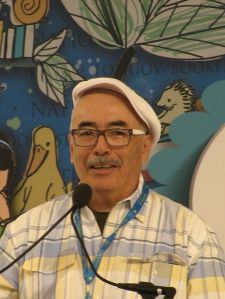
Juan Felipe Herrara (b. 1948), American poet and writer, photo by SlowKing
Juan Felipe Herrera (b. 1948), Mexican-American poet and writer, photo by SlowKing under GNUFDL

I posted this a few years ago here and just included it in this month’s issue of The BeZine.  I’m re-posting it now because it highlights the quality and character of immigrants to the United States of America, which seems a good thing to do at this time. I’ll post this Sunday’s Poesy later today. 

Juan Felipe Herrera is a Mexican-American poet and performance artist, a writer and cartoonist, a teacher and an activist.

“Many poets since the 1960s have dreamed of a new hybrid art, part oral, part written, part English, part something else: an art grounded in ethnic identity, fueled by collective pride, yet irreducibly individual too. Many poets have tried to create such an art: Herrera is one of the first to succeed.”  Punk Half Panther by Stephen Burt in the New York Times

Herrara incorporates into his writing his experience of family and the life of the compesinos, migrant farm-workers.

“Into the tilted factories, the smeared taxis,
the stunted universities, into the parlor of bank notes,
in the cramped cookhouse where the dark-skinned
humans still stoop and pitch the daily lettuce bags …”

He sometimes tells stories that arise from what is for him a pivotal moment: the early school experience of trying to fit in though he had no English-language skills. He also writes stories that illustrate the problems of immigration, which often separates families.

In 2012, California Governor, Jerry Brown, named Herrera California Poet Laureate, the first Chicano poet to be so honored.

Many of us – like Juan Felipe Herrara – had fathers or grandfathers who came to the United States to make a better life for themselves and eventually for their children and future generations and who went on to make substantive contributions to this country. Sometimes we like to remember and acknowledge them for their vision, courage and hard work. Today seems like a good day to do so. The video below is charming children’s story, A Tale for Father’s Day, about Herrera’s immigrant father. Enjoy!

Happy Fathers’ Day to all the dads and to all the moms who, for one reason or other, are both dad and mom.

CELEBRATING AMERICAN SHE-POETS (19): Silva Zanoyan Merjanian, Borrowed Sugar Borrowed Time – from war-torn Lebanon to peace in California

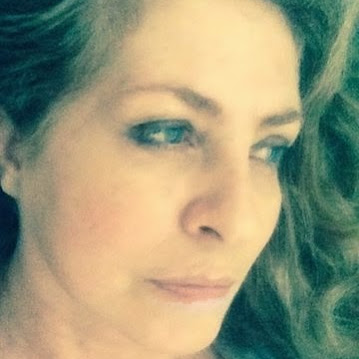
Armenian/Lebanese American poet, Silva Zanoyan Merjanian
Silva Zanoyan Merjanian

Silva Zanoyan Merjanian is an Armenian ethnic who was born in Lebanon. She escaped the civil war there and lived for a time in Geneva, ultimately settling to build a family life in California. Silva has two published collections. Most recently Rumor (Cold Water Press, 2015), which received the Best Book Award from NABE in the 2015. Three poems from Rumor were nominated for a Pushcart Prize. Silva’s first collection is Uncoil a Night (CreateSpace, 2013).

73f533_9cc020b992f94d93a6acdd49383341f5

Falling

In rind of wishes sticky on lips
and sermons’ echo on facepsalms slipping
in envies squirted on spruce and cedar
whims twirling, spiraled, speckled
gossamer visions of friendships withered
in crevices of an upbeat mien
Your name hidden in prayer embers
I mend among buds of poems
flying on a trapeze
with no one at the other end

Rumor is a stunning tour de force of passionate, life-affirming poetry. Silva Merjanian evokes time and place with both grace and authority. Poetry is obviously a tool for her own healing and in that she brings us face to face with the human condition in all its complexity, beautiful and loving and devastating cruel, and she does so totally without pretension.

Mornings arriving
Me alone
Poems half written and done
Poems between toes and toast
‘Round Midnight and Monk
Nostalgia
Right reasons
Brave decisions
Thoughts that glow in the light
Just love
Always, in absence of rats and such
fresh sheets and I
between over and under

from Between the Sheets

She writes with immediacy of war:

bounce of gold crosses between breasts
colorful hijabs ’round others’ bare face
friendships seeded in borrowed sugar, borrowed time
she, unaware of borrowed wailers on their way
makes plans on a sunny balcony as she hangs
her blue jeans on a clothesline
moments before war drums ripple through crisp calm

from Borrowed Sugar Borrowed Time

INTERVIEW

JAMIE:  Silva, Rumor is a remarkable collection with many poems that stay with one. It’s also quite generous of you to donate proceeds to the Syrian-Amenian Relief Fund (SARF). How are sales going and how is the fundraising?

SILVA: Thank you Jamie. I did not have an event or a formal fundraising with Rumor. The sales were a result of readings, speeches, word of mouth and some ads in newspapers and on Facebook. In July there will be an ad for it in Poets & Writers and it will also be included in five book fairs this summer.

My publisher, Dave Boles of Cold River Press, will release the e-book version soon. He is kind enough to donate all proceeds from the e-book also to the SARF. So with all these developments I expect a boost in sales.

JAMIE: When did you fall in love with poetry? When did you realize you are a poet?

SILVA: I am a late bloomer. I started writing in 2011 and my first book was released in 2013. Even though we grew up with the poetry of Shakespeare, Keats, etc.. and many Armenian poets, the thought of writing poetry hadn’t occurred to me. My education is in Business Administration not Fine Art. It was almost like catching the bug of poetry, very unexpected, once I started writing I couldn’t stop. I didn’t write to be published at first, it was just for the pleasure of it, later when I saw friends publishing books, the idea came to me to publish and make it count for something by donating the proceeds.

JAMIE: What are the reactions to your work that surprise you most?

SILVA: I didn’t expect the level of appreciation for my poetry that I received. Especially from those who themselves write and/or are well read in poetry. I have to thank the Irish first for this recognition. They have such talented poets and they recognized my potential first.

I also didn’t expect the difficulty to be accepted as a writer in the Armenian community. It was almost like they waited for me to be respected in the foreign circles before they’d acknowledge me, instead of reading my work and appreciating it themselves. I am disappointed in that respect.

JAMIE: Tell us something about your travels: How did your family arrive in Lebanon and why did they move from there. How did you end up in the U.S.?

SILVA:  My grandparents had to flee their homes twice, trying to survive the Armenian Genocide. If you are familiar with the book The Forty Days of Musa Dagh by Austrian -Bohemian writer Franz Werfel, first published in German in 1933, it is the story of my grandparents. The French helped the population of seven villages escape and relocate as refugees in the Bekaa Valley in Lebanon. So my grandparents did live under refugee tents for a whole year. Now the area is a buzzing town with three churches and schools and commerce.

I left Lebanon after experiencing eight years of the civil war*. Geneva was the city I healed from the war scars. Later I settled in California to raise my sons with my husband.

JAMIE: What do you think most Westerners don’t understand about the Middle East? What do you know and understand that you would like everyone to know?

SILVA: What most don’t understand about Lebanon, and to a degree parts of the Middle East, is that the vast majority of the people are just the nicest fun loving, peace loving, hard working families. They want for their children everything an American family wants. The number of innocent people who are collateral damage to the events in that part of the world is just heartbreaking.

JAMIE: I understand that your brother is a novelist. Does your family have a history of poets and writers?

SILVA: My brother has two volumes of poetry in Armenian. He is writing his third novel. I am not aware of anyone else in my family who has published books, except a volume of translations by my father.

JAMIE:  You have two well-received collections completed. Where to now?

SILVA:  That’s a question I’ve been asking myself. I think I will keep writing and hope a third book will be in the future for me.

* Lebanese Civil War – 1975-1990

© 2016, portrait, poems, bookcover art and responses to questions, Silva Merjanian, All rights reserved

POET, WRITER, ARTIST and COLLEGE LIBRARIAN: Corina Ravenscraft on “The Poetic Evolution”

Corina Ravenscraft
Corina Ravenscraft

Poetry moves us. It makes us think, feel, inspires us to do more, be more. It has been here as long as people could speak and sing, and its energy and intention will probably outlast the end of humanity. Like everything in life, it has had to evolve and adapt. One of the main purposes of poetry, to communicate something with someone else, has necessitated new ways of reaching an audience. This is especially true now, in this digital age of instant gratification and social media.

Poetry has learned to deliver its message via video, recorded poetry slams, Skype, flash mob poetry in action…blink and you might miss it. But even if you DO miss it, you can probably find a recording of it somewhere. No longer is it simply written words on an immortal page in some heavy, dusty collection of poetry, or an oral history sung through the ages and generations. There are still formal forms, still meters (or even free form, as even it has a “beat”), still rhymes (or not), still those who will read it and listen to it. Some things about it do not change.

There have been many famous poets who have attempted to define what poetry “is”; the well-known, poetic “greats”, and they all have valid definitions. I tend to agree with one of my favorites, Robert Frost, who said:

“Poetry is when an emotion has found its thought and the thought has found words.”

To me, poetry is a type of communication that touches the heart and soul.

In honor of (inter)National Poetry Month celebrations, I share a couple of poetic videos with all of you. Both of these “spoke” to me. I hope that you find them as powerful as I did, and maybe that you will look at poetry as more than dry, printed words on a page. It is very much a living thing. And it continues to evolve, just like people do. 🙂

First, is a poem by actor Woody Harrelson.

Next, is a piece by rapper Prince Ea

– Corina Ravenscraft

© 2016, essay and portrait, Corina Ravenscraft, All rights reserved; View The BeZine contributing writer Corina Ravenscraft’s bio HERE; view a comprehensive interview with Corina HERE. Corina’s blog is Dragon’s Dream.