Page 166 of 199

POET, TEACHER, INSPIRATION: Dilys Wood & the Latter-day Sapphos

Sappho (/ˈsæfoʊ/; Attic Greek Σαπφώ [sapːʰɔ̌ː], Aeolic Greek Ψάπφω, Psappho [psápːʰɔː]) was a Greek lyric poet, born on the island of Lesbos. The Alexandrians included her in the list of nine lyric poets. She was born sometime between 630 and 612 BCE, and it is said that she died around 570 BCE, but little is known for certain about her life. The bulk of her poetry, which was well-known and greatly admired through much of antiquity, has been lost; however, her immense reputation has endured through surviving fragments.
“Sappho (/ˈsæfoʊ/; Attic Greek Σαπφώ [sapːʰɔ̌ː], Aeolic Greek Ψάπφω, Psappho [psápːʰɔː]) was a Greek lyric poet, born on the island of Lesbos. The Alexandrians included her in the list of nine lyric poets. She was born sometime between 630 and 612 BCE, and it is said that she died around 570 BCE, but little is known for certain about her life. The bulk of her poetry, which was well-known and greatly admired through much of antiquity, has been lost; however, her immense reputation has endured through surviving fragments.” [Wikipedia]
Sunday: I began my dive into Dilys Wood’s Antarctica* (Greendale Press, 2008), spending my discretionary time engaged by this collection, which includes The South Pole Inn, a novella in verse.

“I dreamt I gave you the white continent
I wrapped it in white wedding wrap, embossed
with silver penguins and skiis …”
from Her Birthday Present in the section Love in a Freezing Climate: Four Poems

*****

“Wherever I look, the bacillus of melt
weakens the floes.”
from Future

DILYS WOOD is a poet, an editor and the founder (“convenor” as she might say) of the London-based Second Light Network of Women Poets (SLN), which produces the biannual ARTEMISpoetry and includes a publishing arm, Second Light Publishing.  I first encountered Dilys thanks to Myra Schneider. That award-winning poet with eleven published collections is a consultant to SLN.

While Internet and email have a way of helping to cross borders and make affinity-based connections, closing the gaps in culture and miles – in this case some 5,500 miles as the crow flies – the tools are imperfect. It’s not the same as meeting, talking and observing in person. However, when you read what people write, when they risk themselves by putting their very souls on paper, you do get to know something about their values and passions. My strongest sense of Dilys was as the quiet persistent energy behind a women’s poetry collective and an apparently indefatigable advocate for women’s right – including women over 40 – to poetic voice. 

At the point in which I first encountered Myra, Dilys and SLN, Dilys had collaborated on (mainly with Myra) four anthologies of women’s poetry. She had two collections of her own poetry published, Women Come to a Death (Databases, 1999) and Antarctica. That was, I think around 2010. Since that time, we are gifted through Dilys and Myra, Anne Stewart (poetry p fand others on the SLN team with so many fine anthologies and magazines of women’s poetry, that I can hardly keep track. 

This slideshow requires JavaScript.

Dilys is modest in presenting herself. Her Poet’s Page on SLN’s website says simply –

Dilys started writing poetry again after retiring from the Civil Service, where her jobs included being secretary of the Women’s National Commission. She shortly after founded Second Light, focussed on the needs of women reconnecting with writing after forty. Second Light Network developed into a support group and, on a small scale (though reviews suggest significant), publisher of women’s poetry. Together with her own writing (Antarctica, 2008; Women Come to a Death, Katabasis, 1997), Dilys has been the joint editor (mainly with Myra Schneider) of 4 womens poetry anthologies.

If The Poet by Day was a poem, its title would have to have the tagline after Dilys Wood. This site is not the product of collaboration and membership. Nonetheless, its commitment to sharing information on poets and poetry, including gifted if lesser-known poets, and promoting and encouraging poets who are marginalized by their gender, ethnicity, disability or age – is very definitely inspired by Dilys work and commitment to mature women and the work and commitment of Myra Schneider and the other SLN women as well as by my own love of poets and poetry and the whole of poesy history and culture.

This is Dilys in her own words as she “spoke” in a guest blog post here several years ago:

NEW SAPPHOS, CHALLENGES FOR WOMEN POETS

I run a network for women poets and naturally I want our members to be treated equitably, with recognition of any woman’s potential to be in the top flight of creative artists.

Some poets feel that ‘male and female he made them’ should not be an issue. I disagree because I want to celebrate and gain personal inspiration from the last fifty years. There has been a vastly increased involvement of women as students of poetry, published poets, book purchasers and consumers of ‘products’ such as poetry festivals. I also want it debated why this has not meant equality of treatment by journals.

Why do some leading journals publish fewer poems by women and use fewer women reviewers? What part is played by prejudice and what by our diffidence? Do we submit enough work and persist when submissions are rejected? Are there subtle shades of prejudice? Are we taken seriously on ‘women’s topics’ but not when writing about spiritual experience or politics?

A first step is to convince ourselves that there is no ceiling. Emily Dickinson surely lives up to the epithet ‘unique genius’? Her work is incredibly economical, dense, universal and deeply moving. She is totally original in style and thought. Her work alone ought to kill the slur that biology-based inferiority explains historical under-achievement.

So many more women have found now their voice. Let’s celebrate poets who excite us, from Emily Bronte (say) to Jorie Graham (say). We can also start thinking seriously about differences and about inflated reputations. Let’s be wary about ‘celebrity status’. This tends to narrows true appreciation. Read voraciously. Include lesser known poets and dead poets. You will be impressed by how much exciting writing is on offer.

– Dilys Wood

* “Antarctica,” Greendale Press, 2008 (all proceeds to Second Light Network funds). �5.95 through poetry p f (scroll down on the page to which this is linked)

© The New Sapphos, Dilys portrait, book cover art, Dilys Wood; © introduction, Jamie Dedes; Sapho embrassant sa lyre Jules Elie Delaunay (1828-1891), public domain

POET & WRITER, JOSEPH HESCH … not working for “the man,” finding poetic voice at 55

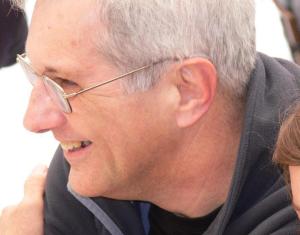
Joseph Hesch
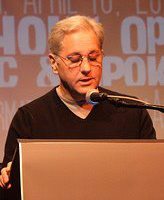
Joseph Hesch

“Each day I squeeze the contents of my heart over whatever expression I’m wearing & imprint it onto a notebook page–my version of St. Veronica’s veil.”

Joseph Hesch (A Thing for Words) lives in a beautiful region, upstate New York, at the confluence of my own beloved Hudson River and the Mohawk River.  It’s a nice setting for a poet.

Joe was a professional writer for forty years. Post-retirement finds him doing writing that is more creative – poetry and fiction – with publication in quite a number of magazines, literary journals and an anthology here and there. He has self-published two collections of poetry. Joe is also a member of The BeZine core team of contributing writers and his poems and flash fiction are featured in the zine just about every month.

JAMIE: Joe, I know you worked as a journalist for a good part of your life.  Did you also write poetry or did you come to it late? What’s it like now that you are not working for “the man?”

JOE: Journalist or hired typewriter and gum-flapper for Skidmore College, a three-state professional organization or the State of New York over my 40-plus years in the working world. And no, I definitely was not writing poetry until I reached the age of 55. Not in high school, college nor when I was a professional writer.

A pretty miraculous recovery from a heart condition let me know each day is a blessing not to be wasted. I decided I’d best hurry and let the writer’s heart I thought I had within me live again.

I started to write sassy essays that I shared with friends. Then I wrote a bit of memoir one afternoon about my childhood Christmases. I took a chance and it was accepted for publication in a Christmas anthology. I continued to write for the discoveries I was making in myself and my world. And then everything stopped. Absolutely dead in the water. I’d run out of those easily reached ideas and emotions. I didn’t know what to do.

A friend told me my prose always sounded quite poetic to her. “Why don’t you write a poem?” she said. So I started out with the 5-7-5 structured hug of haiku. Then I wrote a poem about not being able to write anymore, stringing together those five-and-seven-syllable lines. She suggested I submit it to some journals. I did and it was accepted for publication. Poetry had recharged my life machine and  put me back in the world as a writer.

I never wanted to be a poet. Never wrote a poem in my life before those haiku. I consider myself a storyteller. You could say my poems are stories with the sentences broken into bite-sized pieces, stacked like crackers. But I’ve discovered more about myself as an emotional being, as a feeling man since I began to write poetry than I could have imagined in fifty-some years on this Earth. So, about no longer writing for the man? They can’t pay you enough in any job to learn the discoveries I have as a poet.

JAMIE: Tell us about your two collections.Do you have plans for another? If so, what would be the theme.

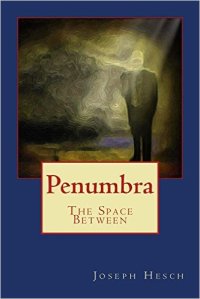
41MhSiONWBL._SX331_BO1,204,203,200_JOE: Oh, thanks for asking. Yes, I have two collections available on amazon.com. The first, Penumbra: The Space Between, I put together in 2014. I guess you could say it’s my coming-out as a poet in middle age. I hope I expressed my impressions on life and nature from the view of a man emerging from years of darkness into a brighter personal and artistic existence, standing astride middle age. Neither young nor old, still peering at things from the edge of shadow and light, the penumbra. I’m kinda proud of it as a first effort.

51thPS3WjdL._SX331_BO1,204,203,200_In my second collection, One Hundred Beats A Minute, I hope to convey impressions and imaginings of life, love, art, nature and what I see outside or inside the swirly-glassed windows of my soul. All of its sixty poems, the number of seconds in a minute, are bound within the frame of one hundred words. No wiggle room, exactly one hundred, or my obsessive mind gets all edgy. When I succeeded at hitting 100 and putting that final period on the page, where my obsession met compulsion and life met art, I squirmed in my seat, my knees and heels tended to flutter up and down from the floor and my heart beat like I’d just run a sprint of a hundred meters. I hope readers can experience that feeling here and there in this collection, too.

My next collection? I haven’t thought very hard about anything yet. However, I have thought for long time about putting together a collection of my short stories and flash fiction. Already have the title, the title of my first short story after I began writing for myself again—But Don’t Touch, as in “You can look, but…” So many of my stories are the opposite of my poetry. Many seem to have the theme of men who have problems reaching out to or accepting intimacy, whether it be carnal or merely the simple warm touch of another’s hand.

576752_311773988900360_1000273563_n

“Writer and poet who’s spent decades writing for The Man. Still do. Except now I’M the man.”

JAMIE: What sorts of poetic activities do you participate in and why?

JOE: Not many, and I feel badly about that. But when I go out to read to other writers, I just don’t feel a sense that I belong. Never have. Nevertheless, for the past four or five years, I’ve read at the Albany Word Fest Open Mic that the Albany Poets group holds during April for National Poetry Month. I’ve also run up the Adirondack Northway to read at the legendary Caffe Lena in Saratoga Springs. That’s an interesting feeling, reading your poetry where Bob Dylan made his bones as a poet in song. But I don’t get out enough to share my work with others. Maybe I’m shy that way. Or maybe just lazy, other than writing something for someone, only lately myself, every day for the past 40 years.

JAMIE: Why is poetry important to you and why should it be important to us?

JOE: Wow, that’s a big one. I guess it merits a big answer, then. Simply put, poetry, my finding poetry as an outlet for my long dormant creative self, helped save my life, most certainly the quality of it. I don’t know how long I could go on wandering in that vast desert of empty when I knew I was supposed to do something creative to fulfill myself.

Beyond that, though, I like to think poetry holds up a mirror, sometimes cracked and refracting, others with a soul-illuminating clarity, to who we are as individuals, families, communities, nations, a world. They can bring us the great Ahh moment, as well as the Ahh-Hah! And most of the time goes for the writer—at least this one—as well as the reader.

IN THE ROOM

Here in the room the breaths come
maybe every ten seconds apart,
snoring sounds from a mouth agape,
now voiceless, beneath eyes mostly closed,
but probably unseeing.
She doesn’t hear the talk in the room.
We think. We hope.

Above the bed, a little plastic bag
of morphine perches like blessed fruit
from a swirly silver branch atop
the six-wheeled tree they’ll roll
out of the room whenever her spirit does.

Here in the room we watch, we wait,
hearing only the sounds of the family,
of the bubbling O2 humidifier,
the beeps of monitors and machines,
the murmurs and shoe-squeaks from staff
in the hallway on the fifth floor
as the hospital awakens this morning.

And punctuating it all come
the snorting gasps of a life dwindling away
every ten–no, fifteen–seconds.
We think. God help her, we hope.

– Joseph Hesch

© words, poem, portraits, cover art, Joseph Hesch

OF SHADOW AND LIGHT AND TWO-HEADED DOUBTS, the poetry of Adam Zagajewski

51-hxZt2IbL-1._SX322_BO1,204,203,200_Mysticism for Beginners, Adam Zagajewski
Translated from the Polish by Clare Cavenagh

Adam Zagajewski (b. 1945) is a new poet to me, discovered on reading Tim Beck’s article, The Other Half of a Poem. I did a bit of reading and research and in sum found that Zagajewski began as a protest poet of the Polish “New Wave.” He felt that poetry should address current social needs, incorporating but not serving politics and using unambiguous language. Poetry should undermine communist double-speak. Not surprisingly, Zagajewski was exiled from Poland in 1982.

Zagajewski I found is generally well-considered by his peers, though there are some who criticize him (Czeslaw Milosz is one) for being “one-dimensional.”

I sent for three of Zagajewski’s books. Mysticism for Beginners is among them.  I find the poems in this collection beguiling and disquieting at once.

From Vermeer’s Little Girl

Johannes Vermeer, c. 1665, Oil on canvas, 44.5 cm × 39 cm (17.5 in × 15 in), Mauritshuis, The Hague, Netherlands
Johannes Vermeer, c. 1665,
Oil on canvas, 44.5 cm × 39 cm (17.5 in × 15 in), Mauritshuis, The Hague, Netherlands

“Oh, Vermeer’s little girl, oh pearl
blue turban: you are all light
and I am made of shadow.
Light looks down on shadow
with forbearance, perhaps pity.”

From The Traveler

“putting his hand to his chest, checking warily
to make sure he still had his return ticket
to the ordinary places we all live”

From Holy Saturday in Paris

“And two-headed doubts
slim as antelopes,
barricade the street
Lord why did you die”

A week after the Twin Towers collapsed, The New Yorker magazine ran Zagajewski’s Try to Praise the Mutilated World on the final page of its special 9/11 issue along with W.S. Merwin’s To the Words. It became – according to a Newsweek article – “the best known poem in decades.” The poem was not inspired by 9/11. It was written a few years before.

“You’ve seen the refugees heading nowhere,
you’ve heard the executioners sing joyfully.
You should praise the mutilated world.”

So, yes: an intriguing poet full of shadow and light and two-headed doubts.
13550802017232

© poetry, Zagajewsik; the photograph of Vemeer’s Girl with a Pearl Earing is in the public domain; thumbs up courtesy of Public Domain Files.

CELEBRATING AMERICAN SHE-POETS (7): Chirlane McCay, New York City’s First Lady

Chirlane McCray by Kelly Weill, NYU Local.com

CHIRLANE McCAY is a writer and poet, a speechwriter and wife of New York City’s Mayor Bill de Blasio. She is also the mother of two children, Chiara and Dante.

According to her bio on de Blasio’s website,

“Chirlane began writing at a young age. In high school she discovered ways to use writing as a tool for activism. While studying at Wellesley College and the famed Radcliffe Publishing Course, Chirlane became a member of the Combahee River Collective, a pioneering black feminist collective, which inspired her to write groundbreaking prose and poetry.”

The poem below is the one – according to the man himself – that made de Blasio fall in love with her. It is from Home Girls: A Black Feminist Anthology].

NEW YORK, NY - SEPTEMBER 10: Public Advocate and mayoral candidate Bill de Blasio kisses his wife Chirlane McCray after voting in the New York City mayoral primary on September 10, 2013 (Photo by Spencer Platt/Getty Images)
NEW YORK CITY: Former public Advocate and then mayoral candidate Bill de Blasio kisses his wife, Chirlane, after voting in the mayoral primary on September 10, 2013 (Photogrpah by Spencer Platt via Getty Images)

I Used To Think

I used to think
I can’t be a poet
because a poem is being everything you can be
in one moment,
speaking with lightning protest
unveiling a fiery intellect
or letting the words drift feather-soft
into the ears of strangers
who will suddenly understand
my beautiful and tortured soul.
But, I’ve spent my life as a Black girl
a nappy-headed, no-haired,
fat-lipped,
big-bottomed Black girl
and the poem will surely come out wrong
like me.

And, I don’t want everyone looking at me.

If I could be a cream-colored lovely
with gypsy curls,
someone’s pecan dream and sweet sensation,
I’d be

poetry in motion
without saying a word
and wouldn’t have to make sense if I did.
If I were beautiful, I could be angry and cute
instead of an evil, pouting mammy bitch
a nigger woman, passed over
conquested and passed over,
a nigger woman
to do it to in the bushes.

My mother tells me
I used to run home crying
that I wanted to be light like my sisters.
She shook her head and told me
there was nothing wrong with my color.
She didn’t tell me I was pretty
(so my head wouldn’t swell up).

Black girls cannot afford to
have illusions of grandeur,
not ass-kicking, too-loud-laughing,
mean and loose Black girls.

And even though in Afrika
I was mistaken for someone’s fine sister or cousin
or neighbor down the way,
even though I swore
never again to walk with my head down,
ashamed,
never to care
that those people who celebrate
the popular brand of beauty
don’t see me,
it still matters.

Looking for a job, it matters.
Standing next to my lover
when someone light gets that
“she ain’t nothin come home with me” expression
it matters.

But it’s not so bad now.
I can laugh about it,
trade stories and write poems
about all those put-downs,
my rage and hiding.
I’m through waiting for minds to change,
the 60’s didn’t put me on a throne
and as many years as I’ve been
Black like ebony
Black like the night
I have seen in the mirror
and the eyes of my sisters
that pretty is the woman in darkness
who flowers with loving

– Chirlane McCray