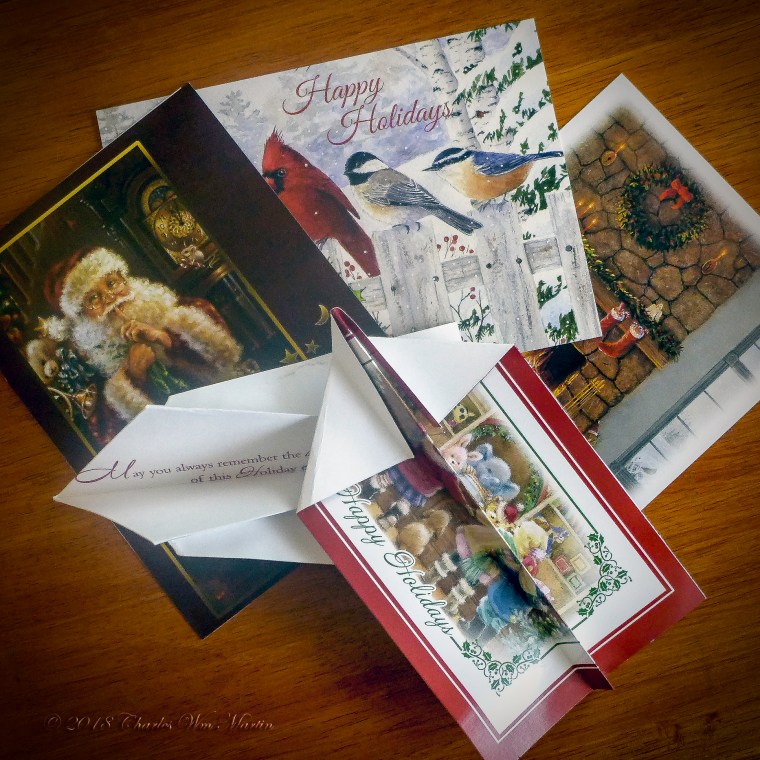
i should have been surprised but wasn’t when i saw the brown bag prophet folding christmas cards into paper airplanes for some reason i suspected that would be representative of his attitude towards such a commercial holiday what surprised me was that he was singing christmas carols as he folded so i was once again compelled to ask what he was doing and why the prophet said i’m making you’re loved cards to send over the wall of hate and ignorance at the border they’re for all souls women men parents and children who’ve been brutalized raped then demonized for political reasons by the soulless so i sat down with the prophet and began folding
“Poetry refreshes who we are and opens our eyes. It is a second sight on all that we’ve known and done. It penetrates into the invisible world we don’t speak of often and thus can bring us together . . . Poetry is the biggest surprise. It can be our double, echo, enhance our solitudes and tell us how the world is in its mysterious questioning ways. Poetry is a beautiful agent of radicalism in all ways.” Linda E. Chown
No Ballroom Dancing in the stark stare of wide-snow and beggars hiding under the Blue Bridge
in the stark slant of a pilgrim’s walk to the plenty of the poor silk slack people with their lips plunged in to the silence of their dark thoughts of the endless ending cursing and coming in this pen, sneering when that old woman there with a Red Hat
can not go in without her teeth she clinks and the pauper people point and peer stare
like pauper people are wont to do
where her Red Hat falls into a pea soup of fear just a happenstance
PART I includes Linda’s interview and two poems HERE.
LInda E. Chown
LINDA E. CHOWN grew up in Berkeley, Ca. in the days of action. Civil Rights arrests at Sheraton Palace and Auto Row. BA UC Berkeley Intellectual History; MA Creative Writing SFSU; PHd Comparative Literature University of Washington. Four books of poetry. Many poems published on line at Numero Cinq, Empty Mirror, The Bezine, Dura, Poet Head and others. Many articles on Oliver Sachs, Doris Lessing, Virginia Woolf, and many others. Twenty years in Spain with friends who lived through the worst of Franco. She was in Spain (Granada, Conil and Cádiz) during Franco’s rule, there the day of his death when people took to the streets in celebration. Interviewed nine major Spanish Women Novelists, including Ana María Matute and Carmen Laforet and Carmen Martín Gaite.
Poet and writer, I was once columnist and associate editor of a regional employment publication. I currently run this site, The Poet by Day, an information hub for poets and writers. I am the managing editor of The BeZine published by The Bardo Group Beguines (originally The Bardo Group), a virtual arts collective I founded. I am a weekly contributor to Beguine Again, a site showcasing spiritual writers. My work is featured in a variety of publications and on sites, including: Levure littéraure, Ramingo’s Porch, Vita Brevis Literature,Compass Rose, Connotation Press, The Bar None Group, Salamander Cove, Second Light, I Am Not a Silent Poet, Meta / Phor(e) /Play, and California Woman. My poetry was recently read byNorthern California actor Richard Lingua for Poetry Woodshed, Belfast Community Radio. I was featured in a lengthy interview on the Creative Nexus Radio Show where I was dubbed “Poetry Champion.”
“What if our religion was each other. If our practice was our life. If prayer, our words. What if the temple was the Earth. If forests were our church. If holy water–the rivers, lakes, and ocean. What if meditation was our relationships. If the teacher was life. If wisdom was self-knowledge. If love was the center of our being.” Ganga White, teacher and exponent of Yoga and founder of White Lotus, a Yoga center and retreat house in Santa Barbara, CA
“Every pair of eyes facing you has probably experienced something you could not endure.” Lucille Clifton
Thank you for sharing your love of words. Comments will appear after moderation.
“The word “palimpsest” helps to describe the trajectory of my poetry. I grew up as a pianist, practicing five hours a day—Haydn, Mozart, Bach. I played in recitals, long pieces of music I then memorized by heart. Music gave me a sense of both sequence and depth, the combined sense of which has never gone away.” Linda E. Chown
INTERVIEW
JAMIE: I know you’ve been writing poetry for most of your life. How has your writing evolved?
LINDA: Initially, I wrote poetry feeling and being rather locked in, in the confines of McCarthyism and terrible asthma. These poems were outcries, full of a sense of being an outsider and a non-success. This first stage of my poetry was full of words, big words sometimes, as I was reading a lot of Faulkner at a young age. And I think my poems were without much nominal direction.
A second stage took place as I went to SFSU and got a degree in Creative Writing. Then, I worked intimately with and heard truly great poets who encouraged me to write spare poems, to take off the loud pedals of my poetry piano. I wrote at this time very lean poetry, often of minute changes in the physical world, of bird calls, of colors blending. Sometimes, I also wrote at this time much longer narrative poems presenting moments of meeting, losing or finding. Then, there was a long time I lived and taught in Spain and the poetry stopped for some years, also when I went to get my Ph.D.
Now, in this third phase, I’m writing of the unforgettable, the personally traumatic, of artists in poems I call “intrications,” I find myself able and ready to write of traumas. I think my poetry has become freer and truer. Not now attempting to use strong fine words, but to allow language to match and measure the person I’ve become and am becoming. Also, now I write without immediate readers. That fact alone gives me a kind of freedom I didn’t have before when people “made suggestions.” My poems today draw upon the first period of Faulkneresque big word poems and the spare lean writing of my creative writing days. It’s as though I can now write of anything in a form which has more hybrid, mingling poetic terseness and prose expansiveness within a guiding imagery.
JAMIE: What were your original inspirations and who or what inspires you now?
First, I was affected by the Holocaust and its pictures of the opening of the Camps. Since I was mostly in bed at that time, I was dramatically changed by seeing this ghastly suffering objectified. Seeing the thinning bodies and expressionless faces. And the stripes in the stillness. Then Albert Camus’s The Stranger brought the world in my focus: I’ll never forget how Meursault wrote at the end, before being hung, about “resigning himself to the benign indifference of the universe.” I did not yet totally understand the kind of social repression Meurseult lived under, its deadening proprieties. I have always resisted imposed proprieties. I was enormously impressed by Camus as a writer and as a fighter, by his argument with Sartre over what was important.
Later at SFSU, I found Jack Gilbert’s writing to be enormously profound and compact. The great Samuel Johnson influenced me to mind myself, to take myself in hand. Linda Gregg’s poetry is beautifully simple and calls to me from everywhere. Her poems are like dense, language-smitten miracles.
Having worked at SFSU’s Poetry Center, I met Robert Creeley and was extremely impressed by his writing and the utopian spirit of Black Mountain College. Now the passionate simplicity of Dylan Thomas, as in “Fern Hill,” slides me into a happiness. I love Gerald Manley Hopkins and John Donne for their enormous reach and power of generalization, all the while growing in images. Poets who can draw together the terrible horror of an actual event and the beauty of a reflective mind captivate me.
Wisława Szymborska’s sense of mystery intrigues me and draws me to her. She said,” Poets, if they are genuine, must … keep repeating ‘I don’t know.’” Now I like a poetry which does not pretend to know but which charges ahead into mystery, into politics, love, parenting, learning with great curiosity and the power of imagery fresh. I don’t like poems of words, of mechanical play.
JAMIE: Why is poetry important?
LINDA: Poetry refreshes who we are and opens our eyes. It is a second sight on all that we’ve known and done. It penetrates into the invisible world we don’t speak of often and thus can bring us together. I heard many of the best poets reading in San Francisco and London. I was lucky enough to hear Voznesensky. Once, he said “metaphor is the motor of form.” Tomas Tranströmer, a genius of internal life and artistic form, wrote: “We look almost happy out in the sun, while we bleed to death from wounds we don’t know about.’ Poetry is the biggest surprise. It can be our double, echo, enhance our solitudes and tell us how the world is in its mysterious questioning ways. Poetry is a beautiful agent of radicalism in all ways.
POETRY SAMPLER
Part Payment
To Don
who came to see me reading poetry at the I-Thou Coffee House
and whom I visited later in a VA hospital
Compact, with wiry bones, you had the face
of a near criminal except for the sweet doe’s
eyes that would sparkle and lust.
You loved motorcycles and speed and solitude.
A man of incompleted skills, you were my
first lover in a dank drunken room
where I performed with such aplomb
you never knew it was a cherry
we so casually took together.
In the dark, I asked just what it meant
to have a “heart-on” and you laughed,
slapping my behind. Short-lived lovers,
when I had my fill, we drifted off
into others, without our moment of pain
or regret.
You grew enthusiasm as old ladies tend
their orchids: printing, Cuba, phoney ID’s
used to acquire tons of new TV sets to sell,
carrying big-time dope across the border
for small-time profits from other men.
These fruits were short-lived, too.
like brushing skin in the dark.
Somehow that does’s sense of honor in your eyes
kept you blinded to the way life juggles
fixed points and unambitious men.
Dead end street blues got you before the police
took both you and the haul
at some barren Texas border town.
Too clean to squeal on the commercial
zeals of your well-fed friends up north
one thing led to another as before—
handcuffs to a narrow cell in Leaven-
worth and bells and bars and guards
spare sunlight came about as often as Christmas
and the flowers of your hope withered
in unceasing and unfilled
promises of future parole.
You thoroughly marginal man,
to think our skins fit once
and I don’t know how you signed your name
or how you approached your mornings.
How was it, then, to get deathly sick in the glands
A Man Who Laughed in the Dark at Jackie Gleason Daddy, this one’s for you, whimsical father marooned in a sea of women. You appear by heart-light in the sheer pores of feeling. You appear lean and indelible stretched out at life like that from within. Your blue eyes raging truth at the sky. How we snickered like fools at you. At your cane’s tap-tap clattering. At your soundless chokings on food
in mid-afternoon deluxe restaurants.
Your eyes gasping about for help.
When Schatzki’s ring kidnapped your throat.
How you got fixed sometimes in a Victorian long-suffering, fixed to pretend, to smile tolerant in an eviscerating niceness. Long you. Long suffering. Badged in a dark-grey suit pitched against the sky here on a bare bridge in Grand Rapids. Inside feeling burbled strong, strong enough to burn the blue clamor of your eyes into concrete pillars.
To shatter the still airs and countermand finally
a long ingrown stillness: To rage that truth of yours at the sky— shedding passionate heart-light out
PART II CONTINUES TOMORROW WITH MORE OF LINDA’S POEMS. STAY TUNED …
LInda E. Chown
LINDA E. CHOWN grew up in Berkeley, Ca. in the days of action. Civil Rights arrests at Sheraton Palace and Auto Row. BA UC Berkeley Intellectual History; MA Creative Writing SFSU; PHd Comparative Literature University of Washington. Four books of poetry. Many poems published on line at Numero Cinq, Empty Mirror, The Bezine, Dura, Poet Head and others. Many articles on Oliver Sachs, Doris Lessing, Virginia Woolf, and many others. Twenty years in Spain with friends who lived through the worst of Franco. She was in Spain (Granada, Conil and Cádiz) during Franco’s rule, there the day of his death when people took to the streets in celebration. Interviewed nine major Spanish Women Novelists, including Ana María Matute and Carmen Laforet and Carmen Martín Gaite.
Poet and writer, I was once columnist and associate editor of a regional employment publication. I currently run this site, The Poet by Day, an information hub for poets and writers. I am the managing editor of The BeZine published by The Bardo Group Beguines (originally The Bardo Group), a virtual arts collective I founded. I am a weekly contributor to Beguine Again, a site showcasing spiritual writers. My work is featured in a variety of publications and on sites, including: Levure littéraure, Ramingo’s Porch, Vita Brevis Literature,Compass Rose, Connotation Press, The Bar None Group, Salamander Cove, Second Light, I Am Not a Silent Poet, Meta / Phor(e) /Play, and California Woman. My poetry was recently read byNorthern California actor Richard Lingua for Poetry Woodshed, Belfast Community Radio. I was featured in a lengthy interview on the Creative Nexus Radio Show where I was dubbed “Poetry Champion.”
“What if our religion was each other. If our practice was our life. If prayer, our words. What if the temple was the Earth. If forests were our church. If holy water–the rivers, lakes, and ocean. What if meditation was our relationships. If the teacher was life. If wisdom was self-knowledge. If love was the center of our being.” Ganga White, teacher and exponent of Yoga and founder of White Lotus, a Yoga center and retreat house in Santa Barbara, CA
“Every pair of eyes facing you has probably experienced something you could not endure.” Lucille Clifton
Thank you for sharing your love of words. Comments will appear after moderation.
The last Poet by Day, Wednesday Writing Prompt, to write about farms and farming (Conjuring Farmhouses), December 12, is covered quite broadly here with responses from Gary W. Bowers, Paul Brookes, Irma Do, Jen E. Goldie, Shiela Jacob, Frank McMahan, Mike Stone, and Anjum Wasim Dar. These will provoke some thought and much pleasure, spiked as they are with memoir, questions, humor, and insight. Enjoy!
Wednesday Writing Prompt will return on January 16, 2019.
three cow salute
walking to my high school meant walking past three cows
just as 61st avenue came to its
senses and straightened up
south of bethany home road
and what was then
a bobwire fence held back these bored cows
who stood and chewed or didn’t
and slowly turned
their
heads
in
unison
as
you
passed
they were the stolid
they were the stupefied
the stunned
the milkbaggy trio
the watchers of boys and girls
they needed a date with a frisky bull
or maybe they needed nothing
but daily relief from udder strain
grass
and me tweaking their monotony
into near monotony
couldn’t tell you
don’t know why those bored
and boring cows still lease space
in a pasture in my head
just know
the smell of horseshit does nothing for me
but
the smell of cowshit
has more than once filled
my stupid stolid eyes
with nostalgic tears
droplets of blood from the tail
of last October’s sacrificed horse,
ashes of the stillborn calves,
the shells of beans.
We are sprinkled with water,
wash our hands
in spring-water,
drink milk mixed with must.
Towards evening after shepherds
fed their flocks,
laurel-branches
are used as brooms
to clean their stables,
water sprinkled through them,
then stables adorned
with laurel-boughs.
Shepherds burn sulphur,
rosemary, fir-wood, and incense,
usher the smoke through the stables
and the flocks to purify them.
cakes, millet, milk,
and other food
is offered.
Hay and straw bonfires lit
cymbals and flutes play
as sheep and shepherds
are run three times
through the fire.
At an open air feast
we sit or lay
on turf benches
and sup a lot.
who plough
who prepare the earth
who plough with a wide furrow to bring water from the river
who plant seeds
who trace the first ploughing, reploughing as first did not work
who harrow
who dg
who weed
who reap
who carry the grain
who store the grain
who share the grain
who share their good fortune with us, the dead
FYI: Paul Brookes, a stalwart participant in The Poet by Day Wednesday Writing Prompt, is running an ongoing series on poets, Wombwell Rainbow Interviews. Connect with Paul if you’d like to be considered for an interview. Visit him, enjoy the interviews, get introduced to some poets who may be new to you, and learn a few things.
The blue sky smelled of manure. Even the allure of coffee and raw milk, homemade bread with rhubarb jam and omelets plucked from their mother just that morning couldn’t overcome the scent that distinctly said, “You’re on a working farm.”
The distinct sound of a tractor pulled up to the farmhouse door. The farmer offered us a hay ride around the farm and explained the difference between hay and straw, silo versus barn. The farmer named each machine and it’s purpose, but not the animals.
That night, I briefly wondered if the chicken that gave her life for our pot pie dinner also sacrificed her progeny for our breakfast. And if the rooster that would wake us in the morning, knew what happened to his family.
Plastic and foam trays
Deception and protection
Farmers eat the truth
Yes, that’s me on a tractor – picture courtesy of one of my sorority sisters who posted some “throwback pictures” of a reunion we had a bed and breakfast in the Pennsylvania countryside a few years after we graduated college. I don’t think the tractor was actually moving for the picture, but it was a first for this city girl!
Coincidentally, Jamie Dedes’ Wednesday Writing prompt requested: This week share poem/s out of your own nostalgia, experience, impressions, gratitude, concerns, or convictions about farms, farming, or farm policy. Despite now living in “farm country”, I still don’t know about farming although I do appreciate the numerous farmers markets in our area.
One thing I do know: I am very appreciative of the men and women who work on farms because I know I don’t have the constitution or inclination to grow things or kill things to eat. Maybe because living in cities, I was never exposed to that reality and thus my aversion to being close to the true source of what I/we eat. Food came in a package and didn’t have faces. Maybe if more people were aware of the reality of farming, there would be less food waste and a better understanding of the need to conserve and protect the environment/nature and animals as finite resources. But what do I know…I’m just a city girl…
When Dad barked
You hopped to it,
Let’s go! In the car!
He loved the country.
One day, he said,
I’m moving to some
Small town,
Somewhere,
Someday.
Got my love of trees,
Wide expanses
And the smell of grass
From him
I guess.
Let’s go pick strawberries.
Get some fresh picked apples,
Some corn, if it’s ready,
Right from the field.
He always took the
Side roads
On our way to
Where he wanted
To be.
I marvel,
Now,
Where he was
Coming from,
Some secret desire,
Some past life,
Taking him home….
A tithed farm had flourished
since Queen Victoria’s reign.
Then the council needed acres
of land, built a housing estate
in the 1930’s for families like
us who couldn’t afford to buy.
Small, airy houses with an inside
toilet and coal shed, no running
hot water but spacious gardens
front and back.We made our home
here in the ’50’s and I walked past
apple trees to my first school.
Elderly neighbours recalled
the redbrick farmhouse, told
how they were sent there
as children and exchanged
a few pence for pats of golden
butter and hay-warmed eggs.
They felt the land’s closeness
despite shops and post office
and bus routes to the city centre.
Road names were echoes.
Farmcote Swancote
Old Farm Glebe Farm
And during the War,they dug
over their long back gardens.
Potatoes and turnips grew again.
Carrots were shaken free of soil,
peeled, grated and added to cake
mix instead of rationed sugar.
Hefting water out of the river to
feed the newly-planted.Long years since I
had to do the same on Uncle’s farm:enamel
white bucket hung from a windlass,sweet
water drawn from deep. I could lift but half
a pailful then. Brothers, neighbour’s girls,
rudimentary washes after endless
play; earth closet in the yard, potatoes,
their skins slowly curling in the cauldron
on the hearth.Somewhere a clock. Bored one day,
I stood beside the well and bawled for help.
Dad came running and rough chastisement
was love’s affirmation.
Brief check before I
swooshed down the hay bales in the barn, guiltless
until the straws in my hair betrayed me.
The years have added muscle, as I bend
and dip and lift from the grateful water,
remembering my boyhood’s guilty smile.
Sonja Benskin Mesher, RCA paintings (This is her Facebook page, so you can connect with her there as well as view photographs of her colorful paintings.)
The dark cloud squats heavily on the horizon
Undecided whether to drift slowly
Over our dusty fields with its fat bladder
Full of drought quenching rains
Or to drift up the coast a ways
To quench the thirst of our enemy’s fields.
O Lord, I know it makes no difference
In the grand scheme of things,
But I can’t help the fact
It would make all the difference in the world
To me.
The dead don’t envy the living
Any more than the living envy the dead.
Who’s to say what’s the best state
For matter to be in
In the long run?
I would think the best,
For one above ground,
Is to make the most of what you are
And, for those below,
To make the least.
Farm and village
soul and spirit
a nation’s harvest giver,
agri-armor of defense ,
lived in one,never,
but loved one where
Grand Dad lived
near the Jhelum River
A place, Sarai Alamgir
with tilled fields
lush green yields,
lands fulfilling needs
wells run by cattle
in circles, bound
pulling out water
round and round
and we so freely….
running in the fields
touching the trees
shouting and singing
with the breeze
But
When land is threatened by famine ,when food is scarce
by waywardness and sins,
when fuel is short
and dry are the streams
the farmer with his horse
and plough
is back in the fields-
the backbone of the people
he is following his dreams
or so it seems-
going back in time
working coping hoping
amidst blasts and screams’
Farmer Farmer get some coal
if you want your crop
and reach your goal
Farmer farmer get your horse
for salvation of the loss
Farmer Farmer get your plough
Let us work and fulfill our vow’
کسان اور گاوؑں
روح رواں زندگی
زرہ بکتر زراع و دفاع
رہنا فارم پہ کبھی نا ھوا
دادا کے گھر سے پیار ھوا
سراےؑ عالم گیر جھلم دریا
گاوؑں تھا پیارا سا
لھلھاتے کھیت و باغ
ھر سو سبزا سبزا ھوا
کوؑیں سے جوتے بیل
کھیت میں پانی ڈالے
ڈبے پے ڈبا ٓاتا جاؑے
اور ھم کھلے میدان میں
بھاگتے دوڑتے ھنستے
درختوں کہ چھوتے رہتے
مگر جب
زمین خطرے میں پڑھنے لگے
قحت و قلت ھو جاےؑ زیادہ
ایندھن کم اور ندیاں خشک
پھر کساں اپنا سامان لیکر
کھیت میں واپس جاتا ھے
گھوڑا جوت کہ ہل چلاتا ھے
اپنی قوم کی فکر ھے لاحک
اپنے خواب ادھورے پا کر
محنت کرنے لگتا ھے
بم دھماکے اور چیخوں میں
بھایو ٓاو آوؑ کوؑلہ نیکالو
اپنا اپنا کھیت اپنا ہل بچاوؑ
صلیب کو دیکھو مسجد جاوؑ
اپنا وعدہ پورا، خوب نبھاوؑ
شاید نجات مل جاےؑ شاید بخشے جاوؑ
“Let us all strive for peace on Earth for all. Let us make a better world. Write to make peace prevail.” Anjum Wasim Dar, Pakistani poet, writer, artist, educator, and parent.
Thank you for sharing your love of words. Comments will appear after moderation.



 Poet and writer, I was once columnist and associate editor of a regional employment publication. I currently run this site, The Poet by Day, an information hub for poets and writers. I am the managing editor of The BeZine published by The Bardo Group Beguines (originally The Bardo Group), a virtual arts collective I founded. I am a weekly contributor to


 Jamie Dedes' THE POET BY DAY Webzine