Page 2 of 3

Back to the Future: Building Beloved Community, The Legacy of Martin Luther King, Jr.

img_2252

This is Unitarian Universalist Minister Rev. Ben Meyers’ sermon celebrating Martin Luther King, Jr.’s Birthday and delivered to our congregation on Sunday, January 15.
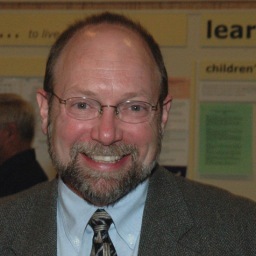
Rev. Ben Meyers of San Mateo, California

Yesterday, this congregation opened its heart and its doors to our neighbors and friends for the twenty-eighth consecutive year of celebrating this holiday, which commemorates the life and legacy of the Reverend Doctor Martin Luther King, Jr. We organize this event in conjunction with the Annual Essay, Poetry and Art Contest. This contest, which honors the Rev. Dr. King, Jr.’s legacy, is sponsored each year by the North Central Neighborhood Association, of which we are a part and which has been a strong community alliiance for thirty-four years.

The contest is an Institution within our city and county. It is the foundational piece of a curriculum for many teachers in the San Mateo school district who use this contest as a platform (and launching pad) for teaching about the legacy of Rev. King and the history of the civil rights movement. It is a tradition that instills a sense of pride in us. It was initiated two years before King’s birthday became a national holiday in this country.
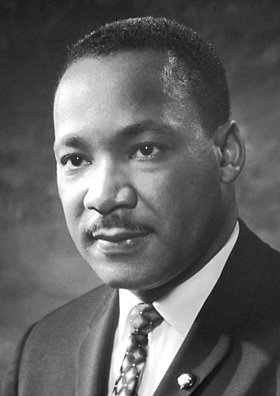
Rev. Dr. Martin Luther King, Jr. (1929-1928)

In discussing the many elements of today’s service, our Worship Leader joked, saying that with all its many activities and high level of participation, this service would resemble “A Happening” harkening back to the 60s and 70s…Now for those of you who weren’t around in the 60s or maybe don’t remember them…”A Happening” was similar to what we now call “Flash Mobs”…and for those of you who don’t know what a flash mob is…its like “A Happening” from the 60’s or 70’s. Sorta like…Woodstock. 😉

A happening, in other words, was a significant event that was not precisely planned but that organically emerged from the moment, usually by necessity or simply out of the spirit of the moment. We are beginning to see the spirit of “Happenings” repeating themselves with the coming ‘peaceful but resistant’ transfer of power from the ending of the Obama administration to the start of the new President’s administration.

In many ways, we, as a nation, are heading ‘back to the future’, repeating ourselves. We are, it would seem to me, to be going “Back to the future”, as in that movie from the 80s. We are going back to the future not only because we sense or fear that our country is poised to take a few steps backwards in the realm of human dignity and civil rights, but also because we have a strong sense that in order to counter these backward steps, we would do well to return to the roots of our struggle for human rights in this country. This will restore our convictions as a foundation in the battle for the future of our country — a battle for its heart and soul.
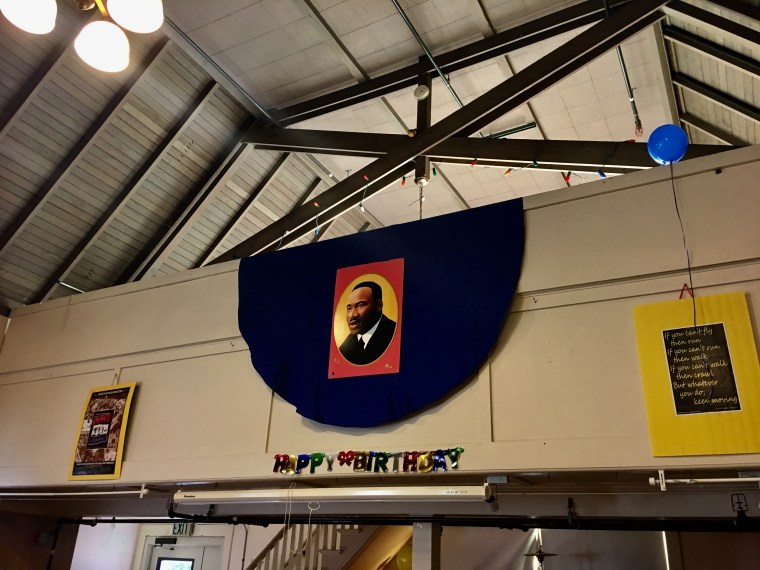
img_2228

The theme for this year’s MLK Poetry, Essay and Art contest was, “Beloved Community: What does it mean to you?” I was pleased that the committee adopted this topic. It was my hope that it would entice and inspire our students to – not only focus on this phrase “Beloved Community” – the centerpiece in Rev. King’s work- but to bridge the divide in this nation caused by the triple threats of poverty, racism, and militarism. I also hope they will identify with the roots of this ideal. I hope that they learn this is not something that King alone created, but that it was an idea that preceded him and one that has a rich history of inspiring many justice-makers in this county.
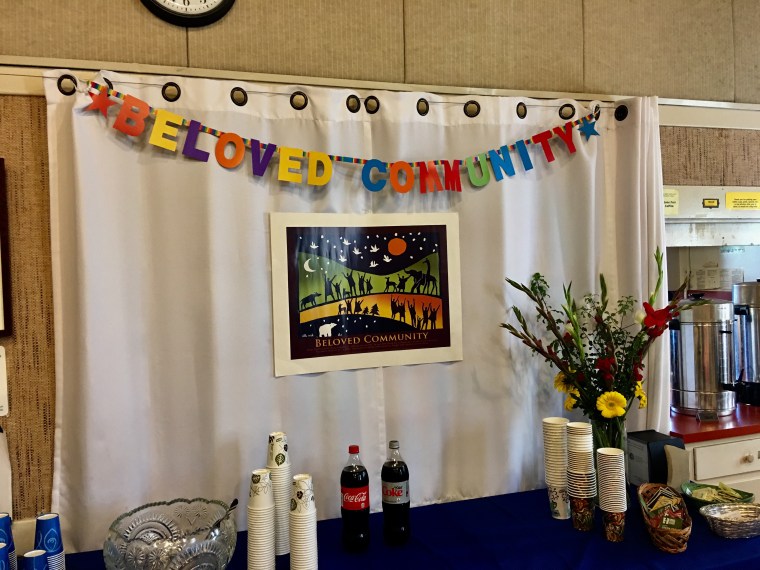
img_2237

And so I decided that I would base our annual MLK Sunday service on this same theme as we honor a man who was more than just an inspiration to us in this country and the leader of the Great Civil Rights struggle of the 20th century, but one who continues to be the source and hope for the Dream of American Justice and the building of Beloved Community in the 21st Century.

I think it is also important that we look back to know where we have come from, to see  that what we face now is not entirely new terrain, and to understand that as we plow ahead into the struggle to create more Beloved Community in the face of current disharmony, hatred, and divisiveness.
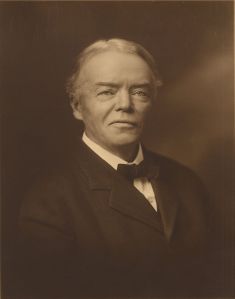
Josiah Royce (1855-1916)

The phrase “Beloved Community” was coined in the early 20th Century by the Unitarian Theologian and Philosopher, Josiah Royce, who was also one of the founders of the Fellowship of Reconciliation, the largest, oldest inter/multi-faith peace and justice organizations in the United States. It was established in 1915. [worth looking up: forusa.org]. He was a teacher and mentor to some of the most progressive minds of his time, like T.S. Eliot, George Santanyana and W.E.B. DuBois.

Josiah Royce’s writing influenced many prominent Social Reformers of his time, including the young Martin Luther King, Jr. Royce wrote:

“Since the office [or purpose] of religion is to aim towards the creation on earth of the Beloved Community [ …] the future task of religion is the task of inventing and applying the arts which will win all over to unity, and which shall overcome their original hatefulness by gracious love, not of mere individuality, but of communities.” The result, said Royce, “is the creation of heaven on earth, a form of [beloved] community we work to create marked by unity and gracious love.”

Martin Luther King, Jr., a member of the same Fellowship of Reconciliation, where he learned the teachings of Josiah Royce, brought the phrase into more common use, comparing the creation of Beloved Community to redemption and reconciliation among all people. Dr. King saw it as a source of powerful change from the disharmony and disparity of HIS day to the harmony and equality he sought to create. You can hear these ideals echoed in King’s words when he said:

“It is the spirit of Beloved Community and this type of [agape] love that can transform opponents into friends. It is this love which will bring about miracles in the hearts of people…The goal of creating a beloved community for all people, will require a qualitative change in our souls  as well as a quantitative change in our lives.” ~ Dr. Martin Luther King Jr., 1957

In his struggle to bring greater justice and equality into the world, King was not simply targeting legislation for desegregation, he was after a transformation in the hearts of all people so that we might learn to live and love together as one people, as a Beloved Community. An all encompassing Beloved Community was Martin Luther King, Jr.’s end goal.

While the specific point of struggle began around racism in America, he also spoke out and marched and protested against war and poverty, fighting against all injustice and oppression. He was working to create a Beloved Community based on equality and justice for all.

It is now our turn to continue his work. Our responsiblity goes beyond the historical perspective of instilling the legacy and the message of building beloved community among our young people through activities like our Annual Essay, Poetry and Art contest. His work must be OUR own daily work with and within the greater community. We must continue doing what we have done for so long with renewed vigor and purpose and the intention of bringing it into a world that is threateningly poised to dismantle the very gains that we cherish, which we cannot take for granted.

img_6595Unless we rise in body and spirit and resist, unless we insist on the persistence of the values we hold dear, which are really the cornerstone of our faith and our nation, we will lose them. Now more than ever, we are called to heed the words of the Rev. Dr. King, who, amid the challenges of his time and against the voices of hatred and intolerance that are with us still, said:

“This is where we are. Where do we go from here? First, we must massively assert our dignity and worth. We must stand up amidst a system that still oppresses, and develop an unassailable and majestic sense of values…”

What is needed is a recognition that power without love is reckless and abusive and that love without power is sentimental and anemic. Power at its best is love implementing the demands of justice. Justice at its best is power correcting everything that stands against love.

Let us stand on the side of love…Amen.

– Rev. Benjamin Walker Meyers

Benediction: Words of Martin Luther King, Jr., adapted, Rev. Ben Meyers
A time like this demands great leaders;
Leaders whom the lust of office does not kill;
Leaders whom the spoils of life cannot buy;
Leaders who possess opinions and a will;
Leaders who have honor;
Leaders who will not lie!
A time like this demands people who can stand before a demagogue (and damn…treacherous flatteries) without winking!
Brave and courageous people, crowned by the sun, who live above the fog, in public duty and private thinking) and who will seek justice, love kindness and walk humbly with their Gods…
Let us be those people!

HEADS-UP NORTH CENTRAL SAN MATEO, CALIFORNIA ~ Celebrating “Beloved Community” for Martin Luther King, Jr.’s Birthday

Rev. Dr. Martin Luther King, Jr. (1929-1928)

In the Spirit of “Beloved Community”

by

Rev. Ben Meyers

Consistent with long tradition (this is our 28th year), the Unitarian Universalists of San Mateo (UUSM) will host a celebration in honor of Dr. Martin Luther King, Jr. and his dream. We do so in concert with our neighbors in North Central San Mateo and invite you to visit us on Saturday, January 14 from 3 pm – 5pm after the annual essay, poetry and art contest awards at the King Community Center, 330 W. 20th Avenue. We are located at 300 E. Santa Inez Avenue, San Mateo, CA 650 342-5946 Join us for a buffet, music and activities for all ages. Together the community of North Central San Mateo will play his dream forward.

“I have a dream that one day every valley shall be exalted, and every hill and mountain shall be made low, the rough places will be made plain, and the crooked places will be made straight, and the glory of the Lord shall be revealed and all flesh shall see it together.” Martin Luther King, Jr.

Dr. King’s dream, shared with the world in one of its most widely known and revered speeches, gives meaning to our celebrations and our efforts to honor Dr. King and keep his memory and ideals alive. The human community still struggles for equity and respect for everyone. We still struggle for peace in the rough and crooked places. We still struggle to heal and to make his dream – one that so many of us share – a reality.

Martin Luther King, Jr. (1929-1968) was a Baptist minister and social activist whose role was pivotal in the American civil rights movement from the mid-1950s through his death in 1968. Through nonviolent civil disobedience, Dr. King promoted equity for African-Americans and for all who were marginalized and victimized.

The photograph of Dr. King is in the public domain.

HEADS-UP SF PENINSULA: INAUGURATION DAY PROTEST ALONG THE EL CAMINO FROM SAN FRANCISCO TO SAN JOSE

58767c3c06230622f04e715c65fab690Rev. Ben Meyers, minister of the Unitarian Universalists of San Mateo (UUSM), announced today that UUSM members will stand in solidarity for peace, sustainability and social justice on Inauguration Day, January 20th. He invited the greater Peninsula community to join in a peaceful protest from noon – 1 p.m. along the El Camino Real (ECR) from San Francisco to San Jose. “If you too are concerned about the rhetoric and proposed policies of the incoming administration,” Rev. Meyers said, “you are encouraged to come out and show that as a community we will stand our ground and fight for tolerance, decency, economic justice and democracy in our country.”

Protesters are invited to come individually or in groups and to carry their organization’s banner or signs indicating their primary concerns. “Be direct,” counsels Rev. Meyers,
“but PLEASE, no hateful or violent language. Don’t block driveways, doorways, street crossings or traffic. We will gather at noon and disperse peacefully and promptly at 1 p.m.” Further details at ECR Protest.  There’s a Group page set up so that you can meet-up with others near you. Ask to join or message Jamie’s personal FB G J Dedes.

A THEODICY OF LOVE

UU San Mateo
UU San Mateo

Editorial Note: In discussion with other members of the congregation to which I belong, I learned that folks would like our minister’s sermons posted to the new church website, which I am helping to build and which may take a couple of months. (Learning curve!) I’m posting Ben’s sermons here for my fellow congregants. For other readers who might be interested or curious, I’ve put Ben’s bio and a short explanation of Unitarian Universalism below the sermon. J.D.

Unitarian Universalism: A Theodicy of Love*, by the Rev. Ben Meyers, Unitarian Universalists of San Mateo, Sermon 12/11/16

A THEODICY OF LOVE

by

Rev. Benjamin Walker Meyers

“A college student once told me how he asked questions about God in his childhood church and the leaders did not know how to answer. He decided that God must not be real.

Rev. Ben Meyers of San Mateo, California

A woman told me that all she knew about God was the passages that her mother would quote from Leviticus and Romans—passages meant to shame her for being a lesbian.

My neighbors’ parents survived years in a concentration camp during the Holocaust. He could never fully answer:  How could there be a God who would allow this to happen to my family and millions of others?

I feel confident that these or similar wounds are real for many of us in this room and I would never encourage someone to ignore such wounds.” (SM*)”

“Western theologians have a concept for how we human beings make sense of the evil which we experience and which exists in the world. The word is THEODICY. Theodicy asks and tries to answer eternal questions as: “Why does evil exist and what is its origin? How can a good Ultimate/God/Source allow for needless and undeserved suffering and pain? How shall WE face the real complexities of life, which include destructive emotions and impulses, wrong and harmful choices, and the inevitable reality of sickness and death? The rabbi Harold Kushner famously addressed this in the question that is also the title of his book: ‘Why Bad Things Happen To Good People.’

“Consider this famous and challenging koan from the Zen Buddhist tradition:

Once, when the great teacher Dongshan was washing his bowls with his pupils by the river, two large crows contended over a squirming frog for their meal. Another monk nearby asked, rhetorically, “Why does it come to this?” Dongshan said, “It is only for YOUR benefit, Honored One.”

“‘Dongshan’s answer is shocking. Pain and suffering is “for your benefit, Honored One.’ The ancient Chinese is vague enough that his response is often translated to mean: ‘It is because of you, Honored One!’

“Wait…that doesn’t seem fair! How could it be because of ME when it’s been going on for eons and ages before I even got here?

“Of course, that “Honored One” doesn’t refer just to the individuated monk, although it includes him, and you, and me, and all of us.

“It refers to the Honored ONENESS of all who partake in the gift of life. It refers to the completeness of being…you know…the Great Big Idea/Thing/Verb/Word that has been going on for eons. It pertains to the notion of God and this idea of evil, what we think about it…and how we respond.” (CB*)

Before I go further, let me just make it clear, that, whether we have a direct understanding of God or not, we all have the right to a religious life, to developing our spiritual growth.  That is why I am a Unitarian Universalist minister, because I know that religious life is bigger than any one scripture, any one culture and certainly bigger than any one word.

“So, consider this: Almost all of us, even if we DON’T believe in G*D, have a mental image of what that word means. It might be a mysterious figure in heaven keeping track of good and bad behavior (but, I’m wagering, probably not…)

It might be an image from scripture, or art: the caring shepherd, or the voice in a whirlwind. It might be a feeling, based upon a direct experience: the lifting of burdens, the gentle touch of love, or the pricking of conscience.

Our word/picture/idea might be quite abstract: Great Spirit, Higher Power, Holy Source of All Being, Nature, Science, Love.

We may believe our image of God exists, and so we are theists, or doesn’t exist, and so we are atheists, OR…is not possible to know, and so we are agnostics…but, we ALL have a picture/idea/words for God in our minds.

For some, the description of God is beyond words. For instance, Orthodox Jews, do not use the word G-o-d. When speaking aloud, they use a description like, Adonai, ‘the holy one,’ and when writing, they write G _ d. Or, YHWH (yod-hay-vod-hay), which is sometimes referred to as Yah-Weh, although, written without vowels, it remains a word that signifies more than a mere word can signify—and that we can never completely understand the nature of…it is, in essence, a sign of humility before the great “I AM.”

Then, why use the word “God” at all, (you might be asking) if it is such a slippery thing as to need warnings and explanations?

Well…I believe it is because without words, we can’t even think, much less communicate. An example of this phenomenon is found in an isolated culture of hunter-gathers in New Zealand that uses the same word for the colors BLUE and GREEN. Because of this, they have great difficulty when presented with the task of sorting blue and green objects by color.

They are born with eyes like ours, capable of seeing blue and green as different colors. But without words for the different colors, they don’t really “see” them. It is the same for us. As difficult as this word G-_-D is, if we don’t use it (or an understandable substitute), we’ll not be able to think about a part of our lives that most people intuit as existing.

If the word God is spoiled beyond redemption for us, we can substitute other words, such as Goddess, Higher Power, Spirit of Life, Great Spirit, the Divine, Holy One, Whom-It-May-Concern, or ‘whatever’, even. Some people use the word Goddess in conversation, as in: “We’ll have to leave that up to the Goddess.” This is not simply a matter of cherishing the feminine connotations of the word, which are often lacking in our “god” words; it is also a way of alerting listeners to the possibility that theological creativity is allowed in our conversations.

It is so very important to remember that our images of God, while useful and necessary, are at best only partial truths and will lead us astray and divided if taken too literally or set too concretely in our minds.

And again, the same is true if the word/concept/image is too vague.

We must each find the definitions, images, and poetry that make sense to us if we are to participate in the critical issues of our times. So we must remain open to the many ways G*D is thought about by many religious people in the world…and they are many:

  • Including pagan ideas of divinity, in which “God” is the sum total of everything, material and immaterial, in our universe, so EVERYTHING is holy, even things we might think are not good, such as the lightning that strikes our favorite tree…
  • Or, the notion of a Higher Power used in 12-step programs such as Alcoholics Anonymous, in an attempt to bring spirituality into a meaningful place in people’s recoveries, without entangling people in theological arguments…
  • Or, the God present in Liberation Theology, which desires that each person have the maximum possible opportunity for a fully human life, beyond the oppression of poverty and tyranny. This is a God who sides with the poor and oppressed wherever they are found and nudges people toward acting for justice and making peace and equity real in the lives of all.
  • Or, the Humanist belief that the highest and the best we can know in this world is HUMANITY, with our grand ideals, marvelous minds, and great creative potential. Humanists say that divinity is within the human being and nowhere else. Most humanists don’t really like to use the word GOD, but they still have a theology, which is a theory or a belief about the highest and best, of which we are a part. (CR*)

And, then there is a movement in the liberal religious circles of Process Theology, which considers how God is a force that is ever-present, that evolves, grows, mourns and even suffers losses. It teaches that God can honor all that we know to be true…about modern science, about protecting the earth, and the right to equality for all people—no matter their orientation, culture, beliefs or practices. It is like the Unfinished God: not a force that controls the world like a puppet on a string, but rather a God who is and has the power to call us toward Love, in partnership with God—even as part of God. It is the notion that God only has our hands to do good in the world.

That is it. Without our partnership, without our agreement, God is powerless. If we do not respond to the call and walk in the ways of Love, God is waiting and calling and waiting and calling.

These are just some of the images and understandings of divinity which can be found within Unitarian Universalism. In our poetry and songs and in what we consider as scripture: Each representing a wide theology beyond mere acceptance. It helps with our desire to learn how we can all get along, both within and beyond these walls.

How can we talk to each other when the meanings behind our words seem so different? We do that by being always mindfully challenged and aware that our images and understandings are at best approximations of an infinite truth that simply cannot be captured by finite beings.

When we remember that fact, and strive to live and ENGAGE in it, beyond comfortable complacency, apathy, or worse, a disrespect of other’s beliefs, OUR faith and our regard for persons with visions and words that differ from ours is NOT a grudging tolerance, but an open-hearted curiosity about yet another way of understanding the God, the universe, and everything.

I believe this is what the Reverend Dr. Martin Luther King, Jr. spoke of when he said:It is not where we stand in moments of comfort and convenience, but where we stand at times of challenge and controversy that marks the ultimate measure of a person and a people.”

These words represent and inspire me to take risks for the sake of promoting and extending this partnership with ‘all Gods who are love.’

In closing you may be wondering, ‘What do I mean by God?’OK, That’s fair. For me, God is Love—all acts of Love are the stuff of God and all acts of bigotry and violence have nothing to do with God. I believe in striving to live in service to all Gods who are love—and this is a powerful God for it is the power of many lives, working together to bring more love and life and justice into the world. It empowers to me to believe in a power at work in the universe. It is the power of our capacity to return to JOY, once our sorrow and grief have been honored, in times of loss;It is the power of our audacity to live with hope, again and again, even within the legacy of despair and hopelessness that has been with us always in the shape of injustice and bondage of all kinds.

My God is the power of our courage to stand in resistance to hate. For my friends, in the days in which we live, Resistance is what love looks like in the presence of hate.This power, I believe, works through human hands, but it was not made by human hands—we are a part of the universe—we are not its most important part, but an important part all the same. This power is creative, sustaining, and transforming and we can trust this power with our lives. It will sustain us whenever we take a stand on the side of love;
whenever we take a stand for peace and justice; whenever we take a risk for its sake. Trust in that power. We are, together, held by this power. And it will not let us go, as long as we hold on to one another, O Honored Ones. Amen. —

*Acknowledgements to the Rev. Susan .Maginn, the Rev. Chris Bell and the Rev. Christine Robinson for inspiration and some content, where noted

13095886_10153410525720997_4513143742898577448_nREV. BEN MEYERS was born into a family with a Catholic father and a Baptist mother. He grew up in the Disciples of Christ Church, but hung out with friends from other progressive religions. During his childhood and youth, he was engaged in exploring various world religions and active in social movements during the 1980’s. He later discovered he was a UU while attending the UU Fellowship in Chico. Rev. Ben was ordained in 1995. He has a: BMusic from California State Univ., Sacramento, 1990 and a MDiv, Starr King School for the Ministry, 1994,  He is the devoted and much appreciated minister of UUSM, where he provides inspiration, spiritual guidance and also leadership in grassroots social justice initiatives and interfaith collaborations. Rev. Ben is a gifted singer and musician.

colorsplasheffectUNITARIAN UNIVERSALISM (UU) is a noncreedal liberal religion characterized by a “free and responsible search for truth and meaning.”  UUs are unified by their shared search for spiritual growth. The roots of UU are in liberal Christianity, specifically Unitarianism and Universalism, traditions that express a deep regard for intellectual freedom and inclusive love (respect) for the diverse ways in which people seek to understand life and spirit. UU Members seek inspiration and derive insight from all major world religions. The beliefs of individual Unitarian Universalists range widely, including atheism, agnosticism, pantheism, deism, Judaism, Islam, Christianity (including Eastern and Roman Catholicism), neopaganism, Hinduism, Buddhism, Daoism, Humanism, and many more.

© sermon and personal photographs, Ben Meyers, 2016, please feel free to share the sermon with attribution to Ben and link to the Unitarian Universalists of San Mateo.;