Page 3 of 5

CELEBRATING AMERICAN SHE-POETS (12): Sharon Frye, Last Chance for Rain

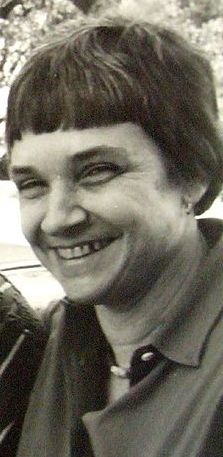
SharonSharon Gariepy Frye – a.k.a. Sharon Frye -is a photographer as well as a poet with one chapbook published, Last Chance for Rain (White Knights Press, 2014) and a new collection, Red Dashboard (Elizabeth Dillon, 51T8-CyhKSL._SX322_BO1,204,203,200_2016) to be published later this year, the exact date to be announced.

Last Chance for Rain offers us twenty poems. Each presents a compassionate look at the complex architecture of everyday lives – occasionally her own – with all their bays and battlements, their facades and their niches. Understanding comes with small intimate descriptions like this one of an elderly gentleman:

“She noticed his wrist, a small pear stone,
silver hair planted, bloomed over stone.”

excerpt from the Last Chance for Rain, the poem that lends its name to the book

When I first encountered Sharon’s poetry, I was impressed with the detail, the sense of a spiritual journey, and with her compassionate imagination, which is both her strength and her distinction. No surprise that Sharon was nominated for the Pushcart Prize for Poetry and most recently made the shortlist for the 2016 Blackwater International Poetry Festival.

JAMIE: Congratulations on making the Blackwater shortlist. It was so pleasant to see the announcement go up. I think it’s not the only award you’ve received. Bravo!

It seems to me your interests are as eclectic as most of us who read and/or are featured here: art and photography, music and dance, literature and poetry. I think I’m not alone in enjoying your nature photography. With the wealth of your interests, how and why did you come to focus on poetry?

SHARON: Thanks for the warm regards on making the Blackwater shortlist. I was a little surprised myself.

From an early age poetry dazzled me. I remember my first anthology of poetry was called Reflections on a Gift of Watemelon Pickle. I was mesmerized by the play and dance of words across the pages. I have been hooked ever since.

I began writing more as my children moved into adulthood, one by one. Now that I have an empty nest, I have more time to follow the muse. I have to say I am pleasantly surprised where it has taken me, from reading to FDNY firefighters, to Ireland and Sacramento…to various stops along Route 66.

JAMIE: This is a question people think is reserved for women, but I ask it of everyone I interview: How do you do it? How do produce a fair amount of poetry, well-crafted and well-considered, and juggle all your interests, your job with the U.S. Postal Service and your family responsibilities?

SHARON: It’s not easy, all this juggling… and I get frustrated. I try to be a good daughter to my aging parents, a good parent and an active grandmother. I also work full time as a rural mail carrier and am an active member of a local writing club. I think the experience and interaction with what has become my focus is also what inspires and serves as a catalyst to express – or record – some of my feelings and observations that result from these experiences.

I once wrote about the Asian man who was giving me a pedicure. I felt my heart expand as I considered what his life and history might have been. It’s a good practice, trying to perceive the worldview of those you come into contact with throughout the day. It gives the gift of empathy, which then always circles back to gratitude, always.

JAMIE: Do you find inspiration in the landscapes of Wyoming, where you come from, and Oklahoma, where you live now?

Jamie, you are a keen observer. I do love the landscape of my birthplace Wyoming and now those in my home of Oklahoma. There is just as much beauty in an Oklahoma sunset as there is on a snow-capped range nestled in the pines. I have learned to love Oklahoma’s red-dirt roads and often meander on a Sunday afternoon, taking pictures of abandoned farms and rusted Studebakers, forgotten in fields.

JAMIE: If I’m not mistaken, you have a strong affinity with what is probably your ancestral country, Ireland. You come honestly then by your love of and gift for poetry. Who is your favorite Irish poet and why?

SHARON: You are right, my maternal grandmother’s family hailed from Kilkenny. Of the Irish poets, I love Seamus Heaney, the earthiness of his words. You spoke of landscape: Heaney seemed to meld the inner landscape with the outer world in a mystical way. I also like some of Yeat’s work…The Stolen Child and A Prayer for my Daughter.

JAMIE: Tell us about Writing Knights and Equador Das Coisas.

SHARON: Writing Knights Press is an independent publishing company in Ohio. They publish many aspiring poets’s chapbooks, as they did my book, Last Chance for Rain. I was pleased that the publisher, Azriel Johnson, nominated one of my poems, Dollar Store Princess for a Pushcart Prize in 2015.

O Equador Das Coisas (the equator of things!) is a lovely journal of art and literature from Brazil. Editors Carol Piva and Germano Xavier have invited me to be a regular contributing poet, with my own page in the journal. Carol translates my poems from English to Portuguese for this endeavor… Oh, sometimes the world is so wonderfully small, you know? 😊

Poverty Line

It started with my back tooth,
much cheaper to extract wisdom.
Now tongue swirls in dark abyss
around black cavity, nothingness.

I feel unbalanced as I walk
one molar gone, orthodontic
shift in class, the have­-not caste,
one millstone followed by another.

How much grinding bore holes
in enamel, uprooting the bed?
Babies sucked from natal stream
drained the marrow, shriveled the bone.

Frayed blue collar underscores
my lopsided, one­-less­-tooth smile
while white starched collars
curl below rows of faultless teeth.

—Sharon Frye

Here is a slide show of Sharon’s photography ~

This slideshow requires JavaScript.

You’ll find some of Sharon’s poems in past issues of The BeZine. (Just type her name into the search feature.) We are sharing some of Sharon’s poems in the April issue – due out on the 15th – which celebrates poetry month.

© 2016, poem, words and photographs, Sharon Frye, All rights reserved

CELEBRATING AMERICAN SHE-POETS (11): Adrienne Rich, wrestling for the soul of our country

Adrienne Rich (1929-2012)
Audre Lorde, Meridel Le Sueur, Adrienne Rich

Madeline Ostrander wrote this article for YES! Magazine, “a national, nonprofit media organization that fuses powerful ideas with practical actions.” Madeline was YES! Magazine‘s senior editor at the time of this writing. She is now an independent journalist and contributing editor to Yes! Magazine.

“I know you are reading this poem listening for something, torn between bitterness and hope…”

I was 19 when I first read Adrienne Rich and these words from “An Atlas of the Difficult World,” which seemed to tear down the barriers between the poem and me, and let me in.

Like Rich, I grew up at a distance from true poverty: “reader reading under a summer tree in the landscape of the rural working poor,” she writes. But I knew how fractured and unstable the world around me was becoming. I was part of the first generation to grow up knowing about climate change, brought to world attention by James Hansen and to my school classroom by a forward-thinking science teacher. I was in high school when the Soviet Union collapsed; as a child, I had nightmares about nuclear war. Rich’s poetry gave me hope that stories could change things—could force us to confront and heal what is painful and give us hope, strength, and compassion.

Rich belonged to an activist strain of poetry; she believed words needed to be reclaimed by the people who have been left out of the history books.

When Rich died a profound loss at a time when we urgently need more storytelling that reaches across our fragmented, politically divided culture. “Atlas” is still one of the most searing and honest descriptions I’ve read about how broken and divisive the modern world is. It’s a 26-page poem that sweeps across the landscapes and histories of North America and elevates people and scenes that are ordinary, neglected, and counted out—farmworkers made sick from pesticides, a woman beaten by her partner, the wasting of our ecological landscapes, weedy fields of Jerusalem artichoke “that fed the hobos, could feed us all.”

Here is a map of our country …
This is the haunted river flowing from brow to groin
we dare not taste its water
This is the desert where missiles are planted like corms …
This is the cemetery of the poor …
This is the sea-town of myth and story when the fishing fleets
went bankrupt … processing frozen fish sticks hourly wages and no shares

Occupy didn’t exist then, of course, but Rich was crafting poetry for the 99 percent: “a poetry older / than hatred. Poetry / in the workhouse, laying of the rails.”

Rich’s long, image-dense lines could seem of out-of-step with a world obsessed with rapid-fire information, Twitter, and text messages. But Rich knew that the marginalization of poets is always a detriment to civil society. In the early 1980s, she traveled to Nicaragua, where she felt the culture “manifested a belief in art, not as commodity, not as luxury, not as suspect activity, but … one necessity for the rebuilding of a scarred, impoverished, and still-bleeding country.”

Rich belonged to an activist strain of poetry; she believed words needed to be reclaimed by the people who have been disempowered and left out of the history books. Her own life is a testament to the power of story in creating cultural change. Rich started college in the late 1940s, when she says even Elizabeth Barrett Browning’s writing was radical for a university campus and certainly no one spoke of feminist ideas in the classroom.

Early in her career, Rich had to scrape together a new kind of language. She used poetry to utter ideas that were almost unspeakable at the time: her poetry pulled back the veil around women’s sexuality and lesbian love and exposed the power and politics that enable war and violence: “I felt driven—for my own sanity—to bring together in my poems the political world ‘out there’—the world of children dynamited or napalmed, of the urban ghetto and militaristic violence—and the supposedly private, lyrical world of male/female relationships,” she said. She published Snapshots of a Daughter in Law, which she calls her first book to overtly tackle sexual politics, in 1963. Decades later, her poetry is still radical, but it’s also a mainstay in college literature classrooms across the country. Her poetry has been a beacon to feminists and social justice activists for several generations, and is included a digital poetry anthology pieced together by organizers of Occupy Wall Street.

Rich never wanted her poetry to be a medium primarily for academe. And she never believed words alone could solve the abuses and inequalities that she wrote about. But reclaiming, decolonizing, and taking charge of language was for Rich the first step in become personally whole and politically powerful. “Because when poetry lays its hand on our shoulder, we can be to an almost physical degree touched and moved. The imagination’s roads open again, giving the lie to that slammed and bolted door, that razor-wired fence, that brute dictum,” she said in a 2006 speech at the National Book Awards, where she received a Medal for Distinguished Contribution to American Letters.

We owe Rich a debt for unlocking the doors that barred the voices of women from art, academe, and the halls of influence for so long. And though she insisted on marking each poem with a date—so that it would stand in the historical context in which she wrote it—everything about her poetry still speaks with urgency and timeliness. Her work illuminates the dark, messy, often painful territory of sex, race, violence, and poverty in America but holds all of us responsible for taking power, ending suffering, and breaking apart social inequalities. In “Atlas,” she writes, “A patriot is one who wrestles for the / soul of her country / as she wrestles for the soul of her own being.” This is what Rich did her whole life, and her poetry enjoins the rest of us to do the same.

– Madeline Ostrander

© feature is courtesy of Yes! magazine under CC license ; photographs are courtesy of Kay Kendall under CC BY 2.0 and were taken in 1980 at a writing conference in Austin, Texas.

CELEBRATING AMERICAN SHE-POET (9): ANN EMERSON, Far From Eyes Broken Like Windows

San Francisco Bay Area poet, Ann Emerson, was one of the first two people I invited to join in the collaboration we now call The BeZine. It was originally named Into the Bardo, in reference to the Buddhist state of existence between death and rebirth; so named because of life-compromising illnesses.

Ann was a gifted poet, but she didn’t find that out until after she was diagnosed with a rare bone cancer. She discovered her voice in a hospital poetry class. Ultimately she studied with Ellen Bass in Santa Cruz, California. 

img_0961

After diagnosis, Ann survived for an almost consistently tortured six years. Physical pain. Trauma. Fear. Chemo. Poverty. She had signs posted around her house that said, “Live!”

While Ann spent a lot of time in the hospital, her home was a cabin in the Redwoods of La Honda, a stone’s throw from the log cabin where Ken Kesey and the Merry Pranksters so famously partied in 1964. She lived with her cats. Originally there were six and they were all blind. No one would take them in, so Ann did.

l.NbSuLbZWIcnyodRP

Ann was just a thesis away from her Ph.D. A few weeks before she died, four of Ann’s poems were published in American Poetry Review

416250017_370-jpg

Two days before Ann died, she married the gentleman who was her sweetheart of thirty years. Ann’s wedding was held in her hospital room. Those of us in the attendance were required by the hospital to wear yellow gowns over our street clothes. The bride wore yellow too. The flowers and the ring were from the hospital gift shop. The founder and leader of our support group for people with catastrophic illness, a Buddhist chaplin, performed the ceremony. One of us took wedding photographs using a cell phone.  I created a virtual wedding album.The wedding was in its way lovely, but it was achingly sad.

IMG_8407

When Ann died, we sat with her for some time because Buddhists don’t believe the soul leaves the body right away. Ann’s Buddhist teacher – someone she held in high regard – came and lead us in meditation and blessing.

Here – on the third anniversary of Ann’s death – are three of her poems. In closing, I added A Hunger for Bone, the poem I wrote the day her ashes were released to the sea near Julia Pfeiffer Burns State Park in Big Sur. My poem in no way comes up to the gold standard Ann set, but it tells the story. 

Julia_Pfeiffer_Burns_State_Park

– Jamie Dedes


Elegy for Cat Five

Fuck the Glory that is Poetry,
fuck the smell of God in my hair,

The world is the color of driftwood,
this ordinary Wednesday in June.

Let’s have a moratorium on poems
about my shitty news from Stanford

and how I can’t tell heat from cold.
My blood dirty as brown sand in a museum,

and my cat, well, he has news too.
Death woman, skeleton cat,

I turned 57 yesterday when
the veterinarian said No.

I am taking us both to the ocean
for as long as we need:

red sand staining white fur.
I am smelling my cat’s iodine breath,

I am putting my hand in the wound
in my side. Dry brine stinking up

the air, seawater choking the
cawing gull in his throat.

And my face, he’d better
not fucking forget.

One more day leaving me
for a little peace of mind.

.
A Modern Poem (draft 1)

.
I am walking again through an American night,
past police stations with barred gates, windows
glazed warm with doughnuts, patrol cars in the lot.
I stand outdoors seeking coffee: someplace where
eyes will not wander through me when I sit in a red
booth filled with books as women fearing Altzeimer’s
hoard cats. I stay up until dawn, waiting for panic
to subside, to find the meaning in all things
in a city which says I am nothing.

..
I wake in my American forest, from a dream
of being shot: when one lives in a forest one cannot expect
the humane society always arriving in time. I walk through
the cabin and on down the path: moonlight blurs the redwoods,
wind blurs water. I feel like a girl safe in a picture book.
Indoors the television screen shines blue as topaz.
I am walking again through the forest aglow with
snowy owls and see-through salamanders.
Far from eyes broken like windows, and people
thinking they are nobodies, reading the paper
about life being rebuilt by night so that
no one notices it tumbling by day.


The Wrong Side of History

Fifty years ago, a house of
pale cinderblock. Sixty miles

north of here, Richmond
California, the poor

mending holes with colored thread.
I live in a house of

unnatural law, I am painting
landscapes in black: horses

and floating carpets of leaves.
When I am ten my father fills my mouth

with dirt for saying I want to die:
a ripped sheet twisted over my eyes,

my ankles hobbled in bed;
I summon the kingdom of horses

where lullabies murmur
brittle-legged ponies to sleep.

When I am twelve the city catches fire:
ruined faces of mares stretch for pages,

and when the tar roof seeps into
my room, I still do not run away.

Say nothing about the comfort of solitude,
stars crowded like sensations under the skin.

Say nothing about the morning blow of light,
the herd coughing on last night’s oily weed

– Ann Emerson


A Hunger for Bone

we scattered your relics, yours and your cats,
chared bone to be rocked by waves,
to be rocked into yourself, the rhythm
enchanting you with cool soothing spume
merging your poetry with the ether,
rending our hearts with desolation,
shattering the ocean floor with your dreams
lost in lapping lazuli tides, dependable ~
relief perhaps after pain-swollen years of
suckle on the shards of a capricious grace

those last weeks …
your restless sleeps disrupted by
medical monitors, their metallic pings
not unlike meditation bells calling to you,
bringing you to presence and contemplation,
while bags hung like prayer-flags on a zephyr
fusing blood, salt, water
into collapsing veins, bleeding-out
under skin, purple and puce-stained,
air heavy and rank; we came not with chant,
but on the breath of love, we tumbled in
one-by-one to stand by you

to stand by you
when death arrived
and it arrived in sound, not in stealth,
broadcasting its jaundiced entrance
i am here, death bellowed on morphine
in slow drip, i am here death shouted,
offering tape to secure tubing, handing
you a standard-issue gown, oversized –
in washed-out blue, for your last journey
under the cold pale of fluorescent light

far from the evergreen of your redwood forest,
eager and greedy, death snatched
your jazzy PJs, your bling and pedicures,
your journals and pens, your computer and
cats, death tried your dignity and identity –
not quickly, no … in a tedious hospital bed,
extending torment, its rough tongue salting
your wounds, death’s hungering, a hunger
for bones, your frail white bones – but you
in your last exercise of will, thwarted death,
bequeathing your bones to the living sea

– Jamie Dedes

© 2011, Ann’s poems, her photo and that of her cat, Ann Emerson estate; © A Hunger for Bone and the yellow flower photograph,  Jamie Dedes; photograph of Julia Pfeiffer Burns State Park in Big Sur courtesy of wordydave under CC BY SA 3.0

CELEBRATING AMERICAN SHE-POETS (8): Lucille Clifton, homage to my hips

Lucille Clifton (1936-2010)

” . . . writing is a way of continuing to hope … perhaps for me it is a way of remembering I am not alone.” Lucille Clifton in an interview with Michael S. Glaser

I am one of those – like the people of Buffalo – who think of Lucille Clifton as a New Yorker. She was born in Depew and grew-up and was educated in Buffalo. I suppose some Californian’s claim her as theirs because she lived in Santa Cruz for a while. Most of the world, however, sees her as belonging to Maryland. I don’t know that she lived there longest but she was that state’s Poet Laureate from 1979 – 1985.

Lucille and Fred James Clifton (professor and sculptor)  were friends with writer, playwright and publisher Ishmael Reed. It was he who introduced them to one another when he organized the Buffalo Community Drama Workshop. They acted together in a version of The Glass Managerie.  Reed took some of Lucille’s poems to Langston Hughes who included them in The Poetry of the Negro, 1746-1970.

Lucille Clifton won many grants and awards including the Ruth Lilly Poetry Prize, the Shelley Memorial Award, and Lannan Literary Award for Poetry. Two of her books were finalists for the Pulitzer Prize. In addition to poetry collections, she wrote a memoir and twenty-some children’s books. The latter include the popular well-regarded Everett Anderson series.

“Lucille Clifton is an African-American whose consciousness of her race and gender informs all of her poetry, though she never gets preachy. Instead, she has chosen a minimalist mode that clears out human society’s clutter, the mess we’ve made by identifying ourselves in contending genders, ethnicities, nations. Lightly, as if biting her tongue, with a wise smile, she shows us a radically egalitarian world where no one or no capitalized word lords it over others. …” Peggy Rosenthal, The Christian Century

Denise Levertov wrote of Lucille Clifton’s work as “authentic and profound.” I find it marked by pragmatism, strength, endurance and humor. You will see the later demonstrated in this poem and her intro to it, her ode: homage to my hips.

these hips are big hips.
they need space to
move around in.
they don’t fit into little
petty places. these hips
are free hips.
they don’t like to be held back.
these hips have never been enslaved,
they go where they want to go
they do what they want to do.
these hips are mighty hips.
these hips are magic hips.
i have known them
to put a spell on a man and
spin him like a top

– Lucille Clifton

© Lucille Clifton, “homage to my hips” from her collection Good Woman: Poems and a Memoir 1969-1980 (BOA Editions Ltd., 1987) – definitely recommended

© introduction, Jamie Dedes; Lucille Clifton’s portrait is from her Amazon Page.