She-Poet, Sor Juana Inés de la Cruz, the most important poet in the America’s before Whitman & Dickenson

Portrait by Fray Miguel de Herrera (1700-1789)

Sor Juana Inés de la Cruz (1651-1695), a Catholic nun of the Order of Saint Jerome, born an illegitimate child of mixed race (Criolo/Creole), lived during the time when Mexico was a part of the Spanish empire. She was a writer, a playwright and a poet. Self-educated and hungry for learning, she established her educational goals when she was quite young.

These three famous quotes of hers are telling:

“I don’t study to know more, but to ignore less.”

“One can perfectly well philosophize while cooking supper.”

“…for there seemed to be no cause for a head to be adorned with hair and naked of learning…”

In 1989 the Mexican poet, diplomat and Nobel laureate, Octavio Paz wrote in The Traps of Faith that Sor Juana was influenced by Spanish writers of the Golden Age and the Hermetic tradition, especially the works of her contemporary, the Jesuit scholar Athanasius Kircher. Paz felt that Sor Juana’s most formidable poem, Primero Sueño (First Dream) is a representation of a desire for knowledge through hermetic symbols. He concludes that Sor Juana’s work was the most important produced in the Americas until the 19th-Century arrival of Emily Dickinson and Walt Whitman.

Sor Juana Inés de la Cruz was brilliant, independent and nonconforming. She was a feminist before feminism. She was at the forefront of Mexican (v. Spanish) literature and is an icon of the Mexican national identity. Her home town of San Miguel Napantla was renamed Nepantla de Sor Juana Inés de la Cruz in her honor. While the people of the United States have snatched Freida, Sor Juana – though loved by many of us – seems to remain relatively unscathed by cultural appropriation.

I Approach and I Withdraw

I approach, and I withdraw:
who but I could find
absence in the eyes,
presence in what’s far?

From the scorn of Phyllis,
now, alas, I must depart.
One is indeed unhappy
who misses even scorn!

So caring is my love
that my present distress
minds hard-heartedness less
than the thought of its loss.

Leaving, I lose more
than what is merely mine:
in Phyllis, never mine,
I lose what can’t be lost.

Oh, pity the poor person
who aroused such kind disdain
that to avoid giving pain,
it would grant no favor!

For, seeing in my future
obligatory exile,
she disdained me the more,
that the loss might be less.

Oh, where did you discover
so neat a tactic, Phyllis:
denying to disdain
the garb of affection?

To live unobserved
by your eyes, I now go
where never pain of mine
need flatter your disdain.

– Juana Inés de la Cruz

© 2016, Jamie Dedes; Illustration and poem in the public domain. Source of translation unknown.

Roses, Homilies, and the Poetic Inspiration of Sor Juana Inés de la Cruz

225592_347930165315583_165440687_n-1

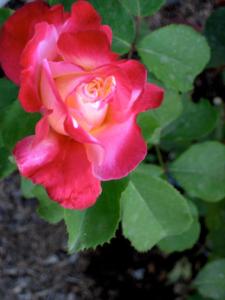
sometimes roses speak to us in homilies

with a nod to Sor Juana Inés de la Cruz

her story and her poem are below my poem

January is on the wane
leaving behind early dark and champagne hopes
for the genus Rosa. Wild or tame, they’re lovely.

Garden roses need pruning, solicitous cultivation ~
Layer shorter under taller, drape on trellises
and over pergolas, the promise of color and fragrance,
climbers retelling their stories in ballet up stone walls,
an heirloom lace of tea roses, a voluptuous panorama
rhymed with shrubs and rock roses in poetic repetition.
Feminine pulchritude: their majesties in royal reds
or sometimes subdued in pink or purple gentility,
a cadmium-yellow civil sensibility, their haute couture.

Is it the thorned rose we love or the way it mirrors us
in our own beauty and flaw and our flow into decrepitude?
They remind of our mortality with blooms, ebbs, and bows
to fate, a noble death to rise again in season, after Lazarus.
Divinely fulsome, the genus Rosa, sun-lighted reflexed ~
And January? January is ever on the wane.

– Jamie Dedes

© 2013, poem and photograph, Jamie Dedes, All rights reserved
I’ve posted this poem before but not with its backstory.

Portrait by Fray Miguel de Herrera (1700-1789)

The work that was the jumping off point for my poem is one by the Mexican nun, Sor Juana Inés de la Cruz (1551-1695), who lived during the time when Mexico was a part of the Spanish empire. She belonged to the Order of St. Jerome.

Sor Juana was a writer, playwright and a Baroque poet. She was hungry for learning and was self-educated. From childhood, she set her own demanding educational goals. These three famous quotes of hers are telling:

“I don’t study to know more, but to ignore less.”

“One can perfectly well philosophize while cooking supper.”

“…for there seemed to be no cause for a head to be adorned with hair and naked of learning…”

I am enamored of Sor Juana’s work and find her life interesting. She was brilliant, independent and nonconforming.

Here is her poem Rosa in Spanish and in English.

Rosa divina que en gentil cultura
eres, con tu fragrante sutileza,
magisterio purpureo en la belleza,
enseñanza nevada a la hermosura.
Amago de la humana arquitectura,
ejemplo de la vana gentileza,
en cuyo ser unió naturaleza
la cuna alegre y triste sepultura.
¡Cuán altiva en tu pompa, presumida,
soberbia, el riesgo de morir desdeñas,
y luego desmayada y encogida
de tu caduco ser das mustias señas,
con que con docta muerte y necia vida,
viviendo engañas y muriendo enseñas!

Rose, heaven’s flower versed in grace,
from your subtle censers you dispense
on beauty, scarlet homilies,
snowy lessons in loveliness.
Frail emblem of our human framing,
prophetess of cultivation’s ruin,
in whose chambers nature beds
the cradle’s joys in sepulchral gloom.
So haughty in your youth, presumptuous bloom,
so archly death’s approaches you disdained.
Yet even as blossoms soon fade and fray
to the tattered copes of our noon’s collapse –
so through life’s low masquerades and death’s high craft,
your living veils all your dying unmasks.

– Juana Inés de la Cruz

Illustration and poem in the public domain. Source of translation unknown.