CONNECT WITH US

Daily Spiritual Practice: Beguine Again, a community of Like-Minded People
Facebook, The Bardo Group Beguines
Twitter, The Bardo Group Beguines
July 15, 2017
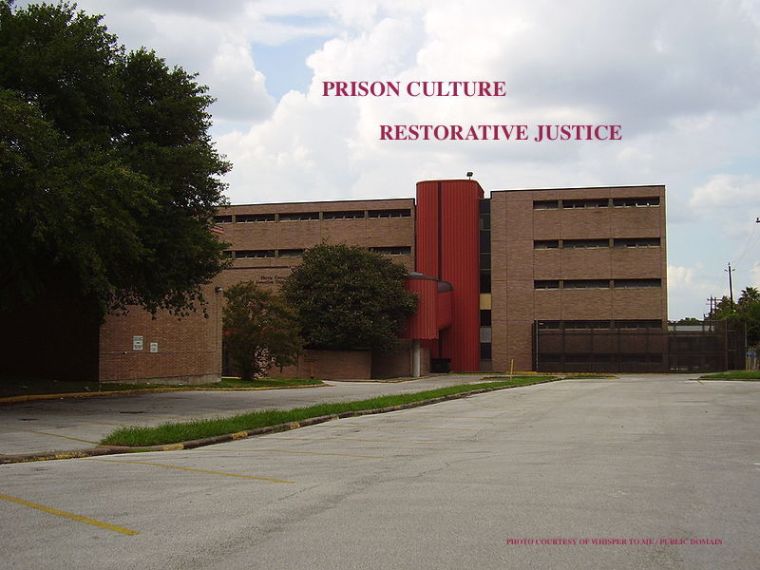
This month’s publication focuses on Restorative Justice. This is a topic that is dear to me. I am the Director of the Youth Chaplaincy Coalition. I have been working with incarcerated folks and those touched by incarceration since 2003. I have seen the ripples of harm that have come. There is harm to the victim, of course. But there is also harm to the person who committed the harmful act, harm to their families, and harm to the communities that encircle all of these people.
Restorative Justice is an en vogue term. Everyone wants it but we don’t know much about how to do it. Most of us look backwards at the ancient ways of first peoples such as the Māori people of New Zealand or the Tagish and Tlingit First Nation people of the Yukon. We lift their practices and bring it forward into a defined court case.
This somewhat misses the point.
The circling process that the first peoples used far pre-dates the term restorative justice. At the same time, restorative justice has become a term to be used by the justice system. And so we create another circling process that is set aside for the courts, jails, and prisons to use.
Circling or Peacemaking Circles, the process given to us by the ancients, is to be used everywhere and with anything: healing, sentencing, discernment. And it involves the entire community. The entire circle of ripples affected by an act. It is a big process. And that’s why we relegate it to the justice system.
Because if we don’t relegate it to the work of the justice system, that means we will have to change and do better. The first principle of the circle: You can only change yourself. As long as we make restorative justice the property of the courts, we don’t have to change. We don’t have to be more welcoming, giving, or inclusive. We don’t have to mentor, feed the hungry, clothe the naked. But I have news! Great news of good tidings! Restorative justice, Peacemaking Circles, is, as the ancients say, the wisdom of the universe. It belongs to no one person and is there for all for the healing and transformation—not of the world, but of each one of us.
This issue about Restorative Justice and new forays into restoration is explored by our core team and guest writers. Each brings their own wisdom to the topic.
Writing on aspects of justice and restorative justice are: Myself, James Cowles, and Chris Hoke. Justice oriented creative writers are Lisa Ashley, Carolyn O’Connell, Paul Brookes, Rob Cullen, Charles W. Martin, Marieta Maglas, Sonja Benskin Mesher, Paul Brookes, Jamie Dedes and a short stories by Joseph Hesch, Lisa Ashley and Rachel Barton. Gail Stone offers a video that speaks to her faith and hope in restorative justice. I have also offered a moderated discussion that I led regarding zero incarceration for youth. Denise Fletcher teaches us how to put together Comfort Kit Baskets for the incarcerated.
We hope this issue will give you pleasure even as it provokes you. Leave your likes and comments behind. As readers you are as import to the The BeZine project, values and goals as are our contributors. Your commentary is welcome and encourages our writers. As always, we offer the work of emerging, mid-career and polished pros, all talented and all with ideas and ideals worth reading and thinking about.
In the spirit of peace, love (respect) and community and on behalf of The Bardo Group Beguines,
Terri Stewart, Guest Editor
How to read this issue of THE BEZINE:
Do You Hear What I Hear?, Terri Stewart
Justice the New Old Way, Terri Stewart
Hearing Voice Underground, Chris Hoke
Refuge, Reconciliation, Recidivism, James R. Cowles
Of Pirates and Emperors, Jamie Dedes
Comfort Kits, Denise Fletcher
Hope and Faith in Restorative Justice, Gail Stone
Zero Incarceration for Youth, Terri Stewart
Room at the Table, Terri Stewart
I Can Trust You, A True Story, Lisa Ashley
Walking Along the Edge, Rachel Barton
Comin’, Joseph Hesch
A Child’s Touch, Lisa Ashley
Full Buck Moon, Lisa Ashley
(ANGERONA) Sunstead, Paul Brookes
Prisoner, Paul Brookes
The Boy in the Park, Rob Cullen
Oscar Wilde in Prison, Marieta Maglas
Restorative Justice for Sale, Charles W. Martin
before it began … , Charles W. Martin
teach a man to fish …, Charles W. Martin
#what more do you expect, Sonja Benskin Mesher
.verdict., Sonja Benskin Mesher
Confrontation, Carolyn O’Conner
Sacrificial Lambs, Carolyn O’Conner
Except where otherwise noted,
ALL works in The BeZine ©2017 by the author / creator
Daily Spiritual Practice: Beguine Again, a community of Like-Minded People
Facebook, The Bardo Group Beguines
Twitter, The Bardo Group Beguines

15 September 2015
For the past five years, September has been the month of 100,000 Poets for Change (100TPC). All over the world, poets (musicians, artists, and, yes, mimes) have organized events on or near a Saturday in September each of those years, this year, on the 26th. For this, the fifth anniversary of 100TPC, there are over 500 events scheduled throughout the world. The readers of, contributors to and publishers of The BeZine have participated with a virtual event in the past and will again this year on the 26th.
Meanwhile, The BeZine’s theme for September also supports the 100TPC call for peace, sustainability, and social justice, with our focus on poverty in general and homelessness in particular. This focus relates to social justice in an obvious way. Yet, how could we speak of sustainability without social justice? If we still have poverty and homelessness, what is sustained other than inequality? And, without social justice could there be peace? For that matter, could peace be sustained without both justice and environmental plus economic sustainability? Our choice is not to put one of these three above the other, but to recognize that all of these three important themes, necessary areas of change interrelate in complex ways. So we chose one aspect to focus on, and in so doing, this issue clearly points to all three themes through the lens of poverty.
We open by featuring three incredibly powerful poems by Sylvia Merjanian, Refugee, Second Chance, and Collateral Damage. Refugee and Collateral Damage come from her collection, Rumor (Cold River Press—proceeds go to help Syrian refugees). Second Chance debuts here. These poems show the relationship of war to poverty, oppression, and sexual abuse. In reading these, one senses the immense personal costs of war, especially to women and children. They provide an important window into the staggering worldwide refugee crisis, currently the largest human migration since World War II. Refugees are homeless in so many ways, even when they have a house to live in. And, the world seems to conspire to keep them destitute.
That war directly and indirectly causes poverty does not surprise. You might not know, until you read James Cowles’ essay, The Roots of Institutionalized Poverty, that something called The Compromise of 1877, which ended the post-Civil War Reconstruction Era, provided the political and economic structures of poverty that continued strong through the Civil Rights Era and, in many ways, still exist today. Certainly we know that poverty is not new in the United States, and neither is homelessness. In this issue you will hear music of the Depression Era that sounds too familiar today. The first time I personally participated in an editorial and writing publication related to homelessness was in 1989, for the University of Minnesota student paper, the Minnesota Daily. We produced a special finals’ week issue, title Ivory Tower, dedicated to the theme.
Poverty and homelessness are evergreen issues historically, but issues also embedded in social and political complexity. They benefit the rich, whose economic system keeps most of the rest of us as, at best, “wage slaves,” and all too many of us in poverty, without enough to provide for basic needs or housing (including the “working poor,” who hold low-paying jobs while CEOs are paid record-breaking salaries and bonuses). Our second feature, Jamie Dedes’ poem, Some Kind of Hell to Pay, cries out against the structures of injustice, where the rich act as demigods and demagogues, and it asks of what use will all their riches be in the Hell realm of the inevitable backlash from the marginalized and disenfranchised.

The poems, prose, photo essay, and art in the rest of the September BeZine will ask you to feel, to see with empathy, to hope defiantly, and always to resist the status quo. The writers often look beyond the borders of the U.S. or Western Europe to see the injustices of a world-wide economic system of war, greed and injustice that makes it difficult to live outside of its oppressive realities—and for those pushed out, choices do not sustain their lives, their dreams, or their spirits.
Yet, people live, they dream, and they hope with spirit—often in defiance, sometimes by dying (see John Anstie’s As if and Sharon Frye’s Jacob’s Ladder in this issue), sometimes by living despite all of the forces lined up against their lives. Victoria C. Slotto’s Homeless Man tells of a “destitute” man whose story reveals that he may in fact have the most rich life of any of us. Always, there is more than what we see.
Read these words. Think about the change that could help to heal creation as Michael Yost’s poem Who Am I to Judge and Michael Watson’s essay The Realm of the Unimaginable speak to. Remember the admonition to think globally but act locally. And, most of all, imagine.
Then, join us on 26 September 2015, on our blog. Add your own thoughts, your own poems, your own essays. Join in our virtual, worldwide 100TPC event from wherever you live. We will post a page with instructions on our blog on the 26th. The posts will go up live. And, after the 26th, we will organize and archive the event (see the 2013 and 2014 pages in the tabs at the top of the page).
—Michael Dickel, Jerusalem
My poem from the 1989 Minnesota Daily Ivory Tower
i
The plow cuts, disk or chisel?
How much of what lies below to bring up
leave exposed
to dry in the wind?
What residue of last years’ crop
to leave upon the soil,
cover over
to rot, return to the fertile land?
What fetish draws me along this furrow?
Street and curb meet here. Step up or down into slime.
Dust, trash tossed around and dropped by the blind wind.
What fate ties strings to which embedded hooks,
Pulls my flesh forward forever forward towards the street?
The Spring fete begins, seeds in muck
anticipating dilettante dance of the chosen few.
Weed out the hungry whose appetite starves wind-pressed grain shafts;
water the rows of the obedient who face slick harvest,
brittleness in the searing sun and death with Winter.
I move, farmer in these city streets, man among the chaff,
I offer to fetch my elegant plow-tongue, to stop the wind,
describe the deep earth and the rotted residue, the dry grasses and newspaper
blown by, salvaged for shelter by the quick grasp of an old hand,
pulled on top of gray hair to keep rain out.
ii
I would pull the plow, but a voice from under the newspaper
covers my shoes in mud and mire.
What d’you know ’bout
all this?
He spit
from mown rye-stubble fields,
fetid earthen face
Cracked
crumbled
creased
Caressed once, long ago
All you see’s a bum.
Fuck you, you son of a whore.
At home I do not wash the dirt from me,
I scrape it off, place it in a box
with a key I open my belly and
secure the box within, sated.
The weeds fend for themselves

Lead Features
Rumor, Silva
Some Kind of Hell to Pay , Jamie Dedes
Articles/Creative Nonfiction
The Realm of the Unimaginable, Michael Watson, Ph.D.
The Roots of Institutionalized Poverty in the Compromise of 1877, James R. Cowles
Farming a Dancing Landscape, Priscilla Galasso
Poetry
As if, John Anstie
Why do you judge me?, Brian Crandall
Homeless, Brian Crandel
I Understand, Brian Crandall
Poverty Line, Sharon Frye
Jacob’s Ladder, Sharon Frye
Barometer of Bones (A Baltimore Teacher Remembers Freddie Gray), Sharon Frye
The Search, Joseph Hosch
Cold Comfort, Joseph Hesch
more Washington rumors, Charles W. Martin
five dollars and some change, Charles W. Martin
The H wor(l)d, Liliana Negoi
I Am Not Alone, Lana Phillips
Pulling Myself Up, Lana Phillips
Wounded Healer, Lana Phillips
Undeserving, Lana Phillips
~ Under ~, Corina Ravenscraft
Le Mendicant, Victoria C. Slotto
Homeless Man, Victoria C. Slotto
Who Am I to Judge, Michael Yost
Photo Story
Out in the World, Naomi Baltuck
Art
Mother and Child, Roy DeLeon, OSB
Special Feature
An Art Lesson with Leslie White … music by Grandpa Elliot
Music
nueva canción de Ameríca Latina
(the social justice music of Latin American)
Sólo le pido a Dios (with translation and brief bio), Mercedes Sosa
from the Great Depression (1929-1941)
The Ghost of Tom Joad, Pete Seeger and Bruce Springsteen
I Ain’t Got No Home, Woody Guthrie
Hobo Bill’s Last Train Ride, Merle Haggard
Brother, Can You Spare a Dime, Rudy Vallee
Nobody Knows You When You’re Down and Out, Bessie Smith
Contemporary
Democracy, Leonard Cohen
FOR UPDATES AND INSPIRATION “LIKE” OUR FACEBOOK PAGE, THE BARDO GROUP/BEGUINE AGAIN

15 August 2015
“Music gives a soul to the universe, wings to the mind, flight to the imagination and life to everything.” Plato
We are excited this month to bring you an issue devoted to music. Never have we had such an enthusiastic response to a theme. Facebook messages, emails and emoticons flying through the ether resulting in what is probably our best and largest issue to date … chock full of mind, imagination and flight wrapped in essay, memoir, poetry and video . . . and it’s all about music.
There is no part of life that music doesn’t touch. No part of our being that is left unmoved. Music is a gift that transcends borders and beliefs and can move the most hardened heart to tears and joy.
As fortune would have it, tears could have been the theme for this month. More than one of us lost someone special. As I worked to pulled things together I also learned of the death of a good friend and found myself helping out another friend who is at the end of her life. She loves music, so during visits with her I shared the videos that were coming in from Core Team members and friends of The BeZine. No matter what life is delivering to us in this very moment, music comes as friend, healer and spiritual succor.
And so we start here with a tear: John Anstie’s short piece on the Darwin Song Project, which is accompanied by a video of Karine Polwart singing We’re All Leaving. It struck me as I listened to this that there is no need for walking on water, no need of “miracles.” We are THE miracle. We who know we are mortal, that we will lose and be lost, still reach out and give our hearts away …What remarkable creatures we are.
Normally I would pick one or two of the pieces that come in to be lead features, but the depth and breadth of the work submitted made that impossible. Hence we have five lead features this month. We have Michael Dickel teaching us about the relation between poetry and music. James R. Cowles bringing music together with science. Lily Negoi is possessed by music. Priscilla Galasso and Terri Stewart bring us memorable experiences of music in the context of family.
From there we move on to a collection of poems and videos. The latter offering some humor as well as grace.
So grab a hot coffee or a cold beer and settle down with us for awhile. Let us know what you think and consider sharing a link to one of your favorite videos as you go through the work delivered here.
Be the peace.
On behalf of The Bardo Group and Beguine Again, publishers of The BeZine,
Jamie Dedes
TABLE OF CONTENTS WITH LINKS
MUSIC:
Giving Life to Everything
Our header this month is courtesy of Sabine Sauermaul.
Special Feature
Music for Mewling, John Anstie
Lead Features:
Music as Self and World, James R Cowles
The Waltz: Poems and Songs, Michael Dickel
Music: A Soul Experience, Priscilla Galasso
On Music, Liliana Negoi
Yes, indeed, that kind of singing . . . , Terri Stewart
Poetry
Late Night Jazz, Michael Dickel
Words, Words, Words, Michael Dickel
Middle-Class Middle-Aged Male Blues, Michael Dickel
But Hear the Dissonance 1948-2011, Michael Dickel
Songs Around the City, Sharon Frye
The Final Bar, Joseph Hesch
Playing with Their Eyes Closed, Joseph Hesch
The Song Remains the Same, Joseph Hesch
I Hear the Angels Hum, Joseph Hesch
Concerto, Joseph Hesch
For Music, Ben Naga
Grande’s Mandolin (Revised), Corina Ravenscraft
music. . . , Charles W. Martin
Music Videos
Hallmark of Harmony, John Anstie
Don’t Throw Away Your Empties, John Anstie
The History of Lyrics That Aren’t Lyrics, Jamie Dedes
Britian’s National Disabled Orchestra, Jamie Dedes
Big Mama Thornton, Jamie Dedes
Sergey Khachatryan – Armenian violinist, Silva Merjanian
Georgre Enescu: “Carillons nocturnes,” Cristian Perescu, piano, Liliana Negoi
BIOS WITH LINKS TO OTHER WORKS BY OUR CORE TEAM AND GUEST WRITERS
FOR UPDATES AND INSPIRATION “LIKE” OUR FACEBOOK PAGE, THE BARDO GROUP/BEGUINE AGAIN
Back Issues Archive
October/November 2014, First Issue
December 2014, Preparation
January 2015, The Divine Feminine
February 2015, Abundance/Lack of Abundance
March 2015, Renewal
April 2015, interNational Poetry Month
May 2015, Storytelling
June 2015, Diversity
July 2015, Imagination and the Critical Spirit

Biographies of our Core Team and our Guest Contributors are HERE.

Flower illustrations for this month’s header and table of contents page © 2015, Jamie Dedes, All rights reserved

The inspiration for this month’s theme is the Christian celebration of Lent, which involves a tradition of fasting and that in turn evolved into “Abundance or Lack of Abundance.”
You’ll find that our contributors have broadened the idea of fasting and also pulled out childhood memories to lend depth to their work. Our lead pieces include features by Imen Benyoub on fasting in the tradition of Islam; Priscilla Gallaso, who looks to nature for wisdom; and Corina Ravenscraft who offers some ways to assist the hungry.
Included among those poets offering theme-related poems are Myra Schneider, Charles W. Martin and Joseph Hesch.
February is the month of romantic love and we’ve had some fun with it. Not to be missed is Karen Fayeth’s tale, Waiting for Betty. More than a few folks may find their funny bones tickled by because love poems are elegies and everyone will be moved by Imen’s sweetly romantic poem, Stangers Meet.
Not least of this month’s treasures are Liliana Negoi’s Little Accidents, a morality tale; Joe Hesch’s poems; Ruth Jewell’s homage to the New Testament scholar, Marcus Borg; and Naomi Baltuck’s touching photo story commemorating the liberation of the prisoners at Auschwitz and her Drive-by in Detroit. All this under General Interest.
Thanks for joining us here and for your stalwart support as readers, contributors and advisors.
Many blessings,
Jamie Dedes

The work done to publish this magazine and the work contributed is on a volunteer basis. The ads you see are WordPress ads, not our ads. This is a labor of love and part of our individual and group effort toward peace through understanding the human condition in its beautiful diversity. We hope that if you enjoy this Zine and benefit from it you will think of making a donation to one of your favorite causes.
This month we are sharing/suggesting a cause that has come to our attention and touched our hearts. It involves one small boy. If you are able and willing to assist, please let us know by email and we will pass your message on to the appropriate person. (bardogroup@gmail.com)
This special request for help comes from a loyal reader (some of you know him), Shakti Ghosal (ESGEE musing, I muse …. as I seek inner peace through Gratitude, Learning and Beauty), who also contributed to this effort when we were just getting started. Shakti is an executive who lives and works in Oman.
“This request comes from my sister-in-law whose husband died of cancer. Since that time, she has worked at helping those suffering from this horrible disease. Now she writes on behalf of a father who is trying to save his five-year-old son’s life, Shivom, a bright little boy who is suffering from Burkitt’s Lymphoma since November 2014.
“The boy is undergoing treatment (intravenous chemotherapy) in Thakurpukur Cancer Hospital [India] since diagnosis.
The cost estimate given by the hospital is around INR 4 lacs. However, his father is not in a position to arrange the amount by himself.”
and …

Lead Features
Ego, Redundancy, Fasting and Abundance ~ Spiritual Lessons from Nature, Priscilla Galasso
The Month of Light: Fasting in Islam, Imen Benyoub
Bread as the face of God, Corina Ravenscraft
Poetry
Oranges, Myra Schneider
Feast or Famine, Charles W. Martin
Feast Days of the Heart, Jamie Dedes
dealer’s choice, Charles W. Martin
Going Fast, Joseph Hesch

Fiction
Waiting for Betty, Karen Fayeth
Poetry
Strangers We Meet, Imen Benyoub
A Portrait in February, Jamie Dedes
because love poems are elegies, Jamie Dedes
Feature Articles
Marcus Borg . . . and gratitude for our teachers, Ruth Jewell
Flash Fiction
Little Accidents, Lilliana Negoi
Poetry
Crunch Time, Joseph Hesch
A Natural Talent, Joseph Hesch
Photo Stories
Depth Perception: 70th Anniversary of Auschwitz, Naomi Baltuck
Drive-by Shooting in Detroit, Naomi Baltuck
Volume 1, Issue 1, November 2014
Volume 1, Issue 2, December 2014
Volume1`, Issue 3, January 2015

 Jamie Dedes' THE POET BY DAY Webzine