God is on our side … without a shadow of a doubt
they said and
no nay-saying her parents
her husband, her people
the politicos and demigods
their war-mongering
her eyes surveilled the warriors as
they cut across fields of innocence,
they stomped and postured
no Light shining from dark disorder no Joy in parting a sea of blood
in her heart: doubts
large, lively, captive
packed tight into small muscle,
specters beating at the walls
ribs
sore
eyes
burning
soul
aching
they know not what they do
God forgives them all, she was taught
But who will forgive God
– Jamie Dedes
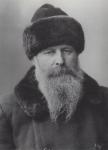
Vasili Vereshchagin
The Apotheosis of War painting (1871) is by Vasily Vereshchagin (1842-1904), a Russian artist, who dedicated this painting and one other – Left Behind (a wounded Russian soldier abandoned by his comrades) – “to all conquerors, past, present and to come…”
WRITING PROMPT
There were several observations that contributed to this poem but, most of all, it was reading some comments on Facebook, especially this one: “If this is God’s will then God has a lot of explaining to do.” War, destruction, murder: God’s will, free will, or the apotheosis of nihilism (insanity)? Write something that – by virtue of its brevity – is pungent: a poem or perhaps a parable.
Please feel free to put a link to your poem or parable below in comments so that I and others may come read your work.
Over there
all that happened
(and didn’t happen)
folded
packed in mental mothballs
stories fading with licked creases
some reduced and softer versions
wonder why I preserve breaths
forced through my lungs in those days
stringed around the eye of a hurricane
circling, demonic, nameless
shaking me shameless for a day
on nights when a collective sigh stings
and I can’t tell
which tale will toll for me
and which nocturnal howl
will lift the dust
through endless times
relive slivers
on a pink tip of my tongue
afraid to bite a dreamt memory
that it might hemorrhage
bleed the night
I want a dripping whiff of that afternoon coffee
instinctively bitter, solemnity and hot
ten minutes when lonely hearts
willed an arching cease fire
and time hovered among us
long enough for my mother
to build castles in my cup
over there
the man flying his doves
on the roof across two streets
remains a blur
but the doves stirring the air
in perfect shades of unison
(I had named them after heroes long forgot)
sometimes still raise dust in my room
of their feathers’ aches and plight
I believed then
I could break away
would break away
I did one day
the doves were left to die
over there
at dusk my father played the mandolin
and my mother’s voice filled all the gaps
between our breaths –
the dam that held surpluses of war
long enough for us to shed in dreams
why do I long for hell
on nights
when I can’t sieve my sigh from the wind’s eye
and I wonder if I ever broke away
from a circle named dead doves
perhaps
scent of jasmine
still smells like home
back home in the rain
Excerpt from the 2015 collection, Rumor, reviewed and published along with an interview of Silva Merjanian HERE. Beirut is published today with the permission of the poet and is under copyright.
Thank you for sharing your love of words. Comments will appear after moderation.
Dan and me as kids and probably the last time he was shorter than I am. He stands 6’5″ and I am 5’2″.
With all its faults – and there are many – Facebook can be a blessing. I haven’t seen my cousin Dan in almost forty years. I lost track of him, but was much delighted to find him again on Facebook last March.
Dan and I were raised in the United States, but our family was from Lebanon. Our mothers were sisters. Our religious roots are Melchite (our grandfather’s side) and Maronite (our grandmother’s side).
My mother, Zabaida, used to tell me that in Lebanon first cousins were like brothers and sisters. Among other things this was one way she tried to understand what people meant when they talked or wrote about Jesus having brothers. I understood it as my relationship to my cousins, especially cousins Daniel and Christopher, who were brothers (Christopher died prematurely) and my most beloved relatives. Though we haven’t seen one another in forever and we’ve walked different paths in life, I suspect our basic values remain the same: peace, love (respect) for others and for life, and appreciation of life’s gifts. Dan has worked in many places around the world, including Algeria and Dubai. Currently he teaches Theology in the Philippines. This essay is Dan’s.
*****
What Have We Done That People Can Pick Up Weapons and Kill?
by
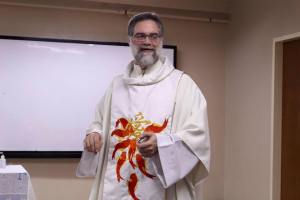
Fr. Daniel S. Sormani, C.S. Sp.
DANIEL S. SORMANI C.S. Sp.
It was one of those things you think but don’t want to say. In the horror of the carnage in Paris and the world’s reaction, it struck me how very little had been said about the terrorist attack in Beirut the day before…or the attack on a funeral in Baghdad…or so much of the other violence that shakes the world. And I felt like I couldn’t say it for fear of looking like I was somehow diminishing the horror or pain of Paris, afraid it could been seen as a lack of respect and understanding. But I wondered. And now so many people are indeed raising such questions, and others are also reacting to such questions, calling them an appalling lack of sympathy…and things have at times spiraled down to a repulsive debate of numbers and geography, rather than of lives and humanity.
When I was young, it was the last hurrah of Lebanon’s golden era when people still referred to it as the “Switzerland of the East” and the wealthy went there to bask on the beach in the morning and ski on its snow-capped mountains in the afternoon. It was the land of poets and artists, and welcomed refugees and visitors equally.
I remember all the Lebanese women with my mother at fundraisers for the Palestinian refugees. We were all kinds of Christians, Muslims, Druze and even a lone family of Lebanese-Jews who ran a shop in our neighborhood. We were just “us”, the Lebanese diaspora, the children of the Phoenicians. And if you were Syrian or Egyptian, that didn’t matter, then we simply enlarged our self-definition to being Middle Easterners. And if you were anything else, then we were “the melting pot” and loved to learn from you.
But so much interference in the internal workings of the country, so much pushing and shoving, dangling of carrots by different powers and religious groups, and finally civil war exploded in Lebanon. What we had known suddenly disappeared. There were a myriad of political parties I couldn’t keep up with, weekly fundraisers for dozens of necessary causes, a flood of refugees, some legal, some not. It should have brought us together, made us one in the struggle for peace and justice. But it didn’t.
I remember vividly the look of joy on the face of complete strangers if they heard my family speak a bit of Arabic. There would be warm introductions and everyone wanted to know everyone. Suddenly it was different. I would say something in Arabic, and the other person would immediately ask “Muslim?” I remember once in my old neighborhood I went into an Arabic music store and was taken by the album playing. Great music, but the dialect threw me a bit. I cheerfully greeted the young man behind the counter with a wish for a morning filled with goodness. He gave me an annoyed look and pointed to the veiled young woman. When he walked away the woman leaned over and whispered in Arabic, “Don’t mind my brother. It’s clear from the way you greeted him that you’re not Muslim.”
I remember in Algeria when I used the traditional Muslim greeting of peace in the market place and the stall-keeper rudely told me I had no right to say such a thing because he knew I wasn’t Muslim. To my delight, an elderly gentleman in traditional dress got angry and shouted at him, “And what should he do, wish you war and trouble instead?” He went on to greet me with great poetry and many warm blessings. Touched, I kissed him the way one kisses his favorite uncle and a few of the women, all wrapped in the white haiks of western Algeria, applauded and blessed God. This, I thought, is what family is, this is how we will conquer the darkness.
We have become our own worst enemy. Whenever we separate the world into “them” and “us”, whenever we accept blind generalizations and cease to see a unique individual before us, whenever we forget we are all victims of carefully orchestrated deceit and deception for wealth and power, the force of darkness wins. Bullets will never win this struggle, only the heart and mind will.I know political scientists and analysts can tear my thoughts to shreds. I do not claim an intellectual understanding…I am only sharing a broken heart that grieves.
A young Melchite priest once told me a story from his village in Lebanon during the war. There was intense shelling and sniper fire for almost three days. After it stopped, people went out to gather up the dead. An old man went to the church and asked the priest to offer two masses. The priest took his pen and book and asked the man to continue. The first mass, he said, was for his son whom they found shot to death in the orchard by their house. And the second mass was for the person who shot him. Startled, the young priest looked at the old man with amazement. The old man explained the obvious saying “What have we done that people can pick up weapons and kill strangers? What have we done that some poor fellow can kill my son without feeling it? We must pray for him, and ask God’s forgiveness.” When I remember that story, after all these years, I still cry.






 Jamie Dedes' THE POET BY DAY Webzine