Page 69 of 72

There Is Pleasure in the Pathless Wood … and therein is your Wednesday Writing Prompt

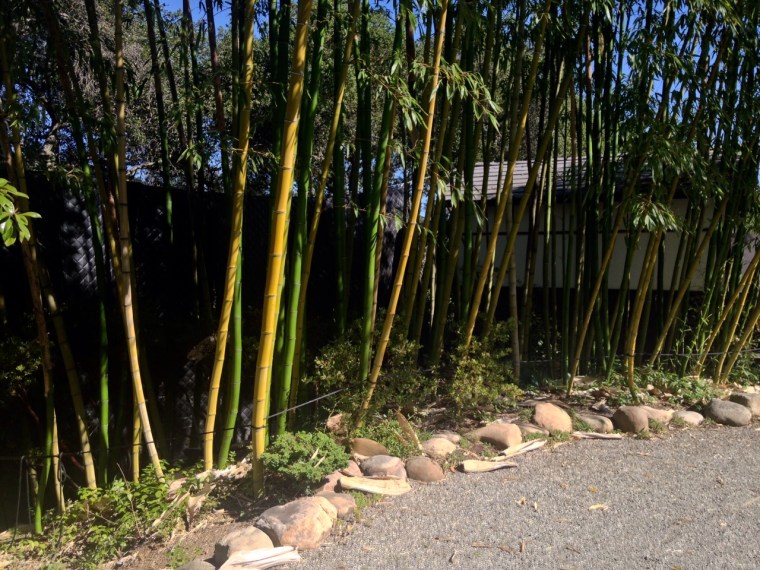
IMG_0046There is a pleasure in the pathless woods,
There is a rapture on the lonely shore,
There is society, where none intrudes,
By the deep sea, and music in its roar:
I love not man the less, but Nature more,
From these our interviews, in which I steal
From all I may be, or have been before,
To mingle with the Universe, and feel
What I can ne’er express, yet cannot all conceal

Gordon George Byron, Lord Byron
from Childe Harold, Canto iv, Verse 178

WEDNESDAY WRITING PROMPT

It’s important – and it’s often a relief – to get out in nature where the quiet is healing and the beauty helps us to feel our connection with the whole of the Universe.  Byron writes here of the woods.  Where do you go for solitude and solice, refreshing your soul? Woods. Garden, Lake. Ocean. Wilderness lands. Perhaps a park like the one in the photograph above. Tell us about it and how you feel, how it draws you in and wakes you up spiritually. Do it by way of poetry or creative nonfiction. May this be a meditative exercise for you.

© photo, Jamie Dedes

THAT WHITE WATCHUNG HOME, a poem … and your Wednesday writing prompt

img_1167I wonder if that old Watchung home still stands
or has it been demolished by developers building
rows on rows of barracks-like housing where
big maples used to rise to line the roadway
·
Driving up to that sprawling place, soundly built
and well-loved, a kaleidoscope of colors greeted us –
The burnished bronze of our uncle’s skin and the
brown-black of his doe eyes and dense curly hair
The azure sky and snowy clouds tumbling down to
top the perfect juicy purple of ripe Italian plums
and the brisk reds of beefsteak and plum tomatoes
The true-green of the too-long grass feathering the
rich chocolaty shades of the well-mulched earth
·
That antique home was pristine white with green trim
and such a busy, welcoming, wrap-around porch,
often with bushels of fruit and vegetables standing
in the company of freshly cut flowers piled and tossed
All waiting . . . for what and for whom?
The airy rooms were waiting too with windows
and doors thrown open to children like me breezing
in from the The City with our pallid skin and eyes
burning to see our uncle and some untouched nature
·
Well-worn carpets, Persian and Arabian, brushed bare feet
as searching room-to-room for hidden treasures and history
I marveled at the accoutrements of other decades –
the water pump, the dumb-waiter, the pull-chain water closet
Each room was a marvel of furnishings, fine wood and hand-turned
Drawers lined with newspapers, yellow and dissolving with age,
advertising corsets, questionable cures, and other ephemera of this
same place in times mostly forgotten except for stale news
telling its stories to the silence in chests mostly empty and untouched
The mammoth tables in the large white high-ceilinged kitchen and
the stately dining room with its chandelier and heavy drapes spoke of
more formal multi-generational dinners before these days of greater
mobility and the tech distractions of i-This and smart-That

The peaceable, sturdy safe-haven of that white Watchung home
matched the steady embrace of its woods and orchards
where a child like me could lie on the hardy ground,
sun blinding bright, browning spindly arms and legs, small body
soaking in rich damp earth, mind yawning, stretching, awakening
Imagination rising in mists of violet-grey shot with silver stories
and flaxen poems finding their way into the pages of a notebook
Such plum-sweet visions set free by that mystical place –
I wonder if it still stands in Watchung, if it remembers me
And how I loved it – I still do

WRITING PROMPT

I think a lot about houses and housing these days. Here in Silicon Valley there’s a critical shortage of housing in general and especially of affordable housing. I know several families who lost their homes when the housing bubble burst in the later part of the last decade. I have a neighbor who ended up on the street for two years . There are too many folks who make their way by couch-surfing or living out of their cars or trucks. We read in the papers about homeless children here and abroad and think and pray and do what we can for all those people sleeping in the rough, escaping violence in their homelands. I’ve always appreciated our homes, never anything fancy but definitely safe, clean and functional, and I remember warmly the homes and hospitality of friends and relatives with whom I stayed at different times when I was a child.

I’m sure you too have memories of the houses or apartments in which you grew-up or stayed when you were young. Maybe those memories are good. Maybe not. Either way, they probably remain vivid in your mind. Perhaps there was one thing – like the tree in A Tree Grows in Brooklyn – that had special meaning or gave you hope. Outside the complex where my mother lived there were two berry trees, Mulberry perhaps, that I thought of as guardians of the building.

Write a poem or creative nonfiction piece about the house or apartment that most stands out in your memories of childhood and tell us what it meant to you, what was special or loathsome, what dreams you may have nurtured there, or how it might have fixed your vision of the home you’d have as an adult. Take your time and enjoy the process.

© 2016, words and photograph, Jamie Dedes, All rights reserved

WHO WILL FORGIVE GOD, a poem . . . and therein lies your Wednesday Writing Prompt

"The Apotheosis of War" 1871, Vasily Vereshchagin
“The Apotheosis of War”

God is on our side …
without a shadow of a doubt
they said and
no nay-saying her parents
her husband, her people
the politicos and demigods
their war-mongering

her eyes surveilled the warriors as
they cut across fields of innocence,
they stomped and postured

no Light shining from dark disorder
no Joy in parting a sea of blood

in her heart: doubts
large, lively, captive
packed tight into small muscle,
specters beating at the walls

ribs
sore

eyes
burning

soul
aching

they know not what they do

God forgives them all, she was taught
But who will forgive God

– Jamie Dedes

Vasili Vereshchagin
Vasili Vereshchagin

The Apotheosis of War painting (1871) is by Vasily Vereshchagin (1842-1904), a Russian artist, who dedicated this painting and one other – Left Behind  (a wounded Russian soldier abandoned by his comrades) – “to all conquerors, past, present and to come…”

WRITING PROMPT

There were several observations that contributed to this poem but, most of all, it was reading some comments on Facebook, especially this one: “If this is God’s will then God has a lot of explaining to do.”  War, destruction, murder: God’s will, free will, or the apotheosis of nihilism (insanity)? Write something that – by virtue of its brevity – is pungent: a poem or perhaps a parable.

Please feel free to put a link to your poem or parable below in comments so that I and others may come read your work.

© 2016, poem, Jamie Dedes, All rights reserved; the portrait of Vasili Vereshchagin and the photograph of “The Apotheosis of War” are both in public domain.

Le Fée Verte, Absinthé … and Your Wednesday Writing Prompt

Absinthe-glass

A glass of absinthe is as poetical as anything in the world, what difference is there between a glass of absinthé and a sunset.” Oscar Wilde 

Albert Maignan's Green Muse (1895): a poet succumbs to the Green Fairy.
Albert Maignan’s Green Muse (1895): a poet succumbs to the Green Fairy (public domain)

in the wilderness of those green hours
gliding with the faerie muse along café
walls virescent, sighing jonquil wings of
poetry, inventing tales in the sooty red
mystery of elusive beauty, beguiled by an
opalescent brew, tangible for the poet and
the pedestrian, the same shared illusions
breaching the rosy ramparts of heaven

– Jamie Dedes

WRITING PROMPT

This poem was originally written in 2011 in response to Victoria Slotto’s Writers’ Fourth Wednesday prompt, which we would host at The BeZine in the years before that site became a zine.  Victoria had written:

As a would-be artist and a former museum docent, I enjoy playing with the elements of art in my writing–both in fiction and poetry. A favorite is to use of color to create mood. In art, abstract expressionists often use color as the primary tool to convey their “story.” There are many interpretations of the meaning or symbolism accorded to each color. I’m offering a few of my own: Yellow is a happy color and can be used to liven up a scene–to make it joyful, while Red signifies anger, passion, love. Think about it: when you’re feeling intense emotions, such as rage and close your eyes, sometimes your visual field appears red. Blue and Green convey calm and  peace Black represents the unknown or fear while Brown is a grounded, earthy color. Violet or Lavender speak of spirituality while White is used to represent truth and innocence.

– Victoria C. Slotto

How does color influence your mood? How do you use color when you dress, decorate your home or choose a car? Do certain colors represent an event, holiday or childhood memory? What colors have symbolic meaning for you, perhaps related to your religion, country or ethnicity? Think for awhile about your own use of and reactions to color. Experiment: write a poem, flash fiction or creative nonfiction piece intentionally using color to set the mood or to foreshadow outcome. Take your time and enjoy yourself.

RELATED:

© 2011, poem, and 2016, prompt text, Jamie Dedes, and Victoria’s text, Victoria C Slotto, All rights reserved; photograph, glass of absinthé by Eric Litton under CC BY-SA license.