“Unplug yourself from the hurly-burly of life on a regular basis so your subconscious has time to make some good compost.” Susan Burmeister-Brown, Interview with Susan Burmeister-Brown, Every Writer
Linda Swanson-Davies and Susan Burmeister-Brown, two sisters who co-founded and co-edit the well-regarded 28-year-old short story magazine, Glimmer Train, have announced on the site that they will read through May 2019 and publish a last issue in October 2019. Given the esteem this magazine holds in the minds and hearts of readers, writers, and the publishing industry, it seems proper to feature their final calls in a separate post from regular Sunday Announcements.
I’m sure we’re all sorry to see the end of Glimmer Train but we thank Susan and Linda for their years of service and wish them well.
Currently open in Glimmer-Train:
Sept/October 2018 Short Story Award for New Writers closes on November 10, 2018. Entry fee: $18.
Standard Submission closes on November 20, 2018. Reading fee: $2.
Nov/Dec 2018 Family Matters contests closes on January 2, 2019. Entry fee: $18.
Poet and writer, I was once columnist and the associate editor of a regional employment publication. Currently I run this site, The Poet by Day, an information hub for poets and writers. I am the managing editor of The BeZine published by The Bardo Group Beguines (originally The Bardo Group), a virtual arts collective I founded. I am a weekly contributor to Beguine Again, a site showcasing spiritual writers.
My work is featured in a variety of publications and on sites, including: Levure littéraure, Ramingo’s Porch, Vita Brevis Literature,Compass Rose, Connotation Press, The River Journal,The Bar None Group, Salamander Cove, Second Light, I Am Not a Silent Poet, Meta / Phor(e) /Play, and California Woman
Thank you for sharing your love of words. Comments will appear after moderation.
I’m ankle-deep in the exercise of this year’s National Novel Writing Month (NaNoWriMo). I always find it an interesting experience to write a poem on the same day that I work on a fiction, which is not to imply that they are not both truthful. However, the processes are different. As Umberto Eco pointed out – with a poem you go where the words take you and with a fiction you go where the story takes you. I’ve also had the experience of writing the poem and then no longer having the need to write the fiction.
A Distant Sky*
old woman speaks
of her great tests,
each word dropping
like a leaf in autumn,
bronzed and crisp
and coming to rest in
memory, waiting and
waiting for the day
and the pen and the
restoration of her life
* A Distant Sky is the working title of my NaNo exercise. The major protagonist is already real to me.
Poet and writer, I was once columnist and the associate editor of a regional employment publication. Currently I run this site, The Poet by Day, an information hub for poets and writers. I am the managing editor of The BeZine published by The Bardo Group Beguines (originally The Bardo Group), a virtual arts collective I founded. I am a weekly contributor to Beguine Again, a site showcasing spiritual writers.
My work is featured in a variety of publications and on sites, including: Levure littéraure, Ramingo’s Porch, Vita Brevis Literature,Compass Rose, Connotation Press, The River Journal,The Bar None Group, Salamander Cove, Second Light, I Am Not a Silent Poet, Meta / Phor(e) /Play, and California Woman
Thank you for sharing your love of words. Comments will appear after moderation.
Travers in the role of Titania in a production of A Midsummer Night’s Dream, c. 1924
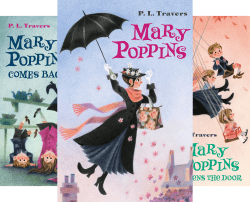
Some of us say we write from the heart, some from spirit. P. L. Travers, OBE(1899-1996, Australian national, British citizen), actress, poet and the conjuror of Mary Poppins, wrote in a Parabola* article that
I sit down inside my abdomen and brood and brood until I figure out how I feel about it.”
I noted the quotation above but I don’t remember the exact context of the piece. I think it was Tavers’ way of talking about the exploration of a painful childhood, one out of which she created a children’s classic. She once told a friend that the people and the objects of her early life were like a spindle around which she wove the threads of her imagination. That worked for her as a writer and for us as readers. In using her childhood to create characters and stories, she gave us a gift that ranks with those given to us by J.M. Barrie, L. Frank Baum, C.S. Lewis and Lewis Carroll.
Of course art-making isn’t therapy, but I often think artists don’t need to be quite so loath to admit some relationship between art-making and therapy.” Short-story writer, Deborah Eisenberg, Paris Review Interview #218, 2016
Travers’ why of writing was – at least in part – to heal and to imagine the childhood she would have liked.
Ultimately, we write for many reasons: to recover, to find closure or completion, to find meaning and understanding and to cherish the gifts of life. I relish life through writing. When I write a poem about an experience or observation, it’s often a way to savor it, prolong or relive the pleasure or heal the wound. It’s a way to live hugely. On the other hand, sometimes I use fiction to reframe experience. I think most people would agree that we also write to have our say and – in the spirit of Joseph Conrad – to help the reader see. That may sound to some like colossal chutzpah, but we all have something to say. We all have a perspective to share.
No matter where our writing comes from or why we write, we have to get the job done. For many of us the muse is a fairly consistent companion. For others it’s a struggle to connect. Either way, we develop habits, disciplines, and rituals to court the muse. It is often as though there is a sort of magical thinking or personal superstition in play. We must sit in this chair at this desk or at this cafe or we simply can’t write. Perhaps that’s why well-known and prolific writers are always being asked how, when and where they write, just another way of saying, “How do you court the muse?” The answers writers give can reveal demons, superstitions, irritation with the question, or even a tongue firmly in cheek. The “tips” or “rules” can be wise, cool, pragmatic, quirky, absurd or disagreeable. You may end up feeling affirmed, acquiring a useful tool, or finding yourself entertained.
Henry Miller‘spolicy was to work on one project at a time. Some will disagree with that. I do. I think many of us find one activity feeds another, that our multiple projects or different artistic outlets form a rich diet for the muse and make us more productive. I have a writer friend who says, “suum cuique” . . . to each his own . . . though to the old Romans that phrase was about justice (may each get their due), not about writing rituals. But the point is made.
John Steinbeck’s tips are pragmatic, born of a long, intense and consistent experience. In the fall of 1968, Steinbeck was actually too ill for a standard interview and one was pieced together from the East of Eden diaries (Journal of a Novel) and from some letters, which were later collected and published in one book. The tips have been widely published and were also included in Steinbeck’s Paris Review, The Art of Fiction** interview. [The Paris Review Interviews are required reading for writers and poets.] Steinbeck’s second tip is “Write freely and as rapidly as possible and throw the whole thing on paper. Never correct or rewrite until the whole thing is down. Rewrite in process is usually found to be an excuse for not going on. It also interferes with flow and rhythm which can only come from a kind of unconscious association with the material.” This is consistent with the philosophy and structure of NaNoWriMo. You write, write, write all month and don’t do your rewrites, editing and proofing until after that.
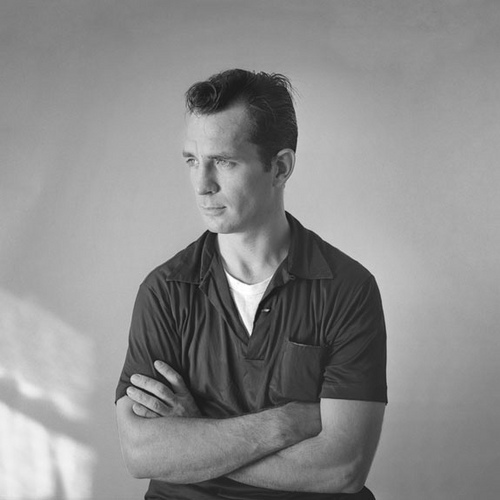
Jack Kerouac’s famous thirty tips are … well, they’re Jack … quirky … but useful … You can check them out HERE on the Gotham Writers’ Workshop site.
Jack Kerouac (1922-1969), American poet and novelist
The best tip I ever got was to “listen to and feel, see and smell the world around you.” Inspiration is everywhere: in the air and its scents, in the conversations you overhear, in your self-talk and memories, in the arguments with your spouse and the aroma of dinner cooking. It’s in the coo of the mourning dove, in the feel of your child’s hand in yours, in your own hopes and dreams and the life experiences and observations others share with you. Inspiration is in the news and in history. Be open to everything without exception. Nora Ephron constantly reminded those around her that everything “is copy.” We might say that everything holds the seed of a story, a character, or a scene.
Some of my most profitable lessons came from my high school English teacher, Sister Francis of Assisi, C.S.J. who encouraged my early writing. Sometimes I imagine her leaning over my desk and I hear her whispering …
What is it you really want to say?
Is this word appropriate? It is accurate?
What is your theme?
Does this really have to rhyme? Be cautious of rhyming.
Is this artfully dramatic or is it bad melodrama?
Is that lyrical or flowery?”
Read and read some more:
What writers do you enjoy most? Why? What can you learn from reading their work?
What novels do you dislike? Why? What can you learn from your reaction?
Reorder and rename the everyday. In truth the ordinary is often extraordinary and it’s your job to recognise and illustrate this.
Practically speaking, the muse is probably most responsive to the simple act of gluing the seats of our pants to our chairs and staying there until the job is done. Perhaps the muse is not fickle. Perhaps to be constant she requires our constancy.
Tips, tricks and rules are helpful and can be inspiring, but take them under advisement. In the end, the best magic for courting the muse is the magic that works for you ….
Work calmly, joyously, recklessly on whatever is in hand”. Henry Miller
* Parabola is a magazine of The Society for the Study of Myth and Tradition. P.L. Travers was one of the founders.
** The Paris Review, The Art of Fictioninterviews from 1953 through 2016 are freely posted online.
Poet and writer, I was once columnist and the associate editor of a regional employment publication. Currently I run this site, The Poet by Day, an information hub for poets and writers. I am the managing editor of The BeZine published by The Bardo Group Beguines (originally The Bardo Group), a virtual arts collective I founded. I am a weekly contributor to Beguine Again, a site showcasing spiritual writers.
My work is featured in a variety of publications and on sites, including: Levure littéraure, Ramingo’s Porch, Vita Brevis Literature,Compass Rose, Connotation Press, The River Journal,The Bar None Group, Salamander Cove, Second Light, I Am Not a Silent Poet, Meta / Phor(e) /Play, and California Woman
Thank you for sharing your love of words. Comments will appear after moderation.
“The attitudes or stereotypes that affect our understanding, actions, and decisions in an unconscious manner. These biases, which encompass both favorable and unfavorable assessments, are activated involuntarily and without an individual’s awareness or intentional control. Residing deep in the subconscious, these biases are different from known biases that individuals may choose to conceal for the purposes of social and/or political correctness. Rather, implicit biases are not accessible through introspection.” The Ohio State University, Kirwan Institute for the Study of Race and Enthnicity.
A Few Key Characteristics of Implicit Biases from the Kirwan Institute:
Implicit biases are pervasive. Everyone possesses them, even people with avowed commitments to impartiality such as judges.
Implicit and explicit biases are related but distinct mental constructs. They are not mutually exclusive and may even reinforce each other.
The implicit associations we hold do not necessarily align with our declared beliefs or even reflect stances we would explicitly endorse.
We generally tend to hold implicit biases that favor our own ingroup, though research has shown that we can still hold implicit biases against our ingroup.
Implicit biases are malleable. Our brains are incredibly complex, and the implicit associations that we have formed can be gradually unlearned through a variety of debiasing techniques.
Given the events of last week in which implicit bias is seen all over the news (we have seen the news of the eleven Jews gunned down in Pittsburgh and held vigils, but have we seen the news of the two black folks gunned down in Kentucky by a white nationalist? And the reticence to label it as a hate crime, although the police are now investigating it as such-after public pressure. And the dude had tried to enter a traditional black church to gun down folks before he settled on the grocery store.
And implicit bias affects how these killers were taken in. They are both alive and untouched. And yet we hear the call all the time with regard to people of color who are shot and killed–we must keep the community safe–we had no choice but to kill this man in his own backyard (Stephan Clark) or we had no choice but to kill this cooperating man in his own car (Philando Castile). Surely, if they couldn’t be “taken alive,” then two mass murders … well, you know. They were white. Implicit bias affects how we treat and approach folks. If there is bias in favor of whiteness, they there is a chance of having a kinder, gentler approach taken that allows life to continue on. Anyway, my rant of the day.
Onward to my daily practice that instigated it all!
Altar’s smoke rises
Blurring earth and the cosmos
Connecting us all
[end]
Judges 13
This is the beginning of the story of Sampson of the tale of the super strong guy who lost his strength when his wife cut all his hair off.
I was so excited by his birth story that I didn’t read through to the entire allegory. Because, #biblegeek. Come on!
Anyway, I forgot the bit about his parents not having children and that they entertained a stranger who told them they would have a child anyway. Hmm…who does this sound like? Sarah and Abraham? And later, Elizabeth and Zechariah? Miraculous birth stories abound!
What I had remembered was that Sampson was pledged to be a Nazarite from birth. In Numbers 6, the rules for being a Nazarite for “men and women” is revealed. I even looked in the KJV version…the inclusion of women was not a modern-day inclusion. It was there from the beginning. The basic rules for Nazarites was no cutting of hair, no drinking of alcoholic beverages, no going near dead people, dedicated to God.
What I liked most about this story was the birth story and the messenger of God that came to Manoah and his wife (another unnamed woman in the Bible). The messenger goes to Mrs. Manoah first. Then manoah who doesn’t get it and needs clarification and asks for the messenger to come talk to him directly.
Manoah asks the “messenger” to stay so they can have a goat together and the “messenger” says, “No, make a burnt offering to the LORD.” So they do that and when the flames and smoke rises, the “messenger” rises up into the heavens along with the smoke (hence today’s drawing).
Then Manoah declares, “We’ve seen God.” The messenger wasn’t a messenger, it was God.
The leadership challenge may be one of implicit bias. Do we let implicit bias drive our “double checking” of voices (like Mrs. Manoah’s voice) or do we believe them?
Peace,
Rev. Terri Stewart
Editorial Notes:
Terri Stewart (a.k.a. Clocked Monk) is a pastor in the United Methodist Church at the Church Council of Greater Seattle’s Youth Chaplaincy Coalition. She is the founder of Beguine Again, focusing on spiritual practice and ideals. Terri is a member of the Zine’s core team. Beguine Again is the sister site to The BeZine.
The Kirwan Institute for the Study of Race & Ethnicity announces the nation’s first free and publicly available online implicit bias module series tailored specifically toward K-12 Educators. Details HERE.
Poet and writer, I was once columnist and the associate editor of a regional employment publication. Currently I run this site, The Poet by Day, an information hub for poets and writers. I am the managing editor of The BeZine published by The Bardo Group Beguines (originally The Bardo Group), a virtual arts collective I founded. I am a weekly contributor to Beguine Again, a site showcasing spiritual writers.
My work is featured in a variety of publications and on sites, including: Levure littéraure, Ramingo’s Porch, Vita Brevis Literature,Compass Rose, Connotation Press, The River Journal,The Bar None Group, Salamander Cove, Second Light, I Am Not a Silent Poet, Meta / Phor(e) /Play, and California Woman
Thank you for sharing your love of words. Comments will appear after moderation.





 Altar’s smoke rises
 Jamie Dedes' THE POET BY DAY Webzine