An annual international literature carnival, where writers, academics and readers discuss, critique literature. / copyright Litfest Harare
LitFest Harare Voices stitched together the November sacredness with the December Christmas fever.
Africa is gifted with a blessing of spoken word artists, literalists, wordsmiths and poetry arts activists. Recently in Zimbabwe dub poet and UNESCO Affiliate Chirikure Chirikure and fellow poets hosted a lineup of accomplished writers and poets through the the highly recognized literary arts fete Litfest Harare in partnership with Glasgow University, Daves Guzha’s Theatre in Park, United States of America Cultural Affairs in Harare and others. LitFest Harare Voices stitched together November sacredness with December Christmas fever.
Poet Sotambe Pusetso Lame at 2019 Sotambe Festival
Mbizo Chirasha
The Sotambe Live Literature Hub curated by fellow poet Mbizo Chirasha saw poetic words bathing copper belt of Kitwe to welcome the beautiful month of October. The Sotambe Live Literature Hub was a collaboration of Sotambe Film, Documentary Arts Festival with the International Human Rights Arts Festival founded by Writer and Artist Thomas Block. The Festival brought together poets from the SADC region that included Pusetso Lame of Botswana, trailblazing Vanessa Chisakula of Lusaka Zambia, and the dare – daring Philani Amadeus Nyoni of Zimbabwe. Africa’s poetry year was capped by the Maruping festival (GBV issues themed festival) in Botswana in partnership with European Union Delegation in Botswana bringing poets from around the world.
In that same literary arts activism wavelength, the Brave Voices Poetry Journal and the Zimbabwe We Want Poetry campaign founded and curated by Mbizo Chirasha an internationally acclaimed literary arts projects curator and poet introduces the Freedom Voices Poetry Writing Prize, an International poetry writing contest that saw more than fifty poets and activists participating from all over the globe. The contest was judged by globally revered poets and acclaimed writers that included Professor Michael Dickel, Poet and Editor James Coburn, and Reputable Journalist and writer Omwa Ombara and Professional Writing Mentor Tracy Yvonne Breazile.
The Winners of the 2019 Freedom Voices Prize are:
Adesina Ajala, a Nigeria poet with his poem FOR KEN SARO-WIWA ( First Prize),
Chrispah Munyoro, a Zimbabwean Poet with her poem ECHO CHAMBERS (Second Prize), and
Christopher Kudyahakudadirwe, a South African based Zimbabwean poet with his poem THE BUDDS ARE FRUITING ( third prize) .
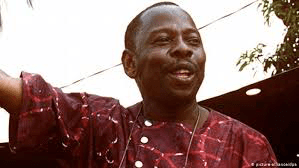
Deceased Nigerian poet Ken Saro-Wiwa for whom Adesina Ajala’s poem is written
There are seven special mentions. The winners are to be published in five digital poetry spaces including the new look Brave Voices Poetry Journal and the seven special mentions will be featured in two platforms including the BRAVE VOICES POETRY JOURNAL.
The 2019 Freedom Voices Poetry Writing Prize was paying Tribute to Unique Heroes/ Heroines. It is an Ode for Cadres of Resistance (human rights, anti-imperialistic, antiapartheid, freedom of expression, fight for political justice, right to economic justice and right to social inclusion) including:
Ken Saro-Wiwa for movement for the survival of Ogoni people ( Nigeria,) Dedan Kimathi (Kenyan liberation struggle),
Steve Biko (fighting inequalities in South African apartheid,)
Lookout Masuku (fighting for political justice in Zimbabwe),
Charles Dambudzo Marechera (PenSlinger of Truth in Zimbabwe),
Ambuya Nehanda (medium spirit of Chimurenga (war of liberation) in Zimbabwe),
Ruth First (South African fighter for civil rights),
Winnie Madikizela Mandela (Fighter for political and economic rights in South Africa,
Itai Dzamara (fighter for human rights and freedom of expression in Zimbabwe), and
Freedom Nyamubaya (gunslinger during war of liberation, poet against dictatorship regime in Zimbabwe).
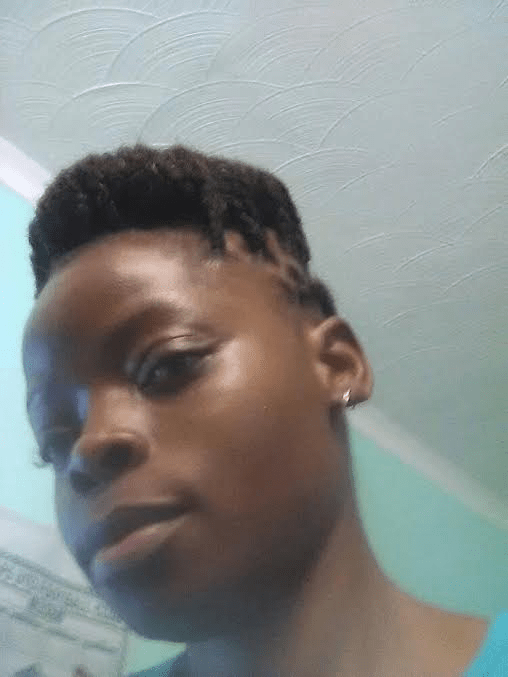
First Prize Winner, Nigerian Poet Adesina Ajala
ADESINA AJALA (Nigerian Poet) on winning the First Prize
SOZA’S BOY AND THE LEMONA’S TALE
For Ken Saro-Wiwa
October 10, 1941,
A sweet cry creaked into the crevices of Bori,
Cascaded with the swings of time
into songs in a time of war.
Like the anopheles mosquito, war was the drill poking Basi & company—
an ethnic minority, crisp lands & fecund rivers.
Shrapnel of crude oil scared faces of waters.
Oil marched the wicks of farmlands, wrecked every lushness in its paths.
A forest of flowers wilted, shed petals,
Became silhouette on a darkling plain.
The singing anthill homed bland silence.
This loud silence would be treason merely set in some four farcical plays.
Berserk bites of genocide in [Ogoniland] Nigeria.
& the Sozaboy chanted the Lemona’s tale—
the agony in the Ogoni girl became bared on the transistor radio.
& the warlords wrangled Wiwa’s weighted words,
Clasped him like prisoners of Jebs,
& clenched his body between the teeth of gallows.
Tell the hand that cuts the mahogany, his stump has sprout fresh leaves.
This poem, a leaf, sways.
Adesina Ajala is sprouting Nigerian medical doctor and writer, Adesina Ajala, desires to grow roots in the loam of the pen and the stethoscope. He does not know how he would fare, but he believes in journeying, in chances, possibilities and the divine. His works have found home in Writers Space Africa, EBOquills, Libretto, Featiler Rays, Brave Voices Poetry Journal and elsewhere. He was the co-winner of the first place of 2018 TSWF Writers Prize. He is on Instagram as and tweets @adesina_ajala.
CHRISPAH MUNYORO (Zimbabwean Poet) ON WINNING THE SECOND PRIZE
Second Prize Winner, Zimbabwe Poet Chrispah Munyoro
ECHO CHAMBER
When eobiont is my father
Living in darkness
Languishing sodom and gommorah
Christened by vampires
Baptised in Hades
My toys,wails and anguish
Bathing with my sweat
Lullaby of sjamboks,button sticks and tear gases
I am a graduate of doom
Hunger and thirst my delicacies
Daughters and sons of darkness
That chieftain ,who rule by subterfuge
Who had fried his heart eons ago
In glee at the cries of the babies
Salivating in total erasure of humans
Ejaculating venomous fire
How then can i think paradise is there
When i am a citizen of hell
Pot trained to be a hardcore bandit
Shrivelling,flowers squashed mercilessly
Future suspended and eroded
Pissing on the precious blemis
Expecting fruits from cactus
Chrispah Munyoro says, “I am a woman who never backs on what she wants to achieve. Ambiguous and hard work is the keys to success. Patience is a virtue I live by I don’t want cut out turn success. The saltiness of sweat unlocks hidden destinies. I am a down to earth woman who looks up to God with zeal.”
CHRISTOPHER KUDYAHAKUDADIRWE (Zimbabwe poet based in South Africa) on Winning the Third prize
THE BUDS ARE FRUITING
Who will tell Dambudzo Marechera
That the seeds that he sowed in us
Have sprouted and are doing well?
That’s right, we want him to know that
The flowers he left slowly budding
Have unfurled their bright petals
To grace the garden of literary bliss
Allowing bees to drink nectar sweet verse?
Who will tell our gallant literary hero:
One of the few who made living prophecies,
About the fermenting corruption
By trying nipping sprouting nepotism
And the cancerous looting in the bud
That would seize our house of stone?
Who will tell Dambudzo Marechera
What has become of the house of hunger
Which he was mind-blasting about
While non-believers stood on the fence
Pointing accusing fingers at him?
But, let me say: never mind your departure.
We, the little buds, will continue
That work that you left unfinished.
Christopher ‘Voice’ Kudyahakudadirwe is a Zimbabwean freelance writer, poet and teacher living and working in South Africa. His first poems appeared in a magazine called Tsotso which was published by the Budding Writers Association of Zimbabwe in the early 90s. Over the years his poems have been published in the following anthologies among others: Harvest: The University of the Western Cape Masters in Creative Writing Poetry Anthology 2016, Best “New” African Poets 2015 Anthology, Zimbolicious Poetry Anthology Volume 1. And his short stories in, Ghost-Eater and Other Stories, New Contrast, Moving On and Other Stories. He is currently running a poetry blog called http://www.kudyahakudadirwe.wordpress.com where he publishes his own poems.
The Magic was also in the Judging
OMWA OMBARA
Omwa Ombara
“The competition was pretty stiff. I hated to let some poems go. I hope the rest get literary mentions. Thank you for the opportunity to judge.”
Omwa Ombara ( First Phase Judge ).Omwa Ombara is The Editor in Chief at Tulipange Africa Media, a diaspora based Magazine in United States of America and Contributing Editor of Women Global Affairs at WOMAWORDS LITERARY PRESS.
TRACY YVONNE BREAZILE
Tracy Yvonne Brazile
“Reading the poems, I was delighted to find polished and confident voices. The poets offered a promise of creative potential surpassing my expectations. The quantity and quality of the writing served to motivate and challenge the mind with a common respect for the voices that linger in our shadows, reminding us of the importance that poetry can bring to problems that demand solutions. The only problem that I found was removing some from the list. This task was far more difficult that I had imagined. In the end, the poems that most closely matched the guidelines were the only match for decision making.
They were all beautifully crafted in both form and function. Although ultimately, there will be a list of winners, I found all of the poems that I read to be prized pieces of poetry that deserve a standing ovation. I found letters meant for reading and listening. Literature and Orature. I do declare, this was a tough task. Thank you, Brave Voices Poetry Journal 67, for paying tribute to unique heroes and heroines and celebrating their uniqueness.
Although ultimately, there will be a list of winners, I found all of the poems that I read to be prized pieces of poetry that deserve a standing ovation. I found letters meant for reading and listening. Literature and Orature.”
Tracy Yvonne Breazile (Second Judging Phase). is a writer living in the United States of America. She was granted the opportunity to serve as Writer/Mentor in Residence with the 2018 Zimbabwe We Want Poetry Mentorship Program, originated by Mbizo Chrirasha. Breazile studied Language and Literature with a concentration in Professional Writing at Columbus State University, Columbus, Georgia, USA
JAMES COBURN
James Coburn
“I was happy to read each poem. Each writer should be encouraged, as well as the ones not chosen. It was a pleasure reading the force and magnetic insight of each word. These are living words with a life of their own. Powerful and penetrating, forged in the flame of heart and traversing fear. Their ancestors would be proud.”
James Coburn is an Oklahoma poet in the United States of America. Coburn has always valued the subtext of life and seeks to reveal its undercurrents. He believes indifference is the enemy of man as it is the benefactor of ignorance, racism and xenophobia” James Coburn (Third Stage Freedom Voices Poetry Writing Contest). is an Oklahoma poet in the United States of America. Coburn has always valued the subtext of life and seeks to reveal its undercurrents. He believes indifference is the enemy of man as it is the benefactor of ignorance, racism and xenophobia.
MICHAEL DICKEL
Michael Dickel
“Poetry contest judges almost always must comment on the subjectivity of what we do. While the Freedom Prize has criteria to decide the quality of the poems, which I used, how well we / I as a single reader see the fit of any given poem to those criteria has to do with myself as reader as much as to the poem itself.
In this case, there were four criteria:
The poem fit the stated theme of the contest,
the poem was indeed poetry and not slogans and clichés,
the quality of the words and language used, and
the originality and creativity of the poem.
The first round of judging selected a “short-list” of ten poems, from which I was asked to select and rank the three best poems. All of this done anonymously, of course.
Another reader reading the ten poems on the short-list of poems might have found other poems of more merit for one reason or another. Reasonable readers may disagree with each other. I had the honor of being asked to select, and I have chosen three that I think stood out. However, this was not an easy task.
The passion of the voices in these ten poems would come across to any reader. The music of the poems, with rhythm and rhyme flowing, consonance and assonance, sounds crafted into what we call poetry. The poet of each of these poems deserves praise both for political activism expressed as poetry and for caring for others, their people, and the world.
The Third Place poem I chose is The Buds Are Fruiting. In this highly original poem, we learn “That the seeds…” Dambudzo Marechera“…sowed in us/ have sprouted and are doing well…” and “The flowers he left slowly budding/ Have unfurled their bright petals…” Unfortunately, “fermenting corruption,” “nepotism,” and “cancerous looting” have also budded, and need to be nipped. Merechera is blamed and indicted by finger pointers. Yet, the poem ends with hope: “We, the little buds, will continue/ That work that you left unfinished.”
The Second Place poem, Echo Chamber introduced me to a new word, eobiont (a hypothetical primordial pre-life chemical) in its opening line. The poem moves from the “father” (of life?) to “Living in darkness” and moves through Sodom and Gomorrah, vampires that Christen the speaker of the poem in Hades…the speaker’s “toys, wails and anguish/ Bathing with my sweat…” This dark poem paints a vivid picture in images painted with a few words, and in these images we see and feel the suffering of Africa and its children from “That chieftain, who rules by subterfuge/ Who had fried his heart eons ago/ In glee at the cries of the babies…” This poem strongly condemns and indicts the cruelty of those in power who savor the suffering of others. Rather than taking responsibility and stopping the suffering, they savor it, and this has cost them their hearts (and souls).
(For Ken Saro-Wiwa), my selection as the First Place poem in the Freedom Prize contest, combines the strengths of these other two poems. It speaks to an historical figure, using strong images and poetic skill to create a poem that reaches the heart, lays bare injustices, but also ends with a type of hope. After a significant date in the first line, “October 10, 1941,” we read “A sweet cry creaked into the crevices of Bori…” The repeated hard “c”— cry, creaked, crevices— pulls us along with some dread, given their contretemps to the “sweet.” The next line begins with “cascaded,” repeating that same hard “c” into “the swings of time/ into songs in a time of war.” In the next stanza we read that “Shrapnel of crude oil scarred faces of waters.” The oil goes on to “march” through farmland, destroying the environment as it goes, until “ This loud silence would be treason merely set in four farcical plays.” We are given “genocide,” “warlords,” and “gallows,” along the way “the agony in the Ogoni girl became bared on the transistor radio.” And after Saro has been hung, where is the hope? “Tell the hand that cuts the mahogany, his stump has sprout fresh leaves./ This poem, a leaf, sways.” The hope comes from the poem, from poets. At least, we hope that this will be true.)
—Michael Dickel, Jerusalem, November 2019
Michael Dickel (Finalists Judge). Michael (Dickel) Dekel has authored six published books and chapbooks (pamphlets) of poetry and short fiction, and published over 200 individually published poems, short stories, and non-fiction pieces, in addition to book-reviews and academic articles—under his birth name, Michael Dickel.
RESILIENCE IS THE KEY
“We advocate for freedom of expression and upholding of human rights through our voices of resistance –POETRY and Literary Arts Activism Interventions like the Freedom Voices Poetry Writing Prize.” MBIZO CHIRASHA is the Originator of the Zimbabwe We Want Poetry Campaign , Curator of the Brave Voices Poetry Journal and the Founder of the Freedom Voices Poetry Writing Prize .
Editor’s Note: This post is complied courtesy of Mbizo Chirasha, the three prize-winning poets, the four competition judges along with LitFest Harare, Brave Voices Poetry Journal, Freedom Voices Poetry Prize, and the Sotambe Festival. The poems, photographs and header illustration are under copyright to the poets, those photographed, and LitFest as noted. The judges own their narratives and photographs.
The blogosphere being what it is – a soundbite world – I know readers will be tempted to skim. I would submit the material here is worthy of close attention, the poems and the judges commentary offer much for us to ponder as caring and conscious human beings and as poets.
Jamie Dedes. I’m a freelance writer, poet, content editor, and blogger. I also manage The BeZineand its associated activities and The Poet by Dayjamiededes.com, an info hub for writers meant to encourage good but lesser-known poets, women and minority poets, outsider artists, and artists just finding their voices in maturity. The Poet by Day is dedicated to supporting freedom of artistic expression and human rights and encourages activist poetry. Email thepoetbyday@gmail.com for permissions, commissions, or assignments.
A bowl of frijoles negros courtesy of Badagnani under CC BY 3.0 license.
In the tradition of Señora Ortega’s own madre, la cocina was a place of teaching — about food, about life, about being a woman, about being human.
Her fate was set when she fell under the spell of his kind eyes and bigger than life personality. For his part, he loved her gentle ways, the fluid dance of her hands at work, the sensual swing of her hips as she walked to the market with basket in hand.
And so it happened that in 1948, with her father’s permission and her mother’s tears, they were wed in the old adobe iglesia where uncounted generations of her family had been married before her. Not many months after the wedding, she kissed her parents and siblings goodbye, took a long loving look at her village, and followed her new husband north to los Estados Unidos de América. She was already pregnant with Clarita.
Jamie Dedes. I’m a freelance writer, poet, content editor, and blogger. I also manage The BeZineand its associated activities and The Poet by Dayjamiededes.com, an info hub for writers meant to encourage good but lesser-known poets, women and minority poets, outsider artists, and artists just finding their voices in maturity. The Poet by Day is dedicated to supporting freedom of artistic expression and human rights and encourages activist poetry. Email thepoetbyday@gmail.com for permissions, commissions, or assignments.
Angel of the Divine Presence Bringing Eve to Adam, William Blake (The Creation of Eve and She shall be Called Woman), Ca.1803 Courtesy of the New York Metropolitan Museum of Art / public domain
“The soul of sweet delight, can never be defiled.” The Marriage of Heaven and Hell, William Blake
William Blake painted lots of men with burly thighs
He painted endings & impasses, full of weepings, warrings and sighs,
Showed us discontent and turbulence much, often, and more.
Because, as he knew of himself, ‘for double the vision my Eyes do see
And a double vision is always with me.’ As one does, he gets stuck in that place of mourning, like we do.
But he came forth back. To beginnings. Painting his “The Nativity,”
his baby Jesus spun flew out of birth through the air, arms stretched open wide,
Here in this balanced bringing Eve here, the birth-hood of woman.
No angry stretched fight-ready faces, no muscled thighs on the ready.
What a field of eyes, an effusion of gentle, this place of peaceful,
so fresh it looks transparent. Nothing weighed this down.
No rib mangling or second best. This is just fresh air.
Adam in some boyish expectation and Eve coming down curly,
Her heart and body sweet singing naked.
Down down down is up up up, it seems, a way forward to.
Birds beaked colors that faded gentle blue.
And Blake knew of misogyny and androgyny
But he let himself paint here a new equality story:
“Love and harmony combine,
And around our souls entwine.”
And he turns open nakedness into a blessing
Natural and sacred. Sweet sweet sweet.
more green woods Blake “going forth to faire free”
“When the green woods laugh with the voice of joy, And the dimpling stream runs laughing by; When the air does laugh with our merry wit, And the green hill laughs with the noise of it.” William Blake
I am delighted to let you know that Linda Chown’s Narrative Authority and Homeostasis in the Novels of Doris Lessing and Carmen Martín Gaite(Routledge Library Editions: Modern Fiction) is now available through Amazon in hardcover and Kindle. Linda tells me a budget-wise paperback edition will be available in six-to-eight months.
This study, originally published in 1990, assesses a shift in the presentation of self-consciousness in two pairs of novels by Doris Lessing and Carmen Martín Gaite: 1) Lessing’s The Summer Before the Dark(1973) and Martín Gaite’s Retahílas (1974) and 2) Lessing’s The Memoirs of a Survivor (1974) and Martín Gaite’s The Back Room (1978). Three major structural divisions facilitate examining implications of the novels for 1) feminism 2) literary narrative and 3) the lives of people-at-large. / J.D.
LINDA E. CHOWN grew up in Berkeley, Ca. in the days of action. Civil Rights arrests at Sheraton Palace and Auto Row. BA UC Berkeley Intellectual History; MA Creative Writing SFSU; PHd Comparative Literature University of Washington. Four books of poetry. Many poems published on line at Numero Cinq, Empty Mirror, The Bezine, Dura, Poet Head and others. Many articles on Oliver Sachs, Doris Lessing, Virginia Woolf, and many others. Twenty years in Spain with friends who lived through the worst of Franco. I was in Spain (Granada, Conil and Cádiz) during Franco’s rule, there the day of his death when people took to the streets in celebration. Interviewed nine major Spanish Women Novelists, including Ana María Matute and Carmen Laforet and Carmen Martín Gaite.
Jamie Dedes. I’m a freelance writer, poet, content editor, and blogger. I also manage The BeZineand its associated activities and The Poet by Dayjamiededes.com, an info hub for writers meant to encourage good but lesser-known poets, women and minority poets, outsider artists, and artists just finding their voices in maturity. The Poet by Day is dedicated to supporting freedom of artistic expression and human rights and encourages activist poetry. Email thepoetbyday@gmail.com for permissions, commissions, or assignments.
“I have been seeing such increasing evidence of abuse recently that I felt it was time to do something. I am not a silent poet looks for poems about abuse in any of its forms, colour, gender, disability, the dismantlement of the care services, the privatisation of the NHS, the rape culture are just the examples that come to mind at the moment. It is not a site for rants which, if they are well written are welcome here [i.e. Facebook]. My idea for this group is for discussion about abuse and what we can do about it. There is room here, of course for poetry. I just felt it was time for me to get off my arse and try to do something.” Reuben Woolley, publisher of the webzine I Am Not A Silent Poet, A magazine for poetry and artwork protesting against abuse in any of its forms
Reuben Woolley died last week and so many of us are feeling the loss of this man who shared our ideals, wrote poems of protest and resistance, and published “quality poems of protest” on his webzine site as well as poetry and information on his Facebook discussion page. His most recent book. This Hall of Tortures, was published in April 2019. He recently sent me a copy for review. I was waiting until he got out of the hospital to send my interview questions.
“I am not a silent poet looks for poems about abuse in any of its forms: colour, gender, disability, the dismantlement of the care services, the privatisation of health services, the rape culture, FGM, our girls in Nigeria are just some of the examples that come to mind at the moment. It is not a site for rants.”
Reuben was laid to rest on Monday and his daughter writes, “Although he was not a religious man, we decided to do brief ceremony at the Iglesia de los Milagros in Ágreda. In the same place where he and my mother got married 40 years ago, we came today to cry his death and celebrate his life.
“Remembering all our roadtrips around the UK listening to the Rolling Stones’ album “Let it Bleed” , I thought that playing for him “You can’t always get what you want” one last time would be a good way to remember him. Personally, I think he would have got a huge kick out of knowing that he caused a Rolling Stones’ song to be played in this quaint Spanish cemetery. Cheers dad.”
requiescat in extremis
the dark denizens
come forward
in flux
& what i have is
the hole in the picture the
red balloon & a child
follow me this
again
& one time only
here
there is weather a
hindrance & my chair i
sit too much listening
to pure crazy jazz
in this brain my
dangerous habitat
extinguish me now say
a pointless gesture ever & down
load this my stupid requiem
In the spirit of I am not a silent poet and in honor of Reuben, please share a protest poem or two – any topic but NO RANTS, per Reuben’s rules. Comments on and memories of Reuben are welcome also if you’d like and will be published along with your poem/s next Tuesday.
please submit your poem/s by pasting them into the comments section and not by sharing a link
please submit poems only, no photos, illustrations, essays, stories, or other prose
PLEASE NOTE:
Poems submitted through email or Facebook will not be published.
IF this is your first time joining us for The Poet by Day, Wednesday Writing Prompt, please send a brief bio and photo to me at thepoetbyday@gmail.com to introduce yourself to the community … and to me :-). These are partnered with your poem/s on first publication.
PLEASE send the bio ONLY if you are with us on this for the first time AND only if you have posted a poem (or a link to one of yours) on theme in the comments section below.
Deadline: Monday, December 9 by 8 pm Pacific Time. If you are unsure when that would be in your time zone, check The Time Zone Converter.
Anyone may take part Wednesday Writing Prompt, no matter the status of your career: novice, emerging or pro. It’s about exercising the poetic muscle, showcasing your work, and getting to know other poets who might be new to you.
You are welcome – encouraged – to share your poems in a language other than English but please accompany it with a translation into English.
Jamie Dedes. I’m a freelance writer, poet, content editor, and blogger. I also manage The BeZineand its associated activities and The Poet by Dayjamiededes.com, an info hub for writers meant to encourage good but lesser-known poets, women and minority poets, outsider artists, and artists just finding their voices in maturity. The Poet by Day is dedicated to supporting freedom of artistic expression and human rights and encourages activist poetry. Email thepoetbyday@gmail.com for permissions, commissions, or assignments.










 I am delighted to let you know that Linda Chown’s


 Reuben Woolley died last week and so many of us are feeling the loss of this man who shared our ideals, wrote poems of protest and resistance, and published “quality poems of protest” on his webzine site as well as poetry and information on
 Jamie Dedes' THE POET BY DAY Webzine