Jamie Dedes. I’m a freelance writer, poet, content editor, and blogger. I also manage The BeZineand its associated activities and The Poet by Dayjamiededes.com, an info hub for writers meant to encourage good but lesser-known poets, women and minority poets, outsider artists, and artists just finding their voices in maturity. The Poet by Day is dedicated to supporting freedom of artistic expression and human rights and encourages activist poetry. Email thepoetbyday@gmail.com for permissions, commissions, or assignments.
December 2, 2019: In honor of a valued poet, a reblog of this 2017 post on Reuben and HERE is the link to Paul Brookes’ interview.
Reuben Woolley’s poetry is minimalist, sinuous on the page – or sometimes scattered like landmines waiting to explode. I find his work addictive and his latest book Skins (Hesterglock Pess, 2016) is going to be a gift to myself next month. Proceeds from sales go to CalAid.
Reuben’s poems, while exquisitely trimmed of all excess, are still rich with imagery and emotion.
Stylistically, I’m reminded of e.e.cummings.
Yes! I like the way he writes. More importantly, I’m glad Reuben chose to use his deft pen and kind heart to bring more awareness to the darkness in humanity, hanging our dirty laundry out to be seen and not denied. He tells the hard truth. If you are not devastated then you have grown numb to the injustices of our world. This is why we need poets like Reuben, to sound the clarion call and to bare witness.
With Reuben’s permission, here are two poems and look for more of Reuben’s work in the January 15 issue of The BeZine.
lessons
this is the fear
of a first breath
start counting
now
this is laughter
through bleeding membranes
don’t hope for wings
or terminal
stations
we walk the subway
mazes.the painted
maps & all their changes
…………drilling
skulls gives no answers
& death itself
is rarely clean
to this we came.not this
wrapping
a mind round wires
& razors ……………..cut
i’ll wear the given
shoes so well in these
white
streets
……………....it isn’t
the same
the running from metal
……………….the bombs
they make who give
the shoes but
still
they’re laughing at us
mother
THE FOURTH INTERNATIONAL FESTIVAL OF POETRY, MARRAKESH
Reuben is invited to the Fourth International Festival of Poetry in Marrakech, Morroco in April. He plans to take poems from I am not a silent poet, his online magazine. The Festival covers hotel and catering costs but doesn’t pay anything towards transport. Like all of us who live off the proceeds of poetry, his purse is a little light. Reuben set-up a crowd funding page to raise the money for the airfare. That’s the main reason I wanted to introduce Reuben to you today. Here’s the invite. The “Mrs.” is a typo and festival organizers have promised to correct it. Reuben’s crowd-funding site is HERE.
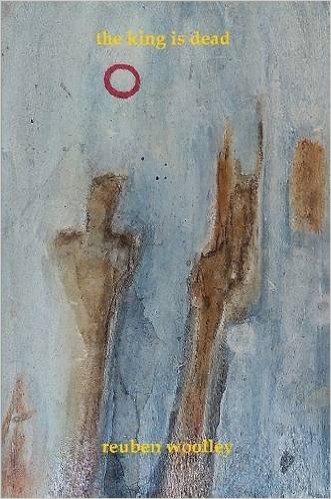
Reuben Woolley is published in various magazines including Tears in the Fence,The Lighthouse Literary Journal, The Interpreter’s House, Domestic Cherry, The Stare’s Nest and Ink Sweat and Tears. His collection, the king is dead was published in 2014 with Oneiros Books and a chapbook, dying notes, in 2015 with Erbacce Press. Reuben was runner-up in the Overton Poetry Pamphlet competition and the Erbacce Prize in 2015. A new collection on the refugee crisis, skins, was published by Hesterglock Press, 2016:
Reubensays, he “pretends to be busy editing the online magazines: I am not a silent poet and The Curly Mind.”
I am not a silent poet is a zine dedicated to poetry and artwork of protest against abuse in all shapes and forms. Reuben’s motivation for founding the site: “I have seen such increased evidence of abuse recently that I felt it was time to do something. I am not a silent poet looks for poems about abuse in any of its forms, colour, gender, disability, the dismantlement of the care services, the privatisation of the NHS, the rape culture and, of course, war and its victims are just the examples that come to mind at the moment.”
Income earned (or not) by inmates v. charges for reading-time in the feature below: “In 1865, the United States passed the 13th Amendment to the United States Constitution, which banned slavery and involuntary servitude “except as punishment for a crime whereof the party shall have been duly convicted.” This provided a legal basis for slavery to continue in the country.
As of 2018, many prisoners in the US perform work. In Texas, Georgia, Alabama and Arkansas, prisoners are not paid at all for their work. In other states, as of 2011, prisoners were paid between $0.23 and $1.15 per hour. Federal Prison Industries paid innmates an average of $0.90 per hour in 2017. In many cases the penal work is forced, with prisoners being punished by solitary confinment if they refuse to work.From 2010 to 2015 and again in 2016, and in 2018 some prisoners in the US refused to work, protesting for better pay, better conditions, and for the end of forced labor. Strike leaders are currently punished with indefinite solitary confinement. Forced prison labor occurs in government-run prisons and private prisons.
The prison labor industry makes over $1 billion USD per year selling products that inmates make, while inmates are paid very little or nothing in return.In California, 2,500 incarcerated workers are fighting wildfires for only $1 per hour, which saves the state as much as $100 million a year.” MORE Wikipedia
“West Virginia’s recent institution of pay-per-minute electronic tablets in prisons is predatory and would effectively limit prisoners’ access to free books,” according to PEN America. The program allows incarcerated people to read a limited selection of books from a free online library, but the service provider will charge up to 5¢ per minute to access this content. The state sharing some of the revenue. The private vendor, Global Tel Link, also reportedly maintains the right to raise prices without state permission.
“If you want to demonstrate how misguided prison policies towards access to literature have become, this serves as a perfect example,” said James Tager, deputy director of Free Expression Research and Policy at PEN America. “Incarcerated people are actually being charged money to read books already in the public domain, and the state gets a portion of the revenue. Not only is this a predatory policy that will actively disincentivize incarcerated people from reading, but it rewards the state for being complicit in these restrictions. After all, do we really expect West Virginia prison officials to develop more permissive policies towards book access now that the state is literally receiving a monetary award for funneling incarcerated people towards these pay-per-minute plans?”
In its September 2019 report Literature Locked UpPEN America examined the recent trend of prisons deploying e-readers. In November 2018, responding to public pressure, the state of Pennsylvania reversed a policy that banned physical book orders and required prisoners to buy e-tablets in order to read. Civil rights groups have increasingly warned that prisons may turn to e-tablets as a lower-cost substitute for physical services — such as law libraries or access to legal assistance — in ways that ultimately degrade the substance of incarcerated people’s constitutional rights.
“The average person may see a headline that says ‘prisoners receive e-tablets’ and think that such an agreement can only be beneficial for the incarcerated population’s right to read. Not necessarily,” Tager said. “We have to look at how these policies are being implemented in practice. Are they truly enlarging incarcerated people’s access to literature? Or are they further entrenching the idea that access to literature is a privilege for incarcerated people and a source of profit for the state? In the case of West Virginia, charging for per-minute access to books in the public domain clearly falls in the latter category. Access to free books should be free. Period.”
This feature is courtesy of PEN America, Wikipedia, and PrisonPolicy.org
PEN America a stands at the intersection of literature and human rights to protect open expression in the United States and worldwide. It champions the freedom to write, recognizing the power of the word to transform the world. Its mission is to unite writers and their allies to celebrate creative expression and defend the liberties that make it possible.
Jamie Dedes. I’m a freelance writer, poet, content editor, and blogger. I also manage The BeZineand its associated activities and The Poet by Dayjamiededes.com, an info hub for writers meant to encourage good but lesser-known poets, women and minority poets, outsider artists, and artists just finding their voices in maturity. The Poet by Day is dedicated to supporting freedom of artistic expression and human rights and encourages activist poetry. Email thepoetbyday@gmail.com for permissions, commissions, or assignments.

 Jamie Dedes. I’m a freelance writer, poet, content editor, and blogger. I also manage The BeZine and its associated activities and The Poet by Day jamiededes.com, an info hub for writers meant to encourage good but lesser-known poets, women and minority poets, outsider artists, and artists just finding their voices in maturity. The Poet by Day is dedicated to supporting freedom of artistic expression and human rights and encourages activist poetry. Email thepoetbyday@gmail.com for permissions, commissions, or assignments.




 Jamie Dedes' THE POET BY DAY Webzine