Poets, Poetry, News, Reviews, Readings, Resources & Opportunities for Poets and Writers
Author: Jamie Dedes
Jamie Dedes is a Lebanese-American poet and free-lance writer. She is the founder and curator of The Poet by Day, info hub for poets and writers, and the founder of The Bardo Group, publishers of The BeZine, of which she was the founding editor and currently a co-manager editor with Michael Dickel. Ms. Dedes is the Poet Laureate of Womawords Press 2020 and U.S associate to that press as well. Her debut collection, "The Damask Garden," is due out fall 2020 from Blue Dolphin Press.
BEST PRACTICE: “FAITH & HOUSING WEEKEND” I am helping with this county-wide effort to address the housing crisis in our area. Between 2010 and 2014, San Mateo County produced 2,100 new housing units and 54,600 jobs. It’s not hard to imagine the resulting decrease in affordable housing and increase in homelessness and other stressful conditions. “The Faith and Housing Weekend” was born of a recent Clergy Housing Summit. At the Summits clergy and county officials unite to understand the crisis and to target solutions for ultimately achieving “Homes for All.”
I am proud of area clergy representing many faiths who have gathered with prayer and intention at the Clergy Housing Summits and are planning collaborative efforts (in numbers there’s strength) that can be implemented by them and their synagogues, mosques and churches to better serve our community. This weekend – “Faith and Housing Weekend” – many of our faith organizations will host educational sessions to provide information to their congregations on the housing crisis, resources, the local ballot initiatives for November 8th, and the ways individually and together members can help resolve the shortage and affordability challenges.There will also be sermons, homilies, music, and prayer. Bravo!
I’ve posted this info because there are many communities around the world where people are homeless for a variety of reasons. This is “a best practice” and one that I suspect could be implemented pretty much anywhere.
Thank you for sharing your love of words. Comments will appear after moderation.
The Madonna in Sorrow Giovanni Battista Salvi (1609-1685)
gentlemen of the old school
those devotees of Mary …
Mother of Christ, Handmaid of the Lord
seeing her in every woman …..generously
even me – daughter, mother, niece, friend –
protagonist, antagonist,
on-again off-again wife
simmering slowly in the broth of the cosmos
never quite done, never quite done …..but they were … ………they were
gentlemen of the old school
dedicated to the real men in my life from whom you will not hear “locker room” talk
The Wiyot lived in the Humboldt Bay area of Northern California and they live in my dreams. For about a year-and-half we made our home in Humboldt County, an area about 200 miles north of San Francisco on the far North Coast. It’s a place dense with redwood forests, wild rivers, and creeks that run dry in the summer and overflow in the winter. If you live in a rural area or grew up in one, you might take such things for granted. Having lived in paved-over cities all my life, they seemed magical to me.
Our four acres were rich with sequoia, madrone, oak, and twenty-eight fruit trees. Blue jays flew in to feed in the morning. Quail families visited at night. They marched down our drive in orderly formation. Hawks and hummingbirds put on air shows. Rosemary thrived unattended. There was a beautiful lush 100-year-old rosebush. There were wild roses too. They gifted us hips for homemade cough syrup.
Scotch Broom
The colors there were brilliant and varied: smog-free blue skies (you could see the stars at night!), rich brown earth, a population of purple iris in a grove of California bay laurel, orange cosmos and red dahlias, yellow scotch broom lining our creek-side in the company of cascading Japanese quince. The Japanese quince provided ample housing for Rufus hummingbirds. Nearby, Queen Ann’s lace stood unbent by the wind. When it went to seed we collected the seeds for cooking. They have a taste somewhere between carrot and caraway.
The spread of blackberry bushes was both wonder and wealth. They seemed never to run out of fruit. I gathered some almost every morning for breakfast and every morning I thought of the women in buckskins who preceded me more than a century ago. Perhaps there was a mother who stood on this spot, picking blackberries for her son too.
I think the peace, quiet and simplicity of that place made it easy to imagine the first peoples as they might have lived there in other times. I could see them tending fires, boiling and drying acorns and then grinding them for flour, bathing in the river, raising their children, gathering wood, hunting and enjoying sacred ceremony. I knew the very same ancient sequoia that watched over us had watched over them.
Qual-a-wa-loo (Humboldt Bay) near Eureka, traditional Wiyot lands, The 1860 Wiyot Massacre happened on Indian Island
Finally, I did some research. I was sad but not surprised to find that the area was once inhabited by an indigenous people – the Wiyot people – who were decimated in a genocide ~
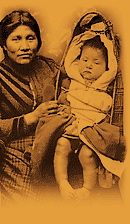
Wiyot Mother and Child
“Eureka newspapers of the time exulted at the night massacres conducted by the “good citizens of the area”. Good haul of Diggers and Tribe Exterminated! were 2 headlines from the Humboldt Times. Those who thought differently about it were shut up by force. Newspaper publisher and short story writer Bret Harte called it “cowardly butchery of sleeping women and children” — then had to flee ahead of a lynch mob that smashed his printing presses.” MORE [Wiyot Tribal Council Page]
Note: Originally written in 2012, I’ve posted this today as a an acknowledgement of Indigenous Peoples’ Day, October 12. More than 40 US jurisdictions celebrate Indigenous Peoples’ Day; the majority of these have replaced Columbus Day with this holiday, but some jurisdictions celebrate both Columbus Day and Indigenous Peoples’ Day.
In addition to reading here, please also treat yourself to Michael Watson’s post Silence, Story, and Healing, a short and thoughtful piece.
Perhaps you too grew up in a time and place where the history books taught a one-sided view of the land you live on and the people who originated there. Perhaps, like me, you had to get out of school and meet new people, read books that weren’t sanctioned by academic authority and do your own research to learn about the devastation that was and is rained upon indigenous people all over the world … the violence, the slavery and the genocide. Perhaps you are a descendent of the original people who suffered so and know the truth from the stories of your elders. Perhaps your roots are in the nations of empire and you are saddened that they perpetrated or were complicit in such unimaginable injustice.
We can’t change what happened in the past but as writers and poets we can make sure that lies aren’t propagated and that the truth is told and shared. Write a poem, short story, essay or article that illustrates some aspect of colonialism, racial bias and stereotype, or the modern complications of colonial history.
Thank you for sharing your love of words. Comments will appear after moderation.
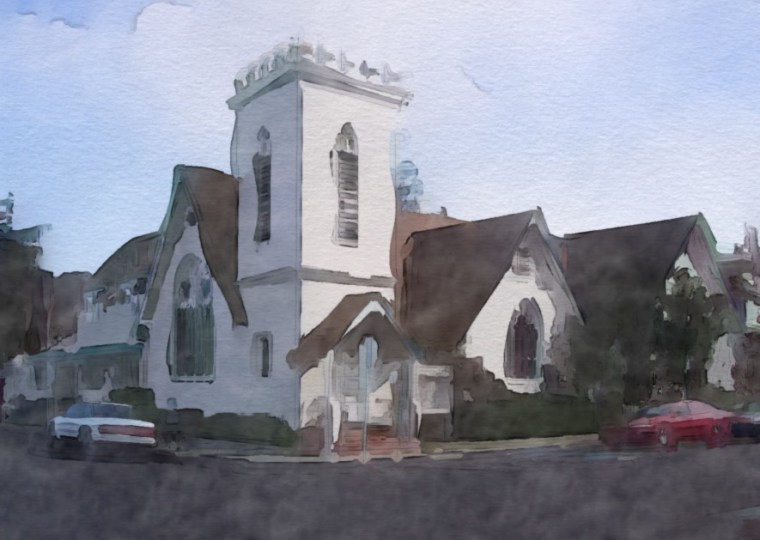 BEST PRACTICE: “FAITH & HOUSING WEEKEND” I am helping with this county-wide effort to address the housing crisis in our area. Between 2010 and 2014, San Mateo County produced 2,100 new housing units and 54,600 jobs. It’s not hard to imagine the resulting decrease in affordable housing and increase in homelessness and other stressful conditions. “The Faith and Housing Weekend” was born of a recent Clergy Housing Summit. At the Summits clergy and county officials unite to understand the crisis and to target solutions for ultimately achieving “Homes for All.”





 Jamie Dedes' THE POET BY DAY Webzine