Page 323 of 433

CELEBRATING AMERICAN SHE-POETS (25): Olympian Alexi Pappas, draws attention to the art of the poem

Olympic_rings_without_rims.svg

So many of us are enchanted by Alexi Pappas, the Greek-American, poet, film-maker and Olympic champion. She’s not only wholesome, bright-spirited and hard-working, she’s a talent who, by virtue of interest and ethnic heritage,  links the historic roots of the Olympics with the modern event . . . and she’s drawing attention to our primary love, poetry. This is altogether a lovely package.

Scary Things

The thing about scary things
like spiders
is that they do not scare me
nearly as much
as the things I want the most.

The want things creep and stay
live in my mind–
a much harder place to reach and find
cannot be killed
will grow instead
unlike the spider in my bed
the scary want inside my head
is not afraid
and will not flee
rather than boo
says come and get me.

– Alexi Pappas

We couldn’t let this week go by without acknowledging Alexi Pappas, who has dual citizenship – U.S. and Greece. She explains here why she chose to run for Greece, but she was born in the States and her hometown is Alameda, California.

RELATED
Road to Rio is paved with poetry for runner Alexi Pappas, PBS Broadcasting
This Olympian — and poet — on her love for “freedom within boundaries”, PBS Broadcasting
Alexi Pappas, Wikipedia
Alexi Pappas, Dartmouth University Big Green (Sports)

WHO WILL FORGIVE GOD, a poem . . . and therein lies your Wednesday Writing Prompt

"The Apotheosis of War" 1871, Vasily Vereshchagin
“The Apotheosis of War”

God is on our side …
without a shadow of a doubt
they said and
no nay-saying her parents
her husband, her people
the politicos and demigods
their war-mongering

her eyes surveilled the warriors as
they cut across fields of innocence,
they stomped and postured

no Light shining from dark disorder
no Joy in parting a sea of blood

in her heart: doubts
large, lively, captive
packed tight into small muscle,
specters beating at the walls

ribs
sore

eyes
burning

soul
aching

they know not what they do

God forgives them all, she was taught
But who will forgive God

– Jamie Dedes

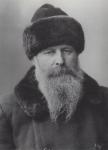
Vasili Vereshchagin
Vasili Vereshchagin

The Apotheosis of War painting (1871) is by Vasily Vereshchagin (1842-1904), a Russian artist, who dedicated this painting and one other – Left Behind  (a wounded Russian soldier abandoned by his comrades) – “to all conquerors, past, present and to come…”

WRITING PROMPT

There were several observations that contributed to this poem but, most of all, it was reading some comments on Facebook, especially this one: “If this is God’s will then God has a lot of explaining to do.”  War, destruction, murder: God’s will, free will, or the apotheosis of nihilism (insanity)? Write something that – by virtue of its brevity – is pungent: a poem or perhaps a parable.

Please feel free to put a link to your poem or parable below in comments so that I and others may come read your work.

© 2016, poem, Jamie Dedes, All rights reserved; the portrait of Vasili Vereshchagin and the photograph of “The Apotheosis of War” are both in public domain.

HEADS-UP NEW YORK: The Hollywood Dreamcatcher and Broadway, Booze & A Song of Life, a one-act play

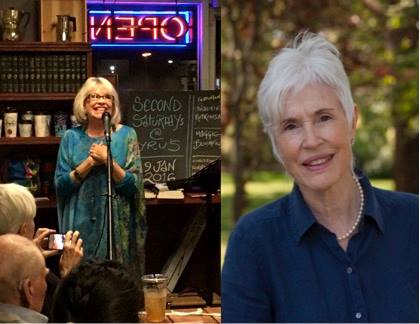
13912701_10153786663552895_1546171734444479484_nTHE HOLLYWOOD DREAMCATCHER by Susan Dingle &
BROADWAY, BOOZE & A SONG OF LIFE by Maggie Bloomfield

In this one-act play, two long-term recovering women, poets and therapists bring their stories from Broadway and Hollywood to prisons and meetings. Their youthful misadventures, told in poetry and conversation, are at once crazy, hilarious and heartbreaking. The shows reflect on their histories, friendships and how they found their voices in sobriety, with the hope of inspiring others toward recovery and change.

Directed by Andrew Botsford & Rosemary Cline. Tickets $20 RSVPs are encouraged: (631) 287-4377
Saturday, September 24 at 7 PM – 10 PM in EDT
Southampton Cultural Center: 25 Pond Ln, Southampton, NY 11968

The Facebook page for this event is HERE.

© photograph, Susan Dingle and Maggie Bloomfield

SELF-PITY AND SELF-AGGRANDIZEMENT, the snares of writing from one’s own biography

IMG_0689 (1)What feeds our imagination: the lives of others or our own lives? My impulse is to say a healthy dollop of each, but it is always interesting to see what someone else has to say.  Poet Nikki Giovanni says,

I want to be clear about this. If you wrote from experience, you’d get maybe one book, maybe three poems. Writers write from empathy.”

51ZfrreZciL._SX332_BO1,204,203,200_

In contrast the Dominica-born British novelist Jean Rhys wrote five stunning novels milked from her own life. Autobiographic elements are even in Wide Sargasso Sea, Rhys’ post-colonial drama in which travesties of racial inequality, patriarchy, displacement and assimilation are themes. This book, a much-lauded prequel to Charlotte Brontë’s Jane Eyre, evolved from Rhys’ dissatisfaction with Brontë’s treatment of Antoinette Cosway, from Rhys’ own life experience of rejection and emotional turmoil, and from her observation of and distress with how the people of Dominica were viewed and treated by colonizers.  The book is her (re)vision of Antoinette Cosway, a Creole heiress, married for her money to an unnamed English gentleman who changed her name and pronounced her mad. Antoinette does not fit in with the Europeans or the Jamaicans. In her own life Jean Rhys never felt that she fit in.

Jean Rhys was an astute self-observer, scrupulously honest.  She worked hard to avoid both self-pity and self-aggrandizement or congratulation. If you’ve read her work you know she largely succeeded.

In one of Rhys journals she imagines herself in court:

It is in myself.

What is?

All. Good evil, love, hate, life, death, beauty, ugliness.

And in everyone?

I do not know everyone. I only know myself.

And others?

I do not know them. I see them as trees walking.

Counsel for the Prosecution: There you are!  Didn’t take long, did it?

Clearly Jean Rhys felt her own life was what she knew best, the podium from which she could speak. She did what she felt called to do, what was natural for her. By being careful and conscious she avoided the pitfalls of self-pity and self-aggrandizement. Certainly to one degree or another writing is therapy. Most of us agree on that. At its best, however, it doesn’t read that way.

© 2016, Jamie Dedes