The World as I Remember It and 100,000 Poets for Change, 2018
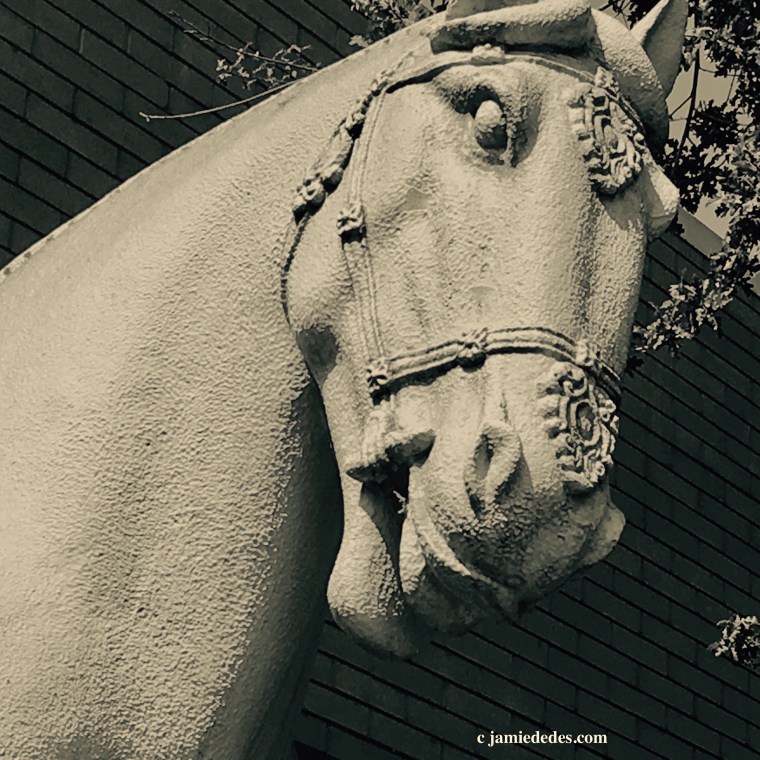
“It is from numberless diverse acts of courage and belief that human history is shaped. Each time a [wo]/man stands up for an ideal, or acts to improve the lot of others, or strikes out against injustice, he sends forth a tiny ripple of hope, and crossing each other from a million different centers of energy and daring, those ripples build a current that can sweep down the mightiest walls of oppression and resistance.” ~ Robert F. Kennedy South Africa, 1966
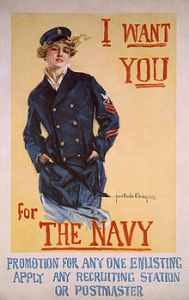 I was born smack-dab in the middle of the last century when military men and women had come home from fighting the Second World War and when it seemed that most women on the home front took up childbearing and housekeeping again, leaving their paid employment to the men. Many ex-military went back to school – to college – on GI loans. Families moved from the cities to newly blossoming Levittowns and “atomic” kitchens were all the rage. Ambitious young people relocated from the country to the city to find employment and foster careers. In that post-war America, everyday citizens were doing their best to heal and to modernize for both good and ill. Life is never easy or fair though for the poor and minority.
Emmett Till before and after the lynching on August 28, 1955. He was a fourteen-year-old boy in Chicago who went to spend the summer together with his uncle Mose Wright in Money, Mississippi, and was killed by white men for allegedly whistling at a white woman. Photographs courtesy of 5EmmettTillAfter under CC BY 2.0 license

Family farms were still going concerns and our food system was in the relatively early stages of its current degradation. I don’t remember the morbid obesity of today. Our world wasn’t as rife with allergies, gluten enteropathy, inflammatory disease, auto-immune disorders or diabetes 2 or 3. Our food then was still comparatively clean. So was the air, the land, the oceans and the rivers. We could fish and go swimming in places where you wouldn’t dip a toe in the water now. Roundup – Glyphosate -didn’t hit the ground until 1977.
The big supermarket chains that were founded in the late 1800s and early 1900s were expanding. Our first Safeway arrived when I was seven. This huge, fancy well-lighted store introduced us to TV dinners and frozen food, so-called convenience foods with all their dangerous chemical additives. This monster-sized store was the beginning of the end for the little mom-and-pop neighborhood groceries run by friends and neighbors who would sell to us on credit, using an index card file to keep a tab on each family’s debt. I have a vague – perhaps inaccurate – memory of Harold Robbins writing rather poignantly about the loss of family run groceries in the introduction to one of his books.

The recession that started in 1948 flowed into the third quarter of 1950. Another recession came in 1953. There was the Korean War and the Vietnam War and, unforgettably, that geopolitical tension we call the Cold War. It inspired some thrilling espionage novels and movies. My mother wasn’t a reader and didn’t track my reading habits. Left to my own devices, I cut my spy-novel teeth on Ian Flaming’s work. Meanwhile, poor boys in skin-tight black pants sang a capella on our street corners at night.
As we moved into the ’60s the neighborhoods and occupational arenas were still as strictly delineated as a checker board. Some neighborhoods were referred to as “dark,” meaning browns and blacks lived there. Shrafft’s hired “Irish girls just off the boat” to wait on elderly white women with silvery-blue rinses in their faded hair. The kitchen “help” was generally “colored.” At Nedick’s and other food purveyors the food prep and wait-staff were always black or brown. If you could pass for white you probably did. It’s about survival. Management was uniformly white male wherever you went. Women got low-paying clerical jobs in pink-collar ghettos.

Sometime in the early to mid sixties I read an article about W. Somerset Maughm in Life magazine. The author referred to Maughm as a misogynist. I had to look the word up. How, I wondered, could someone write a good story if he or she hated half of humankind? To see, I got copies of The Razor’s Edge and Of Human Bondage. It turned out, of course, that “misogynist” was code for homosexual and sadly disrespectful of this compassionate and talented man. But the times they were ‘a-chaining.
The African-American Civil Rights movement that began in ’54 gained traction with sit-ins and marches and the continued heroic and dedicated work of Dr. Martin Luther King, Jr. and others. There were heart-rending events but there was also some legal and social progress.

In ’63 Betty Friedan’s The Feminine Mystique was published by W.W. Norton. The reaction was mixed. Women who were minorities and/or poor or lower middle-class (that would be me and mine) found it difficult to sympathize with Friedan’s privileged suburban housewives. Nonetheless, the book is credited for initiating the “second wave of feminism.”
The late sixties was marked by “consciousness raising,” a style of activism encouraged by American feminists. Things did get better. Not everyone appreciated diversity in their neighbors and coworkers, but many did and learned to work for and with “others” and to hobnob in racially/ethnically mixed neighborhoods and social organizations. Windows opened and employment, education and housing became certainly not perfectly fair but more equitable opportunities then they’d been in the past. People were aware and vocal in their moral objections to inequality, to racial/ethnic, sexual and sexuality prejudice, to environmental degradation, to wars and conflicts. So many of us were dreamers and we had hope that one day “the world will live as one.”
Though the world continued to reflect human imperfection, we retained a certain optimism. We’d made progress that enabled us to envision and work for even more gains toward peace, social justice, environmental stewardship and environmental justice. These days, we need to remember our history. We can’t let optimism die in the face of the fallout from the last U.S. election and the violence we see in so many areas of the world. If we do, all is lost and that guy, his cronies and others who think like him will win.
We poets, writers, other artists and our friends and supporters have a powerful vehicle for old-fashioned consciousness-raising and change: 100,000 Poets (and other artists and friends) for Change, a global movement founded by Michael Rothenberg and Terri Carrion in 2011. Michael and Terri are wonderful at creating opportunities for activism and advocacy. Link HERE to learn more about what they’re doing and HERE to the official site. Become involved. Touch hearts. Speak truth. Embrace hope. Small steps – as our history teaches us – can lead to progress. Poem on …
ABOUT
- The Poet by Day, an information hub serving poets and writers
- The BeZine, founding and managing editor
- Beguine Again, regular contributor
- Second Light Network of Women Poets, professional affiliation
- Testimonials
- Disclosure






 Jamie Dedes' THE POET BY DAY Webzine