Page 48 of 131

PEN AMERICA CALLS FOR THE TRUMP ADMINISTRATION TO RESCIND ITS MUZZLE ON FEDERAL EMPLOYESS

pen_american_center_official_logoYesterday,Tuesday, January 24, President Trump issued orders to several federal agencies to cease all communications with Congress, the press, and the public. PEN America decried the orders.

“This action is incompatible with American democratic values of government transparency and the public’s right to know,” PEN America statement

Multiple sources inside the government have told the press that the Environmental Protection Agency, the U.S. Department of Agriculture, and the Department of Health and Human Services, ordered employees to cease external communications, including press releases, blog and social media posts and correspondence with other public officials.

Federal employees have expressed concern that the communications blackouts will impede work, disrupt communication across branches of the government and leave the public in the dark.

“Blanket orders from the Trump Administration preventing the staffs and experts of federal agencies from communicating with the public send a chilling message that every governmental communication, no matter how routine or technical, will now be subject to a political litmus test,” said Suzanne Nossel, Executive Director of PEN America.

“Federal officials are being cut off from the American public, impairing their work and denying the American citizenry access to necessary information and understanding about the work of our federal government. These blunderbuss and draconian measures infringe upon free expression and the flow of information and ideas, imposing constraints that befit an autocracy, not American democracy. They should be rescinded immediately.” Suzanne Nossel

PEN America stands at the intersection of literature and human rights to protect open expression in the United States and worldwide. PEN champions the freedom to write, recognizing the power of the word to transform the world. It’s mission is to unite writers and their allies to celebrate creative expression and defend the liberties that make it possible.

Public domain illustration.

RELATED:

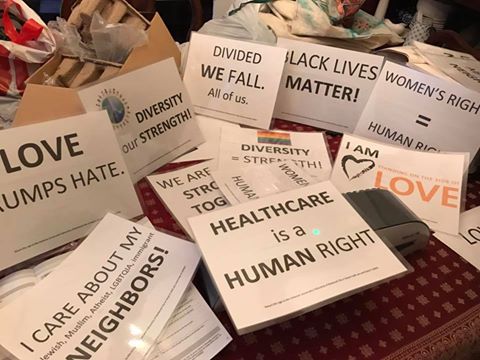
RESIST: SIGNS OF THE TIMES … thoughts and resources

16195083_1734909479868477_3803662542442990024_n

BRAVO! to the people, the church groups, the civic groups, the students and the schools, the poets, the musicians and the artists who bare witness to the times, the historians who remind us of our roots and their lessons, the lawyers who clarify the law and fight for justice, and journalists who investigate and speak out. Bravo! to the women who are the stewards of heart for all their joyousness, their spirited defiance and their hope and faith. Bravo! to the man at the Women’s March on Washington who carried a sign saying, “I think it’s time that white men stopped talking and started listening.”

THIS WEEKEND I was proud that in the midst of fear and contention the majority of protesters were peaceful and respectful.

OFF THE CUFF/STRAY THOUGHT Perhaps it would be wise to replace “Love” with “Respect,” which is really what would be more fitting in this context and perhaps serve as a better reminder of honorable behavior and speech.

The work has just begun. Here are some resources as we move on:

  • Know Your Rights: Demonstration and Protest, the American Civil Liberties Union (ACLU)
  • Indivisible: A Practical Guide for Resisting the Trump Agenda, Former congressional staffers reveal best practices for making Congress listen. There’s a lot to ponder – I’ve reread it a few times over the past two weeks – but it’s an excellent and enlightening guide and worth the time and effort.
  • Inequity Media, videos that frame the issues and offer informed and measured tips for fighting the good fight, Robert Reich
  • American Civil Liberties Union, is taking legal action regarding disclosure of Trump’s tax returns and investigation into possible conflicts of interest et al. There’s an interesting feature –  “Waking Up in Trump’s America” – that details the fears of the most vulnerable among us and also a 7-Point Plan of Action to Take on the Trump Administration.
  • The Nation, the most widely read weekly journal of progressive political and cultural news, opinion and analyses.
  • 100,000 Poets for Change (100TPC), which has evolved to include peacemakers for change, musicians for change … drummers and mimes and so on …  under its banner. This is a global peace initiative started in 2011. It has grown to include over 500 events in countries around the world on the fourth Saturday of September each year. Other events are held on other occasions. To find events in your area or to start one go to the site.
  • 100TPC Global Action Calendar is a place for artists of every ilk to place announcements of upcoming events.
  • The BeZine is a space where we hope you’ll delight in learning how much you have in common with “other” peoples. We hope that your visits will help you to love (respect) not fear. We acknowledge that there are enormous theological differences and historical resentments that carve wedges among and within the traditions and ethnic or national groups, but we believe that ultimately self-preservation, common sense, and human solidarity will empower connections and collaboration and overcome division and disorder. The zine is published monthly, generally on the fifteenth. The BeZine sponsores a virtual 100TPC event every year.  This year it will be on September 30. Mark your calendar. The theme for the January issue was “Resist.”
 More details Rev. Dr. William Barber speaking at a Moral Monday rally
More details
Rev. Dr. William Barber speaking at a Moral Monday rally

And the last and perhaps most important: REQUIRED READING. The Third Reconstruction: How a Moral Movement Is Overcoming the Politics of Division and Fear by The Rev. Dr. William J. Barber II

In April 2013, Rev. Barber began leading regular “Moral Mondays” civil-rights protests in North Carolina’s state capital, Raleigh. He is credited with bringing together a fusion movement to protest restrictions on voting and to reform state govenement. He is said to be responsible for shepharding in a new era of progressive politics.

51qqbcpwhul-_sx332_bo1204203200_The Third Reconstruction is a memoir about how Rev. Barber and his diverse allies (hence the “fusion”) came together to build a coalition. He shares his analysis of race-based inequality along with hopeful message for our United States as it continues to work toward the healing of entrenched racial and economic injustice. Ultimately, The Third Reconstruction is a blueprint for a movement, for  building coalitions and an inspiring call to action from the “twenty-first century’s most effective grassroots organizer.”

© 2017, words, Jamie Dedes, All rights reserved; © 2017, heading photo and signs pictured courtesy of Rev. Stephanie Etzbach-Dale of Unitarian Universalist Fellowship of Redwood City, All rights reserved; Rev. Barber photo courtesy of twbuckner under CC BY-SA 2.0 license

PLANS TO ABOLISH the U.S. National Endowments for the Arts and Humanities

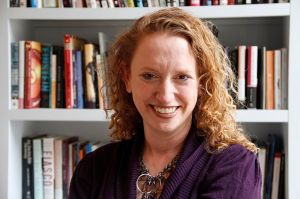
Suzanne Nossel Executive Director, PEN America
Suzanne Nossel
Executive Director, PEN America

In response to news released on January 19 announcing that the Trump administration plans to eliminate the National Endowment for the Arts and the National Endowment for Humanities, PEN America Executive Director Suzanne Nossel released the following statement:

The Trump administration’s plans, reported in The Hill this morning, to abolish wholesale the National Endowment for the Humanities and the National Endowment for the Arts are an outrageous abdication of the U.S. government’s proud history of support for groundbreaking research and creative endeavors that have served as engines of innovation and bolstered America’s stature as a haven for free thinkers and a global leader in humanity’s shared quest for knowledge.

The National Endowment for the Humanities, founded in 1965, is a leading source of funding for humanities programs in the United States. Its grants support cultural institutions including museums, libraries, and public television, as well as universities and individual scholarship. It has supported over 7,000 book projects, including 16 Pulitzer Prize winners, and the United States Newspaper Project, cataloguing over 60 million pages of historic newspapers for future use by scholars.

The National Endowment for the Arts, also established in 1965, supports participation and scholarship in the arts, works to ensure equal access to arts and culture for all Americans, and partners with state and local leaders to support creative initiatives at the community level. Its funding supports literature, visual arts, dance, theater, museums, and arts education programs around the country

The announcement that this is even under consideration casts a sinister cloud over our vibrant national culture, stoking fears that the Trump Administration aims to usher in a new Dark Ages in America. U.S. leadership and innovation in arts, culture, and the humanities are wellsprings of American greatness and the envy of the world. This proposal sends shivers down the spine of all Americans who value research, scholarship, and creativity and who recognize the mortal blow that eliminating these vital agencies would strike at the heart of treasured sectors of our society. Even apart from the essential resources at stake, the signal sent by this gesture is a slap in the face to artists, writers, researchers, and scholars who are learning that the Administration seems to consider their work worthless.

-Suzanne Nossel
Executive Director, PEN America
January 19, 2017

Photo credit PEN America under CC BY SA 4.0 license

PEN America stands at the intersection of literature and human rights to protect open expression in the United States and worldwide. We champion the freedom to write, recognizing the power of the word to transform the world. Our mission is to unite writers and their allies to celebrate creative expression and defend the liberties that make it possible.

“Survivance” … the task of refusing erasure

SurvivanceMichael Watson ~ After a couple of days of warmth and rain, today is seasonably cold. Next week is forecast to be very warm again, an unnerving scenario as we rely on the snow pack for our summer water supply.

Climate change is a complex issue, not so much because there is doubt that it is human caused and accelerating, but because it affects people unevenly. Here in Vermont folks are divided about the issue. Many are appreciative of our much briefer and milder winters. Others lament the loss of tourism jobs, the declining maple forests, and the increasing number of failed drinking water wells.

Much of the divide in opinion can be linked to whether a person lives their life inside or outside. City folk tend to lament cold, snowy, inconvenient weather. Those who spend most of their days outside are more likely to have a keen sense of the problems and losses that come with global climate change.

Those about to assume leadership of the United States deny climate change. They also reject ideas of diversity,  stewardship, and mutual responsibility and community. But you already know this. What you may not know is that many idolize Andrew Jackson. Jackson defied the Supreme Court and stole the lands and farms of Naive people in the Southeast, sending The People on a Trail of Tears. He is so hated in Indian Country that many Native people refuse to use twenty-dollar bills.

Somehow, a few families managed to avoid deportation. I like to imagine they lived up in distant hollows or in the dense forested swamps of the river bottoms.

My father’s family identified as Native, although they refused to tell us younger ones what tribes we hail from. (They did instill in us a deep sense that governments can’t be trusted.) They grew up in Indiana at a time when being Native could cost you your farm, or your life. My understanding is that after my grandfather left the family, my grandmother moved the farm to a rocky, inhospitable, spectacularly beautiful location overlooking the Ohio River. She correctly assumed they would be safe there. My dad and his siblings walked downhill to school, then back up to home. Once, dad took me to see the homestead, in what is now a state park. It took us almost two hours to hike up. (No doubt my Polio body slowed us down.)

A few years ago I was introduce to the idea of “survivance.” The term was apparently a legal term in the Eighteenth Century,  but was adapted for Native use by Jerald Vizenor, a much venerated Native Studies scholar who is no longer here in physical form. The term refers to active survival, a continued presence even as we are supposed to have been erased from the land.

I like to think of survivance as the task of refusing erasure. Beyond that, it is the art of living well in the face of hatred and genocide. I imagine the concept of continuing to live well while under threat might be applicable to the situation of many of us in 2017. (My wife, Jennie, a Jewess, contends that the term applies perfectly to folks who resisted the Holocaust, and I suspect she is right.) Survivance implies asking important questions and making difficult choices. When does one openly resist? When does one hide or, if possible, pass? How do we find and nurture joy, family, and community in the face of hatred?

For me, there is an even more fundamental definition of survivance: the task of nurturing and protecting the soul in the face of those who would obliterate it. We need to save our souls, (individual, cultural, and collective) from those who would destroy them, for soul loss is excruciatingly painful and may impact many generations. (Make no mistake, Jackson and his ilk wanted nothing less than the destruction of the Native soul; those who idealize him now want nothing less than the destruction of all that is “Other”.)

Perhaps we can learn something about survivance from those who came before us. There is much to be said for living on land no one else desires, holding ceremony in the deep night, and pretending to be one of the majority. There is much to gain from building coalitions, going to court, and telling our stories to a larger audience. There is much to be won from making, and sharing, art, music, and literature. My guess is that we will need to draw from all these, and more, during the years to come.

© Michael Watson
Excerpt from the January issue of The BeZine and published here with Michael’s permission.

michael-drum

If you have time enough to follow only one blog, make it Michael’s:

MICHAEL WATSON, M.A., Ph.D., LCMHC (Dreaming the World and Journey Works)  is a contributing editor to The BeZine, an essayist and a practitioner of the Shamanic arts, a psychotherapist, educator, and an artist of Native American and European descent.

Michael lives and works in Burlington, Vermont, where he recently retired from his teaching position in undergraduate and graduate programs at Burlington College,. He was once Dean of Students there.  He also had wonderful experiences teaching in India and Hong Kong, which are documented on his blog, Dreaming the World. In childhood Michael had polio, an event that taught him much about challenge, struggle, isolation, and healing.