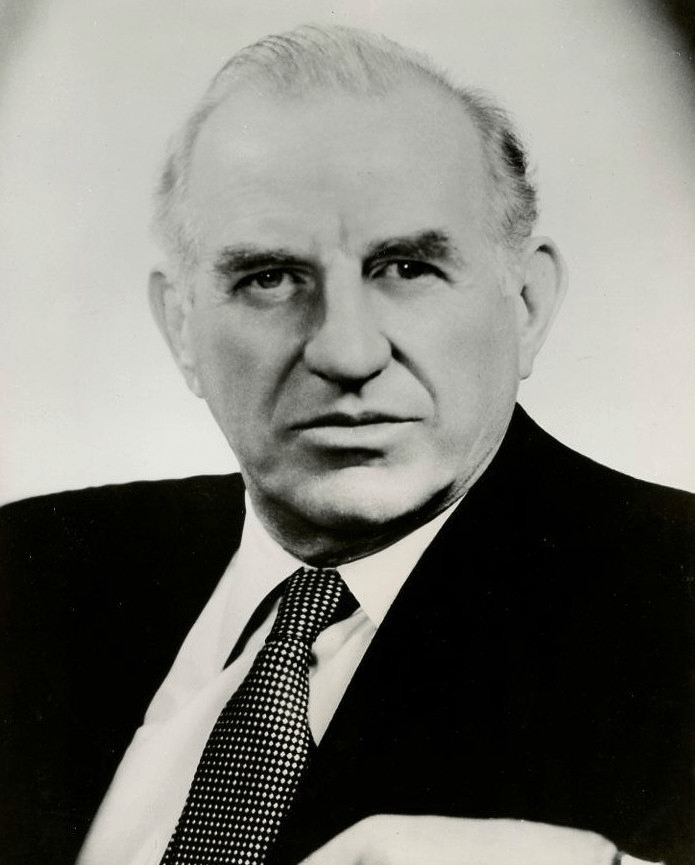
Ed Begley was an American actor of theatre, radio, film, and television. He won an Academy Award for his performance in the film Sweet Bird of Youth in 1962 and appeared in such classics as 12 Angry Men and the Unsinkable Molly Brown. He was nominated for an Emmy Award for his portrayal of Matthew Harrison Brady in a television adaptation of Inherit the Wind. He is the father of actor and environmental activist Ed Begley Jr. MORE [Wikipedia]
In fact, it’s some fifty-six years ago now, around 1963, perhaps around the time that Mr. Begley won the Oscar for Best Supporting Actor for his performance as Boss Finley in Sweet Bird of Youth. He showed up one Sunday afternoon to visit a relative at our convent-affiliated school in Brentwood, New York. In those days, male or female, you had to “dress” to come on the grounds. That meant men had to wear a suit, white shirt, and a tie. It was spring and Mr. Begley came wearing a loud island-print shirt and a big mischievous smile. Sister Regina Celeste, C.S.J. who was Directress (school principal), and who we called (not to her face) “Rexy” for her bulldog tenacity, was not pleased or impressed. I stood outside the chapel and watched and listened as these two accomplished adults, influential in very different spheres, negotiated one another. Clearly neither was awed by the other’s credentials.
Sister was tight-lipped and firm. Mr. Begley laughed but was polite. She indicated a choice: leave and come back properly dressed . . . or just leave. He said something soothing, I think, but I don’t remember what. Then he reached into a pocket, pulled out a roll of bills, and handed off quite a few to her. She raised her eyebrows and pocketed the money. She walked away with a stiff back, prayer beads clacking, and a reminder that next time he needed to come dressed like a gentleman.
The lesson I learned from Mr. Begley: money talks. The lesson I learned from Sister: flex. Weigh the pragmatic against policy. I’m sure the school operated in the red, forever in need of books, supplies, and repairs.
It’s likely that neither Sister nor Mr. Begley realized that one young student was watching, listening, and taking it in, but I was . . .
School days
And then there’s the idealistic poetry of our school song (below). It’s been a lifetime, but it still brings tears to my eyes, as does the memory of the community itself. In the ’60s when the second wave of the women’s movement was in high-gear advocating for – among many other things – opportunities for women in the higher echelons of business, industry, government and social services, this was something that was easy for me to envision. The first C.E.O. I ever met wasn’t a man. It was Reverend Mother Immaculata Maria, C.S.J. Superior General of the Sisters of St. Joseph, overseer of a community that included the mother house (the main convent), novitiate, a college, elementary and high schools around the U.S., a “chapel” (more like a small church), a convalescent hospital for older nuns, a dairy farm, an apple orchard, and stables. She administered as broadly diverse an organization as any male C.E.O. I’ve met or worked with since.
How sacred are thy hallowed halls, oh Brentwood,
A century of learning has combined
With culture, truth and beauty here to form us,
That we may mirror Christ, in heart and mind.
In struggle and defeat –
In joy and gladness –
In every hour of triumph or despair,
May all the lessons Brentwood’s love has taught us,
Bear fruit in holy living, everywhere.
May girlhood’s dreams, and all its dear ambitions,
Be every shrined within our grateful hearts.
To cast their glow on every path we travel,
‘Till age erases time and life departs.
In struggle and defeat –
In joy and gladness –
In every hour of triumph or despair,
May all the lessons Brentwood’s love has taught us,
Bear fruit in holy living, everywhere.
Two videos, should you be inclined to watch: The first is a tribute to Ed Begley, Sr. The second is an intro to the Sisters of St. Joseph. Sadly, the school I attended has gone the way of all things.
If you are reading this post from an email subscription, you will likely have to link through to the site to view the videos.
Note “Reconciliation” as used in the video below: The Sacrament of Penance and Reconciliation (commonly called Confession) is one of the seven sacraments of the Catholic Church (called sacred mysteries in the Eastern Catholic Churches), in which the faithful obtain absolution for the sins committed against God and neighbor and are reconciled with the community of the Church.
Poet and writer, I was once columnist and associate editor of a regional employment publication. I currently run this site, The Poet by Day, an information hub for poets and writers. I am the managing editor of The BeZine published by The Bardo Group Beguines (originally The Bardo Group), a virtual arts collective I founded. I am a weekly contributor to Beguine Again, a site showcasing spiritual writers. My work is featured in a variety of publications and on sites, including: Levure littéraure, Ramingo’s Porch, Vita Brevis Literature,Compass Rose, Connotation Press, The Bar None Group, Salamander Cove, Second Light, I Am Not a Silent Poet, Meta / Phor(e) /Play, and California Woman. My poetry was recently read byNorthern California actor Richard Lingua for Poetry Woodshed, Belfast Community Radio. I was featured in a lengthy interview on the Creative Nexus Radio Show where I was dubbed “Poetry Champion.”
“What if our religion was each other. If our practice was our life. If prayer, our words. What if the temple was the Earth. If forests were our church. If holy water–the rivers, lakes, and ocean. What if meditation was our relationships. If the teacher was life. If wisdom was self-knowledge. If love was the center of our being.” Ganga White, teacher and exponent of Yoga and founder of White Lotus, a Yoga center and retreat house in Santa Barbara, CA
“Every pair of eyes facing you has probably experienced something you could not endure.” Lucille Clifton
Thank you for sharing your love of words. Comments will appear after moderation.
Be still and know that I am God. Be still and know that I am. Be still and know. Be still. Be. Attributed to St. Patrick
Okay, it IS St. Patrick’s Day, but the whole green thing, I made up. Why not? Celebrating green: as in the traditional color of St. Patrick’s Day; as in the Emerald Isle with its engaging traditions; as in a sustainable world; as in the lovely green eyes some people have; as in Christmas Trees, front lawns, and forests.
All over the world there are wonderful religious and cultural traditions around this day, which in Ireland is a holy day of obligation for Catholics, meaning attendance at Mass is required.
St. Patrick, a fifth century Roman, went to Ireland to convert its peoples from their pagan* Celtic traditions. He is considered the Apostle of Ireland, equal to the original twelve. He is revered by Lutherans, Anglicans, and the Eastern Rites (Orthodox and Catholic) as well as the Roman Catholic Church. It is a day cheerfully celebrated with long colorful parades and famously or infamously (depending on your view) with a heavy-duty beer-fest, sometimes with beer that is tinted green.
*”Pagan” is often used as a pejorative. I would submit that the pagan path is simply another well leading to the one great Spiritual river. We see evidence on the Earth and in the sky, that the Creative Essence (also known as God) expresses with great diversity. Dishonoring and dismissing other traditions, other mystical expressions of the one Light, is disrespectful and a powerful way manipulative political and religious leaders pit us against one another for their own ends, even to war, torture and genocide. “To connect with the great river we all need a path, but when you get down there there’s only one river.” Matthew Fox The other guy’s religion is sacred, not superstition.
On my nightstand, I keep a copy of Eknath Easwaran’s God Makes the Rivers to Flow, An Anthology of the World’s Sacred Poetry and Prose. Here is St. Patrick’s Prayer shared by Eknath in that small treasure of a volume. Depending on what your tradition or leanings are, you could substitute God, Allah, Being, Mind, Light or some other resonating pointer in place of “Christ” as used here.
ST. PATRICK’S PRAYER
Christ with me, Christ before me, Christ behind me,
Christ in me, Christ beneath me, Christ above me,
Christ on my right, Christ on my left,
Christ where I lie, Christ where I sit, Christ where I arise,
Christ in the heart of everyone who thinks of me,
Christ in the mouth of every one who speaks to me,
Christ in every eye that sees me,
Christ in every ear that hears me.
Salvation is of the Lord.
Salvation is of the Christ.
May your salvation, Lord, be ever with us.
My Sidto (Grandmother) Adele Riachi Aboumoosa circa 1942
Poet and writer, I was once columnist and associate editor of a regional employment publication. I currently run this site, The Poet by Day, an information hub for poets and writers. I am the managing editor of The BeZine published by The Bardo Group Beguines (originally The Bardo Group), a virtual arts collective I founded. I am a weekly contributor to Beguine Again, a site showcasing spiritual writers. My work is featured in a variety of publications and on sites, including: Levure littéraure, Ramingo’s Porch, Vita Brevis Literature,Compass Rose, Connotation Press, The Bar None Group, Salamander Cove, Second Light, I Am Not a Silent Poet, Meta / Phor(e) /Play, and California Woman. My poetry was recently read byNorthern California actor Richard Lingua for Poetry Woodshed, Belfast Community Radio. I was featured in a lengthy interview on the Creative Nexus Radio Show where I was dubbed “Poetry Champion.”
“What if our religion was each other. If our practice was our life. If prayer, our words. What if the temple was the Earth. If forests were our church. If holy water–the rivers, lakes, and ocean. What if meditation was our relationships. If the teacher was life. If wisdom was self-knowledge. If love was the center of our being.” Ganga White, teacher and exponent of Yoga and founder of White Lotus, a Yoga center and retreat house in Santa Barbara, CA
“Every pair of eyes facing you has probably experienced something you could not endure.” Lucille Clifton
Thank you for sharing your love of words. Comments will appear after moderation.
“Sit down and put down everything that comes into your head and then you’re a writer. But an author is one who can judge his own stuff’s worth and, without pity, destroy most of it.” Collette, Casual Chance, 1964
I remember it well: my first encounter with Sidonie-Gabrielle Colette. Picture it. Brooklyn. A Lebanese restaurant someplace on Atlantic Avenue, ambiance of the Middle East, redolent with fragrances of cinnamon and cardamom and the mouth-watering smell of lamb roasting.
It was 1958. We had just seen the movie, Gigi, starring Leslie Caron, which is based on Colette’s novella of the same name. You might remember that in the early scenes Ms. Caron wore a wide-brimmed straw hat with a ribbon tied in a bow. The ribbon trailed gracefully down her back. I had such a hat and suffered the illusion that I looked just like Gigi in the film. This illusion was strongly supported by the fact that Gigi is my childhood nickname. In fact, from that day on and until her death, my mother would tell everyone – as she did at the restaurant on this occasion – that I was Gigi before Gigi. I knew it wasn’t true. I’d read in the newspaper that there was a book written in 1944, which would predate me by six years. I was hungry to get my hands on it.
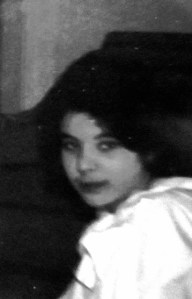
As the adults talked, I mentally replayed scenes from the movie and imagined a woman sitting at her desk writing the story that became the movie. I might have felt smart and pretty and even glamorous and certainly rather grown-up, but I would soon be relieved of my illusions. My mother allowed one of the restaurant patrons – an artist – to do a picture of me. Much to my dismay all he saw and drew was a scrawny olive-skinned kid with a rather gauche hat that sat too far back on her head. Nothing at all approaching the light, elegant, grown-up beauty of Ms. Caron. Then our supposed* distant cousin, Julia, the restaurant owner, worked her special magic. She told fortunes by reading the sludge left in the cup after drinking Lebanese coffee. Julia would provide this service . . . “reading” coffee grounds . . . for her favorite (i.e., frequent) patrons.
*Note: Honestly, everyone we met from Lebanon was pronounced a cousin, so I’m skeptical. Cousin in spirit and language, maybe. Blood cousin? Not so sure.
At Julia’s my special treat was one cup of Lebanese coffee with my baklava. On this day, Mom let Julia do a reading for me. It had none of Julia’s usual romantic niceties: “You are like the sun and the moon. He is the sun that warms your heart. You are the moon that reflects his strength.” Or, “I see a key. Many doors will open for you. And, see there? There are two bells entwined with a string. There will be much love shared.” There was to be no romance like the fictional Gigi’s for me. No. No. For me there was: “See that, Gigi. Two books. You must keep up your studies. Therein is your happiness.” Maybe Julia did have something of a seer’s eye. I turned out to be better at reading books than reading men and I’m content with that.
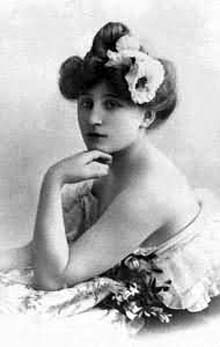
As for Sidone-Gabrielle Colette (a.k.a. Colette), the Nobel nominated (1948, Literature) French novelist, actress, and mime, this was my introduction and the beginning of my appreciation for her life and work.
Colette was a prodigious writer of many popular literary works. The Claudine stories were the first. For La Belle Époque, Colette’s writings were racy but – perhaps unfortunately – by today’s often jaded tastes, not so much. While Colette’s life was too much on the wild side for me, I appreciate her courage and honesty and I do love her writing, so full of an appreciation for life and so rich in perfume, color, and humor, occasionally wry.
Publicity still of Colette for Rêve d’Égypte at the Moulin Rouge.
Quotable Colette
For the romantics among us:
“I am going away with him to an unknown country where I shall have no past and no name, and where I shall be born again with a new face and an untried heart.”
The story of Gigi is about a young Parisian who – in her family’s tradition – is being groomed for a career as courtesan. A handsome, wealthy, and well-placed young man is targeted by her grandmother (Mamita) and aunt for Gigi’s first relationship. For the movie version, the story is sanitized to get by the American censors. It was 1958 after all.
“You will do foolish things, but do them with enthusiasm.”
Colette’s life and work are honored in film, song and story by (among others) The Year I Read Colette (YouTube video) by singer-songwriter Roseanne Cash, The White Rose by Truman Capote (describes his first meeting with Colette), and the movies Coletteand Becoming Colette. Les Vrilles de la vigne is number fifty-nine on Le Monde’s 100 Best Books of the [20th] Century. When Colette died, she was denied a religious burial by the Catholic Church because of her divorces but the French people justly honored her literary significance with a state funeral.
If you are reading this post from an email subscription, you’ll likely have to link through to the site to view these trailers from two movies about Colette.
Poet and writer, I was once columnist and associate editor of a regional employment publication. I currently run this site, The Poet by Day, an information hub for poets and writers. I am the managing editor of The BeZine published by The Bardo Group Beguines (originally The Bardo Group), a virtual arts collective I founded. I am a weekly contributor to Beguine Again, a site showcasing spiritual writers. My work is featured in a variety of publications and on sites, including: Levure littéraure, Ramingo’s Porch, Vita Brevis Literature,Compass Rose, Connotation Press, The Bar None Group, Salamander Cove, Second Light, I Am Not a Silent Poet, Meta / Phor(e) /Play, and California Woman. My poetry was recently read byNorthern California actor Richard Lingua for Poetry Woodshed, Belfast Community Radio. I was featured in a lengthy interview on the Creative Nexus Radio Show where I was dubbed “Poetry Champion.”
“What if our religion was each other. If our practice was our life. If prayer, our words. What if the temple was the Earth. If forests were our church. If holy water–the rivers, lakes, and ocean. What if meditation was our relationships. If the teacher was life. If wisdom was self-knowledge. If love was the center of our being.” Ganga White, teacher and exponent of Yoga and founder of White Lotus, a Yoga center and retreat house in Santa Barbara, CA
“Every pair of eyes facing you has probably experienced something you could not endure.” Lucille Clifton
Thank you for sharing your love of words. Comments will appear after moderation.
“I find that the writing of a memoir has two functions. One is to pass on, as much as you’re willing to tell, the fact’s and deeds of your life to those who might be at all interested. The other function is to discover a truth about yourself that you never had either the time or the courage to face before. You will never investigate yourself as vehemently as you do when you put one word after another, one thought after another, one revelation after another, in the pages that make up your memoirs, and you will suddenly realize the person you are instead of the person you thought you were. To force memory is to open yourself up to that which you have chosen to forget. It’s your RASHOMON. You begin to see all the different sides of your own story.”Neil Simon, The Play Goes On, A Memoir
William Zinsser (1922-2015), American writer, teacher, editor, literary and film critic, feature writer for the now defunct New York Herald Tribune
Not too long ago a friend mentioned the wish to write a memoir. In the senior community in which I live there are several people working on their memoirs in a class called Personal Stories. I think this is fabulous. There are any number of reasons for writing a memoir and generally it’s not about publication. It’s about personal exploration and/or leaving a record behind for our children and grandchildren. Hence this post is for everyone, not just for pro writers or those with ambitions to be pro writers.
While searching for some material to share that might be helpful, I happened upon this feature by William Zinsser of On Writing Well fame in The American Scholar, Spring 2006. I think my friend and neighbors are not the only ones who would be interested, so here it is for you too:
One of the saddest sentences I know is “I wish I had asked my mother about that.” Or my father. Or my grandmother. Or my grandfather. As every parent knows, our children are not as fascinated by our fascinating lives as we are. Only when they have children of their own—and feel the first twinges of their own advancing age—do they suddenly want to know more about their family heritage and all its accretions of anecdote and lore. “What exactly were those stories my dad used to tell about coming to America?” “Where exactly was that farm in the Midwest where my mother grew up?”MORE
RELATED:
For the Record: Remembering Mom,a brief (about 1,000 words) memoir of my own mother, Zbaida, originally published by Connotation Press.
*******
On Writing Well, The Classic Guide to Writing Nonfiction is not without problems. It does however have its virtues. Originally published in 1976, it was a book of the month club selection. In the early days of my career it was always recommended to young writers along with The Elements of Style. I believe On Writing Well is now in its twelfth printing.
At the time of Zinsser’s death in 2015, 1.5 million copies were sold. If you haven’t read On Writing Well, you might enjoy and even benefit from checking it out. Newer editions are reworked to include contemporary concerns: technology, diverse cultures, and demographics.
If you are a mature writer still struggling to find your voice, it might give you hope and comfort to know that in his biography Zinsser said that he didn’t find his writer-voice until his 50s.
MUD SEASON REVIEW is accepting poetry, fiction and nonfiction for consideration through deadline November 1st. No submission fee. Paying market. Details HERE.
Poet and writer, I was once columnist and the associate editor of a regional employment publication. Currently I run this site, The Poet by Day, an information hub for poets and writers. I am the managing editor of The BeZine published by The Bardo Group Beguines (originally The Bardo Group), a virtual arts collective I founded. I am a weekly contributor to Beguine Again, a site showcasing spiritual writers.
My work is featured in a variety of publications and on sites, including: Levure littéraure, Ramingo’s Porch, Vita Brevis Literature,Compass Rose, Connotation Press, The River Journal,The Bar None Group, Salamander Cove, Second Light, I Am Not a Silent Poet, Meta / Phor(e) /Play, and California Woman.
Thank you for sharing your love of words. Comments will appear after moderation.


 Okay, it IS St. Patrick’s Day, but the whole green thing, I made up. Why not? Celebrating green: as in the traditional color of St. Patrick’s Day; as in the Emerald Isle with its engaging traditions; as in a sustainable world; as in the lovely green eyes some people have; as in Christmas Trees, front lawns, and forests.
 On my nightstand, I keep a copy of Eknath Easwaran’s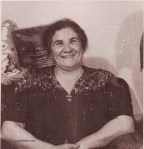

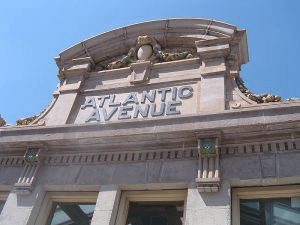 I remember it well: my first encounter with Sidonie-Gabrielle Colette. Picture it. Brooklyn. A Lebanese restaurant someplace on Atlantic Avenue, ambiance of the Middle East, redolent with fragrances of cinnamon and cardamom and the mouth-watering smell of lamb roasting.
 At Julia’s my special treat was one cup of Lebanese coffee with my baklava. On this day, Mom let Julia do a reading for me. It had none of Julia’s usual romantic niceties: “You are like the sun and the moon. He is the sun that warms your heart. You are the moon that reflects his strength.” Or, “I see a key. Many doors will open for you. And, see there? There are two bells entwined with a string. There will be much love shared.” There was to be no romance like the fictional Gigi’s for me. No. No. For me there was: “See that, Gigi. Two books. You must keep up your studies. Therein is your happiness.” Maybe Julia did have something of a seer’s eye. I turned out to be better at reading books than reading men and I’m content with that.


 Jamie Dedes' THE POET BY DAY Webzine