Tracy K. Smith (b. 1977), Pulitzer Prize winning poet and new U.S. Poet Laureate
“When some people talk about money
They speak as if it were a mysterious lover
Who went out to buy milk and never
Came back, and it makes me nostalgic
For the years I lived on coffee and bread,
Hungry all the time, walking to work on payday
Like a woman journeying for water
From a village without a well, then living
One or two nights like everyone else
On roast chicken and red wine.” Tracy K. Smith, Life on Mars
On Wednesday Librarian of Congress Carla Hayden announced the appointment of Tracy K. Smith as the Library’s 22nd Poet Laureate Consultant in Poetry for 2017-2018. Smith will take up her duties in the fall, opening the Library’s annual literary season in September with a reading of her work in the Coolidge Auditorium.
Smith, a Pulitzer Prize-winning poet and a professor at Princeton University, succeeds Juan Felipe Herrera as Poet Laureate.
“It gives me great pleasure to appoint Tracy K. Smith, a poet of searching,” Hayden said.
“Her work travels the world and takes on its voices; brings history and memory to life; calls on the power of literature as well as science, religion and pop culture. With directness and deftness, she contends with the heavens or plumbs our inner depths—all to better understand what makes us most human.”
“I am profoundly honored,” Smith said. “As someone who has been sustained by poems and poets, I understand the powerful and necessary role poetry can play in sustaining a rich inner life and fostering a mindful, empathic and resourceful culture. I am eager to share the good news of poetry with readers and future readers across this marvelously diverse country.”
Smith joins a long line of distinguished poets who have served in the position, including Juan Felipe Herrera, Charles Wright, Natasha Trethewey, Philip Levine, W.S. Merwin, Kay Ryan, Charles Simic, Donald Hall, Ted Kooser, Louise Glück, Billy Collins, Stanley Kunitz, Robert Pinsky, Robert Hass and Rita Dove.
The new Poet Laureate is the author of three books of poetry, including Life on Mars (2011), winner of the 2012 Pulitzer Prize for Poetry; “Duende” (2007), winner of the 2006 James Laughlin Award and the 2008 Essence Literary Award; and The Body’s Question (2003), winner of the Cave Canem Poetry Prize. Smith is also the author of a memoir, Ordinary Light(2015), a finalist for the 2015 National Book Award in nonfiction and selected as a notable book by the New York Times and the Washington Post.
For her poetry, Smith has received a Rona Jaffe Writers Award and a Whiting Award. In 2014, the Academy of American Poets awarded her with the Academy Fellowship, given to one poet each year to recognize distinguished poetic achievement. In 2016, she won the 16th annual Robert Creeley Award and was awarded Columbia University’s Medal for Excellence.
In the Pulitzer Prize citation for Life on Mars, judges lauded its “bold, skillful poems, taking readers into the universe and moving them to an authentic mix of joy and pain.” Toi Derricotte, poet and Academy of American Poets chancellor, said “the surfaces of a Tracy K. Smith poem are beautiful and serene, but underneath, there is always a sense of an unknown vastness. Her poems take the risk of inviting us to imagine, as the poet does, what it is to travel in another person’s shoes.”
Born in Falmouth, Massachusetts in 1972, and raised in Fairfield, California, Tracy K. Smith earned a B.A. in English and American literature and Afro-American studies from Harvard University and an M.F.A. in creative writing from Columbia University. From 1997 to 1999, she was a Stegner Fellow in poetry at Stanford University. Smith has taught at Medgar Evers College of the City University of New York, at the University of Pittsburgh and at Columbia University. She is currently the Roger S. Berlind ’52 Professor in the Humanities and director of the creative writing program at Princeton University.
Background of the Laureateship
The Library of Congress Poetry and Literature Center is the home of the Poet Laureate Consultant in Poetry, a position that has existed since 1937, when Archer M. Huntington endowed the Chair of Poetry at the Library. Since then, many of the nation’s most eminent poets have served as Consultant in Poetry to the Library of Congress and, after the passage of Public Law 99-194 (Dec. 20, 1985), as Poet Laureate Consultant in Poetry—a position which the law states “is equivalent to that of Poet Laureate of the United States.”
During his or her term, the Poet Laureate seeks to raise the national consciousness to a greater appreciation of the reading and writing of poetry. The Library keeps to a minimum the specific duties required of the Poet Laureate, who opens the literary season in the fall and closes it in the spring. In recent years, Laureates have initiated poetry projects that broaden the audiences for poetry.
The Great Hall of the U.S. Library of Congress. Public domain photo.
The Library of Congress is the world’s largest library, offering access to the creative record of the United States—and extensive materials from around the world—both on site and online. It is the main research arm of the U.S. Congress and the home of the U.S. Copyright Office. Explore collections, reference services and other programs and plan a visit at loc.gov, access the official site for U.S. federal legislative information at congress.gov, and register creative works of authorship at copyright.gov.
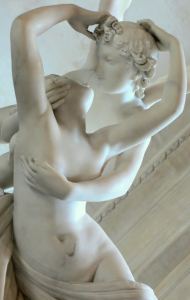
maybe a thing about particles and waves
or wave-particles and the way light works
and moves, the way soulmates’ eyes ignite
from moon dust, the way some ancient god
smiled and blinked, flicked an able wrist
to strew some billion stars across a
darkly barren sky, then asked his goddess
to suspend the amber moon …
its caress so softly lighted, it stirred
the hearts of night-blooming lovers
but surely …
surely the years run like the cheetah and
soon-or-late some hearts quake asunder,
just as surely as moon dust and starlight and
the way a true love fills in the fault lines
What are you’re thoughts on soulmates? Tells us in prose or poem. If you feel comfortable, leave your work or a link to it in the comments below. All shared work will be featured on this site next Tuesday.
WEDNESDAY WRITING PROMPT, June 7, 2017 Remember “Let the wild rumpus start!” in Maurice Sendak, Where the Wild Things Are? Such a wonderful book and that exclamation has stayed with me – probably you as well – and I always wanted to do something with it. This poem is what came from that inspiration. So, my challenge to you this week, is to use “wild rumpus” in a poem.
Thanks to Paul Brookes, Gary Bowers, Sonja Bensken Mesher and Renee Espriu for coming out to play. Poem on…
He Was Pandemonium
He caused such a noise, such outcry, such a racket
from the time he crawled, had words & was walking
& with every sibling that arrived within our midst
there was discord between them and between us
from a knock on the door with unfortunate news
of the fact that a boy was perched upon the roof
to his sisters upset as they walked into a bedroom
to see the scurry of a frog causing a commotion
to the neighbor stating your son is in the alley
ought not to be experimenting with matches ought he
to the surprise knock of the police at the door
with a number of hood ornaments in his possession
to the night of upheaval he came home quite sodden
that as I thought in dismay of all the pandemonium
of the day he was born with strawberry blond hair
never I thought ‘the wild rumpus will now begin’ and it did
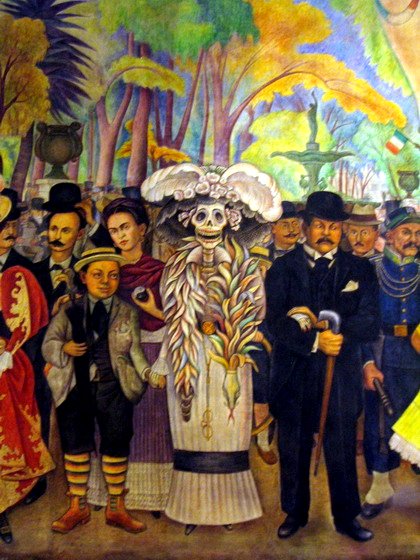
when the dead are invited back
on Halloween and All Souls Day, Dia de los Muertos and Dia de los ñatitas,
during Bon Festival and Qingming Festival, Araw ng mga Patáy and Gai Jatra Chuseok
on these days in the many places
on the crest of our mingling with spirits
at burial sites and among dappled silver-gray stones
and the blue and emerald of sky and sea
around the bend of alabaster bays
and the rough-barked redwoods and stripy eucalyptus
in the damp green of the moss
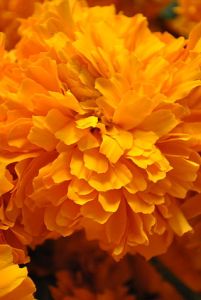
in the pungent cempasúchitl or pale bamboo shoots
and the raucous discontent of crows and sea gulls calling,
among bales of cotton clouds and symphonies of rain
among the hot tears and cool baptisms by salt water,
between the viridescent living and
the remains of the dead, the compost underfoot,
in the wind wailing past the bowing cypress
in these landscapes and littoral zones
our ancestors visit in cellular memory, our blood
sings their songs and they hound us; hounding,
not into death but into life, into blessing
into peace, celebration and joy ~
one life to live or many, what do you give?
what do you leave behind, what will you have
to say when, for just one moment, your spirit is
called to share again this wild rumpus of life
Remember “Let the wild rumpus start!” in Maurice Sendak, Where the Wild Things Are? Such a wonderful book and that exclaimation has stayed with me – probably you as as well – and I always wanted to do something with it. This poem is what came from that inspiration. So, my challenge to you this week, is to use “wild rumpus” in a poem. Enjoy the exercise and if you are comfortable doing so, leave your poem in the comments section below or leave a link to it. All poems shared will be featured here next Tuesday.

 The new Poet Laureate is the author of three books of poetry, including Life on Mars (2011), winner of the 2012 Pulitzer Prize for Poetry; “Duende” (2007), winner of the 2006 James Laughlin Award and the 2008 Essence Literary Award; and The Body’s Question (2003), winner of the Cave Canem Poetry Prize. Smith is also the author of a memoir, Ordinary Light (2015), a finalist for the 2015 National Book Award in nonfiction and selected as a notable book by the New York Times and the Washington Post.




 Jamie Dedes' THE POET BY DAY Webzine