Page 137 of 183

“LET US”, a poem by citizen poet, Alan Kaufman … and your Wednesday Writing Prompt

15253540_10153871288971612_1728300874287005039_n

LET US
For the Poets of January 15th and the Women of January 21st

Let us
take ourselves aboard a bus
and travel to the dispossessed
And let us praise their dreamless eyes and hardened smiles
with rogue words of truth
to the killing fields of their hopes
The slum wards and ragged towns and stolen farms
Let us take to them the carnival of our mad and scattered lives
Let us bring them the mountain, let us give them the vision
of an open window, an unlocked door, a bed to sleep in, a plate of food
Let us give them the keys to the house of our love
Let us bare our throats tattooed with roses, our breasts sequenced with diamonds
our loins hot with dragons, our hands and feet pierced with beauty
Let us come to their dusty squares and drinking holes with canticles of magnificent defeat
Let us deliver to their mangers
of pollution and penitentiaries, shopping malls and tenements
the hard beautiful birth of the heart
Let us bring renewal, let us declare the death of despondency and tyrants
For I have seen our campfires beside the roads, like fallen still-burning miraculous stars
I have seen our bus voyaging to innocence
I have seen us tossed this century like a bone
after decades of science and war reason and corporation
art and Auschwitz
I have seen my vocation descend like a pen to a page
that can never be filled with enough truth
I have crossed a continent of despair and I swear to you, Poets,
I live for greater than myself
You, street-Latin Elizabethan hustlers, I tell you time has come to deal
death’s passionate kiss to kings
Time has come to bare our asses in Paradise
Time has come to write the Constitution with poetry and flesh
Time has come to costume up and ride
with words like steel-tipped whips
into the soul of American
and rage there and sing
till the mouth of every hungry child
is fed.

– Alan Kaufman

Thanks to Alan (Alan Kaufman – writer,poet, artist, teacher) for his willingness to share his poem here.

WRITING PROMPT

Alan Kaufman’s poem is published here with his permission and in anticipation of the event featured in the poster above and initiated by Alan along with Michael Rothenberg.  In coordination with their event, the theme for the January 15 issue of The BeZine is “Resist.”

We invite submissions for the January issue.  This is the second writing prompt to help you toward participation – online and/or off – in  this important event designed to push back against vulgarity, bigotry, xenophobia and misogyny. For The BeZine we invite world-wide participation – not against any one person – but against the renewed growth of these trends all over the Western world and the continued entrenchment – business as usual – for the rest of the world.

For the Zine, you don’t have to write a poem. You can do an essay, feature article, creative nonfiction, art or photography, or music video, which we hope will not only frame the issues but have constructive suggestions toward resolution.  No hateful language please. When you have written something on “resist” and if you feel comfortable submitting it to be considered for publication, email it to bardogroup@gmail.com

Save the date for both live and virtual events and prepare to submit your work or works to the Zine by January 10th, end of day. Let your work be both truthful and artistic . . .

Tell all the Truth but tell it slant —
Success in Circuit lies
Too bright for our infirm Delight
The Truth’s superb surprise

As Lightning to the Children eased
With explanation kind
The Truth must dazzle gradually
Or every man be blind — Emily Dickinson

The Zine submission guidelines HERE. The Zine mission statement HERE.

THE WORDPLAY SHOP: books, tools and supplies for poets, writers and readers

LITERATURE AND FICTION oo Editor’s Picks oo Award Winners oo NY Times Best Sellers


released by Time into Eternity

photo-1

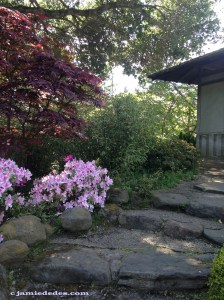
“Easy does it” … even as we mourn the people we love and are saddened by some of the ways of the world.

I’m thinking of all the people I lost last year. It reminds me of a custom in some places – Japan, China, Korea – to write death poems because so often I wish I had a little handwritten note to treasure among the memories, something emblematic of each cherished being. It’s a downside to the computer age. Our boxes of notes and letters have grown quite lean.

My impression is that the death poems tradition was mostly honored among Buddhist monks and Japanese Samurai. The three classic forms were haiku, waka and kanshi. The gentle death poem that follows is a famous one by Yaitsu, but thus far I have been unable to find much information about him.

paradise ~
i see flowers
from the cottage where i lie

– Yiatsu

Eternal memory. Eternal memory. Grant to your servants, O Lord, blessed repose and eternal memory.

In the spirit of caritas/chesed/حنان ناشئ عن الحب/metta…Love!

most especially for those lights: Brian, Lesley and Ralph … and always ,though they died years ago, for Mom, Daddy, Terry, Chris, Aunt Yvonne, Aunt Julie, Kirby, Sidto and all the other family and our friends who have been released by Time into Eternity.

© 2017, photograph, Jamie Dedes, All rights reserved

THE WORDPLAY SHOP: books, tools and supplies for poets, writers and readers

LITERATURE AND FICTION oo Editor’s Picks oo Award Winners oo NY Times Best Sellers


SANCTUARY, an essay on poetry by Indian poet Reena Prasad “Poetry finds you when you are broken.”

img_8295This essay was originally published in the December 2016 issue of The BeZine. It is by Reena Prasad (Butterflies of Time – A Canvas of Poetry) and with her permission I share it here today.  It is simply not to be missed. I can’t think of anything better with which to start 2017. Over the years, I have not seen another poet work with quite the same passion, consistancy or intelligence at her craft. She is diligent not only in the creative process but in getting her work out to publishers. I am pleased to be able to feature her essay here and her poetry in The BeZine. Enjoy! Reena’s bio is below the essay. J.D.

Poetry finds you when you are broken, insists on taking you into its fold, puts your pieces together and then you never leave.

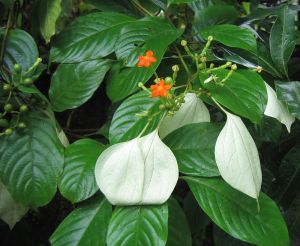
It struck me when I was standing at the doorway of my home one July that the sunshine over the mussaenda was a rare shade of rose-gold and that the leaves under it were a luminous green. The street noises seemed to recede as if the stage had been taken over by some other troupe and sure enough, there was a sudden onset of activity. An excited squirrel ran up and down the guava tree, a few babblers screamed and the jackfruit tree came to life with bird cries. All because there was a long rat snake slithering leisurely across the sunlit ground. There had been stray tears on my cheek and I was a dam on the verge of a collapse but then the other world swung in and took over from me.

I was privy to nature’s poetry slam. I wanted nothing to capture it, not a camera, or a laptop nor pen and paper. A poem followed by several others swung its legs over the cacophony of humdrum routines and marched into me settling deep into waiting trenches filling me up with purpose and with immense joy. While steadily ploughing up the driest top soil and turning it over to the elements to ravage, it was changing me.

I remembered Stanley Kunitz’s translation of Akhmatova’s lines . . .

“No foreign sky protected me,
no stranger’s wing shielded my face.
I stand as witness to the common lot,
survivor of that time, that place.”

Writing a poem is akin to exercising. To begin is difficult at times because it is easier to wallow in conceptual dramas and imaginary hammocks than to sit in one place and write or type. Think about the singular joy of munching on peanuts and reading fitness magazines on the couch compared to going running on a cold day.

Mussaenda Frondosa
Mussaenda Frondosa

Some poems are difficult to birth even while being exhilarating with senses functioning at heightened awareness and making one sore with the intensity of thought . Once begun, every thought zooms into the present; nature, politics and emotions collide, collaborate and confound the notions of what constitutes poetry. The end comes when the experience has gone through like a sword and untwisted all the overlapping images to give one’s vision a clarity that is brighter than the sunbathed green leaves of the mussaenda.

Winner of the T.S Elliot award 2012 Poet John Burnside said,“Poetry reminds us that lakes and mountains are more than items on a spreadsheet; when a dictatorship imprisons and tortures its citizens, people write poems because the rhythms of poetry and the way it uses language to celebrate and to honour, rather than to denigrate and abuse, is akin to the rhythms and attentiveness of justice.” Central to this attentiveness is the key ingredient of poetry, the metaphor, which Hannah Arendt defined as “the means by which the oneness of the world is poetically brought about”. It’s that power to bring things together, to unify experience as “the music of what happens”, that the best poetry achieves.”

It also unifies the people reading it and the poets who write it because we search for affirmation, for reassurance that our feelings and experiences are shared by someone else somewhere and that we aren’t all alone though our pursuit of the game is almost always solitary.

While the visualized poem changes a lot after being handed over to language, the thing that is most changed at the end of the writing is me. I feel kindly and tolerant to all forms of obstacles and injustices that were hindering the poem till then, feeling mostly gratitude for the crash course on changing perception. If there is more indecision, more poems might be written.

As David Biespiel says”You become a poet when you navigate your poem’s labyrinths of mutability, not to a point of stasis, but to a point where your discoveries blossom into ecstasy, intoxication, even beatitude — or, to downplay that bit of grandiosity, into clarity, insight, judgment, understanding, private vision.”

And believe me language plays a mighty role here – give it all the vocabulary and range you can and the poem rushes through like a thing on fire. Don’t let anyone tell you that language doesn’t matter. It does. It does. It does. You wouldn’t want to be subjected to an operation if your doctor uses an rusty, blunt knife he found while swimming in the ocean. It is the same thing with poetry. Hone your weapons before you go to war. Because after that poem is written, you are healed of whatever ailed you. The better your poem, the better you feel. I have no complaints about life as long as I can write because there somewhere between the thought and the written word, lies my wetland, my wildlife reserve, my sanctuary.

Leaving you with Amiri Baraka’s lines from Preface to a Twenty Volume Suicide Note . . .

“Lately, I’ve become accustomed to the way
The ground opens up and envelopes me
Each time I go out to walk the dog.
Or the broad edged silly music the wind
Makes when I run for a bus…

Things have come to that.”

©2016, essay, Reena Prasad;  header photo, Jamie Dedes; photo of Mussaenda Frondosa courtesy of Vinayaraj under CC BY-SA license.

51hyatqlrtl-_sx327_bo1204203200_REENA PRASAD is a poet from India, currently living in Sharjah (United Arab Emirates). She is the co-editor with Dr. A.V. Koshy of The Significant Anthology (2015). She writes poems looking in awe at the world from the seventeenth floor of a high rise in the Arabian desert. Her poems have been published in several anthologies and journals including The Copperfield Review, First Literary Review-East, Angle Journal, Poetry Quarterly, York Literary Review, Lakeview International Journal, Duane’s PoeTree, and Mad Swirl. She is the Destiny Poets UK’s, Poet of the Year for 2014.  More recently her poem was adjudged second in the World Union Of Poet’s poetry competition, 2016.

THE WORDPLAY SHOP: books, tools and supplies for poets, writers and readers

LITERATURE AND FICTION oo Editor’s Picks oo Award Winners oo NY Times Best Sellers

POETRY ON THE BIG SCREEN: “It is difficult to have the heart to write a poem.”

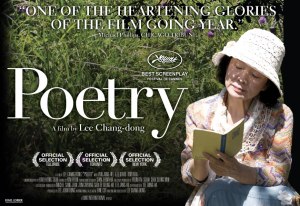
Poetry_WebBase

“The apricot throws itself on the ground. It is crushed and trampled for its next life.”  Yang Mija “sees” while walking through an orchard and takes notes in her poetry notebook

Poetry  (2009), the second movie suggestion for a holiday break movie, is a Korean movie with English subtitles. It speaks quietly about life and art, devastation and redemption. Like the most refined poetry, it is nuanced, honest and dramatic without being melodramatic or manipulative. It is a spare work, whittled down to essentials. It whispers. It never shouts.  Its pacing is leisurely and thoughtful. There is no suggestive music here to help you grasp the story’s progression. There are no stars who’ve been nipped, tucked, brushed, trussed and boosted. These people are real. They could be me or you or a next-door neighbor.  The story could be anyone’s story anywhere in the world. Indeed, Director Lee Chang-dong got the basic idea for the screenplay from news reports..

… this story was finally born from a combination of different elements: the sexual assault case, the suicide of a girl, and the lady in her 60s writing a poem.” Lee Chang-dong

Yoon Jeong-hee stars in the leading role (Yang Mija) and it is the lean script (though the movie is over two hours long) and Jeon-hee’s exquisitely understated acting that transfix us. Watch her face. Watch her body movements.  These also are a kind of poetry.

“I’m quite a poet. I do like flowers and say odd things.” Yang Mija

Yang Mija is a sixty-six year-old grandmother charged with the care of a teenaged grandson, Jongwook – or Wook – whose mother is divorced and living in Busan. Wook is lazy and ungrateful and shows no respect for his grandmother or sensitivity to her age and her loneliness.

“You’re sprouting a mustache but acting like a child.” Yang Mija to Wook

Wook is part of a gang of male friends, fellow students, who over the course of six months repeatedly rape a young woman who subsequently drowns herself. News of this comes coincident with Yang Mija’s diagnosis of Alzheimer’s disease and her first poetry class. It is her poetry classes and effort to write a poem that provide the through-line for this story.

“The most important thing is seeing.” the poetry instructor to the class on the first day

img1-lgWe walk alongside Yang Mija as she struggles with these multiple challenges – not without some humor – and sorts through her emotions regarding her grandson’s actions, her sympathy for the drowned girl, and the desire of other parents to hide the boys’ culpability by buying off the drowned girl’s mother. While Yang Mija may be suffering the early stages of memory loss, she hasn’t lost her moral compass.

As she moves from one experience to the next, Yang Mija questions: How do you write a poem? Where does the poetry come from? When she decides her grandson must face the consequences of his actions, she is finally able to write her poem.

Agnes’s Song

How is it over there?
How lonely is it?
Is it still glowing red at sunset?
Are the birds still singing on
the way to the forest?

Can you receive the letter
I dared not send?
Can I convey the confession
I dared not make?
Will time pass and roses fade?

Now it is time to say goodbye,
Like the wind that lingers
And then goes, just like shadows.

To promises that never came,
To the love sealed till the end,
To the grass kissing my weary ankles,
and to the tiny footsteps following me,
It is time to say goodbye.

Now as darkness falls
will a candle be lit again?
Here I pray nobody shall cry
and for you to know
how deeply I loved you.

The long wait in the middle
of a hot summer day.
An old path resembling my father’s face.
Even the lonesome wild flower
shyly turning away.

How deeply I loved.
How my heart fluttered at
hearing your faint song.
I bless you
before crossing the black river
with my soul’s last breath.

I am beginning to dream…
A bright sunny morning again I awake,
blinded by the light and meet you
standing by me.

– Yang Mija

“It is not difficult to write a poem. It is difficult to have the heart to write a poem.” the poetry instructor on the last day of class. Yang Meja is not in attendance but has left a bouquet of flowers and her poem.

You can stream Poetry on Amazon, if you are interested. It’s quite a memorable film.

© 2016, review, Jamie Dedes, All rights reserved; Photographs, poem, quotes courtesy of and property of the filmmaker and used here under fair use.

THE WORDPLAY SHOP: books, tools and supplies for poets, writers and readers

LITERATURE AND FICTION oo Editor’s Picks oo Award Winners oo NY Times Best Sellers