“Unmasking the God who described himself as the world …” Poets, writers, anyone with a soul, don’t miss Terri Stewart’s post on The Bardo Group blog today …
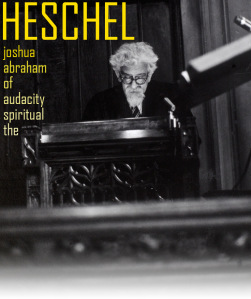
Tonight I went to see Dr. Cornel West along with two young men that I work with. We were all inspired by the passionate energy that Dr. West brings to his presentation! Tonight, he was particularly focused on the work of Abraham Joshua Heschel. He describes the arch of Heschel’s work in a way that I totally relate to the Bardo community!
Pietic–>Poetic–>Prophetic
Meaning, personal piety not bound by religious rules but bound by reverence or seeing the sacred worth in all be-ings. For West’s interpretation of Heschel, the pietic leads to the poetic. A poetry that is not grounded in nihilism or optimism, but grounded in hope. He said, Heschel was “not a person of optimism, but a person of hope.” And that Heschel’s hope as expressed in poetry was hope for the world–not just the Hasidic…
Oh! the brilliant suns,
the gyrating galaxies
strumming the music of the Universe,
its coruscating rhythms,
they’re all of a piece
infiltrating life
finding the interstitial places
filling every emptiness,
etching essential patterns
onto everything and into each
expression of our being
Who knew – I didn’t – that Hemingway wrote poems published by Der Querschnitt in 1924 but banned in the U.S? Rather fun and interesting bit of trivia, including the one above in which he satirizes Eliot.
The lady poets he’s referring to are:
Edna St. Vincent Millay
Aline Kilmer
Sara Teasdale
Zoe Akins
Lola Ridge
Amy Lowell
Details on the poets are HERE at Poetry magazine. You can read the Suppressed Poems of Ernest Hemingway (a chapbook) online at the Internet Archives HERE.
CHAPTER HEADING
For we have thought the larger thoughts
And gone the shorter way.
And we have danced to devil’s tunes,
Shivering home to pray;
To serve one master in the night,
Another in the day.
– Ernest Hemingway
Some tidbits for a lazy Saturday. Have a great weekend all. ♥
Thank you for sharing your love of words. Comments will appear after moderation.
January is on the wane
leaving behind early dark and champagne hopes
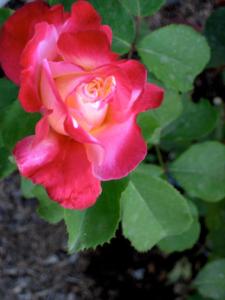
for the genus Rosa. Wild or tame, they’re lovely.
Garden roses need pruning, solicitous cultivation ~
Layer shorter under taller, drape on trellises
and over pergolas, the promise of color and fragrance,
climbers retelling their stories in ballet up stone walls,
an heirloom lace of tea roses, a voluptuous panorama
rhymed with shrubs and rock roses in poetic repetition.
Feminine pulchritude: their majesties in royal reds
or sometimes subdued in pink or purple gentility,
a cadmium-yellow civil sensibility, their haute couture.
Is it the thorned rose we love or the way it mirrors us
in our own beauty and flaw and our flow into decrepitude?
They remind of our mortality with blooms, ebbs, and bows
to fate, a noble death to rise again in season, after Lazarus.
Divinely fulsome, the genus Rosa, sun-lighted reflexed ~
And January? January is ever on the wane.
The work that was the jumping off point for my poem is one by the Mexican nun, Sor Juana Inés de la Cruz (1551-1695), who lived during the time when Mexico was a part of the Spanish empire. She belonged to the Order of St. Jerome.
Sor Juana was a writer, playwright and a Baroque poet. She was hungry for learning and was self-educated. From childhood, she set her own demanding educational goals. These three famous quotes of hers are telling:
“I don’t study to know more, but to ignore less.”
“One can perfectly well philosophize while cooking supper.”
“…for there seemed to be no cause for a head to be adorned with hair and naked of learning…”
I am enamored of Sor Juana’s work and find her life interesting. She was brilliant, independent and nonconforming.
Here is her poem Rosa in Spanish and in English.
Rosa divina que en gentil cultura
eres, con tu fragrante sutileza,
magisterio purpureo en la belleza,
enseñanza nevada a la hermosura.
Amago de la humana arquitectura,
ejemplo de la vana gentileza,
en cuyo ser unió naturaleza
la cuna alegre y triste sepultura.
¡Cuán altiva en tu pompa, presumida,
soberbia, el riesgo de morir desdeñas,
y luego desmayada y encogida
de tu caduco ser das mustias señas,
con que con docta muerte y necia vida,
viviendo engañas y muriendo enseñas!
Rose, heaven’s flower versed in grace,
from your subtle censers you dispense
on beauty, scarlet homilies,
snowy lessons in loveliness.
Frail emblem of our human framing,
prophetess of cultivation’s ruin,
in whose chambers nature beds
the cradle’s joys in sepulchral gloom.
So haughty in your youth, presumptuous bloom,
so archly death’s approaches you disdained.
Yet even as blossoms soon fade and fray
to the tattered copes of our noon’s collapse –
so through life’s low masquerades and death’s high craft,
your living veils all your dying unmasks.
– Juana Inés de la Cruz
Illustration and poem in the public domain. Source of translation unknown.
Thank you for sharing your love of words. Comments will appear after moderation.

 flickr photo by On Being




 Jamie Dedes' THE POET BY DAY Webzine