Page 23 of 183

Poems from Paul Brookes to Honor Reuben Woolley and I am not a silent poet

c estate of Reuben Woolley

“I wish to honour Reuben by thanking him for all the poems he accepted that I submitted to I am not a silent poet.” Paul Brookes


Note: Due to a technical challenge all of Paul’s poems were left out of the original homage to Reuben Woolley. Hence, they are shared here. / J.D.

World Is

always at war.
Every bulletin lists casualties,
devastated buildings, grief.

Bloodied, scarred, lost, missing,
found dead. What about the lost dead?

Forever wanting you to discover,
uncover their brief candle burn.

We Live

in a fake peace between world wars,
shop and shop to stay reasonable.

Families are killed elsewhere.
We see their relatives tears on plasma screens.

Sometimes tears drop closer to home,
and we are reminded of our fake comfort,

that is preferable, a faux fur covered blade
sometimes bleeds and we are keen.

Our Justification

for the gang rape
and killing
of your eight year old
Child
Is that, like you,
She was
Not human
And therefore
Not under
The rights
And privileges
Of humans.

You must
Be tolerant
Of our beliefs
If you wish
To stay
On our land.

Some Baked Bread

or the journey
to the hole in the ground

where they were asked to lay
on the still warm dead
neighbours and children
to be shot

As their ethnicity was cleansed.
the soldiers with guns
wrote home from the war.
It was such an event.

A Queued

Life. Born to this line
Of cotted bairns,

Crocodiled infants,
Slumped with others outside

A locked classrroom,
Marshalled exams desks,

Job interview staring at strangers,
Ranked at work,

Drs, dentists waiting rooms,
appointmented even my wedding.

Waiting list for a council house,
Parents evening lined up with others

Listed as deceased in papers, online.
Regimented plaque for my cremation.

As that world ends another begins.
Join another queue, another thought

of final judgement already delivered,
or forever pended.

Without Permission

he walked on her grass,
uprooted her wild flowers,

She says “Don’t touch
without asking. It’s abuse.

Stop it. No means no!”
Fantasies of ravagement

on both sides who know
these are merely fantasies

that should never be public
so a no becomes yes,

and abuse pleasurable. Always safe
words agreed beforehand.

Always taken too far, control
and power corrupt.

Slavery

is good for you. All folk
should be chained,

manacled to a mortgage,
to work, to an employer

a partner. Freedom denies
your human rights. Slavery

teaches you the meaning of life.
demands you act properly

constrains you to common sense,
sets out a wild world of imagination

creativity and invention. Freedom
is too wishy washy. Lock

and load your chains. Don’t let
loose and free your mind. Freedom

Is heavy, restricts, denies movement
of blood, bone and brain.

Become a slave and see our world
with new eyes, fresh perspectives.

Hopelessness Is Life

Only the hopeless live.
Only hopelessness makes you smile.

When all hopelessness is gone
then you will grieve at the loss.

There are three streets we can go down,
Faithlessness, Hopelessness and Selfishness

Without one of these the others cannot exist.
There must always be hopelessness

in the best of times. It reminds us of an edge
to life. Surrender to hopelessness

and all will be well. It is the force that drives
all that is worthwhile and good.

An Inappropriate Life

Born inappropriate to this inappropriate world
this inappropriate earth I learned how to be inappropriate

in school, met a lass
who said she was inappropriately ready

to be inappropriately wed, so we inappropriately married
after three months of inappropriate courting

she bore inappropriately our first kid
after six months whilst I worked inappropriately

in inappropriate employment
Promoted inappropriately to inappropriate manager

so we bought our first inappropriate home,
furnished inappropriately, after decorating inappropriately.

I had an inappropriate allotment where I grew inappropriate carrots
and potatoes and cabbages.

She died inappropriately after seven years inappropriate fighting
lung cancer. I never remarried inappropriately

Bring up our second child inappropriately
tell her inappropriate dream stories
of our inappropriate love inappropriate life.

Guns Are

good. Make you feel safe.
Make you more responsible,

like your own child. Nobody
hurts my child. I’ll shoot anyone

that does. My child needs
A decent education. Some shooter

Who wants to be famous kills
my little one in lessons.

I’m glad I’ve got my gun
So I can kill the shooter

And his family. Guns are good.
Make folk sit up and listen.

A Bridge

anastomosis [ah-nas″to-mo´sis] (pl. anastomo´ses) (Gr.)

It is bin day. Sound of breaking glass.

A vein.

between places,
one person and another,

A Bridge

anastomosis [ah-nas″to-mo´sis] (pl. anastomo´ses) (Gr.)

It is bin day. Sound of breaking glass.

A vein.

between places,
one person and another,
you and your kids,
a busy crossing between beliefs.
from wick to ash.
full to empty.

Broken, blocked, under investigation.

No link, information dammed,
Adamant your side is right,
other side apostate.
Bloodied metal sends a message,
via media bridges.

Bins must be wheeled back to their places.

a busy crossing between beliefs.
from wick to ash.
full to empty.

Broken, blocked, under investigation.

No link, information dammed,
Adamant your side is right,
other side apostate.
Bloodied metal sends a message,
via media bridges.

Bins must be wheeled back to their places.

Mobiles

are in the shape of small graves
for children who mine the precious
metal inside that make it work
and I look Into the screen
to stay connected but do not see
their gritted lives as they haul
the valuable out of the hole
and the world has never been
so connected by this small grave
I carry in my pocket.

Deliberate Death Of A Conformist

I insist I nod in agreement
at all they accuse me of.

I refuse to make a spectacle of myself.
I will not protest. I agree with all

the folk in power do. I always obey
the law. Drive correctly. I want

an easy life. No hassle. Why am I
guilty? Whatever it is I did it.

They tell me -That’s too easy.
You must have done something worse.

If we told you to jump out
of that window would you do it?

So I do. Now they arrest me again,
-You caused a public disturbance.

-I agree I say. – There must be something
you don’t agree with they say -No I reply.

– If we tell you you died in that fall,
and this police station is heaven – I agree.

Refugee

is good. To belong
is wrong. Be homeless.

Mortgages and rents are chains.
Tread the world without burden.

Find a banquet in a crumb.
A glassful in a droplet.

Warmth in a newspaper blanket.
Comfort is a concrete underpass.

Our Folk Burn

Management say “Lessons will be learnt”
Folk have already warned bosses.
Management say “Our sympathies are with the families”
Death toll expected to rise.
Management say “Lessons will be learnt.
Austerity costs must be met.”

Because

people killed further away
do not grieve any less.

a mother is a mother
even if her fashion is not ours.

a father is a father
even if we disagree with his beliefs.

an explosion is an explosion
even when on a flat screen.

Nothing (For Manchester)

is real.

My smile was a pink balloon
floated above me. I sang.

A big bang.
Blood on the balloon.

I find metal nuts and bolts.
I can’t sing. It isn’t real.

I’m Just About

managing between the barricades.
My kids play between sniper targets.

I fetch the shop through broken
buildings perforated by gunshot,

past cars jammed across streets.

I’m just about managing between regimes.

“Why Dad?”

It happens a lot.
I look up to see
a soldier
with the butt of his rifle
move Dad forward.

“Why, Dad?”

“They don’t know where
we belong.” He says.

© 2019, Paul Brookes

It Was Love Kept Me Anchored, a poem

“What is hell? I maintain that it is the suffering of being unable to love.”  Fyodor Dostoevsky, The Brothers Karamazov


One winter I ate the sun, it warmed
It warmed the moon dancing with my heart
It calmed the seas that ran in my veins
It drew spring flowers from crusts of ice

I wrote a poem to the sun, to the future
I wrote another to the eons gone by
Still another told of history’s lessons
But it was love kept me anchored
Earthy, and yet not earthbound, love

© 2019, Jamie Dedes


Jamie Dedes. I’m a freelance writer, poet, content editor, and blogger. I also manage The BeZine and its associated activities and The Poet by Day jamiededes.com, an info hub for writers meant to encourage good but lesser-known poets, women and minority poets, outsider artists, and artists just finding their voices in maturity. The Poet by Day is dedicated to supporting freedom of artistic expression and human rights and encourages activist poetry.  Email thepoetbyday@gmail.com for permissions, commissions, or assignments.

About / Testimonials / Disclosure / Facebook / Medium

Recent and Upcoming in Digital Publications: Five by Jamie Dedes on The World Literature Blog,  Jamie Dedes, Versifier of Truth, Womawords Literary Press, November 19, How 100,000 Poets Are Fostering Peace, Justice, and Sustainability, YOPP! * The Damask Garden, In a Woman’s Voice, August 11, 2019 / This short story is dedicated to all refugees. That would be one in every 113 people. * Five poems, Spirit of Nature, Opa Anthology of Poetry, 2019 * From the Small Beginning, Entropy Magazine (Enclave, #Final Poems), July 2019 * Over His Morning Coffee, Front Porch Review, July 2019 * Three poems, Our Poetry Archive, September 2019


“Every pair of eyes facing you has probably experienced something you could not endure.”  Lucille Clifton

If You Get Another Chance, a poem . . . and you’re next Wednesday Writing Prompt

“Today you are You, that is truer than true. There is no one alive who is Youer than You.” Dr. Seuss, Happy Birthday to You!


If you get another chance,
don’t try harder and longer
don’t shoot for perfection
forego known stresses and strains

Throw caution out with the trash
make mistakes and skip Mass
giggle at everything or nothing
be a champion risk-taker

If you get another chance
eat lots of birthday cake
laugh out loud and
cry when you need to·

Kiss the earth and hug the sky
travel as light as you can
coddle your feet in sensible shoes
never ever live without a cat

If you get another chance
savor the beach and its sands
get high on the scent of bread baking
swim at sunrise and dance at dusk

Be sure with another chance
to take more lovers
make more babies
and never marry or tarry too long

if you get another chance, be the youest You!

© 2011, Jamie Dedes

Originally published in Brooklyn Memories

WEDNESDAY WRITING PROMPT

An easy prompt this week: What would you do – differently or the not – if you got another shot at this life. Tell us in your poem/s.

  • please submit your poem/s by pasting them into the comments section and not by sharing a link
  • please submit poems only, no photos, illustrations, essays, stories, or other prose

PLEASE NOTE:

Poems submitted through email or Facebook will not be published.

IF this is your first time joining us for The Poet by Day, Wednesday Writing Prompt, please send a brief bio and photo to me at thepoetbyday@gmail.com to introduce yourself to the community … and to me :-). These are partnered with your poem/s on first publication.

PLEASE send the bio ONLY if you are with us on this for the first time AND only if you have posted a poem (or a link to one of yours) on theme in the comments section below.  

Deadline:  Monday, December 16 by 8 pm Pacific Time. If you are unsure when that would be in your time zone, check The Time Zone Converter.

Anyone may take part Wednesday Writing Prompt, no matter the status of your career: novice, emerging or pro.  It’s about exercising the poetic muscle, showcasing your work, and getting to know other poets who might be new to you.

You are welcome – encouraged – to share your poems in a language other than English but please accompany it with a translation into English.


Jamie Dedes. I’m a freelance writer, poet, content editor, and blogger. I also manage The BeZine and its associated activities and The Poet by Day jamiededes.com, an info hub for writers meant to encourage good but lesser-known poets, women and minority poets, outsider artists, and artists just finding their voices in maturity. The Poet by Day is dedicated to supporting freedom of artistic expression and human rights and encourages activist poetry.  Email thepoetbyday@gmail.com for permissions, commissions, or assignments.

About / Testimonials / Disclosure / Facebook / Medium

Recent and Upcoming in Digital Publications: Five by Jamie Dedes on The World Literature Blog,  Jamie Dedes, Versifier of Truth, Womawords Literary Press, November 19, How 100,000 Poets Are Fostering Peace, Justice, and Sustainability, YOPP! * The Damask Garden, In a Woman’s Voice, August 11, 2019 / This short story is dedicated to all refugees. That would be one in every 113 people. * Five poems, Spirit of Nature, Opa Anthology of Poetry, 2019 * From the Small Beginning, Entropy Magazine (Enclave, #Final Poems), July 2019 * Over His Morning Coffee, Front Porch Review, July 2019 * Three poems, Our Poetry Archive, September 2019


“Every pair of eyes facing you has probably experienced something you could not endure.”  Lucille Clifton

Some Kind of Hell to Pay, a poem; Draconian Rules cut food benefits to poor families/disabled/elderly including 1.4 Million Veterans

USDA logo for Supplemental Nutrition Assistance Program / Public Domain

“Almost 1.4 million veterans live in households that participate in SNAP (formerly food stamps), CBPP analysis of data from the Census Bureau’s American Community Survey finds. In every state, thousands of low-income veterans use SNAP to help put food on the table. Florida has the largest number of veterans participating in SNAP (120,000), followed by California and Texas (97,000 apiece). In Oregon, Rhode Island, West Virginia, and Washington, D.C., at least 10 percent of veterans live in households that received SNAP in the last year. SNAP Helps Almost 1.4 Million Low-Income Veterans, Including Thousands in Every State MORE, Center on Budget and Policy Priorities, by BRYNNE KEITH-JENNINGS and LEXIN CAI


the unconscionable dance in the canyons of power,
lined with megalithic buildings, the edifice complex
of the spin-meister’s lie, that the demigods can do
anything – anything – walking this asphalt valley

a parade, flailing lemmings trussed and trusting their
die-cut dreams to the pitiless whim of the military/
industrial/medical alliance, whose war-cries are of
greed and arrogance, believing they’ll live forever,
today’s sovereignty, tomorrow’s guarantee. But it’s

all delusion – cultures die and the hope-crushing
architects of cuts and austerity measures are like
the rich man in the Lazarus story, there’ll be
some kind of backlash, some kind of hell to pay …

Rich Lazarus! richer in those gems, thy tears,
Than Dives in the robes he wears:
He scorns them now, but oh they’ll suit full well
With the purple he must wear in hell”
Richard Crenshaw (c.1613-1649), English cleric, teacher, metaphysical poet, Steps to the Temple. Sacred Poems, Delights of the Muses (1646)

© 2010, poem, Jamie Dedes


New SNAP Rule Would Cost Many of Nation’s Poorest Their Food Aid

by Robert Greenstein, Center on Budget and Policy Priorities Statement

The emphases are mine. / J.D.

On December 4, the Trump Administration issued a draconian rule in the Supplemental Nutrition Assistance Program (SNAP, or food stamps) that will cut off basic food assistance for nearly 700,000 of the nation’s poorest and most destitute people. Those affected — SNAP participants ages 18 through 49 who aren’t raising minor children in their homes — are among the poorest of the poor, according to U.S. Department of Agriculture (USDA) data. Their average income is just 18 percent of the poverty line. Their average monthly SNAP benefits are about $165 per month.

A longstanding, harsh provision of SNAP limits these 18- through 49-year-olds to just three months of benefits, while not employed for at least 20 hours a week, out of every three years. Because of its severe nature, this provision of law also allows states to seek, and USDA to grant, waivers of this three-month cut-off for areas where insufficient jobs are available for these individuals, such as when unemployment is elevated.

From the provision’s enactment in 1996 until now, both Democratic and Republican presidents alike have operated under a common set of criteria in granting waivers from the three-month cut-off. And Democratic and Republican governors alike have sought and secured these waivers. Thirty-six states currently have waivers for parts of their state where unemployment is highest.

Now, the Trump Administration is abandoning this longstanding, bipartisan practice, however, and replacing it with a much more restrictive rule that will increase hunger and destitution. The new rule sharply restricts states’ ability to protect unemployed adults from the harsh time limit. It does so by substantially narrowing the criteria that states have most commonly used to qualify for waivers, thereby greatly shrinking the number of areas that can qualify for relief. As a result, the Trump Administration itself estimates that the rule will cut off basic food aid to nearly 700,000 unemployed or underemployed individuals.

Most of these individuals are ineligible for any other form of government financial assistance because they aren’t elderly, severely disabled, or raising minor children. For many of them, SNAP is the only assistance they can receive to help make ends meet.

What’s more, the final rule is more severe than the proposed rule, which itself was very harsh. States currently can request waivers when they experience rapidly rising unemployment, as typically occurs at the onset of economic downturns based on the Department of Labor’s determination that the state qualifies for extra federal unemployment benefits. But under the final rule, states must rely on historical data that would not reflect the onset of economic downturns until many months later. Moreover, far fewer areas will qualify for waivers during a widespread, national recession. A state with spiking unemployment reaching levels as high as 9 percent would not qualify for a waiver if national unemployment were also high, such as at 8 percent. This will limit a core strength of SNAP — its responsiveness to changes in economic conditions so that individuals who lose their source of income can quickly qualify for temporary food assistance. Instead of mitigating a recession’s harm, the new rule will exacerbate it.

Another Flawed “Work Requirement” Proposal

Adding to these concerns, although participation in a work or training program counts toward fulfilling the 20-hours-a-week requirement, states are not required to provide work or training slots to these individuals — and most states don’t. Furthermore, pounding the pavement and searching hard for a job does not count toward meeting the requirement. If you can’t find a 20-hour-a-week job on your own, you’re cut off SNAP anyway.

The Administration’s portrayal of the new rule as a reasonable “work requirement” thus is misleading — as noted, most states don’t offer any job, training opportunity, or slot in a work program to most people subject to the three-month limit. And people who are “playing by the rules” and looking hard for a job are cut off nonetheless.

In addition, the history of the three-month cut-off shows that some people who should qualify for an exemption from it because they suffer from a significant health condition often don’t get an exemption — and lose their SNAP benefits anyway, because they can’t satisfy the paperwork and other bureaucratic hurdles involved in securing an exemption. That’s especially troubling now, because the Administration is giving states little time to prepare for this sweeping change. Properly identifying which destitute individuals in formerly waived areas should be subject to the three-month time limit and which should be exempt (due to conditions that affect their ability to work) can require both training staff and allocating additional administrative resources.

Rule Hits People of Color, Those With Limited Education and in Rural Areas Hardest

Cutting off basic assistance doesn’t appear to help individuals get jobs, as research into the SNAP time limit, and similar rules in Medicaid, demonstrates. The rule will hit hardest those with the greatest difficulties in the labor market. That includes adults with no more than a high school education, whose unemployment rate is much higher than the overall unemployment rate; people living in rural areas where jobs are often harder to find; and people who are between jobs or whose employers have cut their hours to less than 20 hours a week, which is common in the very-low-wage labor market even when the economy is strong.

People of color are likely to lose benefits disproportionately under the rule, given their much higher unemployment rates and continued racial discrimination in labor markets. The African American unemployment rate has long been roughly double the non-Hispanic white unemployment rate. Studies have found that white job applicants are much likelier to receive callbacks after job applications or interviews than equally qualified Black applicants.

Here’s how the new rule will harm these groups. Under the new rule, an area can qualify for a waiver only if its average unemployment rate over a recent 24-month period has been 20 percent higher than the national average for the same time period and was 6 percent or higher. But a local area with an overall 5.8 percent unemployment rate can have an African American unemployment rate closer to 10 percent, as well as an unemployment rate around 10 percent for people of all races who are age 25 or over who lack a high school diploma or GED.

The Administration and House Republican leaders sought, but failed, to secure these policy changes as part of the farm bill that Congress passed on a bipartisan basis last year. The Administration is now implementing through executive action what it failed to secure through legislation.

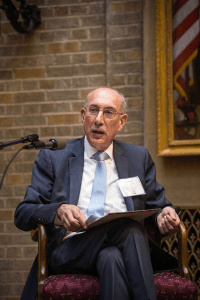
Robert Greenstein, UDSA photograph / Public Domain

Instead of punishing those facing destitution and other difficult circumstances, the Administration should seek to assist them by pursuing policies such as more and better job training and employment programs, a higher minimum wage, and a strengthened Earned Income Tax Credit. Denying them basic food and nutrition is not the route that a fair and compassionate administration of either party should take.

Note: The Center on Budget and Policy Priorities (CBPP) is a progressive American think tank that analyzes the impact of federal and state government budget policies. It was founded by Robert Greenstein, the author of this feature. CBPP is 501(c)(3) nonprofit organization, the Center’s stated mission is to “conduct research and analysis to help shape public debates over proposed budget and tax policies and to help ensure that policymakers consider the needs of low-income families and individuals in these debates.”


Jamie Dedes. I’m a freelance writer, poet, content editor, and blogger. I also manage The BeZine and its associated activities and The Poet by Day jamiededes.com, an info hub for writers meant to encourage good but lesser-known poets, women and minority poets, outsider artists, and artists just finding their voices in maturity. The Poet by Day is dedicated to supporting freedom of artistic expression and human rights and encourages activist poetry.  Email thepoetbyday@gmail.com for permissions, commissions, or assignments.

About / Testimonials / Disclosure / Facebook / Medium

Recent and Upcoming in Digital Publications: Five by Jamie Dedes on The World Literature Blog,  Jamie Dedes, Versifier of Truth, Womawords Literary Press, November 19, How 100,000 Poets Are Fostering Peace, Justice, and Sustainability, YOPP! * The Damask Garden, In a Woman’s Voice, August 11, 2019 / This short story is dedicated to all refugees. That would be one in every 113 people. * Five poems, Spirit of Nature, Opa Anthology of Poetry, 2019 * From the Small Beginning, Entropy Magazine (Enclave, #Final Poems), July 2019 * Over His Morning Coffee, Front Porch Review, July 2019 * Three poems, Our Poetry Archive, September 2019


“Every pair of eyes facing you has probably experienced something you could not endure.”  Lucille Clifton