Photograph by George Platt Lynes (1935) from the United States Library of Congress’s Prints and Photographs division under the digital ID cph.3c01955 / Public Domain
” . . . Moore wrote without regard to labels. She was a Modernist who used a precise syllabic form and rhymes. She was a defender of the underdog, an early white champion of civil rights and of black artists and athletes who also voted Republican and defended LBJ’s continuing the Vietnam War, the latter mainly so as not to abandon the South Vietnamese. She wrote “advertising” verse and patriotic poems during WWII. She was raised by lesbians and then denigrated by second wave feminists.
“Her poetry must be read and dealt with if you care about American poetry. Her carefully controlled poems were often described as emotionless and overly intellectual. In truth, she was able to contain deep emotion and thought in precise verse, a skill and aesthetic often not practiced or appreciated since the Confessionals came along.” excerpt from July 25, 2017 Library Thing Review of Linda Leavell’s Holding On Upside Down: The Life and Work of Marianne Moore
An Egyptian Pulled Glass Bottle In The Shape Of A Fish
Here we have thirst
and patience, from the first,
and art, as in a wave held up for us to see
in its essential perpendicularity;
Not brittle but
intense–the spectrum, that
spectacular and humble animal the fish,
whose scales turn aside the sun’s sword with their polish.
Poetry
I, too, dislike it: there are things that are important
beyond all this fiddle.
Reading it, however, with a perfect contempt for it,
one discovers that there is in
it after all, a place for the genuine.
Hands that can grasp, eyes
that can dilate, hair that can rise
if it must, these things are important not be-
cause a
high sounding interpretation can be put upon them
but because they are
useful; when they become so derivative as to
become unintelligible, the
same thing may be said for all of us – that we
do not admire what
we cannot understand. The bat,
holding on upside down or in quest of some-
thing to
eat, elephants pushing, a wild horse taking a roll,
a tireless wolf under
a tree, the immovable critic twitching his skin like a
horse that feels a flea, the base-
ball fan, the statistician – case after case
could be cited did
one wish it; nor is it valid
to discriminate against “business documents
and
school-books”; all these phenomena are important.
One must make a distinction
however: when dragged into prominence by half
poets,
the result is not poetry,
nor till the autocrats among us can be
“literalists of
the imagination” – above
insolence and triviality and can present
for inspection, imaginary gardens with real toads
in them, shall we have
it. In the meantime, if you demand on one hand,
in defiance of their opinion –
the raw material of poetry in
all its rawness, and
that which is on the other hand,
genuine, then you are interested in poetry.
A Grave
Man looking into the sea,
taking the view from those who have as much right to it as you have to yourself,
it is human nature to stand in the middle of a thing,
but you cannot stand in the middle of this;
the sea has nothing to give but a well excavated grave.
The firs stand in a procession, each with an emerald turkey-foot at the top,
reserved as their contours, saying nothing;
repression, however, is not the most obvious characteristic of the sea;
the sea is a collector, quick to return a rapacious look.
There are others besides you who have worn that look—
whose expression is no longer a protest; the fish no longer investigate them
for their bones have not lasted:
men lower nets, unconscious of the fact that they are desecrating a grave,
and row quickly away—the blades of the oars
moving together like the feet of water-spiders as if there were no such thing as death.
The wrinkles progress among themselves in a phalanx—beautiful under networks of foam,
and fade breathlessly while the sea rustles in and out of the seaweed;
the birds swim through the air at top speed, emitting cat-calls as heretofore—
the tortoise-shell scourges about the feet of the cliffs, in motion beneath them;
and the ocean, under the pulsation of lighthouses and noise of bellbuoys,
advances as usual, looking as if it were not that ocean in which dropped things are bound to sink—
in which if they turn and twist, it is neither with volition nor consciousness.
– Marianne Moore
Editor’s Note: The layout of Ms. Moore’s poems here are not consistent with the original. I was unable to manage that in this WordPress theme. I believe all her poems are in the public domain at this point. Her Amazon Page is HERE. If you haven’t made a study of her, there’s no time like the present.
Marianne Moore (1948 by Carl Van Vechten, Van Vechten Collection at Library of Congress / Public Domain
MARIANNE MOORE (1887 – 1972) was a premier American modernist poet, critic, translator, and editor. Her poetry is notable for formal innovation, precise diction, irony and wit. Poetry may be her most famous poem, followed by The Grave.
Poetry expresses Ms. Moore’s hope for poets who can produce “imaginary gardens with real toads in them”. It also expressed her idea that meter, or anything else that claims the exclusive title “poetry”, is not as important as the delight in language and precise, heartfelt expression in any form. Moore’s meter was radically separate from the English tradition. She wrote her syllabic poems after the advent of free verse, which encouraged to try previously unusual meters.
Marianne Moore credited the poetry of Dame Edith Sitwell as “intensifying her interest in rhythm and encouraging her rhythmic eccentricities” In response to a biographical sketch in 1935, Moore indicated “a liking for unaccented rhyme, the movement of the poem musically is more important than the conventional look of lines upon the page, and the stanza as the unit of composition rather than the line.” Later in her Selected Poems of 1969, she also commented in regard to her poetic form, that “in anything I have written, there have been lines in which the chief interest is borrowed, and I have not yet been able to outgrow this hybrid method of composition”.
Moore often composed her poetry in syllabics, she used stanzas with a predetermined number of syllables as her “unit of sense”, with indentation underlining the parallels, the shape of the stanza indicating the syllabic disposition, and her reading voice conveying the syntactical line. Her syllabic lines from Poetry illustrate her position: poetry is a matter of skill and honesty in any form whatsoever, while anything written poorly, although in perfect form, cannot be poetry.
Jamie Dedes. I’m a freelance writer, poet, content editor, and blogger. I also manage The BeZineand its associated activities and The Poet by Dayjamiededes.com, an info hub for writers meant to encourage good but lesser-known poets, women and minority poets, outsider artists, and artists just finding their voices in maturity. The Poet by Day is dedicated to supporting freedom of artistic expression and human rights and encourages activist poetry. Email thepoetbyday@gmail.com for permissions, commissions, or assignments.
Hervor, Shieldmaiden by Peter Nicolai Arbo (1831-1892) / Public Domain illustration
“The most famous type of mortal warrior woman known from the sagas is the shieldmaiden, who is mirrored in the spiritual realm of the afterlife by the Valkyries. The shieldmaiden was allegedly a woman who took up arms and armor and fought in battle alongside men.”Ten Legendary Female Viking Warriors, Ancient History Encyclopedia
Your pain was not in vain
Found buried with a horse, spear
Shield, battle axe and arrows
Proof that women could overcome fear
Fiercely loving and defending
Family and friends.
Over the centuries
Women have been leashed and silenced
Corseted, drugged, beaten, ignored
Treated like family pets
Teetering on stiletto heels
Emotions wrapped in woman-made steel.
But you, you did what must be done
Yes, silenced too young
But I look at you and know
Women were not made to only
Cook and sew
We are strong and brave
Created to carry life and
Therefore to save
All we love and care for.
And I say to you
Warrior Woman
Role model
Excavated from a farm
Your pain was not in vain…
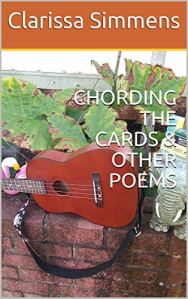
CLARISSA SIMMENS (Poeturja) is an independent poet; Romani drabarni (herbalist/advisor); ukulele and guitar player; wannabe song writer; and music addict. Favorite music genres include Classic Rock, Folk, Romani (Gypsy), and Cajun with an emphasis on guitar and violin music mainly in a Minor key. Find her onAmazon’s Author Page, on her blog, and on FacebookHERE.
Jamie Dedes. I’m a freelance writer, poet, content editor, and blogger. I also manage The BeZineand its associated activities and The Poet by Dayjamiededes.com, an info hub for writers meant to encourage good but lesser-known poets, women and minority poets, outsider artists, and artists just finding their voices in maturity. The Poet by Day is dedicated to supporting freedom of artistic expression and human rights and encourages activist poetry. Email thepoetbyday@gmail.com for permissions, commissions, or assignments.
“We need four things to survive life: bread, water, oxygen, and dreams!” Avijeet Das
after Sylvia Plath
I dreamt an Emergency Room Doc
Bewitched me into a curtained room
Put me on monitors. Left me alone
With beepers for company, sounding
The alarms of my rickety lungs.
A mix of sweet and sour, medicine on
An empty stomach. Queasy. Freezing.
Heated blanket blessings. Baptism.
Ice chips for parched lips. O2
For pulmonary fibrosis …
An arbitrary blackness had galloped in
But you sung me moonstruck with
Med-talk. Blissed me quite insane
With pharmaceuticals. Hellfire faded
And God fell to earth as an ER Doc …
Should I have loved death instead?
Embraced the light at the end of the dark.
But I grow old. I don’t remember
Your name. I shut my eyes and
All the world drops dead. But no,
I didn’t make you up inside my head.
Jamie Dedes. I’m a freelance writer, poet, content editor, and blogger. I also manage The BeZineand its associated activities and The Poet by Dayjamiededes.com, an info hub for writers meant to encourage good but lesser-known poets, women and minority poets, outsider artists, and artists just finding their voices in maturity. The Poet by Day is dedicated to supporting freedom of artistic expression and human rights and encourages activist poetry. Email thepoetbyday@gmail.com for permissions, commissions, or assignments.
This week we bring you poems of hope in response to the last Wednesday Writing Prompt, At a Peace Reading, October 30. As always, all poets have come through beautifully for us, examining hope from several angles. Further some have gifted us with sorely needed salve for these days bad news, unrelieved.
Thanks and a warm welcome to two new-to-us poets, Shannon Browne and Oz Forester and thanks to our stalwart poet-heros: Paul Brookes, Anjum Wasim Dar, Frank McMahon, Urmilia Mahajan, Sonja Benskin Mesher, Tamam Tracy Moncur, Ben Naga, and Bishnu Charan Parida.
Enjoy! and do join us tomorrow for the Wednesday Writing Prompt (something a bit different this week). All are welcome to join in: novice, emerging, or pro.
Hope is the way …
Hope is in the way we play
Not just in the words we say
Its through our actions
aspirations and dreams
desires, good fortunes
utopian schemes.
In a world so empty
Anger finds its mark
Matched by sister courage
Intertwined from the start
One without the other
Shannon and her son fighting a cold keeping spirits high
May be pure bliss
What fun would life be
With no manipulation by sis.
SHANNON BROWNE ((Letters2Mom, Give it a rest) is a wife, and mother of three with an Elementary School teaching degree. Thriving and surviving are her main games at this point in life. Shannon lost her grandmother recently and mother some time ago and has been using writing as her outlet. Finally started blogging and trying to have some fun with her “corky old nature” in a world that’s so unsure.
Hope spoke
Find me, hope said
where headwaters unfurl
and roll across eons of rocks
polished by the playful tumble
of a rumbling stream. I stir belief
in the faintest trace I leave
under layers of a forest bed
the faint murmur of a mountain spring
where the ascent of a desert trail
is more than water
and the curl of a wool blanket
around the thumb of a sleeping child
is more than warmth.
Find me
where daydreams break
and flood the order of days
bridged by that narrow crossing
between duty and yearning. I destroy walls
from the rigid constructs I emerge
from labyrinths of complex reasons
the unwanted changes and the changing wants
where the hunger on the abundant earth
is a promise made
and the bend of the searching sun
under the months of winter snow
is a promise kept.
Find me
where smoke rises
and lifts the ghosts of mourning
entrapped by a constant churn
of candle stubs. I unite breath
under melting symbols I bow
to the church of the desperate fate
the humble faith in the big mistake
where a vow of strange forgiveness
is more than peace
and the prayer for a shamash flame
or the chant to an endless knot
is more than peace.
OZ FORESTOR is a former journalist. He began writing short fiction, poetry, and essays when he realized the topics that don’t make news are more interesting than news: class struggle, un-planet Pluto, geriatric romance, power psychology, migratory birds, Nazi-era art suppression, trees. Forestor’s nature-themed poetry chapbook sold out–all three copies- when he was nine. He enjoys hiking, travel, is prone to getting lost, and does not believe in GPS technology.
Reverse Rumi
Always live in regret.
The past is ever present.
There are no new days; you are the same person you were before.
Believe that today will be no better than yesterday. It’s about looking down with despair
and looking backward.
Don’t Look for new opportunities
that the Almighty has planned for you.
Hardship disheartens,
and does not pass away.
All hope is followed by despair;
all sunshine is followed by darkness.
People want you to be sad.
Serve them your pain!
Don’t untie your wings
bind your soul with jealousy,
You and everyone around you
can’t fly like doves.
FYI: Paul Brookes, a stalwart participant in The Poet by Day Wednesday Writing Prompt, is running an ongoing series on poets, Wombwell Rainbow Interviews. Connect with Paul if you’d like to be considered for an interview. Visit him, enjoy the interviews, get introduced to some poets who may be new to you, and learn a few things.
Flying lightly all over
feathers of hope hover
linger, alive, tingle the soul
stay without burden,cover
the spirit, awakening the heart
from time to time, warding away
danger depression sadness cold
storms in the turbulent seas, not
harming even a bird or a gull
but keeping the lull,cajoling Poseidon
for softness soothing mercy, nothing
ever from me asking or the entire humanity
but flying closer to all flying for peaceful eternity
“POETRY PEACE and REFORM Go Together -Let Us All Strive for PEACE on EARTH for ALL -Let Us Make a Better World -WRITE To Make PEACE PREVAIL.” Anjum Wasim Dar
Spiked
He thought it would be great to be
a manic comic, soaring
on dope and steroids, his wit
an acid-tipped stiletto.
But then he knew he couldn’t stand
his own dark hand ripping the heart
out of hope, his veins flooding
with the world’s insanities and evils
and nothing there to pump them out.
Far from it that we skip the
stony ground of reality
and shroud unpalatable
truth under precarious wings
for two unprivileged children
who lost out through no fault of
their own
like countless others
whose flag is a small white bird of
hope singing from here to eternity
Sonja Benskin Mesher, RCA paintings (This is her Facebook page, so you can connect with her there as well as view photographs of her colorful paintings.)
Hope rises every morning coloring the sky with messages of love declaring peace despite the ratta-tat-tat of gun violence violating innocence.
Hope stands strong in vast rock mountains symbolizing strength…the strength to continue on along this narrow nebulous pathway into the future.
Hope is spring summer fall winter blanketing earth’s atmosphere in splendor…rain washing away tears…the sun shining away fears…falling leaves capturing pain…the snow white in its purity covering shame.
Hope rides on the waves of the ocean in glory and power diving into unfathomable depths seeking fellowship in the dark murky waters.
Hope flies through forests over rolling green hills across rivers into the desert of existence…the highs…the lows…the joy…the heartache…the caring…the callous.…the sharing…the selfish.
Hope unites hearts in just causes lighting fires of indignation flames ablaze burning up hate… subjugation…racism… fanaticism…exploitation…sending sparks of the evidence of faith into the heavens.
Hope internalized is belief in “Somebody Bigger than You and I”
Tamam Tracy Moncur probes the reality of teaching in our inner city school systems as seen from the front line in her book, Diary of an Inner City Teacher. Over two decades in the trenches, Tamam exposes through her personal journal the plights, the highlights, the sadness, and the joys she has experienced as a teacher. Our children’s very existence is at stake! Laugh, cry, and become informed as you embrace the accounts of an inner city teacher.
She Seats Herself to Write
She seats herself to write
Half fearing her writing
Will drive her mad while
Half hopes it will cure her
In two minds – Ah, if only
Thinks were so simple
Turmoil turmoil turmoil
Enough! Dismisses them all
And seats herself to write
Bishnu-ji’s site is: Bishnu’s UniverseBishnu is just getting his blog started. We wish him much joy in this creative effort.
“Listen to the mustn’ts, child. Listen to the don’ts. Listen to the shouldn’ts, the impossibles, the won’ts. Listen to the never haves, then listen close to me… Anything can happen, child. Anything can be.” Shel Silverstein
Jamie Dedes. I’m a freelance writer, poet, content editor, and blogger. I also manage The BeZineand its associated activities and The Poet by Dayjamiededes.com, an info hub for writers meant to encourage good but lesser-known poets, women and minority poets, outsider artists, and artists just finding their voices in maturity. The Poet by Day is dedicated to supporting freedom of artistic expression and human rights and encourages activist poetry. Email thepoetbyday@gmail.com for permissions, commissions, or assignments.




 FYI: Paul Brookes, a stalwart participant in The Poet by Day Wednesday Writing Prompt, is running an ongoing series on poets,

 Jamie Dedes' THE POET BY DAY Webzine