Page 2 of 10

No Calcification of the Heart, No Moratorium on Forgiveness

“The weak can never forgive. Forgiveness is the attribute of the strong.” Mahatma Gandhi, All Men are Brothers: Autobiographical Reflections

“To be a Christian means to forgive the inexcusable because God has forgiven the inexcusable in you.”C.S. Lewis

“Forgiveness is not an occasional act, it is a constant attitude.” Martin Luther King Jr.

“To love means loving the unlovable. To forgive means pardoning the unpardonable. Faith means believing the unbelievable. Hope means hoping when everything seems hopeless.” G.K. Chesterton


I’ve received some flack over yesterday’s post: This poet needs our help: SPOON JACKSON, imprisoned for 41 years or a crime he committed at 19 is still writing poetry and now asking for help to get commutation

The argument against Spoon’s commutation is about the life lost at Spoon’s hands. Advocating for the release of a man for a crime that is – no dispute, even by Spoon as far as I know – heinous is not to justifying the murder. I agree: Who knows what that poor murdered soul’s life might have been like, what his joys might have been, his contributions. We do know – because we’re human – that his family has probably never stopped grieving.  Forgiveness is not always easy but the calcification of the heart is the hardest and most unhealthy thing to bear.

Ever since reading about the woman featured in the video below, I have been unable to forget her. She’s a shining beacon of respect and sanity in a world gone mad. If she can forgive this, I can learn to forgive anything:

Spoon was nineteen years old when he committed the crime for which he is imprisioned.  Here’s what Robert Sapolsky, an American neuroendocrinologist and author, a professor of biology, and professor of neurology, of neurological sciences, and of neurosurgery at Stanford University, has to say about the teen/young adult brain. My feeling is that this needs to be factored into any judgement of Spoon and his case.

If you are reading this post from an email subscription, you’ll likely have to link to this site to view the two videos featured here.

“The willingness to forgive is a sign of spiritual and emotional maturity. It is one of the great virtues to which we all should aspire. Imagine a world filled with individuals willing both to apologize and to accept an apology. Is there any problem that could not be solved among people who possessed the humility and largeness of spirit and soul to do either — or both — when needed?” Gordon B. Hinckley, Standing for Something: 10 Neglected Virtues That Will Heal Our Hearts and Homes

There is also the issue of race and prejudice that clearly factored into his sentencing.  One comment I recieved is from American poet Deb y Felio (Debbie Felio) ” . . . not only the youth of the crime, which he did admit to, and which probably would have had his time served years ago. But the reality again we must continue to face of the limited justice available for black people when he was sentenced. “Special circumstances” which made him ineliglble for parole and in the same fell swoop made another trial unattainable. As a nation we are still struggling for equal justice for all.”

People writing to me from England, Sweden and Norway commented that in their countries Spoon would have been release twenty years ago.

Further, Spoon Jackson is not asking to run a day-care center, teach children, or to run for office but only to reunite with his family.  No harm in supporting that as far as I can see. Kindness and forgiveness are not misplaced.


ABOUT

Poet and writer, I was once columnist and the associate editor of a regional employment publication. Currently I run this site, The Poet by Day, an information hub for poets and writers. I am the managing editor of The BeZine published by The Bardo Group Beguines (originally The Bardo Group), a virtual arts collective I founded.  I am a weekly contributor to Beguine Again, a site showcasing spiritual writers.

My work is featured in a variety of publications and on sites, including: Levure littéraure, Ramingo’s PorchVita Brevis Literature,Compass Rose, Connotation Press, The River Journal, The Bar None GroupSalamander CoveSecond LightI Am Not a Silent PoetMeta / Phor(e) /Play, and California Woman.

Ecce Panis, a poem … and your Wednesday Writing Prompt

ingres_the_virgin_of_the_host

In nomine Patris, et Filii, et Spiritus Sancti …

Clad in blue-gray woolly plaid, black oxfords
and pressed, pristine white uniform-blouse
on the morning walk from the dorms to the convent,
past the apple orchard dripping rubescent fruit,
past long-lashed benign cows gently grazing,
walking briskly across that green pasture land
into the greener wood rich in conifers and
the piney debris that crunches amicably under foot,
in single-minded pursuit of that brass-hinged door,
on into aprons, to Sister Mary Francis, the kitchen, bread.

… we therefore beseech thee, O Lord, to be appeased, and to receive this offering of our bounden duty, as also of thy whole household …

The romance was not with bread to eat,
but with yeasts to proof, batters to mix,
and dough to knead, and rest, and grow –
that beautiful, mystical living thing you have
before the baking and dying into bread, and with
the crackling timpani of wood-ovens firing up, pans crashing,
the rhythmic swish and sway of our community,
punctuated by the clicking of Sister’s rosary as she
monitors the students and novices in silent industry at bakers’ tables.
This is the sacred work of those meditative hours before Mass and school
and the business of music lessons and art classes and
the methodical ticking of Liturgical Hours until finally Compline, sleep and
the contemplation of that final sleep and dust-to-dust.
And this being Tuesday, the day to commemorate St. John the Baptist,
and the day to bake our bread for the week to come.

…order our days in thy peace; grant that we be rescued from eternal damnation and counted within the fold of thine elect. Through Christ our Lord …

The next bake day, Thursday, commemorates the Holy Apostles.
Oh, palpable Presence, we work in the silence of Adoration,
preparing pure wafers for a week of Masses.
In a solemn alcove reserved for this task,
we mix flour, salt, and holy water blessed by Father Gregory,
then the fragile process of baking on baking tongs,
silvery antiques, perhaps a hundred years old.

… which offering do thou, O God, vouchsafe in all things …

Receiving the Eucharist
knowing it was formed by my own hand.

…to bless, consecrate, approve, make reasonable and acceptable
that it may become for us the Body and Blood of thy most beloved Son,our Lord Jesus Christ…

Friday, The Cross and Theotokos (Mary),
mother of both God and man, Divine and human.
A girl, like me, perhaps a baker of breads.

…who the day before he suffered took bread into his holy and venerable hands, and with his eyes lifted up to heaven, unto thee, God, his almighty Father, giving thanks to thee …

Mysterious. Numinous. Inexplicable.
A lifetime ahead to figure it out.

Ecce Panis.

Take this Bread.

… he blessed, brake, and gave to his disciples saying: Take and eat ye all of this…

from the pastures and the woods, from the sky and the stream
from nature’s great cathedrals, everywhere present

... hoc est enim Corpus meum…

for this is my body

for this is my life

Amen.

“Where is God? Wherever you let him in.” Rabbi Menachem Mendel Morgensztern of Kotzk, Poland 1787

© 2011, poem rewritten in 2013, Jamie Dedes, previously published in The BeZine, All rights reserved; Virgin adoring the Host by Jean Auguste Donminique Ingres (1980-1867), public domain; Menachem Mendel Morgensztern bio.


WEDNESDAY WRITING PROMPT

What event or experience or time in your life (doesn’t have to be associated with religion) birthed for you the freedom to explore beyond the boundaries set for you? Tell us in a poem and share it or a link to it in the comments below.  All poetry on theme will be published here on Tuesday next. You have until Monday at 8:30 p.m. PST to respond.  All are welcome to come out and play no matter the status of your career: beginning, emerging or pro. Thank you!


ABOUT THE POET BY DAY

“Just to be is a blessing. Just to live is holy.” Rabbi Heschel … Yom Kippur and 100TPC

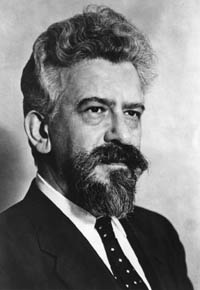
Polish-American Rabbi Abraham Joshua Heschel (1907 -1972)

It is interesting that the Jewish Day of Atonement, Yom Kippur, is being celebrated today at the same time that we are holding 100,000 Poets for Change (100TPC) around the world.  Last night I couldn’t help but think of Rabbi Herschel. I tend to connect well and deeply with those who practice their religions with respect for the mystical. Without mysticism religion is just dry cracker, something without much Life or Light.

Rabbi Hershel lost his family to bombings, Nazis, and the camps. During the war, he lived for awhile in Frankfurt. He was arrested by the Gestapo and sent back to Poland. In the melting pot that was 1950s Brooklyn, we had neighbors from Poland, people who had lost everything but their generosity of spirit. Some were Catholic and some were Jewish.

There was one family I particularly loved. I encountered Rabbi Herschel on their bookshelves when I sat with the children. The wife, a beautiful frail creature whose “shell shock” was clear to me even in my early teens, was none-the-less a good mother, wife and friend. The husband, a cantor and devoted family man, let me read whatever I found in English in their house. What was remarkable to me was that he was also willing to take the time to talk to me about what I read.  He encouraged me to speak my mind. With him, I never had to arm myself as the pretty dolt.

“If [a woman or man] were able to survey at a glance all he has done in the course of his life, what would he feel? He would be terrified at the extent of his own power.” Rabbi Abraham Joshua Heschel

Apropro this discssion, I was surprised (I shouldn’t have been) and charmed when I found Michael Dickel’s introduction to The BeZine 100TPC 2017 event wrapped around Yom Kippur. Here’s the introduction (below) … and when you are done reading perhaps you’ll pop over to The BeZine blog and share a poem and/or read those of others. You’d be very welcome.

– Jamie Dedes


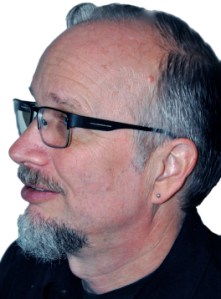
American-Israeli Poet, Michael Dickel

This year, the last Saturday of September, the regular day for the Global 100,000 Poets for Change Events around the world, falls on Yom Kippur, considered the Holiest day of the Jewish religion. Observant Jews around the world are fasting, having spent the Days of Awe leading up to Yom Kippur asking the people in their lives for forgiveness and inventorying their transgressions against Creation. Today, we Jews go to synagogue and ask Creation (G-d) for forgiveness. Another name for Yom Kippur is the Day of Atonement.

First, the order matters: We ask the people in our lives for forgiveness. Then we think how we have acted against the World. Then and only then do we turn to G-d for forgiveness.

Second, saying sorry is not enough, in our tradition. It is a start. In the Jewish tradition, people must also act differently, that is, they must enact the apology with a change in how they are in the world.

Third, human purpose can be understood—in how I have been taught—as working toward Tikkun Olam. Tikkun Olam is the repair or healing of Creation. While there is definitely a range of interpretations that could be made on what this healing entails, it certainly incorporates attention to the physical world as well as the spiritual. These two intertwine and interrelate in such a way as to be inseparable. Social Justice, Environmental Sustainability, and Peace—and writing, the arts, music in service of activism for positive change—are very relevant issues to our human purpose, from this view.

And thus, on the Holiest Day of the Jewish Year, it is appropriate to work toward Tikkun Olam, asking G-d’s forgiveness for all we have done that harms our fellow humans, inventorying our own role, and moving forward with action that shows our genuine desire to change and make things right again.

And, further, as the spiritual and the physical are interrelated, so are all of the arts (literature, art, music, dance, stage, film…), so are all three of the themes: Social Justice, Environmental Sustainability, and Peace.

So this year, on Yom Kippur, we ask you to join in with your contributions from any of the arts—share your efforts toward healing and repair of our World. As you do, remember this, paraphrased from the sages:

Do not despair at the iniquity and injustice of the world in which we live. For today, that is, in this period where injustice, racism, and greed seem to have risen to power, do not give up or give in.

It is not up to us to complete the work of Tikkun Olam, but this does not free us from working toward the healing and repair of Creation. That is, although we may not achieve our goals of a just, sustainable and peaceful world in our lifetime, we must continue to make progress, and in working toward them, the healing of Creation will occur, one poem, one essay, one novel, one painting, one sculpture, one song, one symphony, one performance at at a time…

By action, not words alone, will this be done. If ever there was a time when this action is more needed than others, certainly now is one—Resistance! Activism! Peace! Sustainability! Social Justice!

by Michael Dickel (Meta/Phor(e)/Play)

Waging the Peace, An Interfaith Exploration


Later today I’ll post the responses from readers to last Wednesday’s writing prompt, which is usual every Tuesday. Meanwhile . . . 

In December 2015 world events led to a spontaneous eleventh hour special section – Waging the Peace –  in The BeZine, which I edit. This seems a propitious moment to bring to the fore once again those ideas, ideals and experiences shared with us by Rabbi Gershon Steinberg-Caudill, Rev. Ben Meyers, Father Daniel Sormani, C.S. Sp., Sophia Ali-Khan, Israeli-American poet Michael Dickel, and the Venerable Bhikkhu Bodhi. Thanks to all of them and to Carla Prater, the assistant director of Buddhist Global Relief for their contributions to this collection and their assistance. I’ve included links to each of the features in table of contents for Waging the Peace. It is below the following introductory remarks.

Rabbi SteinBerg-Caudill (the Interfaith Rabbi) is a teacher who espouses a Jewish Spirituality and Universalist teaching for the future brotherhood of all people. When I contacted him about this effort he reminded me of what surely should be foremost in our minds and hearts:

“The Hebrew word for PEACE – שלום – does not imply a lack of strife. It implies instead WHOLENESS, COMPLETION. If one is in a state of peace, he can still be whole in a time of chaos.”

Rev. Meyers of the Unitarian Universalists of San Mateo also counsels inner peace with his You are the promise … the one … the hope. Rev. Meyers says:

“I understand and often share the ‘urge of urgency’ over the peacefulness of peace. But this I also know: We live at the intersection of action and reflection.”

Father Sormani, a Spiritan priest who has lived and worked in Algeria and Dubai and is now teaching theology at Ateneo de Manila University in the Philippines, asks What Have We Done that People Can Pick-up Weapons and Kill. Father Dan says:

“We have become our own worst enemy. Whenever we separate the world into ‘them’ and ‘us’, whenever we accept blind generalizations and cease to see a unique individual before us, whenever we forget we are all victims of carefully orchestrated deceit and deception for wealth and power, the force of darkness wins. Bullets will never win this struggle, only the heart and mind will.”

Lest you missed Sofia Ali-Khan‘s letter, Dear Non-Muslim Allies, which made the rounds on Facebook and was also picked up by some mainstream media, we’ve included it here.

We’ve also included a video recitation of Tunisian poet Anis Chouchéne‘s profoundly moving poem against racism and fanaticism. Chouchène speaks directly to radical Islam  … but I think you’ll agree that he ultimately speaks to the fear in all of us.

“Peace we keep an eye on/while it packs its bags/to abandon our lands, little by little …”

Chouchène concludes as Father Dan does, that we must be able to see the individual.

Michael Dickel‘s poem Mosquitoes (excerpt from his chapbook, War Surrounds Us – 2015, Is a Rose Press), is featured. The poem starts out with Israelis and Palestinians crossing the artificial lines that divide to offer one another condolences on the deaths of their children.  This is a favored poem of mine, especially so because when I initiated The Bardo Group (now The Bardo Group Beguines) in 2011, I had in mind virtual crossing of borders through the arts. (Our mission statement is HERE.) Michael’s poem demonstrates how we are manipulated by the propaganda machine.

We’ve included a short video presentation on the seven steps to peace developed by peace activist, Rabbi Marc Gopin. Director of the Center for World Religions, Diplomacy and Conflict Resolution (CRDC).

The Venerable Bhikkhu Bodhi is Buddhist monk in the Theravada tradition, an author and teacher. He is the founder of Buddhist Global Relief.  With permission, we offer the 2015 talk he gave at the New Year’s Interfaith Prayer Service, Chuang Yen Monastery. Bhikkhu Bodhi says:

“Real peace is not simply the absence of violent conflict but a state of harmony: harmony between people; harmony between humanity and nature; and harmony within ourselves. Without harmony, the seeds of conflict and violence will always be ready to sprout.

Bhikku Bodhi goes on to analyze the obstacles to achieving world peace, the prerequisites of peace, and the means to realizing these goals.

On behalf of The Bardo Group Beguines and in the spirit of love and community,

Jamie Dedes,
Founding and Managing Editor of The BeZine.


Waging The Peace
An Interfaith Exploration

You are the promise . . . the one . . . the hope, Rev. Ben Meyers

What Have We Done That People Can Pick Up Weapons and Kill?, Fr. Daniel Sormani, C.S.Sp.

Dear Non-Muslim Allies,  Sofia Ali-Khan

Peace Be Upon You, شوشان – سلام عليكم, Anis Chouchène

Mosquitoes, American-Israeli poet, Michael Dickel, Jewish

Peace Steps: One Man’s Journey Into the Heart of His Enemies, Rabbi Mark Gopin

Waging Peace, Venerable Bhikkhu Bodhi, Buddhist teacher