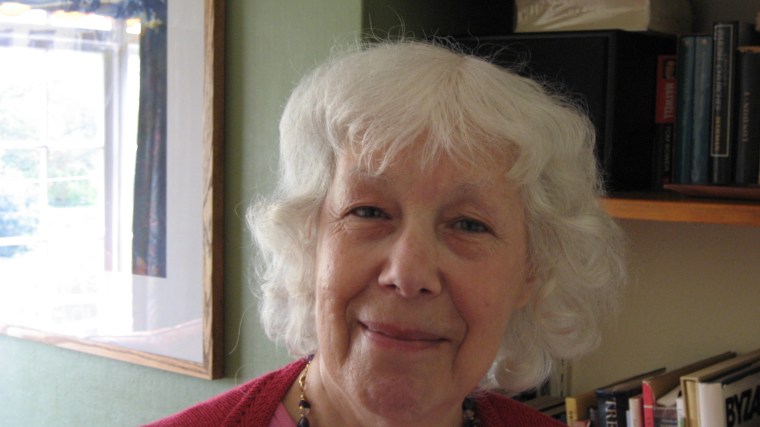
Bird is an excerpt from Myra’s Circling the Core (Enitharmon, 2008), discussed HERE with an interview. Myra is an award-winning poet with eleven published collections. She is a writing coach and a tireless advocate for poetry in all its beauty, power and ability to heal.
Link to Poetry PleaseHERE. It would appear you can stream on demand from anywhere. There’s also a small archive of past shows.
Poetry Please is moderated by Roger McGough, last seen here with Mafia Cats. Well-known actors read the poems. It will be fun to see who reads Bird. According to Wikipedia this show is the longest-running poetry show in the world … twenty-five years.
Jacqueline Woodson by David Shankbone under CC By SA 3.0 license
American poet and writer, Jacqueline Woods (b. 1963) was named Young People’s Poet Laureate in June last year by The Poetry Foundation. The $25,000 laureate award is given every two years to poets devoted to writing quality poetry for children and youth. Poetry Foundation President, Robert Polito, said Jacqueline is an “elegant, daring, and restlessly innovative writer.”
Jacqueline has written some thirty books. She’s won a National Book Award and three Newberry Honor Medals.
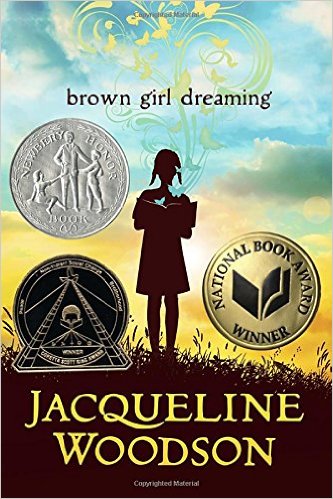
I just finished reading Brown Girl Dreaming, a memoir in free verse that is not just for brown girls. It can be read in one sitting but like all good poetry is meant to be relished … there is much to savor.
What I like about this work – and what in part accounts for its popularity – is that it puts family life and youthful reflection smack-dab in the context of history. Woodson grew-up during the civil rights movement and tells of watching the Black Panthers on television and sitting in the back of the bus, though Woodson’s mother made a point of affirming for her children that they were as good as anyone.
I enjoyed – and think most kids would too – how Woodson writes about the contradictions in family stories. The day, for example, that she is born is reported differently by mother, father and grandmother, each absolutely sure that he or she is the only one who got it right.
This is a wonderful book for any young person. I venture to say, however, if yours is a child who dreams of being a writer and can’t envision it happening, then you must put this book in that child’s hands. S/he will be forever grateful.
Sor Juana Inés de la Cruz (1651-1695), a Catholic nun of the Order of Saint Jerome, born an illegitimate child of mixed race (Criolo/Creole), lived during the time when Mexico was a part of the Spanish empire. She was a writer, a playwright and a poet. Self-educated and hungry for learning, she established her educational goals when she was quite young.
These three famous quotes of hers are telling:
“I don’t study to know more, but to ignore less.”
“One can perfectly well philosophize while cooking supper.”
“…for there seemed to be no cause for a head to be adorned with hair and naked of learning…”
In 1989 the Mexican poet, diplomat and Nobel laureate, Octavio Paz wrote in The Traps of Faith that Sor Juana was influenced by Spanish writers of the Golden Age and the Hermetic tradition, especially the works of her contemporary, the Jesuit scholar Athanasius Kircher. Paz felt that Sor Juana’s most formidable poem, Primero Sueño (First Dream) is a representation of a desire for knowledge through hermetic symbols. He concludes that Sor Juana’s work was the most important produced in the Americas until the 19th-Century arrival of Emily Dickinson and Walt Whitman.
Sor Juana Inés de la Cruz was brilliant, independent and nonconforming. She was a feminist before feminism. She was at the forefront of Mexican (v. Spanish) literature and is an icon of the Mexican national identity. Her home town of San Miguel Napantla was renamed Nepantla de Sor Juana Inés de la Cruz in her honor. While the people of the United States have snatched Freida, Sor Juana – though loved by many of us – seems to remain relatively unscathed by cultural appropriation.
I Approach and I Withdraw
I approach, and I withdraw:
who but I could find
absence in the eyes,
presence in what’s far?
From the scorn of Phyllis,
now, alas, I must depart.
One is indeed unhappy
who misses even scorn!
So caring is my love
that my present distress
minds hard-heartedness less
than the thought of its loss.
Leaving, I lose more
than what is merely mine:
in Phyllis, never mine,
I lose what can’t be lost.
Oh, pity the poor person
who aroused such kind disdain
that to avoid giving pain,
it would grant no favor!
For, seeing in my future
obligatory exile,
she disdained me the more,
that the loss might be less.
Oh, where did you discover
so neat a tactic, Phyllis:
denying to disdain
the garb of affection?
To live unobserved
by your eyes, I now go
where never pain of mine
need flatter your disdain.
“Time had not teased me. I thought eternity was mine in which to live and in which to write. Thinking myself amazingly intelligent, I saw no reason to hide my light under a bushel basket. My youthful poetry paraded my stuff. I imitated Horace shamelessly; he still remains one of my favorite poets in the original Latin but I have grown up enough not to imitate him. Who could?
“Perhaps there will only be one Rita Mae. I’m not sure I could stand another one. Anyway, as I learned more and more about language and literature I also learned more and more about my own limitations. I wanted to write a perfect poem. I was soon humbled and wanted to write a great poem. I eventually became realistic: I wanted to write a good poem.”
. . . so says American novelist, screenwriter, POET and activist, Rita Mae Brown (b. 1944) in the intro to Poems, poetry from her two published collections combined into one book. Who among us can’t sympathize with that ambition? Or perhaps you want to write the perfect short story, paint the perfect picture, or compose the perfect piece of music. It’s all in the same spirit.
Spare and elegant, Rita Mae Brown’s poems deal with war, human rights and feminist and lesbian themes. She’s always confident and often contemptuous.
A Short Note for Liberals
I’ve seen your kind before
Forty-plus and secure
Settling for a kiss from feeble winds
And calling it a storm
Many of the poems were written when she was eighteen and the introduction is written from the perspective of middle-age. She’s fierce, her imagery apt and sometimes breath-taking.
For Those of Us Working For a New World
The dead are the only people
to have permanent dwellings.
We, nomads of Revolution
Wander over the desolation of many generations
And are reborn on each other’s lips
To ride wild mares over unfathomable canyons
Heralding dawns, dreams and sweet desire.
Thumbs-up on this collection. It’s out of print, but used copies are available through Amazon and other book vendors.
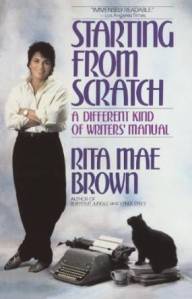
Rita Mae Brown is also a New York Times bestselling author of the Mrs. Murphy mystery series, which is cowritten with her cat, Sneaky Pie. Other novels include In Her Day, The Sand Castle and Six of One. She’s written two memoirs and was nominated for an Emmy for her screenwriting. Writers might enjoy Starting From Scratch: A Different Kind of Writer’s Manual.It’s savvy and full of sass, an enjoyable read.
 Bird is an excerpt from Myra’s Circling the Core (Enitharmon, 2008), discussed HERE with an interview. Myra is an award-winning poet with eleven published collections. She is a writing coach and a tireless advocate for poetry in all its beauty, power and ability to heal.


 I just finished reading Brown Girl Dreaming, a memoir in free verse that is not just for brown girls. It can be read in one sitting but like all good poetry is meant to be relished … there is much to savor.



 Jamie Dedes' THE POET BY DAY Webzine