Page 3 of 11

SECOND LIGHT NETWORK OF WOMEN POETS: News and Information

In the Medieval Period, Sappho had a reputation as an educated woman and talented poet. In this woodcut, illustrating an early incunable of Giovanni Boccaccio’s De mulieribus claris (Concerning Famous Women), Sappho is portrayed surrounded by books and musical instruments. Boccaccio (1313-1375) was an Italian writer, poet and Renaissance humanist.
Dilys Wood, SLN founder and poet, editor and publisher

SECOND LIGHT NETWORK OF WOMEN POETS (SLN), founded by poet, editor and publisher, Dilys Wood, was created to encourage and promote women poets – forty-plus.  SLN lives in London but membership is open to women poets over forty-years old living anywhere in the world.


NEWS & INFORMATION
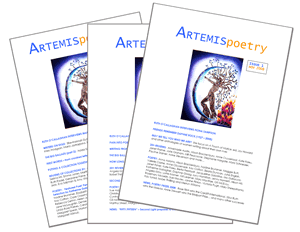
SLN’s ARTEMISpoetry, Issue 18, themed “Risks in Poetry” is just out and can be purchased from Second Light via Anne Stewart’s poetry pf. 

Anne Stewart, poet, poetry tutor, founder of poetry pf and administrator to SLN

Each issue of ARTEMISpoetry is chock full of information, inspiration, poetry and introductions to good poets who might be new to you. There’s always a sprinkling of black-and-white art and often a clever cartoon by Kate Foley. A “note board” provides news and updates on publications by member poets and on events, conferences, classes and poetry readings. These latter are in and around London and so mostly benefit local poets.  

ARTEMISpoetry, Call for Submissions – Opportunity Knocks

Issue 19, November 2017  

Editors for Issue 19 are: General & Artwork – Dilys Wood and Katherine Gallagher; Poetry – Anne Stewart.

New: Readers’ Letters are invited. Comments on the journal’s content or anything you would like to see discussed in relation to women’s writing. (max 100 words).

All submissions: submit paper copy initially to Dilys Wood, 3 Springfield Close, East Preston, West Sussex, BN16 2SZ. Please write “ARTEMISpoetry” on your envelope. (Enquiries only: e-mail Administrator editor@poetrypf.co.ukPoems: Issue 19 deadline – August 31, 2017

Poems by women of any age. Poems should be typed, or if written, then very neatly. Each poem should commence on a new page, headed “Submission for ARTEMISpoetry”. Please SEND TWO COPIES.  Include your name with each poem and include your name and full contact details in your submission. Long poems are considered. Submit up to four poems to a maximum of 200 lines in all.

Artwork: Black and white photographs or line art. Submit up to four pieces to Dilys as above.


EVENTS

Bookings open for AUTUMN FESTIVAL in mid-to-late August. This Festival is scheduled for November 17 & 18 this year.

Bookings open for SPRING FESTIVAL in mid-to-late February 2018. This Festival is scheduled for May. Exact dates to be announced.

Details HERE.


COMPETITION
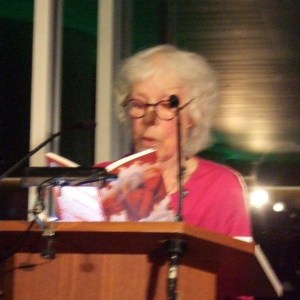
Poet, poetry tutor and consultant to SNL

Second Light Poetry Competition for Long and Short Poems by Women 2017 – Deadline Tuesday, August 15th

JUDGE MYRA SCHNEIDER will read all entries. Myra Schneider’s latest and recent books are Persephone in Finsbury Park (SLP), The Door to Colour (Enitharmon); What Women Want (SLP); and the writing resource, Writing Your Self (with John Killick). Myra is a Poetry School and Second Light regular tutor. More at Myra Schneider website where you can also order Myra’s books

Awards:

  • £300 First Prize for each of Long (no upper limit) and Short (max 50 lines) poems
  • £150 Second Prize (1 poem from either category)
  • £75 Third Prize (1 poem from either category)

Winning & Commended Poets published (in full or extract) in ARTEMISpoetry. Winners offered a London reading.

Entry fees are:

  • £6 each per long poem.
  • Short poems: £4 each or £9 for 3, £14 for 8. Enter by post (2 copies) or online.

Members are entitled to one free entry into the competition. Join now to be eligible.** (see About Second Light/Joining)

Rules & Entry direct link to payment at poetry p f online shop.

The competition results will be posted on the website by September 30th. Once winning poems (or extracts) are published in ARTEMISpoetry, they will be available to read there.


REMOTE (DISTANCE LEARNING) WORKSHOPS

REMOTE WORKSHOPS, a service you can access from anywhere in the world, are offered. There are two courses from which to choose with eight sections each. The workbooks are two of the many poetry anthologies published by SLN, Her Wings of Glass and Fanfare, both can be purchased from poetry pfWorkshop details HERE

PERCEPTIONS OF TIME, a full-day remote/distance workshop (5 hours plus) designed by Myra Sneider. Price: £8.

“Time plays a central role in every aspect of our lives. The workshop explores ways in which we perceive time and how we represent these perceptions in writing.

“Past experience crucially influences how we view the present and future. Earth’s distant past, cosmological time are difficult to imagine … Clock time is fixed but our impressions of time are subjective – an hour’s enjoyable exercise session will seem to be over quickly, but the minutes drag during a boring lecture…”

Further details on Myra Schneider (workshop designer and tutor) are HERE.

To order, contact Administrator, Anne Stewart, +44 (0)1689 811394 / +44 (0)7850 537489 or e-mail

Poems written in these workshops are invited for consideration for ARTEMISpoetry.


REMEMBERING MARY MacRAE
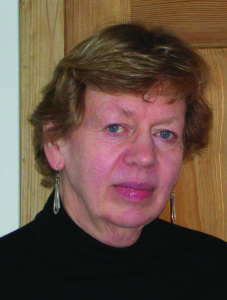
Poet Mary MacRae

THE MARY MacRAE ACCESS TO POETRY MEMORIAL FUND: “many will remember the outstanding poet and Second Light member, Mary MacRae (her books As Birds Do and Inside the Brightness of Red are available from Second Light).

“The Fund has been created in her memory, begun with a substantial donation from Mary’s family, with the intention of providing modest grants to enable local members on low income, along with a travel companion if they are unable to travel alone, to come to Second Light events.

“If anyone would like to make a contribution to the fund in Mary’s memory, all donations, however small, will be most welcome. Donate to the Fund

Making an Application

“Members on low income, who may not otherwise be able to attend Second Light events, may apply for assistance with local travel, for themselves only or for themselves and a travelling companion, if they are unable to travel alone. Recipients will be asked to make receipts for expenditure available whenever possible. Applicants should be aware that Donors of substantial amounts to the Fund may be given access to Fund records on a confidential basis.”

Download Application Form


CONNECT

Photo credits: header is courtesy of cladcat under CC-BY 2.0 license; © photo portraits of poets Dilys, Myra and Anne belong to them and Mary’s to her estate; Sappho Eresia (below) is in the public domain
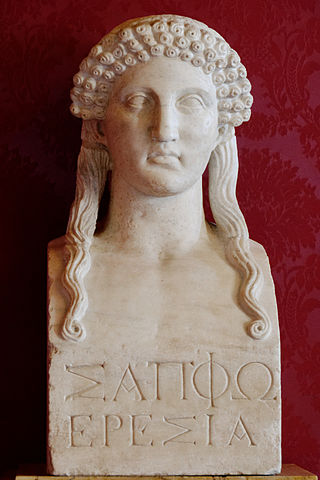

Hermaic pillar with a female portrait, so-called “Sappho”; inscription “Sappho Eresia” ie. Sappho from Eresos. Roman copy of a Greek Classical original.

RELATED:

My SLN member page is HERE.


Jamie’s THE WORDPLAY SHOP: books, tools and supplies for poets, writers and readers

CELEBRATING AMERICAN SHE-POETS (29): Emma Lazarus and Liberty Lighting the World … “I lift my lamp beside the golden door.”

Emma Lazarus, 1849 - 1887
Emma Lazarus, 1849 – 1887

In a letter to Emma Lazarus about Alide, an episode of Goethe’s Life. the Russian novelist Turgenev wrote  “An author who writes as you do is not a pupil in art anymore; he is not far from being himself a master.”

 “Emma Lazarus is a new name to us in American poetry, but ‘Admetus’ is not the work of a ‘prentice-hand’; few recent volumes of verse compare favorably with the spirit and musical expression of these genuine effusions of Emma Lazarus.” The Boston Transcript, c 1871

“What Emma Lazarus might have accomplished, had she been spared, it is idle and even ungrateful to speculate. What she did accomplish has real and peculiar significance. It is the privilege of a favored few that every fact and circumstance of their individuality shall add lustre and value to what they achieve. To be born a Jewess was a distinction to Emma Lazarus, and she in turn conferred distinction upon her race.” Josephine Lazarus, Emma’s elder sister who gather her poems together and published them in two volumes, The Poems of Emma Lazarus, 1881

“Until we are all free, we are none of us free.” Emma Lazarus

EMMA LAZARUS, poet, writer and activist, was by all accounts shy and she died at thirty-nine years, much too young. Nonetheless she accomplished a lot in addition to that for which she is most well-known, The New Colossus, the sonnet that is on the pedestal of the Statue of Liberty (Liberty Enlightening the World) in New York Harbor, having been installed there in 1903.

Unveiling of the Statue of Liberty Enlightening the World (1886) by Edward Moran. Oil on canvas. The J. Clarence Davies Collection, Museum of the City of New York.

“The copper statue, designed by Frédéric Auguste Bartholdi, a French sculptor, was built by Gustave Eiffel and dedicated on October 28, 1886. It was a gift to the United States from the people of France. The statue is of a robed female figure representing Libertas, the Roman goddess, who bears a torch and a ]a tablet evoking the law upon which is inscribed the date of the American Declaration of Independence, July 4, 1776. A broken chain lies at her feet. The statue is an icon of freedom and of the United States, and was a welcoming sight to immigrants arriving from abroad.” [Wikipedia]

In fact Lady Liberty greeted my own father and maternal grandparents and their children as they entered the harbor just as she probably did for the families of those reading here today. Their children and grandchildren learned the poem by heart in school. I suspect the majority of us took the ideals expressed as our own.

The bronze plaque inscribed with Emma Lazarus' poem, The New Colassus.
The bronze plaque inscribed with Emma Lazarus’ poem, The New Colossus.

A hymn to America, the “Mother of Exiles,” The New Colossus, was written to raise money for the construction of the pedestal for the Statue of Liberty.

The New Colossus – 1883

Not like the brazen giant of Greek fame,
With conquering limbs astride from land to land;
Here at our sea-washed, sunset gates shall stand
A mighty woman with a torch, whose flame
Is the imprisoned lightning, and her name
Mother of Exiles. From her beacon-hand
Glows world-wide welcome; her mild eyes command
The air-bridged harbor that twin cities frame.
“Keep, ancient lands, your storied pomp!” cries she
With silent lips. “Give me your tired, your poor,
Your huddled masses yearning to breathe free,
The wretched refuse of your teeming shore.
Send these, the homeless, tempest-tossed to me,
I lift my lamp beside the golden door!”

– Emma Lazarus

Emma came from a large Sephardic-Ashkenazi family, the father’s side from Germany and the mother’s side from Portugal. Her maternal great-grandmother was also a poet.  Emma’s first book of poems was published by her father when she was fourteen and apparently showed much promise. She continued to write poetry and eventually wrote a five-act play, a novel and a short-story as well.  She was a linguist, editing and translating works from the German, notably those of Goethe and Heinrich Heine. She wrote fourteen essays entitled Letters to the Hebrews. She was a forerunner in advocating a Jewish homeland, predating Theodore Herzi. She was friends with and an admirer of the American political economist, Henry George, who was instrumental in the birth of several reform movements of the Progressive Era. Essentially, George believed that workers should own the value of what they create, while the land should be held in common. Ralph Waldo Emerson was both friend and mentor.

Emma Lazarus received many posthumous awards. The Emma Lazarus Statue of Liberty Award is sponsored by the American Jewish Historical Society (New York and Massachusetts) and P.S. 268 in Brooklyn is named for her.

Life and Art

Not while the fever of the blood is strong,
The heart throbs loud, the eyes are veiled, no less
With passion than with tears, the Muse shall bless
The poet-sould to help and soothe with song.
Not then she bids his trembling lips express
The aching gladness, the voluptuous pain.
Life is his poem then; flesh, sense, and brain
One full-stringed lyre attuned to happiness.
But when the dream is done, the pulses fail,
The day’s illusion, with the day’s sun set,
He, lonely in the twilight, sees the pale
Divine Consoler, featured like Regret,
Enter and clasp his hand and kiss his brow.
Then his lips ope to sing–as mine do now.

– Emma Lazarus

RELATED


CELEBRATING AMERICAN SHE-POETS (27): Hélène Cardona … Poetry is language for the ineffable, what is impossible to write…

Hélène Cardona
Hélène Cardona, American poet, literary translator and actor

“I travel the corridors of mind, synapses
of chaos, frenetic amnesia, beguiling
impulses, diffusion of heaven,
past portals to crystalline temples”

excerpt from Cornucopia in Dreaming My Animal Selves

So often I want to shout: Don’t talk to me about the human condition in sociological terms. Don’t give me a technical analysis of the poem. Don’t talk to me about theology. There’s a place for all that but what I really want is your visceral response to life, art and to the Ineffable. In Hèléne Cardona’s poetry, we get just that. One of Helene’s gifts is to render the mysterious and mystical in often poignant terms expanding the boundaries of physical space into the unfettered space of psyche and Spirit. Writing from her sacred space, Hélène speaks to us in a silken web that is both imaginal and mythic, a space inhabited by visions and creatures we all know. Read with a still mind and open heart,the experience is somewhat like meditating and finding oneself in Rumi’s field where “the world is too full to talk about.”

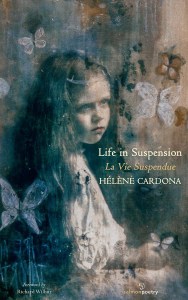
hcI was first engaged by Hélène’s art when I read Dreaming My Animal Selves, Le Songe de mes Ames Animales (Salmon Poetry, 2013), a surreal pathway in legend, myth and fancy. In her latest book, Life in Suspension, La Vie Suspendue, she explores life after loss, the loss of her mother Kitty, and the search for succor and healing.

“I hear beyond the range of sound
the ineffable, the sublime, my mother’s
breath, grandmother’s smile, ancestors’
voices, to soothe and heal the sorrow.”

excerpt from Search of Benevolent Immortality in Life in Suspension

Both books express an intimacy with nature and broad cultural exposure. The poems were written in English and include Hélène’s own translations into French.

Hélène Cardona is a poet, literary translator and actor, whose most recent books include Life in Suspension and Dreaming My Animal Selves (both from Salmon Poetry), and the translations Beyond Elsewhere (Gabriel Arnou-Laujeac, White Pine Press), winner of a Hemingway Grant; Ce que nous portons (Dorianne Laux, Éditions du Cygne), and Walt Whitman’s Civil War Writings for WhitmanWeb.

She has also translated Rimbaud, Baudelaire, Aloysius Bertrand, Maram Al-Masri, Eric Sarner, René Depestre, Ernest Pépin, Jean-Claude Renard, Nicolas Grenier, and her father José Manuel Cardona. A Romanian translation of Dreaming My Animal Selves was published by Junimea Editions in 2016. Her work has been translated into 13 languages.

She contributes essays to The London Magazine, is co-international editor of Plume, and managing editor of Fulcrum: An Anthology of Poetry and Aesthetics. She holds a Master’s in American Literature from the Sorbonne, received fellowships from the Goethe-Institut and Universidad Internacional de Andalucía, worked as a translator for the Canadian Embassy in Paris, and taught at Hamilton College and Loyola Marymount University.

Publications include Washington Square Review, World Literature Today, Poetry International, Dublin Review of Books, Asymptote, The Brooklyn Rail, Hayden’s Ferry Review, The Warwick Review, Irish Literary Times, Poetry Salzburg Review, and elsewhere.

Acting credits include Chocolat, Dawn of the Planet of the Apes, Jurassic World, X-Men: Days of Future Past, The Hundred-Foot Journey, Mad Max: Fury Road, Inception, and Mumford. She is the Computer voice in the TV series Heroes Reborn and her many voice characters include Happy Feet 2 and Muppets Most Wanted. For Serendipity she co-wrote with director Peter Chelsom and composer Alan Silvestri the song Lucienne, which she also sang. http://helenecardona.com

“Poetry is language for the ineffable, what is impossible to write, the mystery. I seek the light within that mystery. We are stretched to the frontiers of what we know, exploring language and the psyche. The poem is a gesture, a movement, an opening towards a greater truth or understanding.” Hélène Cardona

AN INTERVIEW WITH HÉLÈNE CARDONA

JAMIE: Hélène both the collections I’ve read are beautifully crafted and graceful, ripe with all that is profound and mystical in life. Your love of language is evident in each poem and in the fact that you’ve studied and master several. Tell us how this love was birthed. How did it become clear to you that language – in one way or another – would be a major path in your life?

HÉLÈNE: I grew up in France, Switzerland, Spain, Monaco, England, Wales, Germany and Greece, and absorbed different cultures and ideas.

I go back and forth between French, English and Spanish the most. My father is Spanish and my mother Greek, so I grew up speaking all three languages at home. I deepened my study of Spanish at the Sorbonne, the Universidad Menendez Pelayo in Santander, and the Universidad de Baeza in Andalucía.

I started learning German when I was eleven or so, and went on to study it at the Goethe Institute in Paris and later in Bremen, Germany. I loved German right away. It feels very familiar and comfortable to me, as if I had a past life in Germany.

I loved language early but it was not obvious to me that it would be a major path in my life at first. That’s because I was a math major in high school, which led me to medical school when I was seventeen. After two years I had a breakdown. it was like giving up my soul. I went through a deep depression and nearly died. Which is what saved me. It was a deeply transforming spiritual experience and put me on my path.

JAMIE: Your life is busy with acting, voice over work, translating, teaching, mentoring and the usual things we all must attend to: friends, family and the daily prosaic activities of maintaining life and livelihood. How do you transition from all that into your time for writing? Tell us something about your writing regime.

HÉLÈNE:  My ideal writing regime is to write every night. In reality it’s more cyclical, with periods of more intense writing, and times where I write much less.
Regardless, I have notepads I carry with me, where I write things down throughout the day. I also have a notebook by my bed, where I write my dreams in the morning.

JAMIE: Congratulations on your many awards including most recently the Pinnacle Book Award for Best Bilingual Book of Poetry for Life in Suspension. What made you decide to do bilingual collections?

HÉLÈNE: It was my first publisher’s idea and it was brilliant. French is my native language and English is my fifth but it has become my language of choice. So I mostly write in English now. Translating my poems into French, my mother tongue, helped me tremendously because I made some beautiful, creative discoveries and revised the English in the process. It’s become a dance between the two languages.

JAMIE: Congratulations on being a Translation judge for the PEN Center USA Literary Awards. What can you tell us about the experience?

HÉLÈNE:  I was very honored to serve as a Translation judge for the PEN Center USA Literary Awards, along with Hilary Kaplan and André Naffis-Sahely. I’ve been a member and supporter of PEN Centre USA and PEN America for many years. PEN champions “the freedom to write, recognizing the power of the word to transform the world.” Their goal is “to ensure that people everywhere have the freedom to create literature, to convey information and ideas, to express their views, and to make it possible for everyone to access the views, ideas, and literatures of others.” As for PEN Center USA, its “mission is to stimulate and maintain interest in the written word, to foster a vital literary culture, and to defend freedom of expression domestically and internationally.” We judged work produced or published by writers living west of the Mississippi River in all genres: poetry, fiction, and nonfiction. Two works really stood out: Forbidden Pleasures: New Selected Poems, Stephen Kessler’s gorgeous translation of Luis Cernuda – the winner -, and Woman in Battle Dress, Jessica Powell’s stunning translation of the bold novel by Antonio Benítez-Rojo, which was one of the finalists.

JAMIE: Among other works you translated Walt Whitman into French. How – if at all – the experience of translating your own work differ from translating the work of others?

HÉLÈNE:  With my own work I feel freer to make changes to the original, because I’m only accountable to myself.

JAMIE: Who is the poet (or poets) who have most influenced you?

HÉLÈNE: I’ve been writing poetry since I was ten. Growing up I read poetry and plays and devoured novels. I read all the classics like Victor Hugo and Alexandre Dumas. I loved Balzac. I read most of The Human Comedy. It is composed of a series of stories and novels, some historical like The Chouans (which remains one of my favorite with Old Goriot, Cousin Bette, The Lily of the Valley and The Wild Ass’s Skin) mostly depicting French society in the first half of the 19th century. The genius of it is that characters reappear from novel to novel and the reader keeps asking for more. I enjoyed the French playwrights Molière, Racine, Marivaux and de Musset, the Spanish playwrights Calderón de la Barca, Lope de Vega and Lorca, and Shakespeare of course. I discovered English literature and started spending my summers in England and Wales studying English philology. I would later discover Henry James and fall in love with him the same way I fell in love with Balzac.

Some of my favorite poets, in no particular order, are Anna Akhmatova, Mallarmé, Rilke, H.D., Emily Dickinson, Baudelaire, Rimbaud, Aragon, Alberti, Lorca, Neruda, Machado, Cernuda, Breton, Cocteau, Robin Coste Lewis, Lee Upton, Éluard, Blake, Rumi, Yeats, Marie Ponsot, David Mason, Hafiz, David Wagoner, Louise Glück, Dorianne Laux, Edna St. Vincent Millay, Lao Tzu, Sharon Olds, Geoffrey Hill, Thomas McCarthy, Rita Dove, Wisława Szymborska, Warsan Shire, Heather McHugh, Chase Twichell, Seamus Heaney, Mary Oliver, Larry Levis, Hart Crane, and John FitzGerald.

JAMIE: Our readers have a strong interest in poetry as a healing agent, as witness to the human condition. In what ways do you feel your poetry fills these needs?

HÉLÈNE:  For me, poetry is a process of self-revelation, an exploration of hidden dimensions in myself, and it is also at the same time a way to become myself, a process of individuation I try to create throughout my life – a profound experience of the fundamental interconnection of all in the universe. Moreover, writing is cathartic as it extends a search for peace, for serenity, rooted in a desire to transcend and reconcile the fundamental duality I see in life. Ultimately, I seek expansion of consciousness.

helenecardonalis1200pxPOEMS FROM LIFE IN SUSPENSION, La Vie Suspendue (a collection in English and French)

The three poems are shared here with Helene’s permission and are under copyright.

A House Like A Ship

I live in a house like a ship
…..at times on land, at times on ocean.
I will myself into existance
…..surrender, invite grace in.
I heed the call of the siren.
…..On the phantom ship
I don’t know if I’m a wave
…..or cloud, undine or seagull.
Lashed by winds, I cling tight to the mast.
…..Few return from the journey.
I now wear the memory of nothingness
…..a piece of white sail wrapped like skin.

Hélène Cardona
From Life in Suspension (Salmon Poetry, 2016)

Galactic Architect

From the bottom rung of a ladder in the sky
I hang in the void.
Ultramarine is all I need.
Let it be simple,
build a cottage for the spirit
to rest and soar.
I trust, self contained, in equipoise,
resources at my fingertips —
deep-rooted ghosts supporting
the foundation of a throne
to explore and claim whole worlds —
surprised to find you here with me
lighting up my life.

Hélène Cardona
From Life in Suspension (Salmon Poetry, 2016)

Twisting the Moon

Now is the time to know
that all you do is sacred.
—Hafiz

We shared the coast of Maine in June,
hundreds of whales, lobster
…..sandwiches, buttermilk pancakes
…….and a room in Bar Harbor with antique tub.
They’re now a cloister of shadows loved,
goldsmith of the music of time.
…..She left when circumstances met.
I dream of offering her strawberries on sacred moons,
healed by the beauty of memories,
…..ready to start over as if knowing nothing.

– Hélène Cardona
From Life in Suspension (Salmon Poetry, 2016)

Hélène’s Amazon page is HERE and her website is HERE.

© Intro, Jamie Dedes © poems, interview responses and book cover art,Hélène Cardona

THE WORDPLAY SHOP: books, tools and supplies for poets, writers and readers

LITERATURE AND FICTION oo Editor’s Picks oo Award Winners oo NY Times Best Sellers

CELEBRATING AMERICAN SHE POETS (26): May Sarton … when poet becomes woman, “Sisters, My Sisters”

May Sarton (1912-1995), American poet, memoirist and novelist

“The creative person, the person who moves from an irrational source of power, has to face the fact that this power antagonizes. Under all the superficial praise of the “creative” is the desire to kill. It is the old war between the mystic and the nonmystic, a war to the death.”  May Sarton, Mrs. Stevens Hears the Mermaids Singing

Eleanore Marie Sarton – nom de plume, May Sarton – was born in Ghent in Belgium to an English portrait-artist and interior-designer mother, Mabel Eleanor Elwes, and George Alfred Leon Sarton, a chemist and historian renown as the father of science history.

When the German invasion of Belgium began in August 1914 the family escaped to Mabel Sarton’s mother’s home in Ipswich, England. From there they traveled to America and settled in Boston so George Sarton could teach at Harvard University. May came from a family of gentle nonconformists and her maternal grandfather was among the original Fabians.

“Perhaps every true poem is a dialogue with God … when we are able to write a poem we become for a few hours part of Creation itself.” May Sarton in The Practice of Two Crafts, Christian Science Monitor (1974)

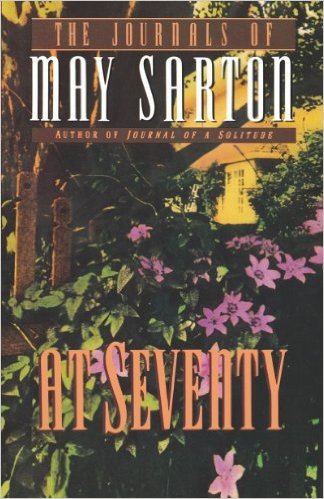
51ryhQbcxtL._SX322_BO1,204,203,200_May Sarton’s parents did not belong to any church but she seemed to feel that her parent’s views were not inconsistent with those of the Unitarian Church.

Interviewed in The World in 1987, she told Michael Finley, “My father and mother believed that, though Jesus was not God, he was a mighty leader, and the spirit of Jesus, the logos of him, is the worship of God and the spirit of man.

“At the age of ten May was introduced to the Unitarian church by her neighborhood friend Barbara Runkle, whose family attended the First Parish in Cambridge. May was impressed by the minister, Samuel McChord Crothers, whose sermons she thought “full of quiet wisdom.” One sermon in particular, she recalled in her memoir At Seventy, 1984, “made a great impression on me—and really marked me for life. I can hear him saying, ‘Go into the inner chamber of your soul—and shut the door.’ The slight pause after ‘soul’ did it. A revelation to the child who heard it and who never has forgotten it.” The Encyclopedia of Unitarian and Universalist Biography

May began writing early and her first poems – sonnets – were published in Poetry magazine in 1930. Her other love was theatre and she abandoned a scholarship to Vassar to study theatre and to eventually found  a theatre company. However, in I Knew a Phoenix, Sketches for an Autobiography she wrote that when her first collection was published she focused on writing and “never looked back.”

Her novel Mrs. Stevens Hears Mermaids Singing is considered a “coming out” book and her work was then labeled lesbian and featured in women’s studies classes. She regretted the label seeing it as limiting, which it is.  May Sarton wrote about the experiences, fears and other emotions that are part of being human. Journal of Solitude, for example, is a meditation on aging and the changes aging brings to life, on solitude ( a frequent theme in her work), on love affairs and creativity. May Sarton’s true gifts are poetry and memoir and not to be missed. Her novels – as she knew and admitted – were good but not top-notch.

“Loneliness is the poverty of self; solitude is richness of self.”  May Sarton, Journey of Solitude

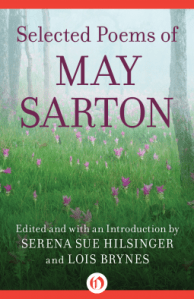
The following poem, Sisters, My Sisters, is one of May Sarton’s most well know poems. She reads it herself in this video. It was originally published in Kenyon Review in 1943 and is in Selected Poems of May Sarton.

If you are reading this in email, you’ll likely have to link through to the site to view it.

cover57866-medium“Nous que voulions poser, image ineffaceable
Comme un delta divin notre main sur le sable”
– Anna de Noaille

Dorothy Wordsworth, dying, did not want to read,
“I am too busy with my own feelings,” she said.

And all women who have wanted to break out
Of the prison of consciousness to sing or shout

Are strange monsters who renounce the measure
Of their silence for a curious devouring pleasure.

Dickinson, Rossetti, Sappho — they all know it,
Something is lost, strained, unforgiven in the poet.

She abducts from life or like George Sand
Suffers from mortality in an immortal hand,

Loves too much, spends a whole life to discover
She was born a good grandmother, not a good lover.

Too powerful for men: Madame de Stael. Too sensitive:
Madame de Sevigne, who burned where she meant to give

Delicate as that burden was and so supremely lovely,
It was too heavy for her daughter, much too heavy.

Only when she built inward in a fearful isolation
Did any one succeed or learn to fuse emotion

– May Sarton, excerpt from Selected Poems of May Sarton (recommended)

***

“Does anything in nature despair except man? An animal with a foot caught in a trap does not seem to despair. It is too busy trying to survive. It is all closed in, to a kind of still, intense waiting. Is this a key? Keep busy with survival. Imitate the trees. Learn to lose in order to recover, and remember that nothing stays the same for long, not even pain, psychic pain. Sit it out. Let it all pass. Let it go.”
― May Sarton, Journal of a Solitude 

© portrait, Don Cadoret; poem, Sarton estate