Page 6 of 11

“GRABBING THE APPLE” … or how a regional (New York) anthology of women poets was created and successfully launched

51UKv1yazEL._SX322_BO1,204,203,200_

Thanks to poet, writer and anthologist, M. J. Tenerelli, for sharing this story with us today.

Several years ago I did a show for the Northport Arts Coalition highlighting the work of well established women poets. I thought at that time that pulling together a collection of passionate, local women’s voices in a book of poetry would be a wonderful thing to do. There were so many talented women I knew on the New York circuit, giving profoundly moving performances, sharing really fine work. Two years ago my friend and co-editor, Terri Muuss, suggested that we get together and produce what became Grabbing the Apple, and anthology of New York women poets. And so a two-year project began.

The idea behind the book was to share what we believed was the unique voice of the New York woman, informed by place as well as a particular confidence, savvy, and passion. Terri and I wanted the book to serve as a conduit for these women, allowing them to define themselves as opposed to the traditional definitions existing in male-created literature, including the bible. Eve from Eve’s perspective.

First we needed a title. We wanted something that reflected the concept of women defining themselves. We turned to the original story of creation in the bible, where the mother of us all begins the downfall of man by plucking an apple from a tree. With Grabbing the Apple, we believed we had a title that turned that creation story upside down. Yes, the first woman, embraced wisdom, and that did not make her a monster but rather a heroine and a role model. The poets in the book define themselves and the lives and concerns of women, forcefully and without shame. We felt the anthology’s title embodied that. And of course “Apple” brings to mind New York.

Call for Submissions: We used social media, college websites and word of mouth to solicit submissions. We emailed the women poets we personally knew. The amount of work that poured in amazed us. I think the concept of the book really spoke to these writers, and they wanted to be heard. We culled 47 pieces from hundreds of submissions. It wasn’t easy. With the help of poet Matt Pasca, Terri’s husband, we instituted a blind process. Matt oversaw the email submission box, and printed out the poems for us, minus the writers’ names. Terri and I both had complete copies of the submissions to read through and consider. I don’t think we understood at the time just how long it would take to come up with a book we were satisfied with–to do right by the poets and the idea behind the book.

Reading and Selecting: I spent a lot of time with the work. As a mother with a full-time job, I spent many lunch hours in my car, and on the couch after work, reading poetry. It was far from a chore. The work energized me, moved me, and surprised me again and again. I started to feel honored to be stewarding these pieces into publication. It was often hard to choose what to accept and what to leave behind. Terri was also reading and considering. We each had a form to work with, where we gave each poem, identified only by number, a yes, no, or maybe. Then we would meet to compare our opinions.

In pizza restaurants, cafes, and often in Terri’s spacious living room, we would have “Apple” meetings. Often we agreed on what needed to go into the book. But not always. Sometimes one or the other of us would make a strong case for a poem we were passionate about. There were negotiations. It was never contentious. We respect each other as writers and editors, and are good friends. So we really listened to what the other had to say. It worked. We came up with a manuscript we could both stand behind. When it came to our own work, I picked a poem of Terri’s that I thought was perfect for the book, and Terri chose a piece that I had done. The next step was to create an order for the poems.

Terri suggested dividing the book into three parts, “Eden,” “The Fall,” and “After the Garden.” I loved the idea, but worried the poems we had wouldn’t lend themselves to the categories. It turned out to be needless worry. Whether loosely or specifically, each poem fits under one of the headings. I remember one night crawling around on Terri’s living room floor with the work spread out in front of us, moving poems around like puzzle pieces into each of the three sections. Again, there was a lot of consideration and some negotiating, but in the end we had groupings that made us both happy. We high fived each other and then celebrated with brownies! We had our poems and we had an order. We weren’t quite done though.

Finalizing and Publishing: We were our own proofreaders. There were a hundred plus pages to pour over. We wanted to get everything right. This took time, and in the end there were a few mistakes but we did our best. We proofed alone and together. We sent the manuscript to the publisher, corrected galleys, and up to the day before publication were still proofing! While we had input into the layout and design, it was the artist Janine DiNatale who created and did the layout for the front and back covers, and the publisher, J.B. Stillwater, who provided the beautiful finished book. I remember cradling the first copy sent to us and feeling like a proud mother. The final step was to get the collection out into the world.

Our initial book launch was at Cyrus Chai, in Bay Shore, New York. So many of the poets in the book came to read. For me, this was the defining moment. The poems I’d been living with for so long came to life. The electricity, love, and sisterhood in the room were palpable. The words sang. We’d accomplished what we set out to do, with more launches planned throughout the Summer.

© 2015, article and portrait (below), Mary Jane Tenerell;  bookcover art © Muuss and Tenerelli, All rights reserved

Grabbing the Apple is on Amazon where you can have a peek inside and sample a poem or two.

M. J. Tennerelli
M. J. Tennerelli

M.J. Tenerelli is a poet and a legal writer. She has worked as an editor of trade magazines and text books for the cosmetology, cosmetics and fragrance industries in New York City. She writes legal briefs for a Social Security Disability law firm and hosts a monthly poetry reading for the Northport Arts Coalition in Northport, NY. Her poetry has appeared in several anthologies, including Cat’s Breath and Estrellas En El Fuego, both by Rogue Scholars Press. Her poems have been published in a number of print and electronic journals, including The Feminist Wire; Poetry Bay; Alaska Quarterly Review; The Improper Hamptonian; Zuzu’s Petals; The Mom Egg; Blue Fifth Review; Poetry Kit; Poetry Super Highway; Big City Lit; American Muse and Parameter. She is a former editor of the art and literary magazine The Wormwood Press. She is the co-editor of the recently published poetry anthology Grabbing the Apple.

CELEBRATING AMERICAN SHE-POETS (19): Silva Zanoyan Merjanian, Borrowed Sugar Borrowed Time – from war-torn Lebanon to peace in California

Armenian/Lebanese American poet, Silva Zanoyan Merjanian
Silva Zanoyan Merjanian

Silva Zanoyan Merjanian is an Armenian ethnic who was born in Lebanon. She escaped the civil war there and lived for a time in Geneva, ultimately settling to build a family life in California. Silva has two published collections. Most recently Rumor (Cold Water Press, 2015), which received the Best Book Award from NABE in the 2015. Three poems from Rumor were nominated for a Pushcart Prize. Silva’s first collection is Uncoil a Night (CreateSpace, 2013).

73f533_9cc020b992f94d93a6acdd49383341f5

Falling

In rind of wishes sticky on lips
and sermons’ echo on facepsalms slipping
in envies squirted on spruce and cedar
whims twirling, spiraled, speckled
gossamer visions of friendships withered
in crevices of an upbeat mien
Your name hidden in prayer embers
I mend among buds of poems
flying on a trapeze
with no one at the other end

Rumor is a stunning tour de force of passionate, life-affirming poetry. Silva Merjanian evokes time and place with both grace and authority. Poetry is obviously a tool for her own healing and in that she brings us face to face with the human condition in all its complexity, beautiful and loving and devastating cruel, and she does so totally without pretension.

Mornings arriving
Me alone
Poems half written and done
Poems between toes and toast
‘Round Midnight and Monk
Nostalgia
Right reasons
Brave decisions
Thoughts that glow in the light
Just love
Always, in absence of rats and such
fresh sheets and I
between over and under

from Between the Sheets

She writes with immediacy of war:

bounce of gold crosses between breasts
colorful hijabs ’round others’ bare face
friendships seeded in borrowed sugar, borrowed time
she, unaware of borrowed wailers on their way
makes plans on a sunny balcony as she hangs
her blue jeans on a clothesline
moments before war drums ripple through crisp calm

from Borrowed Sugar Borrowed Time

INTERVIEW

JAMIE:  Silva, Rumor is a remarkable collection with many poems that stay with one. It’s also quite generous of you to donate proceeds to the Syrian-Amenian Relief Fund (SARF). How are sales going and how is the fundraising?

SILVA: Thank you Jamie. I did not have an event or a formal fundraising with Rumor. The sales were a result of readings, speeches, word of mouth and some ads in newspapers and on Facebook. In July there will be an ad for it in Poets & Writers and it will also be included in five book fairs this summer.

My publisher, Dave Boles of Cold River Press, will release the e-book version soon. He is kind enough to donate all proceeds from the e-book also to the SARF. So with all these developments I expect a boost in sales.

JAMIE: When did you fall in love with poetry? When did you realize you are a poet?

SILVA: I am a late bloomer. I started writing in 2011 and my first book was released in 2013. Even though we grew up with the poetry of Shakespeare, Keats, etc.. and many Armenian poets, the thought of writing poetry hadn’t occurred to me. My education is in Business Administration not Fine Art. It was almost like catching the bug of poetry, very unexpected, once I started writing I couldn’t stop. I didn’t write to be published at first, it was just for the pleasure of it, later when I saw friends publishing books, the idea came to me to publish and make it count for something by donating the proceeds.

JAMIE: What are the reactions to your work that surprise you most?

SILVA: I didn’t expect the level of appreciation for my poetry that I received. Especially from those who themselves write and/or are well read in poetry. I have to thank the Irish first for this recognition. They have such talented poets and they recognized my potential first.

I also didn’t expect the difficulty to be accepted as a writer in the Armenian community. It was almost like they waited for me to be respected in the foreign circles before they’d acknowledge me, instead of reading my work and appreciating it themselves. I am disappointed in that respect.

JAMIE: Tell us something about your travels: How did your family arrive in Lebanon and why did they move from there. How did you end up in the U.S.?

SILVA:  My grandparents had to flee their homes twice, trying to survive the Armenian Genocide. If you are familiar with the book The Forty Days of Musa Dagh by Austrian -Bohemian writer Franz Werfel, first published in German in 1933, it is the story of my grandparents. The French helped the population of seven villages escape and relocate as refugees in the Bekaa Valley in Lebanon. So my grandparents did live under refugee tents for a whole year. Now the area is a buzzing town with three churches and schools and commerce.

I left Lebanon after experiencing eight years of the civil war*. Geneva was the city I healed from the war scars. Later I settled in California to raise my sons with my husband.

JAMIE: What do you think most Westerners don’t understand about the Middle East? What do you know and understand that you would like everyone to know?

SILVA: What most don’t understand about Lebanon, and to a degree parts of the Middle East, is that the vast majority of the people are just the nicest fun loving, peace loving, hard working families. They want for their children everything an American family wants. The number of innocent people who are collateral damage to the events in that part of the world is just heartbreaking.

JAMIE: I understand that your brother is a novelist. Does your family have a history of poets and writers?

SILVA: My brother has two volumes of poetry in Armenian. He is writing his third novel. I am not aware of anyone else in my family who has published books, except a volume of translations by my father.

JAMIE:  You have two well-received collections completed. Where to now?

SILVA:  That’s a question I’ve been asking myself. I think I will keep writing and hope a third book will be in the future for me.

* Lebanese Civil War – 1975-1990

© 2016, portrait, poems, bookcover art and responses to questions, Silva Merjanian, All rights reserved

CELEBRATING AMERICAN SHE-POETS (18): Joy Harjo, Crazy Brave

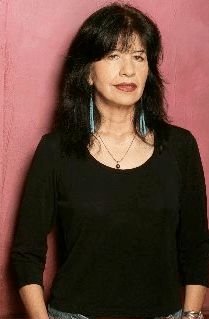
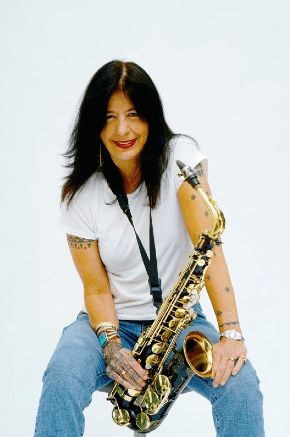
Joy Harjo (b 1951), Mvskoke (Creek) Poet, Musician, author and key player in the second wave of the Native Merican Renaissance (literary efflorescence)
Joy Harjo (b 1951), Mvskoke (Creek) Poet, Musician, author and key player in the second wave of the Native American literary efflorescence

51fFPVB5FTL._SX329_BO1,204,203,200_

 Crazy Brave (Norton & Company, 2012), Joy Harjo’s eminently engaging memoir, flows like a long prose poem. It is rich and well-built on a foundation of tribal mythologies, a strong sense of her ancestry, her difficult childhood and youth and salvation found in poetry and music. From her birth to a handsome much-loved fire-spirit father who inherited Indian oil money, allowing him to indulge a passion for cars, and her beautiful water-spirit singer-mother whose voice was stilled by a bully of a second-husband, Harjo tells the story of girl who survived a physically and emotionally abusive step-father, crushing poverty and the greater cultural obscenities to become one of our most influential poets and a formidable advocate for justice for Native Americans and liberation for women.

I was entrusted with carrying voices, songs, and stories to grow and release into the world, to be of assistance and inspiration. These were my responsibility.”

*****

I can’t imagine the human being who wouldn’t relate to Joy Harjo’s history, but those who have come from “broken” homes, poverty and a family of mixed ethnicity will most especially appreciate it and perhaps find some healing and strength in the pages of Crazy Brave. That Joy Harjo survived so much to become a decent loving person leaves the rest of us with no excuse; and any writer, poet or musician will take to heart the dreams and visions of that long journey to find hope and creative voice in poetry.

Joy Harjo, a member of the Mvskoke tribe was born in Tulsa, Oklahoma, an area where the Native American trail of tears ended, an area to which the indigenous peoples were removed – forced to relocate –  as people of European descent moved into their original home places. The removed were the Five Civilized Tribes – Cherokee, Chickasaw, Choctaw, Mvkoke and Seminole  – who were living as autonomous nations in what is now the American Deep South.

“I fought through the War Between the States and have seen many men shot, but the Cherokee Removal was the cruelest work I ever knew”. Georgian soldier who participated in the removal

*****

When the World as We Knew It Ended
It was coming.
We had been watching since the eve of the missionaries in their long
and solemn clothes, to see what would happen.
We saw it
from the kitchen window over the sink
as we made coffee, cooked rice and potatoes
enough for an army.
We saw it all, as we changed diapers and fed
the babies. We saw it,
through the branches of the knowledgeable tree,
through the snags of stars, through
the sun and storms, from our knees
as we bathed and washed the floors …
The conference of the birds warned us as they flew over
destroyers in the harbor, parked there since the first takeover.
It was by their songs and talk we knew when to rise,
when to look out the window

excerpt from When the World Ended in How We Became Human, New and Selected Poems (W.W. Norton & Co., 2004)

*****

screen-shot-2013-12-27-at-9-02-25-pm

Joy Harjo’s poetry and music are influenced by her ethnic heritage and her feminist and social concerns as well as by her love of word and sound and her education in the arts. Largely autobiographical, her poetry is informed with descriptions of the Southwestern landscape and the mythologies, symbols and values of the Mvskoke people. Hers is the sort of writing that sits with you to become part of your own bone and marrow, which is the way of good poetry and good story. A poet of the people but also a critically-acclaimed poet, her many awards include the Wallace Stevens Award of the Academy of American Poets, The William Carlos Williams Award from the Poetry Society of America and the American Indian Distinguished Achiement in the Arts Award. She is the recipient of several grants and is a teacher, musician (saxophone) and singer.  She has published some fourteen books and ten music albums.

It was a dance,
her back against the wall
at Carmen’s party. He was alone
and he called to her – come here, come here
that was the firs time she saw him
and later she and Carmen drove him home
and all the way he talked to the moon,
to the stars, to someone riding

excerpt from There Was a Dance, Sweetheart in How We Became Human: New and Selected Poems (1975-2022) (W.W. Norton & Co., 2004) © Joy Harjo

If you are reading this post from email, you will likely have to link though to this blog to enjoy the video. Joy Harjo’s Eagle Song, poem and music:

© review, Jamie Dedes; poems, Joy Harjo, photographs courtesy of Ms Harjo

CIRCLING THE CORE & WRITING MY WAY THROUGH CANCER: An Interview with Myra Schneider

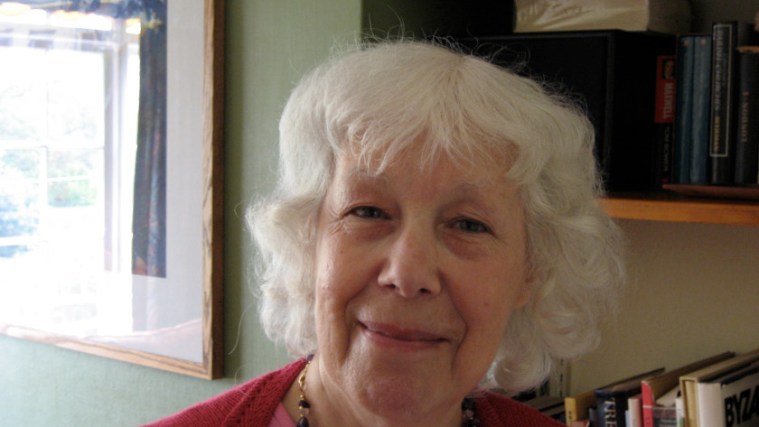
Award Winning British Poet, Myra Schneider (b. 1936), Writer, Writing Coach, Consultant to Second Light Nework of Women Poets

This interview was first published on February 14, 2011, not long after I “met” Myra (Myra Schneider’s Poetry Website). I’m publishing it again in honor of Myra’s 80th birthday this month and because there is value in it. You can see that the career of a poet and writer must evolve like any other career.  It takes time to be noticed by public and publishers, to find your voice, your subject, your niche and a way to promote your work with dignity. It is an evolution that requires self-awareness, patience and perseverance.

Myra and many of the other featured poets on this site make excellent – inspiring – role models. They also demonstrate that there is no waiting for outside validation. First you have to be “poet” or “writer” or the practicioner of whatever is your chosen art. The rest will follow, which doesn’t necessarily mean you will have a huge following and a best-selling collection. You will have a following though, people who support you and appreciate your work, share your values and your love of poetry.

Another more recent interview of Myra,  A Life Immersed in Poetry, is HERE.

– Jamie Dedes

51dg9SOhnHL._SX318_BO1,204,203,200_

This is a tentative world. Ahead the ground
rises, unrolls slowly into distance. Grass
straggles from sparse clumps. The only sound
is silence. On trees thin as bird legs: a fuss
of feathers. Maybe the smudged chimney and roof
are figments of imagination. But the wall
has a solidity which would support grief,
guides the walker and her dog up the hill,
reaches beyond the point eyes can see
into the future’s opaque sky. The way
is planted with snares but they’ll plod to its end
and the dog will linger to sniff the moment’s petals,
the wall will shield the woman from the wind
as she hugs her thoughts, their jet darks, opals.

Excerpt from Wall (for Jennifer), in Circling the Core

INTERVIEW 

JAMIE: YOU STARTED OUT WRITING FICTION FOR CHILDREN AND YOUNG ADULTS AND THEN MOVED TO POETRY. WHAT INSPIRED THE TRANSITION AND WOULD YOU WRITE FICTION AGAIN?

MYRA: My first published work was fiction for children but the story of my writing life is quite complicated. During my teens and while I was at university I was sure I wanted to be a poet. When I left college – we’re talking about a long time ago 1959/60 – there were not the workshops and openings which we now have in the UK. I was invited to join a group of well-known poets but what they were writing didn’t seem to connect with the  poetry I loved from the past and the 20th century. Their poems struck me as pretentious and I felt like a fish out of water. As I found almost nothing to counterbalance this I soon stopped writing poetry and for a few years wrote rather bad adult novels, none of them were published.

When my son was small he kept asking me to tell him stories and after writing down some of these I tried writing a full-length children’s novel. The third one, Marigold’s Monster, was accepted by a well-known publisher who later commissioned me to write two novels for teenagers. By this time I had started writing poems again and had one or two accepted in magazines. At the end of the 1970s there was a cut in library spending in the UK and because of this I didn’t receive a contract for a third novel which the publishers were interested in. I started writing a lot more poetry and after three years I was lucky enough to find a small press publisher. By the mid-1980s I knew that poetry was my real metier and I stopped writing fiction in prose.

What I retained though was a love of narrative and I have written a number of narrative poems.  These range from poems of two or three pages to poems of thirty pages or more. Some deal with contemporary life both relationships and social issues and draw indirectly on my own experience. Examples of these are Voice Box in my book, Multiplying The Moon and Hotel in Circling The Core. Others draw on myths or known historical material and  explore themes which interest me. The most recent of these is the The Minotaur which has just come out in the Long Poem Magazine. I have also written Becoming which is published as a short book by Second Light Publications. This draws on difficult personal material and presents it in a parallel situation. I love writing narrative poetry – it’s almost a different medium from lyrical poetry and it allows me to approach material in a very different way.

JAMIE: IT IS NOT WELL KNOW THAT THE GREAT AMERICAN NOVELIST, PEARL BUCK, WROTE POETRY AS WELL AS PROSE. A SMALL, ELEGANT COLLECTION OF HER POEMS WAS PUBLISHED POSTHUMOUSLY. ONE POEM CALL ESSENCE IS OF SPECIAL INTEREST:

I give you the books I’ve made,
Body and soul, bled and flayed.
Yet the essence they contain
In one poem is made plain,
In one poem is made clear:
On this earth, through far or near,
Without love there’s only fear.

– Pearl Buck

WOULD YOU SPEAK TO THAT PLEASE AND WRITE ABOUT WHAT YOU SEE AS THE ESSENCE OF POETRY?

MYRA: This spiritual poem is an expression of what Pearl Buck feels is at the heart of living and writing – love. Without it life would have no meaning, nothing to offset the negativity, dangers and fears of living. What I understand too is that in all else she has written, all she has given body and soul to, love is the essence. I’m glad she used the word essence because for me the poetry that really matters – both what I read and what I write – is spiritual poetry, poetry which searches below the surface for meanings . This is not say that I write or look for poetry which is very solemn or far removed from the everyday or humorless – rather that I want to explore what lies beneath the ordinary, what raises it, makes it not ordinary.

JAMIE: WHY DID YOU AND JOHN KILLICK WRITE WRITING YOU SELF, TRANSFORMING PERSONAL MATERIAL?

MYRA: We wrote the book because we believe that personal writing is very potent both for the writer and the reader, because some of the greatest literature is rooted in personal material. We both became aware years ago that many people feel a strong need to write about their lives and feelings and even when they go to writing workshops without recognising this need it is quickly apparent that it is the driving force behind what they write. What we think is key to the book is the range of personal subject matter which we have examined and the widely different approaches writers have used. We believe the firsthand accounts by a number of writers and also ourselves about how we tackled personal material make the book unique. It also mattered to us to include powerful writing by little-known and unknown writers as well as work by those with high reputations. The second part of the book offers many different techniques and suggestions for tackling personal experience. It also looks closely at the difference between raw and finished writing, the validity of each, and includes ideas for developing work.

JAMIE: WRITING YOUR SELF IS JUST WHAT IT SAYS AND PROMOTES POETRY WRITING AS A HEALING ACTIVITY. YET, READING POEMS IS HEALING AS WELL. ALTHOUGH MANY OF YOUR POEMS DO NOT SEEM PERSONAL, I SUSPECT THEY ARE AND THE SHARED EXPERIENCE IS HEALING FOR US. IT MAKES ME WONDER WHAT YOUR PRIMARY GOAL IS WHEN YOU WRITE. DO YOU WRITE FIRST FOR YOURSELF OR FIRST FOR YOUR READER?

MYRA: Yes, reading, writing and sharing poems is healing and if one is to be fully involved in writing it is crucial to read poetry and read poems closely. Circling The Core, my most recent poetry collection includes a poem about very painful personal material, Room, but it has fewer directly personal poems than my earlier books. I have in fact written many personal poems, in particular about my difficult relationship with each of my parents and my experience of breast cancer. I also write many poems which I consider personal, or partly personal, about my response to situations, other people, my inner self and how I connect with the outer world. Writing, in fact, helps me make sense of my life, of the world we live in. I write poetry above all else because I feel compelled to write. If I didn’t write something central would be missing from my life. Communication with others, however, is very important to me so although I write out of my own need the reader and what he/she will receive is always in my mind as I develop my initial ideas.

iu

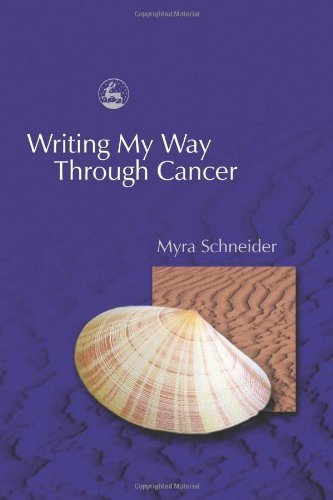
I wish I wasn’t putting such a strain on Erwin. I am afraid the breast cancer nurse, who is coming again tomorrow, will give me more information that will worry me. I have to hang onto the thought of friends and the relatives and friends of people I know who have survived for years and years after breast cancer. I owe it to myself to manage my panic and to make this a life experience not a death experience, to concentrate on possibilities, to grab every moment of life I can, to use what has happened for writing, to include the awfulnesses but also the plusses. I mustn’t forget the moments of joy: the sun lying in swathes on the grass, the sharp clean cut of the air, the disc of the sun on water. I must keep the words that came into my head about the snowdrops I saw in a garden when we walked to the shops a couple of hours ago. I think it’s the starting point of a poem.” From Myra’s cancer notebook.

JAMIE: PAIN OFTEN MAKES US FEEL LIKE ISOLATING AND YET WE CREATE SOME FINE ART OUT OF THAT PAIN. IT’S HARD TO REMAIN ISOLATED WHEN YOU WRITE. YOU ARE REVEALED AND YOU TOUCH AND ARE TOUCHED. IS THAT – THE CONNECTION WITH OTHERS – PART OF THE HEALING PROCESS OF POETRY WRITING OR SIMPLY INCIDENTAL TO IT?

MYRA: Yes, for me, and I think most other people, making connection with others when one writes out of pain or distress, is part of the healing process. I was particularly aware of this when I was being treated for breast cancer. Being weak and having to spend much of my time at home and do very little work for several months made me feel cut off from life but writing my journal and, even more importantly, poems during those months supported me in a way which I found absolutely amazing even though I had always believed writing was therapeutic. While I was writing I felt l was my whole self and not my ill self and also I felt connected with the outside world. The reason I turned my journal, poem notes and poems into a book, Writing My Way Through Cancer was because I wanted to share the possibilities writing can offer anyone in times of trauma and difficulty. For this reason I added a section of therapeutic writing ideas. In total I felt all the writing I did during the year I was being treated for cancer was a way of creating something positive out of a negative experience. This was very uplifting.

JAMIE: YOU SAID YOU “KNIT WORDS INTO POEMS.” THIS SEEMS ALMOST TO IMPLY STRUGGLE. DOES POETRY COME EASILY FOR YOU? ORGANICALLY? OR, IS IT A LABOR?

MYRA: Ah now, writing organically is absolutely crucial if one is produce authentic poetry. If the poem does not come from the centre of oneself, if one is not totally engaged it isn’t possible to write a real poem. Exciting seeds of poems present themselves, often insist on my attention but transforming these visions into poetry – that is work, hard work, at times a struggle. This does not mean to say that it is tedious, unwanted toil. For me it is a compulsion. If it becomes monotonous slog to develop or revise then something has been lost and it is best to leave the poem until the impulse to work returns or if necessary to abandon it altogether. I find the later ‘work’ stages of writing as totally involving as noting down those first images and ideas. The moment of discovering what direction the poem should take when I have been uncertain, finding the way to write a line which has eluded me, is always exciting.  I don’t believe many poems find their final shape easily – so my answer is yes, ideas and parts of poems come easily and my writing is organic but it is also hard work, work which I am committed to.

JAMIE: I SEE THAT YOU TEACH AS WELL AS WRITE. DO YOU FEEL THAT TEACHING FEEDS THE CREATIVE MUSE OR IS IT A DISTRACTION? I GUESS WHAT I’M ASKING IS WHAT DO YOU GET BACK FROM TEACHING POETRY WRITING TO OTHERS AND IS THE REWARD NEARLY WHAT IT IS WHEN YOU WRITE?

MYRA: I love teaching. I run  two regular monthly courses/ workshops for the Poetry School in London and also one-off workshops which I do for a range of organizations all over England and occasionally in other countries. A few of the one-off workshops are residential. It is very satisfying to open doors which help writers generate ideas, also to run groups where rigorous but supportive feedback is offered not only by me but everyone in the group. Some of the people I work with are very talented and I feel them to be colleagues rather than students. Discussion of their work or of the work of published writers with these groups is always illuminating and the contact with people committed to their work and interested in the writing process feeds my own work. When I set writing exercises in my workshops I always write too and sometimes this triggers a new poem for me so this is another bonus. I am a firm believer in writing courses and workshops. Of course not everyone is going to become a professional poet or writer but everyone can gain more satisfaction from reading and writing poetry, everyone can develop their skills.

You can visit Myra HERE. Myra’s Amazon U.S. Page HERE.  Myra’s Amazon U.K. Page HERE.

This video version of Myra’s The Red Dress can’t be viewed from email. If you are reading this post in an email, you will have to come to the site.

© Myra Schneider, her responses, poem, portrait and bookcover art