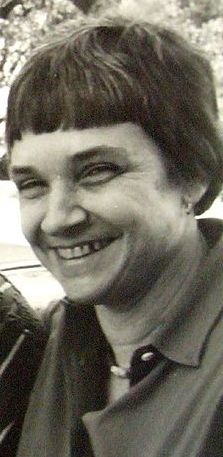
Adrienne Rich (1929-2012)Audre Lorde, Meridel Le Sueur, Adrienne Rich
Madeline Ostrander wrote this article for YES! Magazine, “a national, nonprofit media organization that fuses powerful ideas with practical actions.” Madeline was YES! Magazine‘s senior editor at the time of this writing. She is now an independent journalist and contributing editor to Yes! Magazine.
“I know you are reading this poem listening for something, torn between bitterness and hope…”
I was 19 when I first read Adrienne Rich and these words from “An Atlas of the Difficult World,” which seemed to tear down the barriers between the poem and me, and let me in.
Like Rich, I grew up at a distance from true poverty: “reader reading under a summer tree in the landscape of the rural working poor,” she writes. But I knew how fractured and unstable the world around me was becoming. I was part of the first generation to grow up knowing about climate change, brought to world attention by James Hansen and to my school classroom by a forward-thinking science teacher. I was in high school when the Soviet Union collapsed; as a child, I had nightmares about nuclear war. Rich’s poetry gave me hope that stories could change things—could force us to confront and heal what is painful and give us hope, strength, and compassion.
Rich belonged to an activist strain of poetry; she believed words needed to be reclaimed by the people who have been left out of the history books.
When Rich died a profound loss at a time when we urgently need more storytelling that reaches across our fragmented, politically divided culture. “Atlas” is still one of the most searing and honest descriptions I’ve read about how broken and divisive the modern world is. It’s a 26-page poem that sweeps across the landscapes and histories of North America and elevates people and scenes that are ordinary, neglected, and counted out—farmworkers made sick from pesticides, a woman beaten by her partner, the wasting of our ecological landscapes, weedy fields of Jerusalem artichoke “that fed the hobos, could feed us all.”
Here is a map of our country …
This is the haunted river flowing from brow to groin
we dare not taste its water
This is the desert where missiles are planted like corms …
This is the cemetery of the poor …
This is the sea-town of myth and story when the fishing fleets
went bankrupt … processing frozen fish sticks hourly wages and no shares
Occupy didn’t exist then, of course, but Rich was crafting poetry for the 99 percent: “a poetry older / than hatred. Poetry / in the workhouse, laying of the rails.”
Rich’s long, image-dense lines could seem of out-of-step with a world obsessed with rapid-fire information, Twitter, and text messages. But Rich knew that the marginalization of poets is always a detriment to civil society. In the early 1980s, she traveled to Nicaragua, where she felt the culture “manifested a belief in art, not as commodity, not as luxury, not as suspect activity, but … one necessity for the rebuilding of a scarred, impoverished, and still-bleeding country.”
Rich belonged to an activist strain of poetry; she believed words needed to be reclaimed by the people who have been disempowered and left out of the history books. Her own life is a testament to the power of story in creating cultural change. Rich started college in the late 1940s, when she says even Elizabeth Barrett Browning’s writing was radical for a university campus and certainly no one spoke of feminist ideas in the classroom.
Early in her career, Rich had to scrape together a new kind of language. She used poetry to utter ideas that were almost unspeakable at the time: her poetry pulled back the veil around women’s sexuality and lesbian love and exposed the power and politics that enable war and violence: “I felt driven—for my own sanity—to bring together in my poems the political world ‘out there’—the world of children dynamited or napalmed, of the urban ghetto and militaristic violence—and the supposedly private, lyrical world of male/female relationships,” she said. She published Snapshots of a Daughter in Law, which she calls her first book to overtly tackle sexual politics, in 1963. Decades later, her poetry is still radical, but it’s also a mainstay in college literature classrooms across the country. Her poetry has been a beacon to feminists and social justice activists for several generations, and is included a digital poetry anthology pieced together by organizers of Occupy Wall Street.
Rich never wanted her poetry to be a medium primarily for academe. And she never believed words alone could solve the abuses and inequalities that she wrote about. But reclaiming, decolonizing, and taking charge of language was for Rich the first step in become personally whole and politically powerful. “Because when poetry lays its hand on our shoulder, we can be to an almost physical degree touched and moved. The imagination’s roads open again, giving the lie to that slammed and bolted door, that razor-wired fence, that brute dictum,” she said in a 2006 speech at the National Book Awards, where she received a Medal for Distinguished Contribution to American Letters.
We owe Rich a debt for unlocking the doors that barred the voices of women from art, academe, and the halls of influence for so long. And though she insisted on marking each poem with a date—so that it would stand in the historical context in which she wrote it—everything about her poetry still speaks with urgency and timeliness. Her work illuminates the dark, messy, often painful territory of sex, race, violence, and poverty in America but holds all of us responsible for taking power, ending suffering, and breaking apart social inequalities. In “Atlas,” she writes, “A patriot is one who wrestles for the / soul of her country / as she wrestles for the soul of her own being.” This is what Rich did her whole life, and her poetry enjoins the rest of us to do the same.
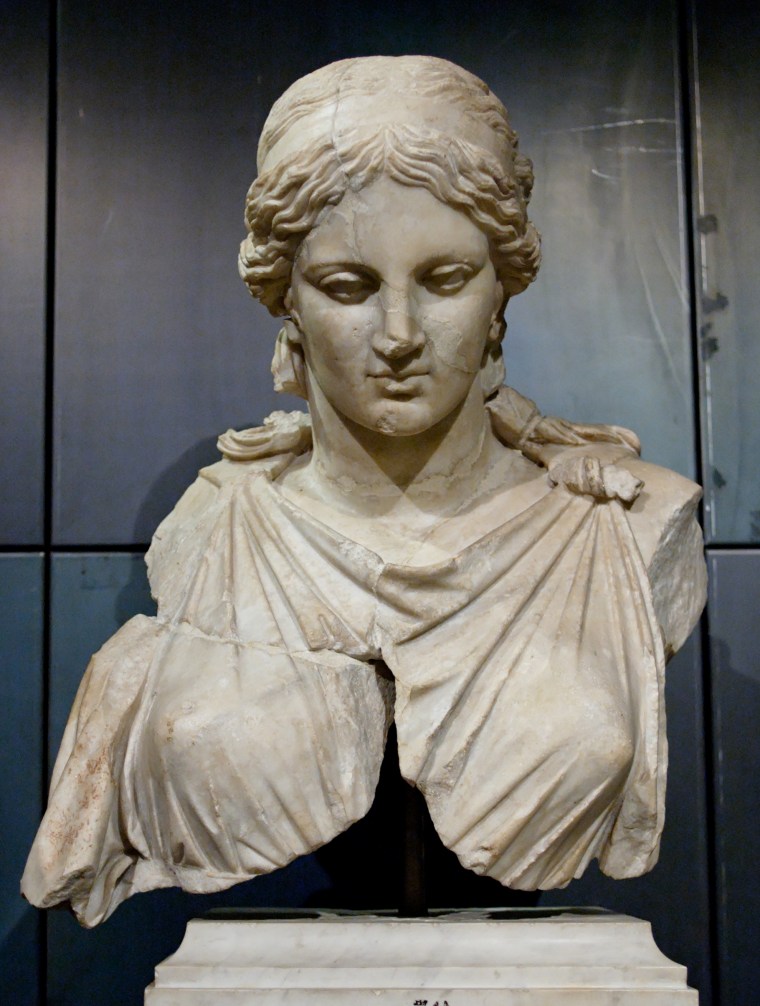
Roman marble Bust of Artemis after Kephisodotos (Musei Capitolini), Rome.
“Women, of course, write good and bad poetry – ‘ambitious’ implies more enterprising subject-matters and approaches, as well as a unique voice for each poet.” Kate Foley and Dilys Wood, Editorial Page, ARTEMISpoetry, November 2015
Here it is April – Poetry Month! – and the month in which I know that Dilys Wood, Anne Stewart and other poets in London at Second Light Network of Women Poets(SLN) are hard at work putting a wrap on the May 2016 issue of ARTEMISpoetry. This biannual literary magazine specializes in the work of women bent on honest self-expression, subjects of substance, and well-crafted poetry.
The issue included poems by Anne Stewart, the featured poet and the author of Janus Hour and Only Here till Friday.
Myra Schneider was the judge for the 2015 poetry contest. The winning poems are featured as well as the commended and we get a bit of the behind-the-scenes look at the hard work of judging.
“I went through over a thousand poems looking for poems that traveled, paid attention to form and made words work. Eventually I reduced a long list of 101 poems to 26 … I was very excited because the winning poems were telling me loud and clear which they were!”
No doubt it is an honor to be selected to judge – and clearly there are rewards – but what a job as well. Certainly a labor of love. The winners for 2015 were: Carolyn King, Margaret Wilmot, Judith Taylor and Kathy Miles.
I was also pleased to read Myra’s feature on one of my own favorites, American poet Louise Glück.
In line with the issue’s theme, politics and eco-politics were explored by Kay Syrad, a regular contributor. She discussed Priscila Uppal’s Sabotage (explores private and public acts of destruction, disruption, and vandalism in the 21st century) and Helen Moore’s Ecozoa(response to the destruction caused by industrial civilization).
Fiona Owen gifted us a thoughtful piece – both homage and exploration – on Anne Cluysenaar‘s eco-poetry.
“… Anne ponders ‘the tenuous job of the poet’ and sees the arts as having an intrinsic evolutionary role …”
In addition to poetry,ARTEMISpoetry always offers book reviews and announcements of publications, events and classes of interest … and lately continues some discussion and promotions of SLN’s last two anthologies Her Wings of Glass and Fanfare.
🙂 I recommend both. 🙂
Below is a sampling (three poems) from Fanfare with thanks to the poets and their publishers, to SLN and especially to Anne Stewart for doing the work of acquiring the permissions for me to share these poems with you here today.
January
Going into the sun
over mud flats skimmed with water
people are walking on ice or glass
their reflections perfect
and you know it’s a new year
walking into the sun
beach and sky cast in light
sheer
gone when you turn
and wave rippled mud
takes your footsteps, softly.
– Caroline Natzler
Caroline Natzler:January and Life’s Work, from Fold (Hearing Eye, 2014)
Untouchable
She shines like Lakshmi through the fields –
a gentle stride, arms at her sides.
By the houses, stooping her beauty
to the earth, she raises the brimming bucket,
its stench sealing her nostrils. Slurry clings
to hair and skin, but nothing changes
on her face, only a puckering of lips
in silent thanks to Kali
for twenty years of women’s work,
this dawn till dusk that’s nurtured seven sons;
thanks that she’s never known the blessing of –
nor visited this curse upon –
a daughter.
– Jill Sharp
Jill Sharp:Untouchable, from Ye gods (Indigo Dreams, 2015)
A Miracle at Iskitim
In Siberia, a symbol –
this is what the locals believe,
a magical birth of water:
a fresh water spring, a spurt
close to the ground, a low white
eternal flame.
We dip our cups
(plastic, from the hotel) and say,
“It tastes pure. The water is pure.”
Some people here heard the last trucks
grind out of sight, after they shut
the ‘lagpunkt’,
the slow-killing place,
left the scar for people like us
in a half circle, dark barrels
in our padded coats, gloves, hats, scarves …
With our white breaths, we breathe out lives
as we raise up transparent cups,
“The future came too late.”
– Dilys Wood
In her Gulag, A History (Penguin, 2004)Anne Applebawm refers to a new fresh-water spring near a former camp at Iskatim.
This slideshow requires JavaScript.
SLN, through community, classes, magazines and books, regularly serves up thought-provoking, often heart stirring and always engaging poetry by women as well as informative explorations and analyses of poems, collections, news and views. Whether you are an experienced professional or an amateur poet, there’s plenty to enjoy here, plenty to learn and think about. I venture to say though that if you are an older woman poet working to find your voice, you’ll discover special inspiration and encouragement through Second Light.
rising from my heart,
bathing in my soul’s ashes,
proud of my fire…
i’m burning words with my thought,
forging new-born cries of hope…
– Liliana Negoi
I got to know Liliana Negoi a.k.a. Lily (Endless Journey and curcubee în alb şi negru), her gentle refined spirit and her intelligent and well-crafted work years ago when we collaborated on a poetry project. We still keep in touch – it must be at least five years now – and Lily agreed to join The BeZine team and is a regular contributor of poems and essays to that peace-through-the-arts forum. Here today you have an in-depth interview with this thoughtful poet and samples of her work. Enjoy!
JAMIE: How did you come to poetry and when did you start writing it?
Although I was a big fan of reading (prose and poetry), poetry began to flow from my pen rather late – by “late” I mean when I was about eighteen years old. The thing that triggered the birth of my first poem was that my philosophy teacher from my final high school form almost died Someone told us that he was in hospital, all alone, without anyone to be there for him. This idea of profound loneliness managed to touch a “sleeping layer” in my conscience. thus my first poem, Anonymous Will, was born.
Despite that first poem coming out though, I didn’t consider writing poetry in a serious manner until much later, at first because I didn’t feel that my texts were good enough, and then because people around me didn’t seem to be much interested in poetry or writing. Also, at that time I was caught up with my music studies I paid more attention to those. A couple of years later though, I discovered the Internet (yeah, I was rather late in discovering it), and via the Internet, the English poetry websites. Eighteen years ago Romanian poetry websites were less developed, and since I wasn’t frequenting literary circles, what I found online was of much help.
At first I translated some of the poems I had already written. Later I simply began to write directly in English. The rest was a matter of time; the passion for poetry was already there. And in all this time, the creations of well-known Romanian poets like Nichita Stanescu, Marin Sorescu, Ana Blandiana, Adrian Suciu, but also foreign ones, like Pablo Neruda, Walt Whitman, and lately Nikola Madzirov, were (and are) a splendid lesson to me, with regard to understanding and writing poetry.
I also write haiku and tanka, as you know, but for some reason, despite the fact that these are also poetry forms, to me they were always on a different plan than the rest. Maybe because their spirit is of a different nature, and it took me more time to “crack the nut” and understand them.
I still see myself as a beginner in many ways, when it comes to poetry, but poetry chose to come to life through (however clumsily) me. I think this is one of my biggest joys in this life.
JAMIE:You are so productive: two blogs – one in English and one in Romanian – and five books of poetry in English and one in Romanian. I believe your children are still young … and you have your love of music and gardening to feed as well. How do each of these support and feed the others?
Yeah, I guess it sounds like a lot, if you sum it up like that :). But it was (again) all a matter of time. I didn’t do all those things at once. For instance, the first one that appeared was the English blog, when I felt that I needed something else than the poetry websites (on which I spent actually quite a few years, reading, learning, understanding – the international virtual literary community is a marvelous ground, if you know how to use it). Then came up the first poetry collection, in English, and despite the fact that there were mistakes in that process which I saw later, I think the greatest thing about that printed collection is that it made me more aware of what words truly are, and how they should be treated.
The Romanian blog appeared when a very dear friend of mine told me, with a lot of disappointment, that I should also write in Romanian, not only in English (I think I forgot to tell you that, after I started to write in English, for quite a long time I wrote only in that language). So I began to write again in Romanian, and to be honest, at first I felt like a toddler who was beginning to learn how to walk :). But then I found my way again among words, and it all fell into place.
The books…well, I guess they simply followed on the way, one by one.
As for the rest – yes, my two children are only eight and seven years old, so they do require a lot of attention. All these aspects of my life, including music and everything else, are merely the pieces of a puzzle – some bigger, some smaller, but all filling up the space of my life up to the smallest crack :). And when these things can’t fill those up, I have reading, which was the first passion in my life, starting at age four. But, again, it’s not a more crowded life than others’. It just requires (as in all cases) good time management. They are all connected – children to garden, garden to music, music to writing, or in any other order you prefer :).
This slideshow requires JavaScript.
JAMIE:You have said that you like to write in English. What about English is so appealing? How is it different from writing in Romanian?
I started to learn English when I was five years old, in kindergarten. Back then, Ceausescu was still ruling Romania; so, to have an English teacher in kindergarten was rare. My grandmother, with a spark of genius, wanted at all costs for me to start to learn this language in private, at home, so she arranged for lessons with that teacher. There were two things that I hated about it (or more like about the way of learning it): learning vocabulary by heart and learning grammar rules :).
Later, I stared English in school in my sixth form, when I was about twelve. The problems were the same. I simply didn’t understand that what I needed and wanted was to read more in that language. I think that happened about the time when I discovered the English poetry websites. I was lucky enough to talk online to English native speakers. That simple but constant contact with this language was the thing that enabled me understand what my teachers hadn’t – the inner mechanics of the language. I think it’s the same with any language – the more you read and speak it, the faster you understand and learn it, but the main thing is to read and speak about something you are interested in, not just didactical texts.
For instance, I fell in love with Nikola Madzirov’s poetry a couple of years ago, when I bumped into it by accident, while looking for something else. I read it in English back then, from his bilingual book Remnants of Another Age, but I heard some recordings of him reading his own texts in Macedonian. I was curious to see on my own how it sounded read in that language. Now, with Macedonian, the problem is the Cyrillic language, but I was fortunate enough to know most of the Russian letters from my grandmother, so I had an easier start with that. I began reading them, always comparing my reading with the English version, and listening to the several recordings of the author, and now I’m starting to slowly understand and learn Macedonian, even if my original intention was only to “feel the taste” of Madzirov’s poetry in my mouth :).
Going back to English (I’m sorry I have such a way of “expanding” my answers, please forgive me!), I think English provided me with a fluency I didn’t expect, and, for some reason, a fluency that, at the time when I began to write in English, I hadn’t found in my own native tongue. Sure, I speak Romanian without problems, but from many points of view English had a different impact on my writin and images were easier to “paint” with English words (and it happened to me to find many images that were better worded in English than in Romanain).
I think the real issue here is the musicality of a language in certain contexts; or, better said (because all languages have their own musicality), the way in which the musicality of a language resonates to the reality stimuli surrounding us. It’s the same with music. All music is beautiful, but you don’t listen to any kind of music in any given moment of the day – all languages are musical, but you can’t capture the beauty of a moment the same way in two languages. No matter how good a translation, Basho’s haikus will never convey the same feeling as in their native tongue, simply because that language has profound connections to that form and because that form responds best to that musicality. My inner structure resonates (or at least it used to resonate) better with the way English language sounds, thus my poetry, for years, flowed much better in that language.
JAMIE:What forms of poetry do you prefer and why?
I write mostly in free verse, white rhyme, or various combinations of rhyming verse, but in time I tried newer and older forms of poetry. From these, I eventually grew much attached to sonnets (especially Shakespearean sonnets), haiku and tanka.
I also have another form, the sestina, that’s dear to me, but with that one is more like a “love-hate relationship”, so to speak. One of the people who taught me online certain things about poetry made me literally try to write several forms, and at some point he mentioned the sestina, saying that a rhyming pentameter in that form was among the most difficult things to write, so in my mind I was like “challenge accepted” :))). I wrote three such texts, the first two not so bad, but of the third one (named “panta rhei”) I’m actually very proud of. I decided that even if I am able to produce a text in this form, I am not very fond of the fact that the virtuosity is strictly connected to the way one makes use of the same six end-line words all through the poem. It’s a whirling form, maybe even maddening one – and one needs much patience and determination, and above all, a VERY good motivation to write one. I only found that motivation three times so far, maybe I will find it again, but I couldn’t say when that should happen.
Sonnets, on the other hand, were something so elegant, from my point of view; they were like a time travel at first. And as with other things, I realized that not all imagery can be “stuffed” into this form. Normally a love poem, I found that love sometimes, when put in a sonnet, feels square, just like I found out that other aspects of life, when given the form of a sonnet, gain a certain nobility.
The haiku and tanka were two forms that appealed to me first due to their minimalism and strictness of rules. I’m not talking here about the 5-7-5 haiku rule – so many great haiku poems were written without respecting that rule. I’m talking about the fact that a haiku, for instance, is merely an observation of what surrounds you, as a poet, an observation of the delicate changes in the nature around you, of the delicate balance between nature and you. Haiku is not simple, precisely because it should be simple, and we, the European and American poets, don’t know how to keep things as simple as a haiku. I love haiku because it taught me to look deeper at things, but also to see the immediate beauty of everything. It’s there. You need no metaphor to acknowledge it – the beauty of life, in its entirety.
JAMIE: You’ve accomplished so much. What are your next steps, your goals for the future?
It’s hard to have steps in poetry. My only step (in this moment) related to this is to find the best way to bring words to life. Sure, I have some book projects, but I am not as disciplined in this matter as to sit down every day and tell myself “now I’m working on this or that book”. It’s a matter of inspiration, and yes, maybe some are able to summon inspiration at will. Lately though, I find myself basking in some sort of “laziness”, let’s say. I’m more like living than writing the poetry :). I definitely won’t stop writing; I just want to understand the connection between time and poetry, between time and words.
JAMIE: What advice might you have for others who self-publish their poetry, whether it be via blogs or books or both?
I think they should write for themselves, first of all, and learn to be objective. One must realize that you begin to become a poet only after you’re willing to “trim” what you create, to understand that not all words belong to one poem, just like not all poems belong to one book.
Then comes something that someone very dear to me told me at some point: do you want to publish a book in order for it to be commercial or in order for it to be good? Because it’s highly difficult to have both things at the same time nowadays. If they write for commercial reasons…I’m afraid they will have to take advice from some other person than me :).
If they don’t write for commercial reasons, then they should first of all write with profound honesty. They shouldn’t write for others to like what they pen. They should write with the awareness that those liking their poems today might not like them tomorrow, and that what matters if first of all their personal connection to what they write.
They should write with the awareness that people liking their work now will be gone in years to come, and what they write will be seen by a different generation, with different eyes, different brains and concepts. They must decide whether they want to write something that should be valid for a while or for ever. Evanescence is beautiful to talk about but difficult to assume.
Writing something that should be valid forever is not easy. For that, you must love to read – reading forms your vocabulary, your imagination, your inspiration. You must love to see things – not just look at them, but see them, in their entirety. You must love to write. Not only on a computer keyboard, but with a pen on a piece of paper. Form a connection with the words. See them inked on paper. See the poetry of the spaces in words, not just that of their letters’ lines. You must love to talk but also to listen to people. Form connections with people. Above all, if you want to write poetry, you must be willing to live it first with all that it implies.
The Talking Rose
I was talking on an evening to a purple velvet rose
that was reigning in a glass bowl on a shelf inside my house –
I was asking it to sell me out its soul, but I suppose
what I offered was too little,
what I offered was too useless,
what I offered was too shallow,
for I thought I heard it grouse
of how priceless was the perfume which it spread inside my house.
Feeling vexed by the contempt and pride affected by the bloom
I ignored all further whisper it attempted to convey –
‘til one night, when in the thickly warm and humid summer gloom
all I heard was just the silence,
all I heard was just the darkness,
all I heard was just my breathing
vainly searching for a say
from the rose which, in the meantime, hushed its scent and passed away.
So I tenderly beheld it – purple velvet turned to brown –
as it gracefully adorned the wooden shelf within my room –
now, that all the sweet aroma had resigned the rose’s crown,
what was left was just the stillness,
what was left was just an echo,
what was left was just a shadow
of the rose that met its doom –
and I missed – oh! how I missed! – the talking fragrance of the bloom…
– Liliana Negoi
Liliana Negoi was born in 1979 in Craiova, Romania. She began to write poetry at the age of eighteen. She is the author of five collections of poetry in English (Sands and Shadows, Footsteps on the Sand – tanka collection, Cream of wordflakes, The Hidden Well and Amber Drops) and one in Romanian (aparenta curgere a lucrurilor). Texts of hers can be read both on her English blog Endless Journey and Romanian one curcubee în alb şi negru and she can also he heard reciting on SoundCloud HERE and HERE. She is also the author of a novel, Solo-Chess, available for free reading HERE. Many of her creations, both poetry and prose, have been published in various literary magazines. She is a member of the team publishing on The BeZine and established, together with Raluca Ioana Chipriade, an e-zine of Romanian art and culture named Din dragoste pentru arta.
San Francisco Bay Area poet, Ann Emerson, was one of the first two people I invited to join in the collaboration we now call The BeZine. It was originally named Into the Bardo, in reference to the Buddhist state of existence between death and rebirth; so named because of life-compromising illnesses.
Ann was a gifted poet, but she didn’t find that out until after she was diagnosed with a rare bone cancer. She discovered her voice in a hospital poetry class. Ultimately she studied with Ellen Bass in Santa Cruz, California.
After diagnosis, Ann survived for an almost consistently tortured six years. Physical pain. Trauma. Fear. Chemo. Poverty. She had signs posted around her house that said, “Live!”
While Ann spent a lot of time in the hospital, her home was a cabin in the Redwoods of La Honda, a stone’s throw from the log cabin where Ken Kesey and the Merry Pranksters so famously partied in 1964. She lived with her cats. Originally there were six and they were all blind. No one would take them in, so Ann did.
Ann was just a thesis away from her Ph.D. A few weeks before she died, four of Ann’s poems were published in American Poetry Review.
Two days before Ann died, she married the gentleman who was her sweetheart of thirty years. Ann’s wedding was held in her hospital room. Those of us in the attendance were required by the hospital to wear yellow gowns over our street clothes. The bride wore yellow too. The flowers and the ring were from the hospital gift shop. The founder and leader of our support group for people with catastrophic illness, a Buddhist chaplin, performed the ceremony. One of us took wedding photographs using a cell phone. I created a virtual wedding album.The wedding was in its way lovely, but it was achingly sad.
When Ann died, we sat with her for some time because Buddhists don’t believe the soul leaves the body right away. Ann’s Buddhist teacher – someone she held in high regard – came and lead us in meditation and blessing.
Here – on the third anniversary of Ann’s death – are three of her poems. In closing, I added A Hunger for Bone, the poem I wrote the day her ashes were released to the sea near Julia Pfeiffer Burns State Park in Big Sur. My poem in no way comes up to the gold standard Ann set, but it tells the story.
– Jamie Dedes
Elegy for Cat Five
Fuck the Glory that is Poetry,
fuck the smell of God in my hair,
The world is the color of driftwood,
this ordinary Wednesday in June.
Let’s have a moratorium on poems
about my shitty news from Stanford
and how I can’t tell heat from cold.
My blood dirty as brown sand in a museum,
and my cat, well, he has news too.
Death woman, skeleton cat,
I turned 57 yesterday when
the veterinarian said No.
I am taking us both to the ocean
for as long as we need:
red sand staining white fur.
I am smelling my cat’s iodine breath,
I am putting my hand in the wound
in my side. Dry brine stinking up
the air, seawater choking the
cawing gull in his throat.
And my face, he’d better
not fucking forget.
One more day leaving me
for a little peace of mind.
. A Modern Poem (draft 1)
.
I am walking again through an American night,
past police stations with barred gates, windows
glazed warm with doughnuts, patrol cars in the lot.
I stand outdoors seeking coffee: someplace where
eyes will not wander through me when I sit in a red
booth filled with books as women fearing Altzeimer’s
hoard cats. I stay up until dawn, waiting for panic
to subside, to find the meaning in all things
in a city which says I am nothing.
..
I wake in my American forest, from a dream
of being shot: when one lives in a forest one cannot expect
the humane society always arriving in time. I walk through
the cabin and on down the path: moonlight blurs the redwoods,
wind blurs water. I feel like a girl safe in a picture book.
Indoors the television screen shines blue as topaz.
I am walking again through the forest aglow with
snowy owls and see-through salamanders.
Far from eyes broken like windows, and people
thinking they are nobodies, reading the paper
about life being rebuilt by night so that
no one notices it tumbling by day.
The Wrong Side of History
Fifty years ago, a house of
pale cinderblock. Sixty miles
north of here, Richmond
California, the poor
mending holes with colored thread.
I live in a house of
unnatural law, I am painting
landscapes in black: horses
and floating carpets of leaves.
When I am ten my father fills my mouth
with dirt for saying I want to die:
a ripped sheet twisted over my eyes,
my ankles hobbled in bed;
I summon the kingdom of horses
where lullabies murmur
brittle-legged ponies to sleep.
When I am twelve the city catches fire:
ruined faces of mares stretch for pages,
and when the tar roof seeps into
my room, I still do not run away.
Say nothing about the comfort of solitude,
stars crowded like sensations under the skin.
Say nothing about the morning blow of light,
the herd coughing on last night’s oily weed
– Ann Emerson
A Hunger for Bone
we scattered your relics, yours and your cats,
chared bone to be rocked by waves,
to be rocked into yourself, the rhythm
enchanting you with cool soothing spume
merging your poetry with the ether,
rending our hearts with desolation,
shattering the ocean floor with your dreams
lost in lapping lazuli tides, dependable ~
relief perhaps after pain-swollen years of
suckle on the shards of a capricious grace
those last weeks …
your restless sleeps disrupted by
medical monitors, their metallic pings
not unlike meditation bells calling to you,
bringing you to presence and contemplation,
while bags hung like prayer-flags on a zephyr
fusing blood, salt, water
into collapsing veins, bleeding-out
under skin, purple and puce-stained,
air heavy and rank; we came not with chant,
but on the breath of love, we tumbled in
one-by-one to stand by you
to stand by you
when death arrived
and it arrived in sound, not in stealth,
broadcasting its jaundiced entrance i am here, death bellowed on morphine
in slow drip, i am here death shouted,
offering tape to secure tubing, handing
you a standard-issue gown, oversized –
in washed-out blue, for your last journey
under the cold pale of fluorescent light
far from the evergreen of your redwood forest,
eager and greedy, death snatched
your jazzy PJs, your bling and pedicures,
your journals and pens, your computer and
cats, death tried your dignity and identity –
not quickly, no … in a tedious hospital bed,
extending torment, its rough tongue salting
your wounds, death’s hungering, a hunger
for bones, your frail white bones – but you
in your last exercise of will, thwarted death,
bequeathing your bones to the living sea







 Jamie Dedes' THE POET BY DAY Webzine