
CONNECT WITH US

Daily Spiritual Practice: Beguine Again, a community of Like-Minded People
Facebook, The Bardo Group Beguines
Twitter, The Bardo Group Beguines
 September 15, 2017
Fragments—
Reflecting on anger
a sort of Introduction
i
I am trying to write a social justice-sustainability-peace song. This is as far as I have gotten.
Where have all the flowers gone, since the election?
Where has the dialogue gone, now that we yell and scream?
You may say it’s social media, typing, and not raised voices,
But you know we’re all making some dissonant choices.
This divisiveness, it’s like some sort of infection,
All the medicine won’t do any good, not pill or cream,
You may say it’s someone else, spreading these angry voices,
But you know we’re all making these dissonant choices.
Take care of others now, it’s time to give a helping hand,
Find the empathy in your heart, spread it through the land,
Stand up for justice, peace, sustainability, while you can,
Find the common ground where all of us can stand…
ii
I am searching for interconnections and intersectionality between social justice, sustainability, and peace—how each affects the other. I don’t want to focus on the negative, but I do feel a need to say something that would get at the role of divisiveness and hate in our current anxieties and politics—not just in the November 2016 elections, not just between the camps, not just within the left. It is everywhere, infused with out morning hot drink.
iii
We must reach out our hands to each other. Yes, we can and should express our differences, speak our anger, listen to the anger of others. However, we cannot afford to weaponize that anger, to externalize it into missiles and nuclear warheads. Don’t let anger shoot, stab, run us over in an un-civil war of accusations and blame that wounds our souls. We cannot let this roiling rage keep us from joining together in common cause, which we all have—the need for peace, social justice, and environmentally-sustainable practices. We must use our real angers, somehow, as building tools, to join together to create more humane, just, sustainable, and peaceful structures in our world. We must harness the anger to make love, not war.
Even so, it will be an imperfect world.
But, if we find a way to work together, through our differences, it will be a better world, too.
iv
Audre Lorde had this to say, in her 1981 speech (later printed as an essay), The Uses of Anger: Women Responding to Racism:
Every woman has a well-stocked arsenal of anger potentially useful against those oppressions, personal and institutional, which brought that anger into being. Focused with precision it can become a powerful source of energy serving progress and change. And when I speak of change, I do not mean a simple switch of positions or a temporary lessening of tensions, nor the ability to smile or feel good. I am speaking of a basic and radical alteration in those assumptions underlining our lives.
I have seen situations where white women hear a racist remark, resent what has been said, become filled with fury, and remain silent because they are afraid. That unexpressed anger lies within them like an undetonated device, usually to be hurled at the first woman of Color who talks about racism.
But anger expressed and translated into action in the service of our vision and our future is a liberating and strengthening act of clarification, for it is in the painful process of this translation that we identify who are our allies with whom we have grave differences, and who are our genuine enemies.
Anger is loaded with information and energy. When I speak of women of Color, I do not only mean Black women. The woman of Color who is not Black and who charges me with rendering her invisible by assuming that her struggles with racism are identical with my own has something to tell me that I had better learn from, lest we both waste ourselves fighting the truths between us. If I participate, knowingly or otherwise, in my sister’s oppression and she calls me on it, to answer her anger with my own only blankets the substance of our exchange with reaction. It wastes energy. And yes, it is very difficult to stand still and to listen to another woman’s voice delineate an agony I do not share, or one to which I myself have contributed.
Why has this passage come to mind? Besides the fact that it remains relevant about privilege, more than 35 years later, it also speaks to the in-fighting among people who want to change the world positively, who have shared goals in making change—activists, if you will. The need to share our “grave differences,” but at the same time to work together as allies to resist—and overcome—”our genuine enemies.”

v
It seems to me that these are some of the tools and forces of our genuine enemies: greed, oppression, racism, ethnocentricity, genders-based bias, unfettered capitalism, and fascism. Also: war, famine, and destruction of resources. Also: hatred, division, rage. Also…
vi
Right now, my Facebook feed streams with angry posts between Clinton and Sanders supporters and third camp—fourth, fifth, sixth… camps—who attack both and each other, all arguing an election nearly a year old and few looking for ways to work together for the mid-term elections a little over a year away. People argue about the best way to resist, all the while they criticize and attack each other for not approaching a particular issue in the “correct” way.
What I don’t feel is a constructive analysis and dialogue emerging from this divisiveness. I don’t feel that the anger focuses on the genuine enemies. Instead, the angry posts shred our (potential) allies against those who would divide us on the way to grinding us up. At times, my paranoia rings its tocsin, suggesting that those who oppose positive, life-and-humanity affirming change—my genuine enemies—foment the pitched battles (especially those in social media). I feel that too many of us (yes, I would include myself) think we “understand” the problems we face, and that others “don’t get it.” We want to be correct. My way or the highway.
That path only leads to traffic jams.
vii
Lorde tells us, “Anger is loaded with information and energy.” Are we listening? I often bristle and respond with anger—I fire off a few well-aimed zingers, a few capable of carrying nuclear warheads. Or else, I turn away and don’t listen. I miss the opportunity to learn from the information in the anger.
I fight against the energy in the anger, draining us both, as I argue my point of righteousness. I don’t take in the energy in the “anger expressed” to help energize our (potential) alliance. I don’t look for ways to translate it “into action in the service of our vision and our future.”
Thus, by not listening and firing my “defensive” missiles, I miss opportunities for “a liberating and strengthening act of clarification.”
This is critical when listening across the social, racial, economic, regional, generational, religious, gendered, and so many other divides of the world. It is as critical when listening to the anger that appears ready to pull apart groups of people who want to make a positive difference. When we are torn apart from each other. Divided, we will fall.
Yet, to stand together, we will have to listen to each other, to engage in learning from each other, and to find ways to translate our anger, our pain, our fear for the future into “… the painful process” of this translation, so that we identify who are “our allies with whom we have grave differences,” and who are “our genuine enemies.”
viii
A storm hammers my brain—this tide of attacks without engaged dialogue hammers my brain—my brain hammers against the ways in which I fail to do all of the many right things that need doing. And in my frustration, I forget to try to do just some of those many right things as well as I can—even if not to the level of an ideal and perfect world.
And here is where I end up, stalled, frustrated, angry. But where I want to end up is caring for humanity with empathy at the intersections of social justice, sustainability, and peace. The writing, music, and photographs in this issue have at their heart, I believe, empathic caring for all of our fellow humans. This caring motivates the work you will find ahead. Yes, you will feel anger. Yes, you will hear anguish. But all of it comes from hearts full of a desire to create “liberating and strengthening act[s] of clarification.”
—Michael Dickel, Contributing Editor
Click HERE to read the entire magazine by scrolling, or
You can read each piece individually by clicking the links in the Table of Contents.
To learn more about our guests contributors, please link HERE.
To learn more about our core team members, please link HERE.
Honeymoon’s Over, John Anstie
Refugee blues, W. H. Auden
The Hands Off, Paul Brookes
Prisoner, Paul Brookes
The Stricken, Paul Brookes
Three men, Rob Cullen
Measuring the Weight of Clouds, Rob Cullen
I Didn’t Apologize to the Well, Mahmoud Darwish
gods of our making, Jamie Dedes
let us now praise the peace, Jamie Dedes
do not make war, Jamie Dedes
Pigeon dreams, Jamie Dedes
Visions Then and Now / Again, Michael Dickel
Come on up folks, Michael Dickel
High Technology Death, Michael Dickel
the game of war, Iulia Gherghei
Peace in the Desert, Joseph Hesch
genome for survival, Charles W Martin
:: submarine ::, Sonja Benskin Mesher
:: reimagine the world ::, Sonja Benskin Mesher
:: the burning ::, Sonja Benskin Mesher
Building Freedom, Carolyn O’Connell
Another Note in an Endless Melody, Phillip T. Stephens
the places between, Reuben Woolley
virginia’s move, Reuben Woolley
knucklebone excess, Reuben Woolley
Eclipsed, Naomi Baltuck
~ Gen X Musings ~, Corina Ravenscraft
Waiting on the World to Change, John Clayton
Musical Interlude for Change, The Young Bloods and Dionne Warwick and Burt Bacharach
The BeZine: Be Inspired, Be Creative, Be Peace, Be (the subscription feature is below and to your left.)
Daily Spiritual Practice: Beguine Again, a community of Like-Minded People
Facebook, The Bardo Group Beguines
Twitter, The Bardo Group Beguines

August 15, 2017
In the introduction to his translation of Beowulf, Seamus Haney comments that “as a work of art it lives in its own continuous present.” For me, theatre (whether in its broadest or narrowest sense) is very much the same. Theatre always encourages us to be in that continuous present. As an over-arching art form it can integrate every other form of human (and even animal) expression. It usually rewards our engagement and disdains our detachment. Even when a show runs for a thousand performances, it can never be quite as canned, as mass produced as many of our other entertainments. Human variability is on display every night.
More broadly, theatre tends to mean any place in which we think there is a scripted or specialized drama occurring. In that sense it often indicates that we’re seeing a performance driven by an agenda and perhaps designed to deceive. We criticize this as hypocrisy. In ancient Greece, a hypocrite was merely an actor, i.e. one who had made a judgment or assessment of a script when preparing to perform that script for others. At that time, it was also thought unworthy for actors to become politicians since actors were skilled at impersonation. We could not know their true selves.
In the context of our art, we would probably judge this as unfair. We’ve all had the experience of “donning the mask” or crafting a persona as a way of freeing ourselves. In expressing the lie, we hope to tell the truth.
I’m delighted to be Guest Editor this month. It coincides with a production that I’m currently in. This is an experimental production staged as immersive experience. We’re telling the story of a family in crisis (the passing of parents, dealing with aging and the end of life, and the break-up of relationships). We tell this story in a residence where small audience groups (a dozen to two dozen at a time) sit in the “living rooms” of the characters. This intimacy connects us with our audience. They do not participate in the sense of interacting with the actors. But, they are side-by-side with us as we make the journey, watching us, crying with us, laughing with us and even eating with us. Detachment is not an option. We join together in the continuous present.
This month’s pieces remind us of these connections and touch on so many of the stages on which we act.
Priscilla Galasso speaks of her experience with theatre and its broad impact in her life. “Playing the muck of human behavior” as she says.
Charles W. Martin’s poetry talks passionately of life’s stage, reminding us that, yes, detachment is not an option.
Corina Ravenscraft gets to the root of why we should all spend time in “the seeing place.” It’s a broadside worth taking around when it comes time to fund arts in schools and communities.
Michael Watson recounts an early experience where his personal humiliation also reflected larger and deeper ones around him. He shows us how Playback Theatre is another powerful way to connect.
John Anstie recounts the life of his mother. In reading her story, I think on the many roles we are often forced to play and how we adopt certain personas to help us survive.
I feel that basic joy of theatre in Renee Espriu’s contribution. “The hills are alive…” means a little more to me now than it did before.
Jamie Dedes points us to theatrical entertainment with its golden moments and the theatre of life with it’s chaos and absurdity. [And, seriously, check out Fanny Brice’s physical comedy.]
John Sullivan’s four poems this month are, for me, intriguing and searching meditations on the self. They speak to who we are, the personas we have, the masks we wear, the music we sing. And, he’s allowed us to publish an excerpt from his new play, Hey Fritz, Looks Like You Lost It All Again in the Ghosting.
Naomi Baltuck’s discussion of Come From Away focuses right in on an essential aspect of our experiences both in life and in theatre. Specifically, I’m thinking about what it means to literally commune with strangers, whether it’s the characters in Come From Away or the audience who watches it.
Karen Fayeth shows how, no matter what size or shape the spectacle, there is something profound in the simplest of relationships. Say, between a boy and his horse. Because, whether we’re seeing animals at play or a play about animals we are moved.
In bringing together both her visual art and her poetry, Sonja Benskin Mesher has each explain the other. And, yet, each also enlarges the other and perhaps we see our own actions a little differently, too.
Of course, plays and poetics go hand-in-hand. Michael Dickel thoughtfully discusses how one arises from the other and the personal origins of both.
Paul Brookes’ poems read as very modern, but also touching on things quite old, such as shared rituals and the hypocrisy of actors (in the classical sense).
And, finally, there’s a last word from Denise Fletcher. I hope we’ve achieved a kind of success along the lines of what she describes.
Thank you to all who contributed this month and for letting me join the show. I’m having a wonderful time! I look forward to seeing where the story goes from here. And, to the last one who leaves the theatre, please turn on the ghost light.
Richard Lingua
Guest Editor
How to read this issue of THE BEZINE:
Photograph: Gargoyles as theatrical masks above a water basin. Mosaic, Roman artwork, 2nd century CE. The piece can be found at the Capitoline Museum in Rome, Palazzo dei Conservatori, first floor, hall of the Horti of Mæcenas. From the Baths of Decius on the Aventine Hill, Rome.
Priscilla Galasso
Charles W. Martin
Corina Ravenscraft
Michael Watson
John Anstie
Renee Espriu
Jamie Dedes
John Sullivan
Naomi Baltuck
Karen Fayeth
Sonja Benskin Mesher
Michael Dickel
Paul Brookes
Denise Fletcher
The BeZine, Be Inspired, Be Creative, Be Peace, Be
Daily Spiritual Practice: Beguine Again, a community of Like-Minded People
Facebook, The Bardo Group Beguines
Twitter, The Bardo Group Beguines

July 15, 2017
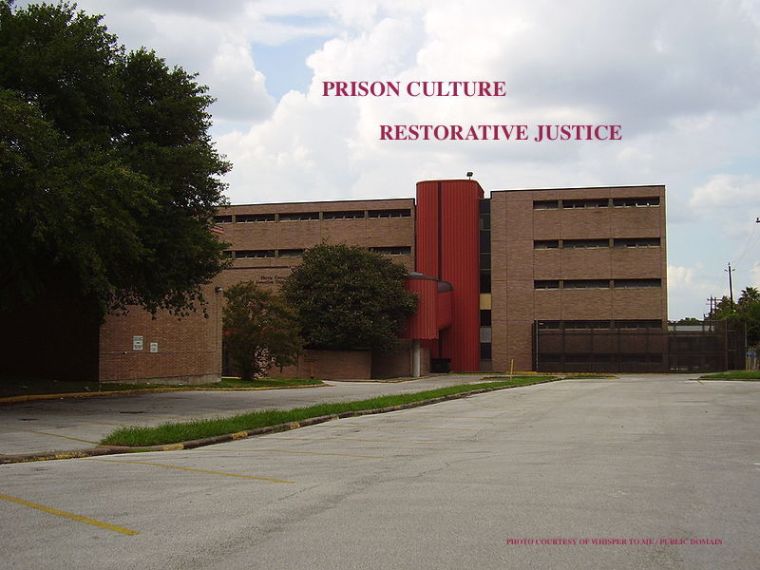
This month’s publication focuses on Restorative Justice. This is a topic that is dear to me. I am the Director of the Youth Chaplaincy Coalition. I have been working with incarcerated folks and those touched by incarceration since 2003. I have seen the ripples of harm that have come. There is harm to the victim, of course. But there is also harm to the person who committed the harmful act, harm to their families, and harm to the communities that encircle all of these people.
Restorative Justice is an en vogue term. Everyone wants it but we don’t know much about how to do it. Most of us look backwards at the ancient ways of first peoples such as the Māori people of New Zealand or the Tagish and Tlingit First Nation people of the Yukon. We lift their practices and bring it forward into a defined court case.
This somewhat misses the point.
The circling process that the first peoples used far pre-dates the term restorative justice. At the same time, restorative justice has become a term to be used by the justice system. And so we create another circling process that is set aside for the courts, jails, and prisons to use.
Circling or Peacemaking Circles, the process given to us by the ancients, is to be used everywhere and with anything: healing, sentencing, discernment. And it involves the entire community. The entire circle of ripples affected by an act. It is a big process. And that’s why we relegate it to the justice system.
Because if we don’t relegate it to the work of the justice system, that means we will have to change and do better. The first principle of the circle: You can only change yourself. As long as we make restorative justice the property of the courts, we don’t have to change. We don’t have to be more welcoming, giving, or inclusive. We don’t have to mentor, feed the hungry, clothe the naked. But I have news! Great news of good tidings! Restorative justice, Peacemaking Circles, is, as the ancients say, the wisdom of the universe. It belongs to no one person and is there for all for the healing and transformation—not of the world, but of each one of us.
This issue about Restorative Justice and new forays into restoration is explored by our core team and guest writers. Each brings their own wisdom to the topic.
Writing on aspects of justice and restorative justice are: Myself, James Cowles, and Chris Hoke. Justice oriented creative writers are Lisa Ashley, Carolyn O’Connell, Paul Brookes, Rob Cullen, Charles W. Martin, Marieta Maglas, Sonja Benskin Mesher, Paul Brookes, Jamie Dedes and a short stories by Joseph Hesch, Lisa Ashley and Rachel Barton. Gail Stone offers a video that speaks to her faith and hope in restorative justice. I have also offered a moderated discussion that I led regarding zero incarceration for youth. Denise Fletcher teaches us how to put together Comfort Kit Baskets for the incarcerated.
We hope this issue will give you pleasure even as it provokes you. Leave your likes and comments behind. As readers you are as import to the The BeZine project, values and goals as are our contributors. Your commentary is welcome and encourages our writers. As always, we offer the work of emerging, mid-career and polished pros, all talented and all with ideas and ideals worth reading and thinking about.
In the spirit of peace, love (respect) and community and on behalf of The Bardo Group Beguines,
Terri Stewart, Guest Editor
How to read this issue of THE BEZINE:
Do You Hear What I Hear?, Terri Stewart
Justice the New Old Way, Terri Stewart
Hearing Voice Underground, Chris Hoke
Refuge, Reconciliation, Recidivism, James R. Cowles
Of Pirates and Emperors, Jamie Dedes
Comfort Kits, Denise Fletcher
Hope and Faith in Restorative Justice, Gail Stone
Zero Incarceration for Youth, Terri Stewart
Room at the Table, Terri Stewart
I Can Trust You, A True Story, Lisa Ashley
Walking Along the Edge, Rachel Barton
Comin’, Joseph Hesch
A Child’s Touch, Lisa Ashley
Full Buck Moon, Lisa Ashley
(ANGERONA) Sunstead, Paul Brookes
Prisoner, Paul Brookes
The Boy in the Park, Rob Cullen
Oscar Wilde in Prison, Marieta Maglas
Restorative Justice for Sale, Charles W. Martin
before it began … , Charles W. Martin
teach a man to fish …, Charles W. Martin
#what more do you expect, Sonja Benskin Mesher
.verdict., Sonja Benskin Mesher
Confrontation, Carolyn O’Conner
Sacrificial Lambs, Carolyn O’Conner
Except where otherwise noted,
ALL works in The BeZine ©2017 by the author / creator
Daily Spiritual Practice: Beguine Again, a community of Like-Minded People
Facebook, The Bardo Group Beguines
Twitter, The Bardo Group Beguines

May 15, 2017
 “In a time of deceit telling the truth is a revolutionary act.”
—George Orwell
This is an extraordinary time; a time when post-truth culture is thriving in Russia, China, America, Australia, Britian, India, Japan and Turkey. This political climate is founded and furthered by appeals to emotion and on conclusions based on ignorance of and resistance to hard science and well-documented history. A perhaps unprecedented level of bombast replaces common sense, honesty and sincere promise creating a climate that rests on disinformation, intimidation and divide-and-conquer as its primary weapons of control. This all combines to undermine rule of law, free speech and free media. We have administrations evolving in the spirit of Orwell’s 1984 where diplomacy and statesmanship have devolved into manipulative spins calculated to influence the gullible and solidify the power of would-be autharitarians.
With the mixed blessing of social networking citizens seem unable – or perhaps unwilling – to distinguish lies from truth and fact from fallacy. President Obama is described as “obsessed” with this problem (hyperreality) and the mixed ecosystem of professional journalism and social network reportage in which “everything is true and nothing is true.”
 “In an age where there’s so much active misinformation, and it’s packaged very well, and it looks the same when you see it on a Facebook page or you turn on your television, where some over-zealousness on the part of a US official is equated with constant and severe repression elsewhere, if everything seems to be the same and no distinctions are made, then we won’t know what to protect…If we can’t discriminate between serious arguments and propaganda, then we have problems.”
—Barak Obama
We’ve decided this month to address the challenges that face our countries and the world. We’ve addressed these in essay and poetry, sometimes head-on and sometimes by a thread. Though perspectives and solutions may differ to some degree, there is clear agreement that the concerns are real as is the need to “resist.”
♦
A last note: Thanks to Michael Dickel for further technical refinements to make this zine more accessible and readily readable. Thanks also to the members of our core team, to our guest contributors and to our readers for continued support, encouragement and the pleasures of our shared values.
In the spirit of peace, love and community
and on behalf of The Bardo Group Bequines,
—Jamie Dedes, Founding and Managing Editor
“Political language is designed to make lies sound truthful and murder respectable, and to give an appearance of solidity to pure wind. ”
― George Orwell
For this issue of The BeZine

 Jamie Dedes' THE POET BY DAY Webzine