Your eyes are a thorn in my heart
Inflicting pain, yet I cherish that thorn
And shield it from the wind.
I sheathe it in my flesh, I sheathe it, protecting it from night and agony,
And its wound lights the lanterns,
Its tomorrow makes my present
Dearer to me than my soul.
And soon I forget, as eye meets eye,
That once, behind the doors, there were two of us.
Your words were a song
And I tried to sing, too,
But agony encircled the lips of spring.
And like the swallow, your words took wing,
The door of our home and the autumnal threshold migrated,
To follow you wherever led by longing
Our mirrors were shattered,
And sorrow was multiplied a thousand fold.
And we gathered the splinters of sound,
Mastering only the elegy of our homeland!
Together were will plant it in the heart of a lyre,
And on the rooftops of our tragedy we’ll play it
To mutilated moons and to stones.
But I have forgotten, you of the unknown voice:
Was it your departure that rushed the lyre or was it my silence?
Yesterday I saw you in the port,
A long voyager without provisions,
Like an orphan I ran to you,
Asking the wisdom of our forefathers:
How can the ever-verdant orange grove be dragged
To prison, to exile, to a port,
And despite all her travels,
Despite the scent of salt and longing,
Remain evergreen?
I write in my diary:
I love oranges and hate the port
And I write further:
On the dock
I stood, and saw the world through Witter’s eyes
Only the orange peel is ours, and behind me lay the desert.
In the briar-covered mountains I saw you,
A shepherdess without sheep,
Pursued among the ruins.
You were my garden, and I a stranger,
Knocking at the door, my heart,
For upon my heart stand firm
The door and windows, the cement and stones.
I have seen you in casks of water, in granaries,
Broken, I have seen you a maid in night clubs,
I have seen you in the gleam of tears and in wounds.
You are the other lung in my chest;
You are the sound on my lips;
You are water; you are fire.
I saw you at the mouth of the cave, at the cavern,
Hanging your orphans’ rags on the wash line.
In the stoves, in the streets I have seen you.
In the barns and in the sun’s blood.
In the songs of the orphaned and the wretched I have seen you.
I have seen you in the salt of the sea and in the sand.
Yours was the beauty of the earth, of children and of Arabian jasmine.
And I have vowed
To fashion from my eyelashes a kerchief,
And upon it to embroider verses for your eyes,
And a name, when watered by a heart that dissolves in chanting,
Will make the sylvan arbours grow.
I shall write a phrase more precious than honey and kisses:
‘Palestinian she was and still is’.
On a night of storms, I opened the door and the window
To see the hardened moon of our nights.
I said to the night: Run out,
Beyond the darkness and the wall;
I have a promise to keep with words and light.
You are my virgin garden
As long as our songs
Are swords when we draw them.
And you are as faithful as grain
So long as our songs
Keep alive the fertile soil when we plant them.
You are like a palm tree in the mind:
Neither storm nor woodsman’s ax can fell it.
Its braids uncut
By the beasts of desert and forest
But I am the exiled one behind wall and door,
Shelter me in the warmth of your gaze.
Take me, wherever you are,
Take me, however you are.
To be restored to the warmth of face and body,
To the light of heart and eye,
To the salt of bread and song,
To the taste of earth and homeland.
Shelter me in the warmth of your gaze,
Take me, a panel of almond wood, in the cottage of sorrows,
Take me, a verse from the book of my tragedy,
Take me, a plaything or a stone from the house,
So that our next generation may recall
The path of return to our home.
Her eyes and the tattoo on her hands are Palestinian,
Her name, Palestinian,
Her dreams, and sorrow, Palestinian,
Her Kerchief, her feet and body, Palestinian,
Her words and her silence, Palestinian,
Her voice, Palestinian,
Her birth and her death, Palestinian,
I have carried you in my old notebooks
As the fire of my verses,
The sustenance for my journeys.
In your name, my voice rang in the valleys:
I have seen Byzantium’s horses
Even though the battle be different.
Beware, oh beware
The lightning struck by my song in the granite.
I am the flower of youth and the knight of knights!
I am the smasher of idols.
I plant the Levantine borders
With poems that set eagles free.
And in your name I have shouted at the enemy:
Worms, feed on my flesh if ever I slumber,
For the eggs of ants cannot hatch eagles,
And the shell of the adder’s egg
Holds but a snake!
I have seen Byzantium’s horses,
And before it all, I know
That I am the flower of youth and the knight of knights!
Mahmoud Darwish (Arabic: محمود درويش, translit.maḥmūd darwīsh, 13 March 1941 – 9 August 2008) was a Palestinian poet and author who was regarded as the Palestinian national poet. He won numerous awards for his works. Darwish used Palestine as a metaphor for the loss of Eden, birth and resurrection, and the anguish of dispossession and exile.He has been described as incarnating and reflecting “the tradition of the political poet in Islam, the man of action whose action is poetry.” He also served as an editor for several literary magazines in Israel. MORE [Wikipedia]
Poet and writer, I was once columnist and associate editor of a regional employment publication. I currently run this site, The Poet by Day, an information hub for poets and writers. I am the managing editor of The BeZine published by The Bardo Group Beguines (originally The Bardo Group), a virtual arts collective I founded. I am a weekly contributor to Beguine Again, a site showcasing spiritual writers. My work is featured in a variety of publications and on sites, including: Levure littéraure, Ramingo’s Porch, Vita Brevis Literature,Compass Rose, Connotation Press, The Bar None Group, Salamander Cove, Second Light, I Am Not a Silent Poet, Meta / Phor(e) /Play, and California Woman. My poetry was recently read byNorthern California actor Richard Lingua for Poetry Woodshed, Belfast Community Radio. I was featured in a lengthy interview on the Creative Nexus Radio Show where I was dubbed “Poetry Champion.”
“What if our religion was each other. If our practice was our life. If prayer, our words. What if the temple was the Earth. If forests were our church. If holy water–the rivers, lakes, and ocean. What if meditation was our relationships. If the teacher was life. If wisdom was self-knowledge. If love was the center of our being.” Ganga White, teacher and exponent of Yoga and founder of White Lotus, a Yoga center and retreat house in Santa Barbara, CA
“Every pair of eyes facing you has probably experienced something you could not endure.” Lucille Clifton
Thank you for sharing your love of words. Comments will appear after moderation.
“I adore social media. FaceBook and WordPress have been incredible avenues of not only reading the words of poets world-wide, but also gaining friends, virtual but real . . .The poets are people like me and you who want the same thing: respect, a safe and healthy environment for family and friends, and the freedom to have fun without being hurt or harming others. I think the great [William Shakespeare] would have loved the world-wide web…” Clarissa Simmens
A couple of weeks ago The Poet by Day, Wednesday Writing Prompt was Spinning With Shakespeare. Readers were challenged to write a poem using phrases from Shakespeare that have come into general usage. It was fun. The poems were great. You can read them HERE. Meanwhile, it happens that Clarissa Simmens has a passion for Shakespeare, so much so that she does a yearly poetic homage to WS, as she refers to him. She shared her 2018 homage with us in comments. Here (below) are those poems for you to read today along with an interview of Clarissa and her bio.
Shakespearian Trivia: As I read through Clarissa’s responses to my interview questions, I had to chuckle. Her intro to Shakespeare was in high school and included a local movie-theater-showing of Hamlet with Richard Burton in the lead. I suspect Clarissa and I are of an age and may have seen the same show. My intro to Shakespeare included the 1964 “electrovision” (early video/closed circuit TV) version of Hamlet at our own local movie theater. Apparently this presentation was being delivered to high school students all over the U.S. as an English literature course requirement. The production was directed by Sir John Gielgud. It was done sans period costumes and with minimal sets. It is said that Burton disliked the production and wanted the videos destroyed. Apparently at least one copy survived. I found it HERE on YouTube. Time has tampered with the visual but there’s nothing wrong with the sound. Close your eyes and listen. Enjoyable!
– Jamie Dedes
THE UNCERTAIN GLORY OF AN APRIL DAY…
Shakespeare’s Birthday Approximately April 23, 1564
In cold country I sadly plucked the lute
Shining in England, you the rising son {sun}
Seeking me in verse, yet remaining mute
Why don’t you know we are meant to be one
Oh, dear Will, you were fated to be mine
Although centuries separate us now
Twin souls formed by a heavenly design
Calling your name, but me you disavow
Yet I’ve glimpsed your soul somewhere in my space
Perhaps in a yellow striped bumble bee
And though you changed I recognize your face
But stung by your insensitivity
Wading through tears, my grief so prodigious
We’ve lost so much, love now sacrilegious
(c) 2018 Clarissa Simmens (ViataMaja)
AND HERE IS MY ANNUAL BIRTHDAY SONNET CREATED FROM THE FIRST LINES OF SHAKESPEARE’S SONNETS:
#60 Sin of self-love possesseth all mine eye
#88 When thou shalt be disposed to set me light
#66 Tired with all these, for restful death I cry
#80 O, how I faint when I of you do write.
#139 O, call not me to justify the wrong
#150 O, from what power hast thou this powerful might
#100 Where art thou, Muse, that thou forget’st so long
#28 How can I then return in happy plight
#43 When most I wink, then do mine eyes best see
#66 Tired with all these, for restful death I cry
#52 So am I as the rich, whose blessed key
#115 Those lines that I before have writ do lie
#56 Sweet love, renew thy force; be it not said
#71 No longer mourn for me when I am dead
Characters from Shakespeare’s plays. Unknown artist.
INTERVIEW
JAMIE:When and how did your passion for Shakespeare start? CLARISSA: I saw my first Shakespeare play in high school. It was a class trip to a local movie house showing Hamlet starring Richard Burton. This was a filming of a rehearsal with no scenery or costumes. There Burton was in a black sweater (my favorite clothing color) and without the distraction of a mise en scène, Hamlet suddenly became real to me: just words and emotion. I then began reading his plays very carefully. Around that time, I bought a copy of MacBird!, the Macbeth satire centering around the theory that President Johnson was behind the JFK assassination. Once again, I saw the incredible relevance of WS. I began reading him for enjoyment, rather than to pass school tests and although not covered in class, I discovered his sonnets. How I love the structure of a Shakespearean Sonnet! Everything WS wrote can be seen in a modern context and that was what I needed to learn in order to enjoy him.
JAMIE: What drew you to writing your own poetry?
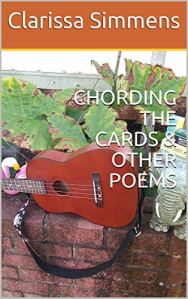
CLARISSA: At about age 3 or 4 I had a Little Golden Book called A Bird Can Fly and So Can I. There was about a line or two for a series of animals and my parents read it to me so many times that I memorized it and composed my own poem about a pig. I don’t know if I had an innate sense of rhythm or if it is the autism, but although I was never a finger waver (we are all different on the Autism Spectrum) I was certainly a “counter” and loved flicking my fingers over numbers and syllables especially. Rhyming poetry just suited me. Didn’t know the name, but when I finally learned about Iambic Pentameter (and all those other meters) I began writing my own sonnets. I mostly write open and free verse now, but I think the physical part of words has been replaced by my playing ukulele and guitar. Something about pressing the chords and plucking them on string instruments reminds me of rhythmic, but structured, writing.
JAMIE:Who are the poets other than Shakespeare that you admire?
CLARISSA: The great Confessional Poet Sylvia Plath will always be my heroine because of the honest sharing of her mental health struggle. It is the reason why I mention my autism in many of my poems. Another is Emily Dickinson with her slashing dashes. I tend to end my poems with ellipses because it is as if my voice is trailing off… But one day I wondered if I was unconsciously doing a passive-aggressive imitation of her. Marina Tsvetaeva who said “I know the truth” (and she did) has touched me no matter how many times I read her poems. Allen Ginsberg’s Howl changed my whole opinion of poetry, indoctrinating me into a lifetime of so-called hippie-ism that can be interpreted as love of peace and tree-hugging. TS Eliot’s Waste Land, despite his bigotry in other works, has always remained one of my favorite poems (as you can see in my first poetry book Madame Sosostris Explains). Finally, I would add Bob Dylan. Once announcing to a Survey of American Lit class that he was the greatest contemporary poet, the class and the instructor howled with laughter, so all these years later I finally felt vindicated when he won the Nobel Prize in Literature. JAMIE:What is the importance of poetry on the global scene? I adore social media. FaceBook and WordPress have been incredible avenues of not only reading the words of poets world-wide, but also gaining friends, virtual but real, nevertheless. I don’t sell many poetry books on Amazon but am pleased to see that many of my books are borrowed in India and Japan. Most of all, it is the only way to truly learn about different cultures. This is why I enjoy your associated Ezines including The BeZine and The Poet By Day, 100,000 Poets for Change, and other sites you have generously shared. Reading globally, and being able to comment on other works, are what I consider grassroots-level knowledge. These poems are not media soundbites or part of a political or monetary agenda. The poets are people like me and you who want the same thing: respect, a safe and healthy environment for family and friends, and the freedom to have fun without being hurt or harming others. I think the great WS would have loved the world-wide web…
Thank you for giving me this opportunity to share my thoughts with you!
CLARISSA SIMMENS (Poeturja) is an independent poet; Romani drabarni (herbalist/advisor); ukulele and guitar player; wannabe song writer; and music addict. Favorite music genres include Classic Rock, Folk, Romani (Gypsy), and Cajun with an emphasis on guitar and violin music mainly in a Minor key. Find her on Amazon’s Author Page, on her blog, and on FacebookHERE.
Poet and writer, I was once columnist and associate editor of a regional employment publication. I currently run this site, The Poet by Day, an information hub for poets and writers. I am the managing editor of The BeZine published by The Bardo Group Beguines (originally The Bardo Group), a virtual arts collective I founded. I am a weekly contributor to Beguine Again, a site showcasing spiritual writers. My work is featured in a variety of publications and on sites, including: Levure littéraure, Ramingo’s Porch, Vita Brevis Literature,Compass Rose, Connotation Press, The Bar None Group, Salamander Cove, Second Light, I Am Not a Silent Poet, Meta / Phor(e) /Play, and California Woman. My poetry was recently read byNorthern California actor Richard Lingua for Poetry Woodshed, Belfast Community Radio. I was featured in a lengthy interview on the Creative Nexus Radio Show where I was dubbed “Poetry Champion.”
“What if our religion was each other. If our practice was our life. If prayer, our words. What if the temple was the Earth. If forests were our church. If holy water–the rivers, lakes, and ocean. What if meditation was our relationships. If the teacher was life. If wisdom was self-knowledge. If love was the center of our being.” Ganga White, teacher and exponent of Yoga and founder of White Lotus, a Yoga center and retreat house in Santa Barbara, CA
“Every pair of eyes facing you has probably experienced something you could not endure.” Lucille Clifton
Thank you for sharing your love of words. Comments will appear after moderation.
“Art should never be a crime. [Zehra] Doğan is a model of courage for all journalists and artists for standing up against injustice and silence, especially because of her determination to work and create while incarcerated.” Julie Trébault, Director of the Artists at Risk Connection (ARC) at PEN America
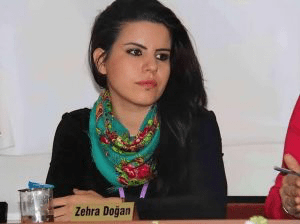
Last week PEN America celebrated the release of Turkish painter, journalist and feminist activist, incarcerated Zehra Doğan (Free Zehra Doğan • Zehra Doğan’a özgürlük). Doğan was released on February 24 after spending 600 days in a Turkish jail after courts deemed her journalistic and artistic work to be “terrorist propaganda.”
Doğan was the editor of Jin News Agency (JINHA), a feminist Kurdish news agency. She was arrested on July 21, 2016, and detained until December 2016 when she was released pending trial. On March 7, 2017, Doğan was sentenced to prison for 2 years, 10 months and 22 days on charges of “terrorist propaganda” as a result of her reporting, social media posts, and her paintings about the Turkish military’s operations in the largely Kurdish town of Nusaybin. The indictment stated that one of her paintings, which depicted a real-life scene of Turkish flags on war-torn buildings and was based on a photo circulated by the Turkish military on social media, went ‘beyond the limits of criticism.’ JINHA was also shut down as part of the government crackdown following an attempted coup in 2016.
“We are delighted that Zehra has been released and reunited with family and friends after her unjust imprisonment, which was an appalling affront to free expression,” said Julie Trébault, Director of the Artists at Risk Connection (ARC) at PEN America. “Art should never be a crime. Doğan is a model of courage for all journalists and artists for standing up against injustice and silence, especially because of her determination to work and create while incarcerated. Many other journalists in Turkey remain behind bars. As we celebrate Zehra’s release, we call for the release of all other Turkish journalists, artists, and activists who are in prison for their journalism or their expression.”
While imprisoned, Doğan rigorously continued to work on her paintings using diverse media including pomegranate shells, tincture of iodine, and bedsheets, despite restricted access to painting materials. Following her release, she told BBC Turkish that she had never painted as much as she did in prison. Also while in prison, she founded the 8-page handmade newspaper Özgür Gündem Zindan (Free Agenda Dungeon) with the help of several of her fellow inmates. As an inmate, Doğan received public support from numerous human rights organizations and renowned artists, including the graffiti artist Banksy and prominent Chinese artist Ai Weiwei. During her imprisonment, Doğan became the second woman in Turkey to receive the International Women’s Media Foundation’s “Courage in Journalism” award. She also received the Freethinker Prize from the Swiss Freethinker Association. Most recently, Doğan was shortlisted in the Arts category for the Index on Censorship Awards 2019.
*****
Post and photograph courtesy of PEN America.
PEN America stands at the intersection of literature and human rights to protect open expression in the United States and worldwide. It champions the freedom to write, recognizing the power of the word to transform the world. Its mission is to unite writers and their allies to celebrate creative expression and defend the liberties that make it possible.
Poet and writer, I was once columnist and associate editor of a regional employment publication. I currently run this site, The Poet by Day, an information hub for poets and writers. I am the managing editor of The BeZine published by The Bardo Group Beguines (originally The Bardo Group), a virtual arts collective I founded. I am a weekly contributor to Beguine Again, a site showcasing spiritual writers. My work is featured in a variety of publications and on sites, including: Levure littéraure, Ramingo’s Porch, Vita Brevis Literature,Compass Rose, Connotation Press, The Bar None Group, Salamander Cove, Second Light, I Am Not a Silent Poet, Meta / Phor(e) /Play, and California Woman. My poetry was recently read byNorthern California actor Richard Lingua for Poetry Woodshed, Belfast Community Radio. I was featured in a lengthy interview on the Creative Nexus Radio Show where I was dubbed “Poetry Champion.”
“What if our religion was each other. If our practice was our life. If prayer, our words. What if the temple was the Earth. If forests were our church. If holy water–the rivers, lakes, and ocean. What if meditation was our relationships. If the teacher was life. If wisdom was self-knowledge. If love was the center of our being.” Ganga White, teacher and exponent of Yoga and founder of White Lotus, a Yoga center and retreat house in Santa Barbara, CA
“Every pair of eyes facing you has probably experienced something you could not endure.” Lucille Clifton
Thank you for sharing your love of words. Comments will appear after moderation.
The program, “Climate Change, Nature and the Writer’s Eye,” will honor Annie Proulx, winner of the Prize for American Fiction, on March 20. Photo by Gus Powell.
“Writers who use the wide palette of the natural world command an important vantage point from which to observe the issues of climate change, rising seas, animal and insect extinctions, or the loss of woodlands,” Proulx said.
The U.S. Library of Congress will honor the lifetime achievement of novelist Annie Proulx, winner of the Library’s Prize for American Fiction, in a program titled Climate Change, Nature and the Writer’s Eye.The discussion on March 20 will explore the role of writers and the intersection between literature and the environment.
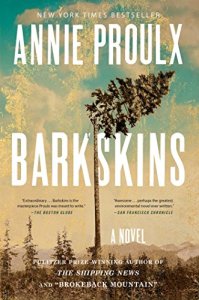
Proulx is the author of the Pulitzer Prize-winning novel The Shipping News, the renowned short story Brokeback Mountain that was made into an Academy Award-winning film, and the 2016 novel Barkskins, among many other works. Science writer Peter Brannen and Indian novelist Amitav Ghosh will join Proulx to discuss issues of climate change and a writer’s responsibility to represent its realities.
The discussion will be moderated by author Marie Arana, senior literary advisor to the Librarian of Congress. Climate Change, Nature and the Writer’s Eye promises a lively exchange between two great literary masters, a prize-winning journalist and a historian of Latin America, all of whom have written passionately on environmental degradation, mass extinctions and the human quotient.
“Seldom have we seen the arts join science to issue such a vibrant summons to confront the most urgent task of our time,” Arana said.
The event will take place at 7 p.m. on Wednesday, March 20, in the Coolidge Auditorium on the ground floor of the Library’s Thomas Jefferson Building, 10 First Street S.E., Washington, D.C. The event is free, but tickets are required. For tickets, please visit this ticketing site: lc-prize.eventbrite.com.
Each year, the prestigious Library of Congress Prize for American Fiction honors an American literary writer whose body of work is distinguished not only for its mastery of the art but also for its originality of thought and imagination.
Librarian of Congress Carla Hayden chose Proulx for the 2018 prize, honoring her as an “American original,” based on the recommendation of a jury of distinguished authors and prominent literary critics from around the world. The prize was awarded during the National Book Festival in 2018.
About the Speakers
ANNIE PROULX is the author of 10 books, including the novel The Shipping News and the story collection Close Range. Her story Brokeback Mountain, which originally appeared in The New Yorker, was made into an Academy Award-winning film. Proulx’s many honors include a Pulitzer Prize, a National Book Award and a PEN/Faulkner Award. In 2017 and 2018, she was awarded the National Book Foundation’s 2017 Medal for Distinguished Contribution to American Letters, the 2018 Library of Congress Prize for American Fiction and the Ucross Foundation’s inaugural 2018 Award for Distinguished Achievement in the Arts. Proulx’s most recent novel, Barkskins (Scribner, 2016), was a New York Times Notable Book, a Kirkus Prize Finalist for Best Novel and was one of the San Francisco Chronicle’s Top 10 Books of 2016. She lives in Port Townsend, Washington.
PETER BRANNEN is an award-winning science journalist whose work has appeared in The New York Times, The Atlantic, The Washington Post, Wired, The Boston Globe, Slate and The Guardian, among other publications. His book, “The Ends of the World,” about the science behind the five major mass extinctions in Earth’s history, was published by Harper Collins in 2017. It was named a New York Times Editor’s Choice and one of the 10 Best Environment, Climate Science and Conservation Books of 2017 by Forbes. Peter is currently a Scripps Fellow at the Center for Environmental Journalism at the University of Colorado Boulder.
AMITAV GHOSH was born in Calcutta and grew up in India, Bangladesh and Sri Lanka. He is the author of two books of nonfiction, a collection of essays and eight novels. His most recent book is “The Great Derangement: Climate Change and the Unthinkable” (2016). His books have won prizes in India, Europe and Myanmar, and he has been awarded honorary degrees by the Sorbonne, Paris, and by Queens College, New York. He is married to the writer Deborah Baker and divides his time between Brooklyn, Goa and Kolkata. Amitav Ghosh’s work has been translated into more than 30 languages, and he has served on the jury of the Locarno Film Festival and the Venice Film Festival.
The Library of Congress Prize for American Fiction seeks to commend strong, unique, enduring voices that—throughout long, consistently accomplished careers—have told us something valuable about the American experience.
The Library of Congress is the world’s largest library, offering access to the creative record of the United States — and extensive materials from around the world — both on-site and online. It is the main research arm of the U.S. Congress and the home of the U.S. Copyright Office. Explore collections, reference services and other programs and plan a visit at loc.gov; access the official site for U.S. federal legislative information at congress.gov; and register creative works of authorship at copyright.gov.
This post courtesy of the U.S. Library of Congress. PhotoCredit-GusPowell.
Poet and writer, I was once columnist and associate editor of a regional employment publication. I currently run this site, The Poet by Day, an information hub for poets and writers. I am the managing editor of The BeZine published by The Bardo Group Beguines (originally The Bardo Group), a virtual arts collective I founded. I am a weekly contributor to Beguine Again, a site showcasing spiritual writers. My work is featured in a variety of publications and on sites, including: Levure littéraure, Ramingo’s Porch, Vita Brevis Literature,Compass Rose, Connotation Press, The Bar None Group, Salamander Cove, Second Light, I Am Not a Silent Poet, Meta / Phor(e) /Play, and California Woman. My poetry was recently read byNorthern California actor Richard Lingua for Poetry Woodshed, Belfast Community Radio. I was featured in a lengthy interview on the Creative Nexus Radio Show where I was dubbed “Poetry Champion.”
“What if our religion was each other. If our practice was our life. If prayer, our words. What if the temple was the Earth. If forests were our church. If holy water–the rivers, lakes, and ocean. What if meditation was our relationships. If the teacher was life. If wisdom was self-knowledge. If love was the center of our being.” Ganga White, teacher and exponent of Yoga and founder of White Lotus, a Yoga center and retreat house in Santa Barbara, CA
“Every pair of eyes facing you has probably experienced something you could not endure.” Lucille Clifton
Thank you for sharing your love of words. Comments will appear after moderation.
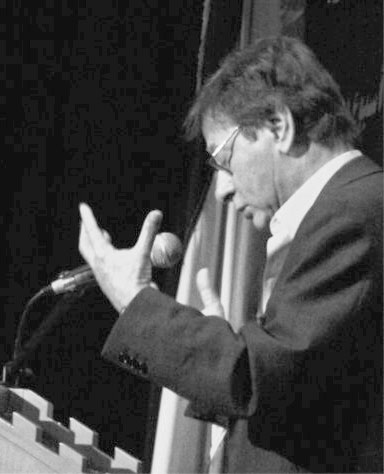
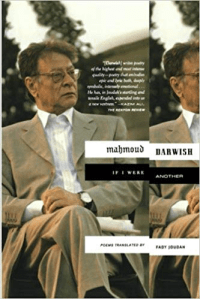 Mahmoud Darwish (
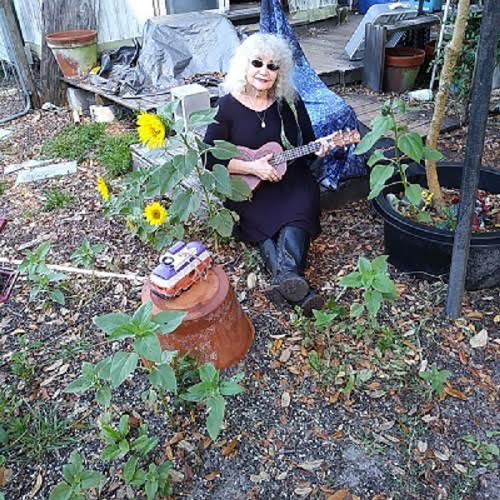
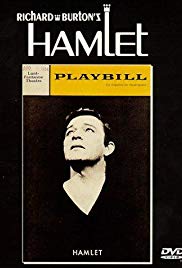 hared her 2018 homage with us in comments. Here (below) are those poems for you to read today along with an interview of Clarissa and her bio.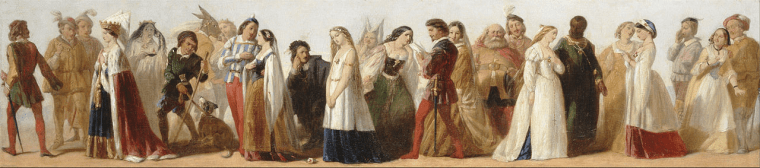
 Poet and writer, I was once columnist and associate editor of a regional employment publication. I currently run this site, The Poet by Day, an information hub for poets and writers. I am the managing editor of The BeZine published by The Bardo Group Beguines (originally The Bardo Group), a virtual arts collective I founded. I am a weekly contributor to


 ANNIE PROULX
 PETER BRANNEN

 Jamie Dedes' THE POET BY DAY Webzine