Generally we celebrate romantic love on Valentines Day. Instead I choose to celebrate stalwart friendships with Ann Emerson’s serious but unutterably exquisite poetry.
This post is dedicated to my old poetry buddy, Ann Emerson, and celebrates her poetry and photography. Sunday marks the fifth anniversary of Ann’s transition into the realms of Light.
It is for Mike P., a college friend of Ann’s who asked after her this morning.
It is for her husband, Dan.
It is for all the members of the support group to which Ann and I belong, a Group for people with life-threatening illnesses, and for our Buddhist Chaplin, Mick B., who gathered us together and was always there for us. It is for those who have passed on ahead. Their seats at the roundtable may be empty, but the very thought of them still fills our hearts with joy. / J.D.
TWO CATS
Sometimes I walk among the
orange maples standing in the dark
dead stream behind my house. Then
it’s like remembering childhood,
the smell of dirt ground into hair.
Fifty years later; my tears are no different.
I do not twist words to discover meaning
the way I did not discuss my father
who kept me like a stolen animal
never given back. Shuffling about
among the copper leaves,
I turn around to view my kingdom:
a nine by twelve foot room with
inward-looking windows. Some
piano music of Ludovico Einaudi
and two old cats who trust in sloth
and play. And what kindness is left in me
and when to close this poem down.
IN MY FEVER, I CAN’T GO WITHOUT SAYING
In my fever, I can’t go without saying
that if given a little attention, I have something
more to share: that death is waiting for you ·
just a little walk ahead behind the house
you thought you’d never escape, a place ·
next door like the quietest place on earth.
Between the wall and the bed, a woman ·
cast in blue television light sits in Buddha
position: there is something inside her love ·
belonging to you that in your past was dead:
years of grass and air, and a stray horse ambling ·
in your direction with eyes squeezed tight
with sweetness. And you will come alive like ·
another month of summer just as the blue
woman lifts your picture to her altar, even as
·
you are licked asleep by the long-haired mare
and the sunflowers turn away.
WINTER
This is what I’ve come to know:
dark mornings, white books
on the bed splayed open like wings,
slippers on the floorboards,
affection for medicine, red wine.
I lost perspective months ago,
trying to read the fine print.
I sit by the window: this is life
still worth saving, rain in my eyes,
the glittering glass work of trees.
Poet and writer, I was once columnist and associate editor of a regional employment publication. I currently run this site, The Poet by Day, an information hub for poets and writers. I am the managing editor of The BeZine published by The Bardo Group Beguines (originally The Bardo Group), a virtual arts collective I founded. I am a weekly contributor to Beguine Again, a site showcasing spiritual writers. My work is featured in a variety of publications and on sites, including: Levure littéraure, Ramingo’s Porch, Vita Brevis Literature,Compass Rose, Connotation Press, The Bar None Group, Salamander Cove, Second Light, I Am Not a Silent Poet, Meta / Phor(e) /Play, and California Woman. My poetry was recently read byNorthern California actor Richard Lingua for Poetry Woodshed, Belfast Community Radio. I was featured in a lengthy interview on the Creative Nexus Radio Show where I was dubbed “Poetry Champion.”
“What if our religion was each other. If our practice was our life. If prayer, our words. What if the temple was the Earth. If forests were our church. If holy water–the rivers, lakes, and ocean. What if meditation was our relationships. If the teacher was life. If wisdom was self-knowledge. If love was the center of our being.” Ganga White, teacher and exponent of Yoga and founder of White Lotus, a Yoga center and retreat house in Santa Barbara, CA
“Every pair of eyes facing you has probably experienced something you could not endure.” Lucille Clifton
Thank you for sharing your love of words. Comments will appear after moderation.
how sweet is the sensation, how smooth the flight in holy silence, words flow on, with delight
as the hours pass by, dawn breaks into light
Anjum Wasim Dar
Over my life
I have drifted,
along, with the flow-
I came to know
I have to go, be slow
To move step by step
shed tears drop by drop,
Over my heart I found,
nothing was my own
It all had to be gifted,
to known and unknown,
Over my heart I saw,
as inside I bled
outside all was black ,
as the invisible was red,
love’s return, hard to find,
to complete a good age
we ourselves must be
loving caring and kind.
Spirit of Two Spheres
O My Spirit
someone has seen you
In sound and silence,
felt you in celestial
sphere,
O spirit where dost thy wander<
Free when I fall asleep…
Tell me who is the silent one
Who thinks of me<
With hand on the cheek
a smile in thoughts, deep
O spirit tell me, how is she?
and tell her please she is very<
Dear n near to me, I know not<
When or how many times our
paths crossed on the page…
My pen said write and I wrote
My poem missed the boat once
twice, made me sad, not for the poem
but for not reaching her in time…
Quietly I moved across the screen
searching for her, in vain, she seems to
be away, perhaps resting after the day
I wonder how much work she has to do<
Or needs to go out too, but then my heart
missed many beats as I saw in silent sound<
That ‘I am mostly home bound’
Spirit you do not know my heart
painfully bled inside, I felt love n concern
deeply strangely beside.
O spirit pray pray pray….
JAMIE: How did you come to poetry?
ANJUM: I believe I came to this world with poetry inherited in my blood. Becoming aware of life I found myself in a Renaissance atmosphere, an environment replete with books magazines newspapers radio programs and home screen movies.
My early school lessons had poems rhymes and songs that I thoroughly enjoyed. I fell in love with the Silver Bells Poetry books and would read and recite the poems again and again. While at home spoken-word a parlor games were popular: ‘Bait Baazi is played by composing verses of Urdu poems. It is very common among Urdu speakers in Pakistan and India. It is similar to Antakshari, the Sistanian Baas-o-Beyt, the Malayalam Aksharaslokam and, more generally, the British Crambo. It was the most popular game with uncles and aunts all living together after arriving safely in Pakistan, the newly created state by Partition in the Indo-Pak Subcontinent.
My Grandfather Mohammed Hasan ( B.Sc B.T. Kashmir), was a Professor at King George Royal Military College, Jhelum City, Pakistan after migration from Kashmir in the 1950s. He wrote poems in Urdu, mostly on request. He never published his writings. I learned the Arabic poetry meter system from him. He told me Urdu used the Arabic poetry meter system because it was quite simple to understand. Grandfather had learned English, Persian, and Urdu. He knew Shakespeare’s numerous lines by heart and had translated Arthur Conan Doyle’s The Hound of Baskervilles into Urdu.
I wrote my first poem in Urdu at the age of 12 while sitting silently during blackouts of the two wars that were fought with India (in 1965 and 1971). During this time, I also listened to patriotic songs on the radio, which had a deep impact on my writing. I realized how nations were inspired to compose words and record acts of heroism and then I understood the works of our Great National Poet, Allama Mohammed Iqbal, who expressed the qualities of a true Muslim and the characteristics of the Muslims as a separate nation through his poetry. Iqbal awakened the Muslims as a nation, highlighted their rights and duties…I was 16 at the time.
Studying for the master’s degree in English Literature I captured the true essence of poetry and the hidden poet in me emerged. I was by then a mother of three college going kids – the year 2000 and I was recognized internationally as the Poet of Merit by Poetry.com USA and the ISP International Society of Poets
JAMIE: Why is poetry so important to the global community?
ANJUM: The global community has expanded profoundly in recent years, grown in number but shrunk in distance, It has established links from one end of the planet to the other – the Age of Digital Connectivity, which ensures the constant availability of all kinds of information.
Poetry has been the earliest form of language ever since people learnt to make meaningful sounds. I believe human beings understood each other better with fewer syllables and there and then poetry took the first form. Still the understanding of concepts, ideas and precepts came in short forms like ‘formulas.’
Poetry can reach the masses in its various ‘short forms ‘ and convey guidance, pleasure, motivation, love and a warning’ faster than any other means. In its indirect mode it would not offend, abuse or disrespect anyone, though the key here is the knowledge and ability to read and understand.
I believe poetry has the power to change the fate of nations. It reveals the truth of life and leaves strong meaningful lessons for those who turn towards it. Some may deliberately use poetry for their own goals and objectives, which may again beneficial.
The global community needs conscious help in many form. Poetry has the potential to play a major role in educating broadly. Listening to poetry involves patience, so a better usage of time, for example through verses and lyrics of songs, we can think differently and stay away from violence, feel hopeful. Here we have seen a change in the style of political activity when every public gathering and following speeches were interspersed with songs called ‘Promoting Party Songs’ and it kept the public involved, joyful and inspired. The current trends are Poetry and Peace in the World, such as Poets Against War and 100,000 Poets for Change are moving together in many countries around the globe.
Poetry readings bring people closer. The individual cultural aspects and traditions are shared, this leads to more knowledge and better understanding among different communities and thus to peaceful living life style in an improved environment.
JAMIE: What poet do you find most inspiring and comforting and why?
ANJUM:In the early years the poems were Mother Goose Rhymes, then poems of nature where William Wordsworth and Robert Frost stand out, but with only one poem each, Daffodils and Stopping by the Woods. I am sure many are familiar, as these poems are part of the school/college syllabus.
At this stage a poem that touched my soul and spirit was Ozymandias of Egypt by Percy Bysshe Shelley. I had just started college when war with India was declared and ‘Death’ came to the forefront. Father and an elder brother were actively involved at the borders. I came to know Urdu poets and writers like Masroor Anwer, Soofi Tabassum, Jameeluddin Aali and Himayat Ali Shaer. The concept of bravery, sacrifice and patriotism was highlighted in the poems for the soldiers and kept the nation motivated and in high spirits…and I felt the support in the absence of father at home.
Among the writers of English Literature, though I enjoyed reading Shakespeare and found him close to nature and humanity, John Milton and T.S.Eliot inspired me the most. John Milton’s style of expression, themes and choice of words brought a change in my writing style. I began to see life differently, on a higher level of reality and grandeur. Milton’s grand style improved my proficiency in English (a foreign language for me), in sentence structure and the use of adjectives, similes and imagery. It moved me to write better and writing poetry became a part of me…I would keep reading lines from Milton’s epic Paradise Lost. The phrases “to be weak is miserable’’ and “all is not lost’ though coming from Satan in the poem gave much hope to thoughtful believers…Side by side Keat’s Odes brought color, movement and the density of vocabulary to embroider the little that I could write. My literature teacher guided me to adopt the style of such great writers. I must mention Mathew Arnold and Sir Philip Sydney whose essays also enlightened my mind towards understanding literature. Poetry remained on top of the list. T.S.Eliot’s Wastland and the essays Tradition and Talent and What is a Classic opened more avenues for understanding human nature and ‘to justify the ways of God to men’ as Milton wrote. T.S.Eliot inspired me to write about the great event, the ‘Partition ‘of India, which changed the lives of millions of people of the Indo-Pak Subcontinent.
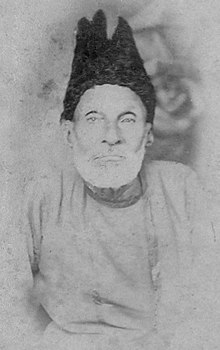
Ghalib
When you ask me about a comforting poet then without any doubt or hesitation I would say that it is none other than Mirza Asadullah Khan Ghalib (1797-1869). I have his complete works in my personal library including audio cassette recordings of his essays and letters etc read by Mr Zia Mohyiuddin. Every time my thoughts emotions feelings need comfort I turn towards his poems and ghazals. Ghalib understood human feelings. When one reads his verses one finds soothing answers. “… life is like that.” He has the saintly prophetic style of expression..he speaks the truth…in this world of hate, envy, and revenge I find him a great support…’acceptance is the key to happiness’ and he assures that awareness of one’s skill is the most satisfying thing in the world..’ ‘ and writes for himself..that he could have been a ‘wali’ a friend of the Almighty if he had not been an alcoholic.
ھیں اور بھی دنیا میں سخن ور بہت ا چھے
کہتے ھیں کہ غالب کا ھے انداظے بیاں اور
Iqbal
The other influence on my writing came from Dr Allama Iqbal (1877-1938) whose poetry was regularly read aloud at home. From the primary level to college and later at family gatherings, Allam Iqbal’s poems were remembered and recited. Dr Iqbal inspired me towards religion, developing the strength of my faith belief and trust in Allah. Other than his poems for children, the Prayer DUA…
لب پہ آتی ھے دعا بن کہ تمنا میری
زندگی شمع کی صورت ھو خدایا میری
“I say a prayer, which is my wish that my life be like a lamp.”
He provides a complete guideline for the purpose of life and how to live it. Quranic study with meaning and understanding came much later in my life. Many verses are inspiring but two which I always recite and quote ..
کبھی اے ھقیقت منتظر نظر آ لباس مجاز میں
کہ ھزاروں سجدے تڑپ رھے ھیں میری جبین نیاز میں
“O Great Truth appear in the worldly light, am dying to prostrate myself, thousands of times.”
کھول آنکھ زمیں دیکھ فلک دیکھ فظا دیکھ
مشرق سے ابھرتے ھوےؑ سورج کو زرا دیکھ
“Open your eyes see the Earth, the sky, the scene, see the sun rising in the East, have a vision,be enlightened. “
For Dr Iqbal one needs intensive and consistent study. His philosophy of ‘Self’ rising above personal desires, gaining knowledge and being positive and steadfast in faith lead to a fine development of character.
JAMIE: Pakistan has declared Urdu the national language and you have been working to translate your work into Urdu. What has that adventure been like for you? What are the challenges?
.
ANJUM:Yes, Urdu is our national language. It is also compulsory for all to study in school. For me Urdu was not difficult. A 10-lesson reader and a small book of grammar was all we had in the course. Two options were offered, either one could take the Advanced Course or the Easy one. I took the advanced and found it rather easy.
.
When I started teaching, I found that students and teachers both had a low proficiency level in the subject. A Certification of Teaching of Urdu was not required, only a master’s degree was enough for a job. Many precious years have gone by without any regular or professional training courses in the subject for teachers of Urdu. My love of poetry kept me glued to Urdu. I had read Mir Taqqi Mir, Mir Dard, Daagh, Bahadur Shah Zafar Ghalib Allama Iqbal a couple of poems by Nazeer Akbarabadi. As a family all loved the Urdu(Indian ) songs and Urdu movies ..Pakistani Urdu songs came later. This way I got to listen, speak, and read a little ( an Urdu newspaper with my Grandmother) and keep my Urdu language alive. My parents spoke Punjabi. In fact my Grandfather, uncles, aunts and other relatives all, spoke Punjabi…we kids spoke Urdu and later quite fluently. .it was English.
.
I found translating English poetry to Urdu quite challenging. I had translated paragraphs but not poems, the last translation task that I had to do was a letter (from Urdu to English ) while working as Creative Writer (English –with Channel 7 Adv. Company Islamabad).
..
Poetry in Urdu reflects the thoughts ideas and emotions more effectively than English as the Poetess of India who uses the pen name “Haya” writes :
.
کیا بھلا چاند ستاروں کی زباں سمجھیں گے
برگ پھولوں کا پرندوں کا بیاں سمجھیں گے
کتنے بد بخت ھیں واۡقف نہیں جو اردو سے
وو حیا علم و محبت کو کہاں سمجھیں گے
.
“who can understand the language of the moon and stars
of flowers leaves and of the birds and what they say
how unfortunate are those who don’t know Urdu
they will never understand, language of love and knowledge.”
.
I must appreciate and thank you for setting me off on a wonderful amazing exciting adventure into the mythical mysterious world of Language. I feel like King Odysseus on a great Viking ship, my companions are few but powerful, the Internet, the laptop computer, and the camera….I miss the Urdu Thesaurus, I believe it is available in book form and will try to get a copy. In the meantime the Internet helps…
.
The challenges I face when translating are not tenses nor Urdu grammar but Urdu vocabulary. I need to increase the repertoire. The Urdu script /Urdu Fonts (how to write a word correctly) the problem…generally one finds an English word written with the Urdu alphabet, in the Urdu script, when the word is read, it sounds as in English…. Office…آفس English… انگلش Game گیم Show شو
.
I had to learn and perfect my Urdu typing ability.
.
With regard to transferring the correct poetic idea to a different language there are constraints that I have noticed: There are no Urdu language programs for outside classroom audiences, like a poetry recital stage show or a forum or gathering of writers and poets called Mushaira. Common language exchange outside the classroom have developed into a mixture of Urdu and English. Many English words have come to stay in Urdu vocabulary lists as …’family, bed, chair. office, cushion, curtain , butter, finish, film, game, milk, racquet, ball, house, number, shop, wife, darling. “Hello” is the most common word used to attract the attention, in place of “hey listen” or “are you listening?’?”
.
The best part of the adventure is that I am using Urdu, writing in Urdu, looking up the Urdu Dictionary, sharing the language adventure with my family and friends and dearly loving all the activities of my dear national language. It is a beautiful language, quite misunderstood, misused too sometimes but it is pure, soft, sweet and full of respect and love. I wish I had started this adventure earlier.
.
My regret is that Urdu is not getting the attention it should. The Academy of Letters is working somewhere. Urdu magazines for children are few and one fails to find good authentic speakers of Urdu language. Only a deliberate effort can create that environment and that too would be rare.
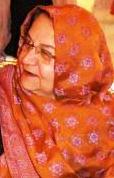
ANJUM WASIM DAR (Poetic Oceans) was born in Srinagar (Indian occupied Kashmir) in 1949.
,
Her family opted for and migrated to Pakistan after the Partition of India and she was educated in St Anne’s Presentation Convent Rawalpindi where she passed the Matriculation Examination in 1964. Anjum ji was a Graduate with Distinction in English in 1968 from the Punjab University, which ended the four years of College with many academic prizes and the All Round Best Student Cup, but she found she had to make extra efforts for the Masters Degree in English Literature/American Studies from the Punjab University of Pakistan since she was at the time also a back-to-college mom with three school-age children.
.
Her work required further studies, hence a Post Graduate Diploma in Teaching English as a Foreign Language (TEFL) from Allama Iqbal Open University Islamabad and a CPE, a proficiency certificate, from Cambridge University UK (LSE – Local Syndicate Examination – British Council) were added to her professional qualifications.
.
Anjum ji says she has always enjoyed writing poems, articles, and anecdotes and her written work found space in local magazines and newspapers. A real breakthrough came with the Internet when a poem submitted online was selected for the Bronze Medal Award and I was nominated as Poet of Merit 2000 USA. She accepted the Challenge of NANOWRIMO 2014 and Freedom is Not a Gift, A Dialogue of Memoirs, a novel form was the result. She was a winner, completing her 50,000 word draft in one month.
.
Although a Teacher and a Teacher Trainer by Profession, she is a colored-pencil artist and also enjoys knitting and is currently trying to learn Tunisian Crochet.
.
Memoir writing is her favorite form of creative expression.
.
“POETRY PEACE and REFORM Go Together -Let Us All Strive for PEACE on EARTH for ALL -Let Us Make a Better World -WRITE To Make PEACE PREVAIL.” Anjum Wasim Dar
Poet and writer, I was once columnist and associate editor of a regional employment publication. I currently run this site, The Poet by Day, an information hub for poets and writers. I am the managing editor of The BeZine published by The Bardo Group Beguines (originally The Bardo Group), a virtual arts collective I founded. I am a weekly contributor to Beguine Again, a site showcasing spiritual writers. My work is featured in a variety of publications and on sites, including: Levure littéraure, Ramingo’s Porch, Vita Brevis Literature,Compass Rose, Connotation Press, The Bar None Group, Salamander Cove, Second Light, I Am Not a Silent Poet, Meta / Phor(e) /Play, and California Woman. My poetry was recently read byNorthern California actor Richard Lingua for Poetry Woodshed, Belfast Community Radio. I was featured in a lengthy interview on the Creative Nexus Radio Show where I was dubbed “Poetry Champion.”
“What if our religion was each other. If our practice was our life. If prayer, our words. What if the temple was the Earth. If forests were our church. If holy water–the rivers, lakes, and ocean. What if meditation was our relationships. If the teacher was life. If wisdom was self-knowledge. If love was the center of our being.” Ganga White, teacher and exponent of Yoga and founder of White Lotus, a Yoga center and retreat house in Santa Barbara, CA
“Every pair of eyes facing you has probably experienced something you could not endure.” Lucille Clifton
Thank you for sharing your love of words. Comments will appear after moderation.
“I find myself “Dancing With Cancer”, problem is…I can’t dance. I stumble, bumble, and get pulled along. To keep my sanity, (humor me), I write short stories, a journal, musings and poetry….just about anything goes.” Renee Robinson
I’ve spent some time recently in hospitals and specialty clinics. It’s always heartening to witness how remarkably resilient some folks are, how they deal with their trials in good spirit. They remind me of one special person, a blogger and poet you might remember. With utter grace, she dealt with the fallout from a devastating disease. She was Renee Robinson.
A few years ago, I’m not sure why or how the impulse came to me, I suddenly had to see if Renee’s blog was still up. I discovered her WordPress domain had expired. Her other blog and Twitter account hadn’t seen posts since August 2014. It also appeared that no books were published after that date. Finally I searched for and found an obituary. Renee died in September 2014.
For about four years many of us watched this young woman produce a staggering amount of work, taking refuge in poetry as she struggled with metastatic colon cancer.
“Life is ever-changing. It is what we make of it. Though I have no control of when my life will end, I can paint my words out on a canvas. I can show my love for my family with each stroke.”
Renee’s love of writing combined with the knowledge that her life was on the wane. In this last thing, she was only different from her readers in that she was no longer in denial and was using her time consciously to do what she wanted most to do and to leave behind her own special blessings.
Renee self-published several poetry collections. The one I selected to read some years ago was Shadows of the Heart, which is still on my Kindle. The operative word here is not “shadow,” it’s “heart” . . . a collection of poems from a big heart evolved from a deeply prolific rhizome of courage. In that book were the young shoots and the adventitious roots of an old soul.
Renee’s poetry was that of someone with a passion and talent for writing and not enough time on this earth to refine either. Having said that, the collection is notable for its unbearably naked emotion: pain, fear, remorse, courage, gratitude, and for the intense feelings arising out of her unshakable affection and appreciation for her husband.
In 2013 and 2014, Renee self-published a series of Captain Chemo books for children. According to Amazon, they’re in Amazon’s Top 100 in Children’s Book Sales. Brava, Renee!
A magickal night
When death is life
And dark is light
Time stands still
Hail! The Samhain Night!
Two Souls, One Life
Poet and writer, I was once columnist and associate editor of a regional employment publication. I currently run this site, The Poet by Day, an information hub for poets and writers. I am the managing editor of The BeZine published by The Bardo Group Beguines (originally The Bardo Group), a virtual arts collective I founded. I am a weekly contributor to Beguine Again, a site showcasing spiritual writers. My work is featured in a variety of publications and on sites, including: Levure littéraure, Ramingo’s Porch, Vita Brevis Literature,Compass Rose, Connotation Press, The Bar None Group, Salamander Cove, Second Light, I Am Not a Silent Poet, Meta / Phor(e) /Play, and California Woman. My poetry was recently read byNorthern California actor Richard Lingua for Poetry Woodshed, Belfast Community Radio. I was featured in a lengthy interview on the Creative Nexus Radio Show where I was dubbed “Poetry Champion.”
“What if our religion was each other. If our practice was our life. If prayer, our words. What if the temple was the Earth. If forests were our church. If holy water–the rivers, lakes, and ocean. What if meditation was our relationships. If the teacher was life. If wisdom was self-knowledge. If love was the center of our being.” Ganga White, teacher and exponent of Yoga and founder of White Lotus, a Yoga center and retreat house in Santa Barbara, CA
“Every pair of eyes facing you has probably experienced something you could not endure.” Lucille Clifton
Thank you for sharing your love of words. Comments will appear after moderation.
“There was an old belief that in the embers Of all things their primordial form exists, And cunning alchemists Could re-create the rose with all its members From its own ashes, but without the bloom, Without the lost perfume Ah me! what wonder-working, occult science Can from the ashes in our hearts once more The rose of youth restore? What craft of alchemy can bid defiance To time and change, and for a single hour Renew this phantom-flower?” ― Henry Wadsworth Longfellow
Thanks to Aprilia for the introduction to Ranjana, a new-to-me poet. It’s an introduction I think you’ll appreciate as well. / J.D.
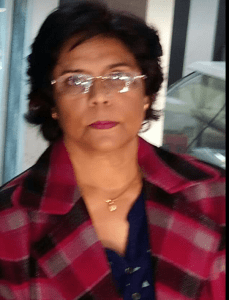
DR. RANJANA SHARAN SINHA is a former professor in English at Shree Binzani City College, Nagpur, Maharashtra (India) and is well- known poet, author and literary critic. Dr. Sinha’s PhD thesis was on ” Sri Aurobindo and the Epic tradition”. She is a recognised voice in Indian Poetry in English and has received an accolade from the former President of India A.P.J. Abdul Kalam for her poem “ Mother Nature”.
Dr. Shinha’s poems, short stories, articles and research papers published in reputed dailies, magazines, e-zines and archives at national and international levels.Her poems have found place in prestigious Sahitya Akademi’s journal lndian Literature and international anthogies.Authored and published 06 books in different genres and 50 research papers.The books are:1.Spring Zone (Collection of Poems and Haiku); 2. Midnight Sun ( Collection of Short Stories); 3. Nature in the Poetry of William Wordsworth and Sumitra Nandan Pant ( Criticism); 4. Feminism: Times and Tides ( Historiographical and theoretical commentary on Feminism covering eleven chapters) 5. Different Dimensions (Compilation of Research Papers) 6. Scents and Shadows ( Collection of Poems) 7. Rhymes for Children ( Collection of rhymes- to be published).Completed UGC-sponsored MRP on comparative literature.
Dr. Shinha has received awards for her outstanding contributions to literature: Best Poet Award by Poets International, Bangalore; Rashtriya Pratibha Samman by Akhil Bhartiya Sahitya Sangam,Udaipur; Best Citizens of lndia by lnternational Publishing House, New Delhi; T.G.Deshmukh Best Teacher Award by Nagpur Shikshan Mandal, Nagpur; Brij Sahityamani Samman by Brajlok Sahitya-Kala-Sanskriti Academy, Agra; Hindi Bhasha Bhushan by Shri Govind Hindi Seva Samiti, Muradabad; Chitransh Kul Bhaskar Samman, Bilaspur(CG); Felicitated at lnternational Poetry Festival, Guntur.Featured poet of Pentasi B World Friendship Poetry 2019.
She is associated with a number of literary organisations and Poetry groups.Presented papers in many national and international seminars and conferences.Research Supervisor,RTM Nagpur University.
DR. APRILIA ZANKis a lecturer for Creative Writing and Translation Theory from Germany. She received her PhD degree in Literature and Psycholinguistics for her thesis THE WORD IN THE WORDLiterary Text Reception and Linguistic Relativity, at the Ludwig Maximilian University of Munich, where she started her academic career as a lecturer. She is also a poet, a translator and the editor of two anthologies: the English–German anthology poetry tREnD Eine englisch-deutsche Anthologie zeitgenössischer Lyrik, LIT Verlag, Germany, 2010, and the anthology POETS IN PERSON at the Glassblower (Indigo Dreams Publishing, UK, 2014).
Aprilia writes verse in English and German, and was awarded a prize at the “Vera Piller” Poetry Contest in Zurich. Her poetry collection, TERMINUS ARCADIA, was 2nd Place Winner at the Twowolvz Press Poetry Chapbook Contest 2013. BAREFOOT TO ARCADIA, her bilingual collection of poems translated in Telugu by the eminent Indian poet and translator Dr. L. S. R. Prasad. was launched in 2018 in Hyderabad, India.
Aprilia has received wide recognition in both western and eastern countries for her merits and achievements. She is active in many literary and artistic groups, a frequent judge in poetry and photography competitions, and a member of the editorial boards of advisors of prestigious literary platforms such as Our Poetry Archive (OPA), Sahitya Anand Literary Journal and Athena, Journal on Humanities and Social Sciences. In 2018, she was awarded the title “Dr. Aprilia Zank – Germany Beat Poet Laureate”, by the National Beat Poetry Foundation (USA).
Aprilia is also a passionate photographer. To her, photography means the attempt to get a new insight into the essence of things. She has organised many photography exhibitions at the Ludwig Maximilian University and other cultural centres in Munich. Many of her images are prize winners and have been selected for poetry book covers.
Poet and writer, I was once columnist and associate editor of a regional employment publication. I currently run this site, The Poet by Day, an information hub for poets and writers. I am the managing editor of The BeZine published by The Bardo Group Beguines (originally The Bardo Group), a virtual arts collective I founded. I am a weekly contributor to Beguine Again, a site showcasing spiritual writers. My work is featured in a variety of publications and on sites, including: Levure littéraure, Ramingo’s Porch, Vita Brevis Literature,Compass Rose, Connotation Press, The Bar None Group, Salamander Cove, Second Light, I Am Not a Silent Poet, Meta / Phor(e) /Play, and California Woman. My poetry was recently read byNorthern California actor Richard Lingua for Poetry Woodshed, Belfast Community Radio. I was featured in a lengthy interview on the Creative Nexus Radio Show where I was dubbed “Poetry Champion.”
“What if our religion was each other. If our practice was our life. If prayer, our words. What if the temple was the Earth. If forests were our church. If holy water–the rivers, lakes, and ocean. What if meditation was our relationships. If the teacher was life. If wisdom was self-knowledge. If love was the center of our being.” Ganga White, teacher and exponent of Yoga and founder of White Lotus, a Yoga center and retreat house in Santa Barbara, CA
“Every pair of eyes facing you has probably experienced something you could not endure.” Lucille Clifton
Thank you for sharing your love of words. Comments will appear after moderation.

 TWO CATS


 Poet and writer, I was once columnist and associate editor of a regional employment publication. I currently run this site, The Poet by Day, an information hub for poets and writers. I am the managing editor of The BeZine published by The Bardo Group Beguines (originally The Bardo Group), a virtual arts collective I founded. I am a weekly contributor to Beguine Again, a site showcasing spiritual writers. My work is featured in a variety of publications and on sites, including: Levure littéraure, Ramingo’s Porch, Vita Brevis Literature,Compass Rose, Connotation Press, The Bar None Group, Salamander Cove, Second Light, I Am Not a Silent Poet, Meta / Phor(e) /Play, and California Woman. My poetry was recently read by Northern California actor Richard Lingua for Poetry Woodshed, Belfast Community Radio. I was featured in a lengthy interview on the Creative Nexus Radio Show where I was dubbed “Poetry Champion.”



 ANJUM WASIM DAR (


 Poet and writer, I was once columnist and associate editor of a regional employment publication. I currently run this site, The Poet by Day, an information hub for poets and writers. I am the managing editor of The BeZine published by The Bardo Group Beguines (originally The Bardo Group), a virtual arts collective I founded. I am a weekly contributor to

 DR. RANJANA SHARAN SINHA is a former professor in English at Shree Binzani City College, Nagpur, Maharashtra (India) and is well- known poet, author and literary critic. Dr. Sinha’s PhD thesis was on ” Sri Aurobindo and the Epic tradition”. She is a recognised voice in Indian Poetry in English and has received an accolade from the former President of India A.P.J. Abdul Kalam for her poem “ Mother Nature”.
 is a lecturer for Creative Writing and Translation Theory from Germany. She
 Jamie Dedes' THE POET BY DAY Webzine