Page 26 of 91

AN INTERVIEW WITH POET LINDA E. CHOWN & A SAMPLER OF HER POETRY, PART 1

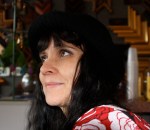
“The word “palimpsest” helps to describe the trajectory of my poetry. I grew up as a pianist, practicing five hours a day—Haydn, Mozart, Bach. I played in recitals, long pieces of music I then memorized by heart. Music gave me a sense of both sequence and depth, the combined sense of which has never gone away.” Linda E. Chown


INTERVIEW

JAMIE: I know you’ve been writing poetry for most of your life. How has your writing evolved?

LINDA:  Initially, I wrote poetry feeling and being rather locked in, in the confines of McCarthyism and terrible asthma. These poems were outcries, full of a sense of being an outsider and a non-success. This first stage of my poetry was full of words, big words sometimes, as I was reading a lot of Faulkner at a young age. And I think my poems were without much nominal direction.

A second stage took place as I went to SFSU and got a degree in Creative Writing. Then, I worked intimately with and heard truly great poets who encouraged me to write spare poems, to take off the loud pedals of my poetry piano. I wrote at this time very lean poetry, often of minute changes in the physical world, of bird calls, of colors blending. Sometimes, I also wrote at this time much longer narrative poems presenting moments of meeting, losing or finding. Then, there was a long time I lived and taught in Spain and the poetry stopped for some years, also when I went to get my Ph.D.

Now, in this third phase, I’m writing of the unforgettable, the personally traumatic, of artists in poems I call “intrications,” I find myself able and ready to write of traumas. I think my poetry has become freer and truer. Not now attempting to use strong fine words, but to allow language to match and measure the person I’ve become and am becoming. Also, now I write without immediate readers. That fact alone gives me a kind of freedom I didn’t have before when people “made suggestions.” My poems today draw upon the first period of Faulkneresque big word poems and the spare lean writing of my creative writing days. It’s as though I can now write of anything in a form which has more hybrid, mingling poetic terseness and prose expansiveness within a guiding imagery.

JAMIE:  What were your original inspirations and who or what inspires you now?

First, I was affected by the Holocaust and its pictures of the opening of the Camps. Since I was mostly in bed at that time, I was dramatically changed by seeing this ghastly suffering objectified. Seeing the thinning bodies and expressionless faces. And the stripes in the stillness. Then Albert Camus’s The Stranger brought the world in my focus: I’ll never forget how Meursault wrote at the end, before being hung, about “resigning himself to the benign indifference of the universe.” I did not yet totally understand the kind of social repression Meurseult lived under, its deadening proprieties. I have always resisted imposed proprieties. I was enormously impressed by Camus as a writer and as a fighter, by his argument with Sartre over what was important.

Later at SFSU, I found Jack Gilbert’s writing to be enormously profound and compact. The great Samuel Johnson influenced me to mind myself, to take myself in hand. Linda Gregg’s poetry is beautifully simple and calls to me from everywhere. Her poems are like dense, language-smitten miracles.

Having worked at SFSU’s Poetry Center, I met Robert Creeley and was extremely impressed by his writing and the utopian spirit of Black Mountain College. Now the passionate simplicity of Dylan Thomas, as in “Fern Hill,” slides me into a happiness. I love Gerald Manley Hopkins and John Donne for their enormous reach and power of generalization, all the while growing in images. Poets who can draw together the terrible horror of an actual event and the beauty of a reflective mind captivate me.

Wisława Szymborska’s sense of mystery intrigues me and draws me to her. She said,” Poets, if they are genuine, must … keep repeating ‘I don’t know.’” Now I like a poetry which does not pretend to know but which charges ahead into mystery, into politics, love, parenting, learning with great curiosity and the power of imagery fresh. I don’t like poems of words, of mechanical play.

JAMIE: Why is poetry important?

LINDA: Poetry refreshes who we are and opens our eyes. It is a second sight on all that we’ve known and done. It penetrates into the invisible world we don’t speak of often and thus can bring us together. I heard many of the best poets reading in San Francisco and London. I was lucky enough to hear Voznesensky. Once, he said “metaphor is the motor of form.” Tomas Tranströmer, a genius of internal life and artistic form, wrote: “We look almost happy out in the sun, while we bleed to death from wounds we don’t know about.’ Poetry is the biggest surprise. It can be our double, echo, enhance our solitudes and tell us how the world is in its mysterious questioning ways. Poetry is a beautiful agent of radicalism in all ways.


POETRY SAMPLER

Part Payment

To Don

who came to see me reading poetry at the I-Thou Coffee House

and whom I visited later in a VA hospital


Compact, with wiry bones, you had the face

of a near criminal except for the sweet doe’s

eyes that would sparkle and lust.

You loved motorcycles and speed and solitude.

A man of incompleted skills, you were my

first lover in a dank drunken room

where I performed with such aplomb

you never knew it was a cherry

we so casually took together.

In the dark, I asked just what it meant

to have a “heart-on” and you laughed,

slapping my behind. Short-lived lovers,

when I had my fill, we drifted off

into others, without our moment of pain

or regret.


You grew enthusiasm as old ladies tend

their orchids: printing, Cuba, phoney ID’s

used to acquire tons of new TV sets to sell,

carrying big-time dope across the border

for small-time profits from other men.

These fruits were short-lived, too.

like brushing skin in the dark.

Somehow that does’s sense of honor in your eyes

kept you blinded to the way life juggles

fixed points and unambitious men.

Dead end street blues got you before the police

took both you and the haul

at some barren Texas border town.


Too clean to squeal on the commercial

zeals of your well-fed friends up north

one thing led to another as before—

handcuffs to a narrow cell in Leaven-

worth and bells and bars and guards

spare sunlight came about as often as Christmas

and the flowers of your hope withered

in unceasing and unfilled

promises of future parole.


You thoroughly marginal man,

to think our skins fit once

and I don’t know how you signed your name

or how you approached your mornings.

How was it, then, to get deathly sick in the glands

alone, to be blasted with mustard gas

and to watch your own physique shrink,

lessen, until your joints weakened

and took you forever to bed, leaving

a gaunt man’s face on a child’s thin bones,

to walk into death at 32 in a military bed

where your listless legs dangled

without reaching the slippers on the floor

and your neck looked chicken-scrawny,

bony and grotesque?


Perhaps, hombre, it was your crowning

success, your way to elude all the many

buyers of your exceptional loneliness,

that terrible disintegration proving

you did, in fact, exist, but

you died, doe-eyed, as you lived, adrift

in the shadows, never really being

missed.

© 2018, Linda Chown, All rights reserved


A Man Who Laughed in the Dark at Jackie Gleason

Daddy, this one’s for you,
whimsical father marooned
in a sea of women.
You appear by heart-light
in the sheer pores of feeling.
You appear lean and indelible
stretched out at life like that from within.
Your blue eyes raging truth at the sky.

How we snickered like fools at you.
At your cane’s tap-tap clattering.
At your soundless chokings on food

in mid-afternoon deluxe restaurants.

Your eyes gasping about for help.

When Schatzki’s ring kidnapped your throat.

How you got fixed sometimes
in a Victorian long-suffering,
fixed to pretend, to smile tolerant
in an eviscerating niceness.
Long you. Long suffering.

Badged in a dark-grey suit
pitched against the sky here
on a bare bridge in Grand Rapids.
Inside feeling burbled strong,
strong enough to burn the blue clamor
of your eyes into concrete pillars.

To shatter the still airs
and countermand finally

a long ingrown stillness:

To rage that truth of yours at the sky—
shedding passionate heart-light out

about us everywhere.

© 2018, Linda E Chown, All rights reserved

PART II CONTINUES TOMORROW WITH MORE OF LINDA’S POEMS. STAY TUNED …


LInda E. Chown

LINDA E. CHOWN grew up in Berkeley, Ca. in the days of action. Civil Rights arrests at Sheraton Palace and Auto Row.  BA UC Berkeley Intellectual History; MA Creative Writing SFSU; PHd Comparative Literature University of Washington. Four books of poetry. Many poems published on line at Numero Cinq, Empty Mirror, The Bezine, Dura, Poet Head and others. Many articles on Oliver Sachs, Doris Lessing, Virginia Woolf, and many others. Twenty years in Spain with friends who lived through the worst of Franco. She was in Spain (Granada, Conil and Cádiz) during Franco’s rule, there the day of his death when people took to the streets in celebration. Interviewed nine major Spanish Women Novelists, including Ana María Matute and Carmen Laforet and Carmen Martín Gaite.


ABOUT

Testimonials

Disclosure

Facebook

Twitter

Poet and writer, I was once columnist and associate editor of a regional employment publication. I currently run this site, The Poet by Day, an information hub for poets and writers. I am the managing editor of The BeZine published by The Bardo Group Beguines (originally The Bardo Group), a virtual arts collective I founded.  I am a weekly contributor to Beguine Again, a site showcasing spiritual writers. My work is featured in a variety of publications and on sites, including: Levure littéraure, Ramingo’s PorchVita Brevis Literature,Compass Rose, Connotation PressThe Bar None GroupSalamander CoveSecond LightI Am Not a Silent PoetMeta / Phor(e) /Play, and California Woman. My poetry was recently read by Northern California actor Richard Lingua for Poetry Woodshed, Belfast Community Radio. I was featured in a lengthy interview on the Creative Nexus Radio Show where I was dubbed “Poetry Champion.”


 The BeZine: Waging the Peace, An Interfaith Exploration featuring Fr. Daniel Sormani, Rev. Benjamin Meyers, and the Venerable Bhikkhu Bodhi among others

“What if our religion was each other. If our practice was our life. If prayer, our words. What if the temple was the Earth. If forests were our church. If holy water–the rivers, lakes, and ocean. What if meditation was our relationships. If the teacher was life. If wisdom was self-knowledge. If love was the center of our being.” Ganga White, teacher and exponent of Yoga and founder of White Lotus, a Yoga center and retreat house in Santa Barbara, CA

“Every pair of eyes facing you has probably experienced something you could not endure.” Lucille Clifton

ARE YOU INTERESTED IN ATTENDING A 100,000 POETS FOR CHANGE WORLD CONFERENCE IN SALERNO, ITALY?

“Would you be interested in going to Salerno, Italy for a 100 Thousand Poets for Change World Conference if we held another gathering at the end of May in 2020? 4 days, workshops, party, reception, tours, poetry readings, tour Pompeii, Amalfi boat cruise…” Michael Rothenberg, 100,000 Poets for Change (100TPC) cofounder


In June of 2015, poets and other artists from all over the globe gathered in Salerno, Italy for their first 100,000 Poets for Change (100TPC) World Conference organized by 100TPC Cofounders Michael Rothenberg and Terri Carrión.  Michael is putting out feelers to see how much interest there would be in a another gathering to be held in 2020.  If this appeals to you, you can connect with Michael Rothenberg on Facebook HERE. Honestly, if I were able to travel, I’d be there faster than that fabled New York minute.

In 2015, I asked Michael Dickel (Meta/ Phor(e) /Play) who attended the first conference to pull together a report for The BeZine, which he graciously and gracefully did and has also given his permission for it to be republished here today.  I think it might help you get a better idea of what to expect. His report is below the following info on Michael Rothenberg, Terri Carrión, and 100TPC.

Photo courtesy of Giaros under CC BY-SA 3.0 license.


c Michael Rothenberg, Big Bridge Publishing

Michael Rothenberg is an American poet, songwriter, editor, and active environmentalist. Born inMiami Beach, Florida, Rothenberg received his Bachelor of Arts in English at the University of North Carolina at Chapel Hill. Afterward, he moved to California in 1976, where he began “Shelldance Orchid Gardens”, an orchid and bromeliad nursery. In 2016, Rothenberg moved to Tallahassee, Florida. In 1993 he received his MA in Poetics at New College of California. In 1989, Rothenberg and artist Nancy Davis began Big Bridge Press, a fine print literary press, publishing works by Jim Harrison, Joanne Kyger, Allen Ginsberg, Philip Whalen and others. Rothenberg is editor of Big Bridge, a webzine of poetry. Rothenberg is also co-editor and co-founder of Jack Magazine.

Terri Carrion, Big Bridge Publishing

Terri Carrión earned her MFA at Florida International University in Miami, where she taught Freshman English and Creative Writing, edited and designed the graduate literary magazine Gulfstream, taught poetry to High School docents at the Museum of Contemporary Art in North Miami and started a reading series at the local Luna Star Café. In her final semester at FIU, she was Program Director for the Study Abroad Program, Creative Writing in Dublin, Ireland.poetry, fiction, non-fiction and photography has been published in many print magazines as well as online, including The Cream City Review, Hanging Loose, Pearl, Penumbra, Exquisite Corpse, Mangrove, Kick Ass Review, Exquisite Corpse, Jack, Mipoesia, Dead Drunk Dublin, and Physik Garden among others, including the recent anthology, Continent of Light. Her chapbook “Lazy Tongue” was published by D Press in the summer of 2007. A collaborative poem with Michael Rothenberg, “Cartographic Anomaly” was published in the anthology, Saints of Hysteria, A Half-Century of Collaborative American Poetry. Her most recent project is a collaboration with F.R Lavandeira and Loreto Riveiro on a trilingual Galician Anthology, (from Galician to Spanish to English)

“100 Thousand Poets for Change, or 100TPC, is an international grassroots educational organization focusing on the arts, especially poetry, music, and the literary arts. It was founded in 2011 by Michael Rothenberg and Terri Carrion, and focuses on a worldwide event each September.” Wikipedia MORE


MICHAEL DICKEL’S REPORT ON THE 2015 CONFERENCE

Salerno, il mio amore

100TPC World Conference Banner
Santa Sofia Complex, Salerno, Italy
Inside the Santa Sofia Complex

June 3, 2015, the afternoon after I arrived in Salerno, Italy, I found my way up to the Santa Sofia Complex, an old church on a square with a fountain.The first 100-Thousand Poets for Change (100TPC) World Conference would begin with an opening reception in the evening. In the complex, I met Terri Carrion, one of the co-founders of 100TPC and co-organizer of the conference. She told me that her partner, Michael Rothenberg, was around the corner at a cafe meeting one of the writers who had just arrived from Macedonia.

Poets gathered at tables in a cafe, Salerno, Italy, 100TPC World Conference

After helping Terri and Valeriano Forté, a Salerno poet and 100TPC organizer, assemble some tables in our meeting room, I wandered down to the cafe. Several poets gathered at tables in excited conversation. Michael was with Mitko Gogov, the poet from Macedonia. Others were from the U.S., Mexico, Hungary, Germany (via the U.S. and Rome), Greece, Malaysia, and France. And this was just the beginning. All of the people at the cafe then I now count among new-found friends, along with many more that I met during the following week.

Aqueduct Salerno, Italy
Aqueduct
Salerno, Italy

Imagine, if you can, more than 80 poets from all over the world—every continent, 33 countries. Imagine poets from every generation, spoken-word artists, poets with books or no book, all come together to share the spirit of poet-activists, as 100TPC organizers. Now imagine us all talking about poetry, about arts and activism, women’s issues, oral versus print traditions, and organizing—with interpreters translating into Italian and English. That’s how our four conference days were (mostly) spent.

Alfonso Gatto Poem Detail from mural in Salerno
Alfonso Gatto Poem
Detail from mural in Salerno

Those were scheduled topics. Another one came up—artists’ international mobility. Several poets had their visa requests turned down by their home countries or Italy. So we rejoiced when three poets from Egypt finally received their visas at the last minute and arrived during the conference. Some who could not make it joined us virtually by posting to social media. For the next conference, we plan to be more prepared for this issue, and to have both advice and, if we can raise them, funds to assist people.

View of Salerno
View of Salerno

The days tended to serious dialogue on sustainability, peace and justice. The evenings (and a couple of afternoons) overflowed with poetry. Each evening, several poets read as “scheduled” readers, usually after dinner. Then came the open mic—which ranged from raucous readings to a quiet “campfire” around candles to a poetry walk from the complex to the sea. The open mic that I co-hosted with a poet living in Malaysia and a Ghanian poet was in a restaurant, the last reading of the conference.

Light and Shadow Along a Salerno Street
Light and Shadow
Along a Salerno Street
Street Art, Salerno
Street Art, Salerno

And what of Salerno? Salerno won our hearts—an old city with a castle overlooking it that once was ruled by a warrior-princess; the home of Alfonso Gatto, an Italian poet whose poetry appears in murals by contemporary artists all over the town via the Alfonso Gatto Foundation (a sponsor of the conference); a town nestled between mountains of alleyways, stone walls, beautiful squares and the sea; a song of bells, sea gulls, swallows; a haven for street artists and poets.

Arch and Tree Salerno, Italy
Arch and Tree
Salerno, Italy

The night following the end of the conference, many of us still in Salerno took over most of a small restaurant around the corner from the Santa Sofia Complex. Not wanting to let go of our transformative week of amazing global poetry, we began an impromptu reading, some reading from books of others, some reading our own work. A couple from the town, not part of our conference, sat at one of the tables listening, and then the man asked if he might read some of his work in Neapolitan. He recited his work, then line by line he read the Italian with someone translating into English. Poets attract poets.

So, in two years, we plan to return. Writer-artist-activists reading this, perhaps you’d like to join us?

Looking out the door Santa Sofia Complex
Looking out the door
Santa Sofia Complex

– Michael Dickel

© 2015, article and photographs, Michael Dickel, All rights reserved


Michael Dickel (c) 2018, Photo credit Zaki Qutteineh

MICHAEL DICKEL a poet, fiction writer, and photographer, has taught at various colleges and universities in Israel and the United States. Dickel’s writing, art, and photographs appear in print and online. His poetry has won international awards and been translated into several languages. His chapbook, Breakfast at the End of Capitalism came out from Locofo Chaps in 2017. Is a Rose Press released his most recent full-length book (flash fiction), The Palm Reading after The Toad’s Garden, in 2016. Previous books: War Surrounds Us, Midwest / Mid-East, and The World Behind It, Chaos… He co-edited Voices Israel Volume 36(2010). He was managing editor for arc-23 and arc-24. With producer / director David Fisher, he received an NEH grant to write a film script about Yiddish theatre. He is the former chair of the Israel Association of Writers in English. Meta/ Phor(e) /Play is Michael’s blogZine. Michael on Social Media: Twitter| FaceBook Page | Instagram | Academia


ABOUT

Testimonials

Disclosure

Facebook

Twitter

Poet and writer, I was once columnist and associate editor of a regional employment publication. I currently run this site, The Poet by Day, an information hub for poets and writers. I am the managing editor of The BeZine published by The Bardo Group Beguines (originally The Bardo Group), a virtual arts collective I founded.  I am a weekly contributor to Beguine Again, a site showcasing spiritual writers. My work is featured in a variety of publications and on sites, including: Levure littéraure, Ramingo’s PorchVita Brevis Literature,Compass Rose, Connotation PressThe Bar None GroupSalamander CoveSecond LightI Am Not a Silent PoetMeta / Phor(e) /Play, and California Woman. My poetry was recently read by Northern California actor Richard Lingua for Poetry Woodshed, Belfast Community Radio. I was featured in a lengthy interview on the Creative Nexus Radio Show where I was dubbed “Poetry Champion.”


 The BeZine: Waging the Peace, An Interfaith Exploration featuring Fr. Daniel Sormani, Rev. Benjamin Meyers, and the Venerable Bhikkhu Bodhi among others

“What if our religion was each other. If our practice was our life. If prayer, our words. What if the temple was the Earth. If forests were our church. If holy water–the rivers, lakes, and ocean. What if meditation was our relationships. If the teacher was life. If wisdom was self-knowledge. If love was the center of our being.” Ganga White, teacher and exponent of Yoga and founder of White Lotus, a Yoga center and retreat house in Santa Barbara, CA

“Every pair of eyes facing you has probably experienced something you could not endure.” Lucille Clifton

CELEBRATING AMERICAN SHE-POETS (32): Linda Chown, “A Poem of How She Thought It Could Be” and other Poems

“Poems are like dreams: in them you put what you don’t know you know.” Adrienne Rich, Arts of the Possible: Essays and Conversations


A Poem of How She Thought It Could Be

they thought it could be simple

in the beginning there was an in and an out

stiff byways, like zippers where there are too many

as in the names of those writers there

on the desk where they are swimming in paper

(too much paper leeches nubile thought, she thought)


when fish die they say the salt sinks, into a pile

there is a woman here with books she says

she knows their names what they meant

to say with the zippers and all that salt.  Maybe


Simon and Hagar once ate anchovies in a corner

where they thought it could be simple

simply to hold hands maybe to touch and lick the salt

just to suck the taste in, there without the words


like the silent gasp of new pilots at take off

or the pop young birds make in small circles

round and round spring as the air begins to putt

and pulse with Virginia bloom and the world views of  Ellen Glasgow

© 2018, Linda E. Chown

McCarthy’s Girl

On looking how she was. Staring
always, as though there were
depths and hollows to see through
somehow all into. Something to stay with her
little girl hands twisting and then the warts.
She would always try to pull
The world into her fingers.
To play the sounds closer.
She was just oblivious
To her difference.

But behind, they knew her
for the witch they thought they knew she was,
Jude, Commie, sick-to-stick-out little girl,
Pale-wincer-in-the-sun with that heavy coat.
Cassie and Lassie, those twins,
they knew fast just what to do.
lasso a tip of her hanging braid
and soak it slow and silent in the
ink-well behind. Well, she just kept her still.
Her long eyelids shuddering in her quiet.
Little girl on the edges, locked inside in.
No Howdy Doody times, no way to say it.
She just fought to gaze hard to look straight
beyond the puppet land of the 1950s.
She had to come home to hide
behind the tv and the cooking.

All the time life opened up for her
savage saddle markings.

originally published in The BeZine, September 2018

© 2018, Linda E. Chown

Coming Back: Franco not here no more, 1988

I go blind from then I go
here now so into Franco-free light
where I don’t know
how to turn my eyes,
<em>spent scars of second skin</em>,
years of no and fury,
now the clean air breaking in
to be real in this to breathe it
all in and then to die in Madrid.
Tempt it not—I surely do not
Not too. No Franco and his cops
Nor his tiny stamps, unwritten laws
And truncheons at the ready.

I did not come here to die
but to be home here
where I can get lost again free
in a landscape of
words drifting oh words!
Hombre que te pasa
la Republica Zaragoza libertad.

Find the bridge, the path,
to cross over to some-
where the verdict words cannot.
Qué bonitas son
Son las flores
No, not just pretty. Knot not.

When I go blind,
“good I cannot see them”
(as the words once were cords
even to touch their fury)
The pain of sound.
Clackety clack.
Let the air out
of this flat tire.

I’m breaking in
to be real again—
the Guadarrama mountain range
splendid low about the horizon
white-scarred muses
women scarring Fascism.
Late afternoon glory with them in Madrid.
The air so pure it stings to settle.

originally published in The BeZine, September 2018

© 2018, Linda E. Chown

What they said

At the beginning of before.
Here it is: are we in the right
spindle bobbing away?
Are you a fable resting in the sun and wanting?
Tell me how your dreams are.
Tell me what you might mean to yourself in their fury,

Now, skirts forever in a night wind
Yesterday spins yellows around tomorrow
Whatever did your mother tell you about
late at night when you put your book down
on the bed and she came in soundless
with a tight face to sit in the dark with you
while you wheezed and you waited.
Violence in the coal mines.

They always told me
La Pasionaría was brave
no pasarán, she said. With her vision
she was defending Madrid’s mountains
they told me and I heard her when
she spoke with that spike of passion
indomitable: she said no pasarán
and in the foothills there were cheers all dressed in black.

Your father I learned took a gun with him
there at the beginning of before
to protect himself at midnight
on the picket lines in the dark
to protect himself from hit men
who hated his vision out west
in the fog in those long flat parking lots .

Low in his left cheek a muscle quivered
within, at the end of a smile that wasn’t.
He took a gun and she went kitten silent on your bed.
The quiet of her heavy sitting
at the beginning of before
reminds me of an old dream,
her telling you of crossing the street
because of the scar on her skin
because she wanted to hide it from all eyes

Was this a mingled message
to fight with all the passion the rains pour
or to scurry away from feeling?
To hold the front line or to flee into a hole?
Camus who believed in solitude as his struggle
And Aragon whose masses were transcendental
Tell, tell me more please before the end is over.

Isidora Dolores Ibárruri Gómez, aka “La Pasionaria,” a Spanish Republican leader of the Spanish Civil War

originially published in The BeZine, September 2018

© 2018, Linda E. Chown

LInda E. Chown

LINDA E. CHOWN grew up in Berkeley, Ca. in the days of action. Civil Rights arrests at Sheraton Palace and Auto Row.  BA UC Berkeley Intellectual History; MA Creative Writing SFSU; PHd Comparative Literature University of Washington. Four books of poetry. Many poems published on line at Numero Cinq, Empty Mirror, The Bezine, Dura, Poet Head and others. Many articles on Oliver Sachs, Doris Lessing, Virginia Woolf, and many others. Twenty years in Spain with friends who lived through the worst of Franco. I was in Spain (Granada, Conil and Cádiz) during Franco’s rule, there the day of his death when people took to the streets in celebration. Interviewed nine major Spanish Women Novelists, including Ana María Matute and Carmen Laforet and Carmen Martín Gaite.


ABOUT

Testimonials

Disclosure

Facebook

Twitter

Poet and writer, I was once columnist and associate editor of a regional employment publication. I currently run this site, The Poet by Day, an information hub for poets and writers. I am the managing editor of The BeZine published by The Bardo Group Beguines (originally The Bardo Group), a virtual arts collective I founded.  I am a weekly contributor to Beguine Again, a site showcasing spiritual writers. My work is featured in a variety of publications and on sites, including: Levure littéraure, Ramingo’s PorchVita Brevis Literature,Compass Rose, Connotation PressThe Bar None GroupSalamander CoveSecond LightI Am Not a Silent PoetMeta / Phor(e) /Play, and California Woman. My poetry was recently read by Northern California actor Richard Lingua for Poetry Woodshed, Belfast Community Radio. I was featured in a lengthy interview on the Creative Nexus Radio Show where I was dubbed “Poetry Champion.”


 The BeZine: Waging the Peace, An Interfaith Exploration featuring Fr. Daniel Sormani, Rev. Benjamin Meyers, and the Venerable Bhikkhu Bodhi among others

“What if our religion was each other. If our practice was our life. If prayer, our words. What if the temple was the Earth. If forests were our church. If holy water–the rivers, lakes, and ocean. What if meditation was our relationships. If the teacher was life. If wisdom was self-knowledge. If love was the center of our being.” Ganga White, teacher and exponent of Yoga and founder of White Lotus, a Yoga center and retreat house in Santa Barbara, CA

“Every pair of eyes facing you has probably experienced something you could not endure.” Lucille Clifton

ANNIVERSARY OF RAINER MARIE RILKE’S BIRTH; UPDATE ON DECEMBER COMPETITIONS

How can I keep my soul in me, so that
it doesn’t touch your soul? How can I raise
it high enough, past you, to other things?
I would like to shelter it, among remote
lost objects, in some dark and silent place
that doesn’t resonate when your depths resound.
Yet everything that touches us, me and you,
takes us together like a violin’s bow,
which draws *one* voice out of two separate strings.
Upon what instrument are we two spanned?
And what musician holds us in his hand?
Oh sweetest song.


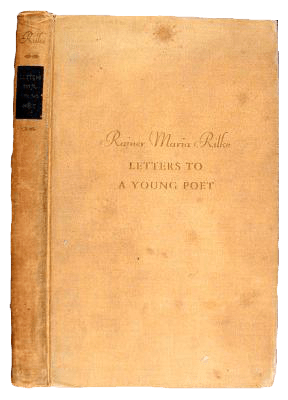
1934 edition / public domain photograph

TODAY IS THE ANNIVERSARY OF THE BIRTH OF RAINER MARIA RILKE Rainer Maria Rilke, poet and novelist. “He is ‘widely recognized as one of the most lyrically intense German-language poets’. He wrote both verse and highly lyrical prose. Several critics have described Rilke’s work as inherently “mystical”. His writings include one novel, several collections of poetry and several volumes of correspondence in which he invokes haunting images that focus on the difficulty of communion with the ineffable in an age of disbelief, solitude and profound anxiety. These deeply existential themes tend to position him as a transitional figure between the traditional and the modernist writers.

“Rilke travelled extensively throughout Europe (including Russia, Spain, Germany, France and Italy), and in his later years settled in Switzerland—settings that were key to the genesis and inspiration for many of his poems. While Rilke is most known for his contributions to German literature, over 400 poems were originally written in French and dedicated to the canton of Valais in Switzerland. Among English-language readers, his best-known works include the poetry collections Duino Elegies (Duineser Elegien) and Sonnets to Orpheus (Die Sonette an Orpheus), the semi-autobiographical novel The Notebooks of Malte Laurids Brigge (Die Aufzeichnungen des Malte Laurids Brigge), and a collection of ten letters that was published after his death under the title Letters to a Young Poet (Briefe an einen jungen Dichter). In the later 20th century, his work found new audiences through use by New Age theologians and self-help authors]and frequent quotations by television programs, books and motion pictures. In the United States, Rilke remains among the more popular, best-selling poets.” MORE Wikipedia


COMPETITIONS UPDATES:

MASTERS REVIEW: List of thirteen competitions that are open this month HERE.

GLIMMER TRAIN: Deadline for “Family Matters” contest – Glimmer Train’s last contest – is January 2, 2019. Details HERE.

WORTHY READ:

Does Great Writing Require Solitude?, Regan Penaluna, Guernica


ABOUT

Testimonials

Disclosure

Facebook

Twitter

Poet and writer, I was once columnist and associate editor of a regional employment publication. I currently run this site, The Poet by Day, an information hub for poets and writers. I am the managing editor of The BeZine published by The Bardo Group Beguines (originally The Bardo Group), a virtual arts collective I founded.  I am a weekly contributor to Beguine Again, a site showcasing spiritual writers. My work is featured in a variety of publications and on sites, including: Levure littéraure, Ramingo’s PorchVita Brevis Literature,Compass Rose, Connotation PressThe Bar None GroupSalamander CoveSecond LightI Am Not a Silent PoetMeta / Phor(e) /Play, and California Woman. My poetry was recently read by Northern California actor Richard Lingua for Poetry Woodshed, Belfast Community Radio. I was featured in a lengthy interview on the Creative Nexus Radio Show where I was dubbed “Poetry Champion.”


 The BeZine: Waging the Peace, An Interfaith Exploration featuring Fr. Daniel Sormani, Rev. Benjamin Meyers, and the Venerable Bhikkhu Bodhi among others

“What if our religion was each other. If our practice was our life. If prayer, our words. What if the temple was the Earth. If forests were our church. If holy water–the rivers, lakes, and ocean. What if meditation was our relationships. If the teacher was life. If wisdom was self-knowledge. If love was the center of our being.” Ganga White, teacher and exponent of Yoga and founder of White Lotus, a Yoga center and retreat house in Santa Barbara, CA

“Every pair of eyes facing you has probably experienced something you could not endure.” Lucille Clifton