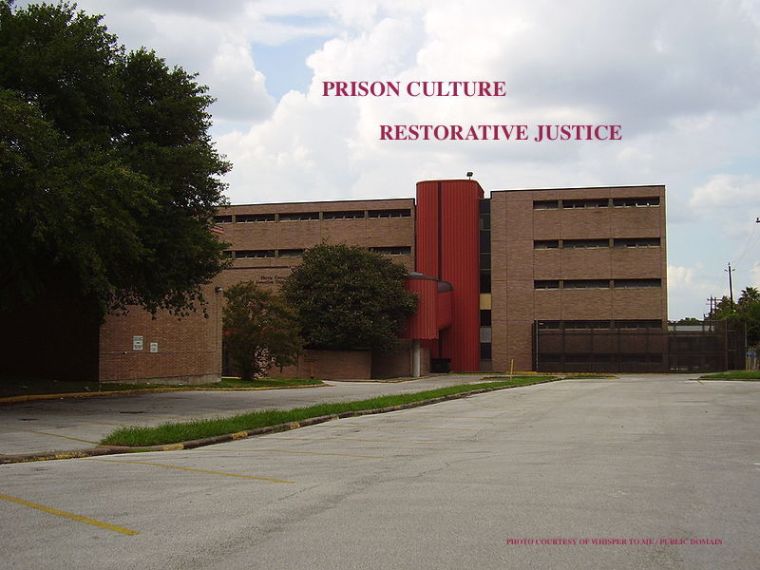
This month’s publication focuses on Restorative Justice. This is a topic that is dear to me. I am the Director of the Youth Chaplaincy Coalition. I have been working with incarcerated folks and those touched by incarceration since 2003. I have seen the ripples of harm that have come. There is harm to the victim, of course. But there is also harm to the person who committed the harmful act, harm to their families, and harm to the communities that encircle all of these people.
Restorative Justice is an en vogue term. Everyone wants it but we don’t know much about how to do it. Most of us look backwards at the ancient ways of first peoples such as the Māori people of New Zealand or the Tagish and Tlingit First Nation people of the Yukon. We lift their practices and bring it forward into a defined court case.
This somewhat misses the point.
The circling process that the first peoples used far pre-dates the term restorative justice. At the same time, restorative justice has become a term to be used by the justice system. And so we create another circling process that is set aside for the courts, jails, and prisons to use.
Circling or Peacemaking Circles, the process given to us by the ancients, is to be used everywhere and with anything: healing, sentencing, discernment. And it involves the entire community. The entire circle of ripples affected by an act. It is a big process. And that’s why we relegate it to the justice system.
Because if we don’t relegate it to the work of the justice system, that means we will have to change and do better. The first principle of the circle: You can only change yourself. As long as we make restorative justice the property of the courts, we don’t have to change. We don’t have to be more welcoming, giving, or inclusive. We don’t have to mentor, feed the hungry, clothe the naked. But I have news! Great news of good tidings! Restorative justice, Peacemaking Circles, is, as the ancients say, the wisdom of the universe. It belongs to no one person and is there for all for the healing and transformation—not of the world, but of each one of us.
This issue about Restorative Justice and new forays into restoration is explored by our core team and guest writers. Each brings their own wisdom to the topic.
Writing on aspects of justice and restorative justice are: Myself, James Cowles, and Chris Hoke. Justice oriented creative writers are Lisa Ashley, Carolyn O’Connell, Paul Brookes, Rob Cullen, Charles W. Martin, Marieta Maglas, Sonja Benskin Mesher, Paul Brookes, Jamie Dedes and a short stories by Joseph Hesch, Lisa Ashley and Rachel Barton. Gail Stone offers a video that speaks to her faith and hope in restorative justice. I have also offered a moderated discussion that I led regarding zero incarceration for youth. Denise Fletcher teaches us how to put together Comfort Kit Baskets for the incarcerated.
We hope this issue will give you pleasure even as it provokes you. Leave your likes and comments behind. As readers you are as import to the The BeZine project, values and goals as are our contributors. Your commentary is welcome and encourages our writers. As always, we offer the work of emerging, mid-career and polished pros, all talented and all with ideas and ideals worth reading and thinking about.
In the spirit of peace, love (respect) and community and on behalf of The Bardo Group Beguines,
Terri Stewart, Guest Editor
TABLE OF CONTENTS
How to read this issue of THE BEZINE:
Click HERE to read the entire magazine by scrolling, or
You can read each piece individually by clicking the links below.
To learn more about our guests contributors, please link HERE.
Early heads-up: Mark your calendars for the 17th Library of Congress National Book Festival, which is scheduled for Saturday, Sept. 2, at the Washington Convention Center.
Librarian of Congress, Dr. Carla Hayden
Librarian of Congress, Dr. Carla Hayden, announced that the main-stage author presentations will be live-streamed on Facebook. Details on the scheduled authors are presented in the video below, which includes the Washington Post’s book editor, Ron Charles, discussing books, authors, and expectations.
if you are reading from an email subcription, you’ll likely have to link through to this site to view the video.
Livestream: Collections as Data, July 25:: the relevance, accessibility and other benefits of making digital collections available as data and ready for computational analysis. The Library of Congress is hosting a day-long livestreamed event that will feature case-studies and impact stories of applying digital methods to analyzing and sharing collections.
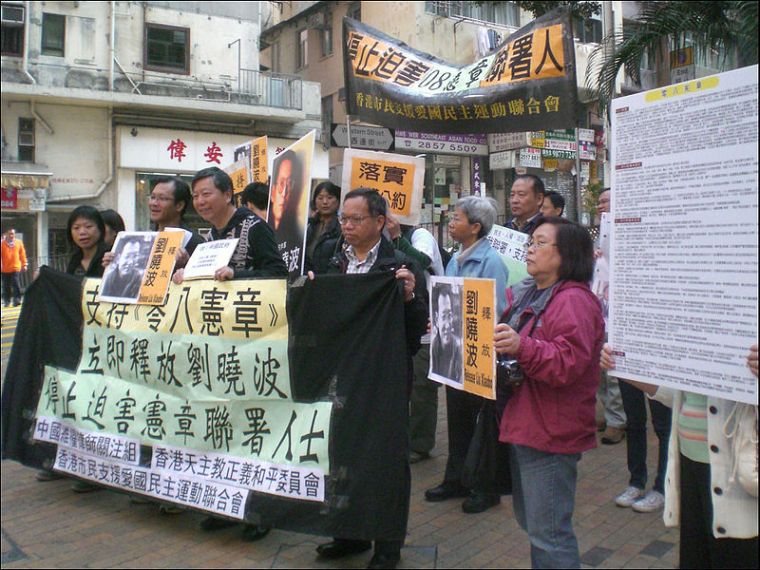
Politial protest in Hong Kong against the detention of Liu Xiaobo, Photo courtesy of Pederez under CC BY-SA 2.0 license
The death of Liu Xiaobo will forever mar China’s reputation under international law and global human rights standards, PEN America said today and called on China to Release Late Literary Icon’s Wife, Liu Xia
Liu Xiaobo, a brilliant writer, literary critic, and pro-democracy activist, was a founding member and former president of the Independent Chinese PEN Center. After his arrest, PEN America honored Liu with the 2009 PEN/Barbara Goldsmith Freedom to Write Award, kicking off an international campaign for his freedom that culminated in his receipt—in absentia—of the 2010 Nobel Peace Prize.
PEN America held a candlelight vigil earlier this evening at the Permanent Mission of the People’s Republic of China to the U.N. to honor Liu Xiaobo’s legacy and protest continued human rights abuses in China, where more than forty writers are currently in jail. This free, public event featured readings from the work of Liu and his wife, Liu Xia, who remains under house arrest in China without charge since her husband’s receipt of the Nobel Prize.
PEN America Executive Director Suzanne Nossel released the following statement today in response to news of Liu Xiaobo’s death today:
“The death of Liu Xiaobo today from a virulent cancer contracted while serving an 11-year prison sentence will forever be a black mark marring China’s reputation under international law and global human rights standards.
“As President of the Independent Chinese PEN Center, Liu Xiaobo was a friend and compatriot for writers all over the world who struggle against tyranny using words as their sole weapon. Liu Xiaobo’s purported crime was no crime at all, but rather a visionary exposition on the potential future of a country he loved.
“For the act of penning seven sentences, China punished Liu Xiaobo with a long prison term, limiting his access to state-of-the-art medical care that might have prevented his illness or improved his prognosis. China’s refusal to honor Liu Xiaobo’s last wish to travel overseas for treatment and its decision to hold him incommunicado during his dying days are a cruel epitaph in the tale of a powerful regime’s determination to crush a brave man who dared challenge a government that sustains its rule through suppression and fear. Liu Xiaobo was not afraid. His courage in life and in death is an inspiration to those who stand for freedom in China and everywhere.
“Our thoughts are with Liu Xiaobo’s family and friends, especially his beloved wife, the poet Liu Xia, who has been kept under house arrest, harassed, and hounded for years without charge. The only thing the Chinese government can do now to expiate its complicity in the death of Liu Xiaobo is to grant his wife, Liu Xia, the freedoms in life that her husband gained only in death. PEN America calls on China to immediately grant Liu Xia freedom of movement, expression, and travel lest their crimes against Liu Xiaobo claim a second victim.”
PEN America stands at the intersection of literature and human rights to protect open expression in the United States and worldwide. The organization champions the freedom to write, recognizing the power of the word to transform the world. Its mission is to unite writers and their allies to celebrate creative expression and defend the liberties that make it possible.
Thank you for sharing your love of words. Comments will appear after moderation.
never saw my father’s living room,
but i imaged it, cut kitty-corner,
end to end, into triangles, like
mom’s grilled-cheese sandwiches,
hope dying on the one side
despair thriving on the other
“There’s only one great evil in the world today. Despair.” Evelyn Waugh, Vile Bodies