Page 263 of 433

Waging the Peace, An Interfaith Exploration


Later today I’ll post the responses from readers to last Wednesday’s writing prompt, which is usual every Tuesday. Meanwhile . . . 

In December 2015 world events led to a spontaneous eleventh hour special section – Waging the Peace –  in The BeZine, which I edit. This seems a propitious moment to bring to the fore once again those ideas, ideals and experiences shared with us by Rabbi Gershon Steinberg-Caudill, Rev. Ben Meyers, Father Daniel Sormani, C.S. Sp., Sophia Ali-Khan, Israeli-American poet Michael Dickel, and the Venerable Bhikkhu Bodhi. Thanks to all of them and to Carla Prater, the assistant director of Buddhist Global Relief for their contributions to this collection and their assistance. I’ve included links to each of the features in table of contents for Waging the Peace. It is below the following introductory remarks.

Rabbi SteinBerg-Caudill (the Interfaith Rabbi) is a teacher who espouses a Jewish Spirituality and Universalist teaching for the future brotherhood of all people. When I contacted him about this effort he reminded me of what surely should be foremost in our minds and hearts:

“The Hebrew word for PEACE – שלום – does not imply a lack of strife. It implies instead WHOLENESS, COMPLETION. If one is in a state of peace, he can still be whole in a time of chaos.”

Rev. Meyers of the Unitarian Universalists of San Mateo also counsels inner peace with his You are the promise … the one … the hope. Rev. Meyers says:

“I understand and often share the ‘urge of urgency’ over the peacefulness of peace. But this I also know: We live at the intersection of action and reflection.”

Father Sormani, a Spiritan priest who has lived and worked in Algeria and Dubai and is now teaching theology at Ateneo de Manila University in the Philippines, asks What Have We Done that People Can Pick-up Weapons and Kill. Father Dan says:

“We have become our own worst enemy. Whenever we separate the world into ‘them’ and ‘us’, whenever we accept blind generalizations and cease to see a unique individual before us, whenever we forget we are all victims of carefully orchestrated deceit and deception for wealth and power, the force of darkness wins. Bullets will never win this struggle, only the heart and mind will.”

Lest you missed Sofia Ali-Khan‘s letter, Dear Non-Muslim Allies, which made the rounds on Facebook and was also picked up by some mainstream media, we’ve included it here.

We’ve also included a video recitation of Tunisian poet Anis Chouchéne‘s profoundly moving poem against racism and fanaticism. Chouchène speaks directly to radical Islam  … but I think you’ll agree that he ultimately speaks to the fear in all of us.

“Peace we keep an eye on/while it packs its bags/to abandon our lands, little by little …”

Chouchène concludes as Father Dan does, that we must be able to see the individual.

Michael Dickel‘s poem Mosquitoes (excerpt from his chapbook, War Surrounds Us – 2015, Is a Rose Press), is featured. The poem starts out with Israelis and Palestinians crossing the artificial lines that divide to offer one another condolences on the deaths of their children.  This is a favored poem of mine, especially so because when I initiated The Bardo Group (now The Bardo Group Beguines) in 2011, I had in mind virtual crossing of borders through the arts. (Our mission statement is HERE.) Michael’s poem demonstrates how we are manipulated by the propaganda machine.

We’ve included a short video presentation on the seven steps to peace developed by peace activist, Rabbi Marc Gopin. Director of the Center for World Religions, Diplomacy and Conflict Resolution (CRDC).

The Venerable Bhikkhu Bodhi is Buddhist monk in the Theravada tradition, an author and teacher. He is the founder of Buddhist Global Relief.  With permission, we offer the 2015 talk he gave at the New Year’s Interfaith Prayer Service, Chuang Yen Monastery. Bhikkhu Bodhi says:

“Real peace is not simply the absence of violent conflict but a state of harmony: harmony between people; harmony between humanity and nature; and harmony within ourselves. Without harmony, the seeds of conflict and violence will always be ready to sprout.

Bhikku Bodhi goes on to analyze the obstacles to achieving world peace, the prerequisites of peace, and the means to realizing these goals.

On behalf of The Bardo Group Beguines and in the spirit of love and community,

Jamie Dedes,
Founding and Managing Editor of The BeZine.


Waging The Peace
An Interfaith Exploration

You are the promise . . . the one . . . the hope, Rev. Ben Meyers

What Have We Done That People Can Pick Up Weapons and Kill?, Fr. Daniel Sormani, C.S.Sp.

Dear Non-Muslim Allies,  Sofia Ali-Khan

Peace Be Upon You, شوشان – سلام عليكم, Anis Chouchène

Mosquitoes, American-Israeli poet, Michael Dickel, Jewish

Peace Steps: One Man’s Journey Into the Heart of His Enemies, Rabbi Mark Gopin

Waging Peace, Venerable Bhikkhu Bodhi, Buddhist teacher

SUNDAY ANNOUNCEMENTS: Calls for Submissions, Contests, Events and Other News and Information

CALLS FOR SUBMISSIONS

Opportunities Knock

THE PEEKING CAT publishes a magazine and annual anthology and offers editorial services. They are always open for submissions to the magazine but the deadline date for the 2017 anthology is August 31.  Appropriate material for consideration: poetry (all forms), nonfiction (up to 1,000 words), artwork and photography. A broad range of subjects are well despite the “cat” in the title. Detailed submissions guidelines are HERENo demographic restrictions.

THE BeZINE submissions for the May 2017 issues (theme: Honesty and Transparency, the Post-truth Era) should be in by May 10th latest.  Publication date is May 15th. Poetry, essays,fiction and creative nonfiction, art and photography, music (videos), and whatever lends itself to online presentation is welcome for consideration. Please check out a few issues first and the Intro./Mission Statement and Submission Guidelines. No demographic restrictions.

HERMENEUTIC CHAOS LITERARY JOURNAL is published six times a year. “We welcome submissions by authors from diverse backgrounds and literary preferences. We admire all forms of experimental, hybrid and avant-garde literature, collaborative writings, visual and graphic outpourings – anything that literature is capable of. Our primary interest lies in works which inspire an active cathartic response, and not a sentimental passivity. To achieve this end, we seek poetry and prose where imagination, symbolism, metaphors, lexical ingenuity and a strong imagery guide reality to examine the creative chaos beyond its straitjacket cliff.” This journal is interested in poetry, fiction and nonfiction. Details HERENo demographic restrictions.

APOGEE JOURNAL features literature and art “that engages with identity politics, incuding but not limited to: race, gender, asexuality, class, ability and intersectional identity.” The journal is published in print biannually and welcomes fiction, nonfiction, poetry and visual art. Details HERENo demographic restrictions.

UP THE STAIRCASE QUARTERLY is an online lit publication featuring poetry, art, interviews and reviews. The deadline for the summer issue (themed AudioVisual) is June 15th. Details HERENo demographic restrictions.

PERMAFROST MAGAZINE, a publication of the University of Alaska, Fairbanks is “Located at 64° 50′ N (198 miles from the Arctic Circle), Permafrost Magazine is the farthest north literary journal for writing and the arts. We’re proud of Permafrost’s thirty-five years as interior Alaska’s foremost literary magazine . . .  Permafrost seeks original voices from all over the world.” The reading period for the print edition is May 1 – November 30. There is a $3 submission fee. Fiction, poetry, hybrid and artwork are welcome. Details HEREThis publication sponsors contests. All are closed now but watch for upcoming.


COMPETITIONS/AWARDS

  • 2040AWARDS PROGRAM is open to minorities – “ethnic authors or those from an ethnic background over the age of 18” – and entries of translations and from the International Community are welcome as well. 2040 is seeks fiction, creative nonfiction, collections, essays.  The grand prize is $1,000. The runner-up award is $500.  There is a $25 reading fee. Details HERE. Deadline is July 7.
  • ELEANOR TAYLOR BLAND CRIME FICTION WRITERS OF COLOR AWARD for 2017 is accepting application through June 15, 2017 this annual awards $1,500 or the winner. Details HERE.
  • WUNDOR POETRY CONTEST, an inaugural contest, is themed “Spring” and the deadline is 31 May 2017. There are entrance fees.  There is no indication of a financial award but there is pubication for the winner.  Details HERE.
  • THE SECOND ANNUAL LOUISE MERIWETHER FIRST BOOK PRIZE is now through July 31 for works by women or nonbinary author of color. The award is $5,000 and publication by Feminist Press. Details HERE.

EVENTS

  • WRITING RESISTANCE: INVESTIGATING/SUBVERTING FORM & NARRATIVE, A Writing Worksop Series of Apogee Journal with the NY Writers Coalition and funding from the Brooklyn Arts Council. “Apogee editors and contributors will lead nine craft based writing and editing workshops. True to our mission of creating accessible and socially engaged programming, this workshop will be affordable, inclusive, and attentive to the ways identity informs reading and writing practices.” The cost is $25 per class. The series started in April.  Remaining classes are: Flash Fiction with Robert Lopez (May 17); What Song Told Me with Stacy Parker Le Melle (May 20); Radicalizing the Personal Essay or Narrative Poem with Lorde and Baldwin at the Helm with JP Howard (May 20).  Workshops are in Brooklyn, NY. Details HERE.
  • SISTERS IN CRIME is a thirty-year-old professional association founded “to promote the ongoing advancement, recognition and professional development of women crime writers. Today the Triangle area (North Carolina) hosts a thirty-year celebration – an Ice Cream Social – for writers, publishers an readers at Page-Walker House, Cary, North Carolina.  Admission is free; tickets for ice cream are $7 for Adults, $5 Ages 4 – 12; children 3 and under are free. Details are HERE at Triangle area chapter’s site.
  • SISTERS IN CRIME list of conferences, events and trade shows scheduled around the country is HERE.
  • EDINBURGH INTERNATIONAL FILM FESTIVAL (open-air cinema) Edinburgh International Film Festival’s hugely popular open-air cinema runs through June 16-June 18 at St. Andrew Square Garden. Details HERE..

NEWS and INFORMATION

The recommended read: On Tyranny: Twenty Lessons from the Twentieth Century by Timothy Snyder. Left, right or center – American or not – it’s a must read.


THE WORDPLAY SHOP: books, tools and supplies for poets, writers and readers


ABOUT THE POET BY DAY

Atttn.: San Mateo ~ STOP THE SEPARATION OF FAMILIES, IMMIGRANT RAPID RESPONSE NEIGHBORHOOD CANVAS organized by Faith in Action

Organized by Faith in Action Bay Area.

The Immigrant Rapid Response hotline is up and running in the San Francisco Bay Area. We now have teams with hundreds of volunteers ready to converge whenever an ICE raid is taking place in our neighborhoods. The teams are trained to witness and record the event and ensure that the rights of immigrants are protected. Now, we need to make sure our neighbors in the immigrant community are aware of the hotline.

Help distribute the rapid response hotline information in UUSM’s own neighborhood. We will meet at UUSM on Saturday and spread out to canvass the neighborhood with posters and cards. For questions, email rapidresponse@faithinactionba.org. Please RSVP HERE.

MEET AT: Unitarian Universalists of San Mateo, 300 E. Santa Inez Avenue, San Mateo, CA 94401 @ 10 a.m. on Saturday, May 6th.

“Pangur Bán” ~ The Gift of a 9th Century Irish Poem Revisited in “The White Cat and the Monk” & “The Secret of the Kells”

The White Cat and the Monk was a 2016 Christmas gift to me from my son and daughter-in-law. It’s a charmingly illustrated retelling of an old Irish poem, Pangur Bán, a lovely gift and a lovely addition to my bookshelves.

I wasn’t familiar with the poem, so the gift inspired – as such gifts are want to do – a few hours of pleasurable reading and research, an effort lightly akin to the endeavors of the anonymous but renown author of the poem. Pangur Bán was written by a 9th Century monk somewhere inside or in the vicinity of Reichenau Abby, which is on Reichenau Island in Lake Constance in the south of Germany.


The page of the Reichenau Primer on which Pangur Bán is written. It is now housed in St. Paul’s Abbey – a Benedictine Abby – in the Lavanttal, a market town in Carinthia, Austria. (public domain photograph)

The poet monk tells of a white cat who shares his work and living space. While the monk single-mindedly finds pleasure in scholarly pursuits, the white cat finds pleasure in single-mindedly chasing mice.

There are many translations of Pangur Bán, notably by W. H. Auden and Seamus Heaney. The most famous translation – which turned out to be my favorite – is by Robin Flowler (1881-1946), an English poet and scholar, a Celticist, Anglo-Saxonist and translator of Gaelic.

The Scholar and His Cat, Pangur Bán

I and Pangur Bán my cat,
‘Tis a like task we are at:
Hunting mice is his delight,
Hunting words I sit all night.

Better far than praise of men
‘Tis to sit with book and pen;
Pangur bears me no ill-will,
He too plies his simple skill.

‘Tis a merry task to see
At our tasks how glad are we,
When at home we sit and find
Entertainment to our mind.

Oftentimes a mouse will stray
In the hero Pangur’s way;
Oftentimes my keen thought set
Takes a meaning in its net.

‘Gainst the wall he sets his eye
Full and fierce and sharp and sly;
‘Gainst the wall of knowledge I
All my little wisdom try.

When a mouse darts from its den,
O how glad is Pangur then!
O what gladness do I prove
When I solve the doubts I love!

So in peace our task we ply,
Pangur Ban, my cat, and I;
In our arts we find our bliss,
I have mine and he has his.

Practice every day has made
Pangur perfect in his trade;
I get wisdom day and night
Turning darkness into light.

-translated from the Gaelic by Robin Flowler


THE SECRET OF THE KELLS

Featuring Pangur Bán, both cat and poem


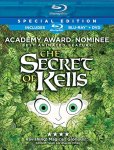
In 2009 the Flatiron Film Company released an animated film, The Secret of Kells, which is inspired by a mix of history, Celtic mythology, magic and fantasy. One of the characters is a white cat, Pangur Bán,  and during the credits Pangur Bán is read in modern Irish.

If you are viewing this by email subscription, you’ll likely have to link through to the site to view this video, the Pangur Bán Song from the film.

The Secret of the Kells is a relief from horrifying news and the overflow of often vapid and violent movie offerings. The pace of the film is relaxed. Unlike a lot of movies, it doesn’t yell at you. It does engage with story and beautiful animation reminiscent of traditional Irish art.

Though the story is a fiction, it is grounded in history: an Ireland besieged by Viking raids and a mythical mystical take on the production and preservation of The Book of Kells, an early illustrated (illuminated) New Testament. The Book of Kells is housed now at Trinity College Library in Dublin. The film incorporates the Irish poetic genre – aisling – developed in Irish poetry of the 17th and 18th centuries and in which Ireland appears in a poet’s dream as a woman – maiden, mother or crone – and bemoans the state of Ireland.


The White Cat and the Monk was written by JoEllen Bogart and illustrated by Sydney Smith. It was short-listed for the Governor General’s Literary Awards, Young People’s Literature (Illustrated Books). It was named New York Times Best Illustrated Children’s Book and listed on Brain Pickings’ Best Children’s Books of 2016.

The Secret of the Kells was nominated for an Oscar and won several other film awards including the Audience Award of the Annecy International Animated Film Festival. It has an overall approval rating of 91% on Rotten Tomatoes where the consensus is “Beautifully drawn and refreshingly calm. The Secret of the Kells harkens back to animation’s gold age …”


Aisling

Pierre-Cécile Puvis de Chavannes: An Aisling, 1883 – Public Domain