Page 335 of 433

CHRISTOPHER HITCHENS: A Good Prodigious Writer, Living Life Honestly, Dying Gracefully
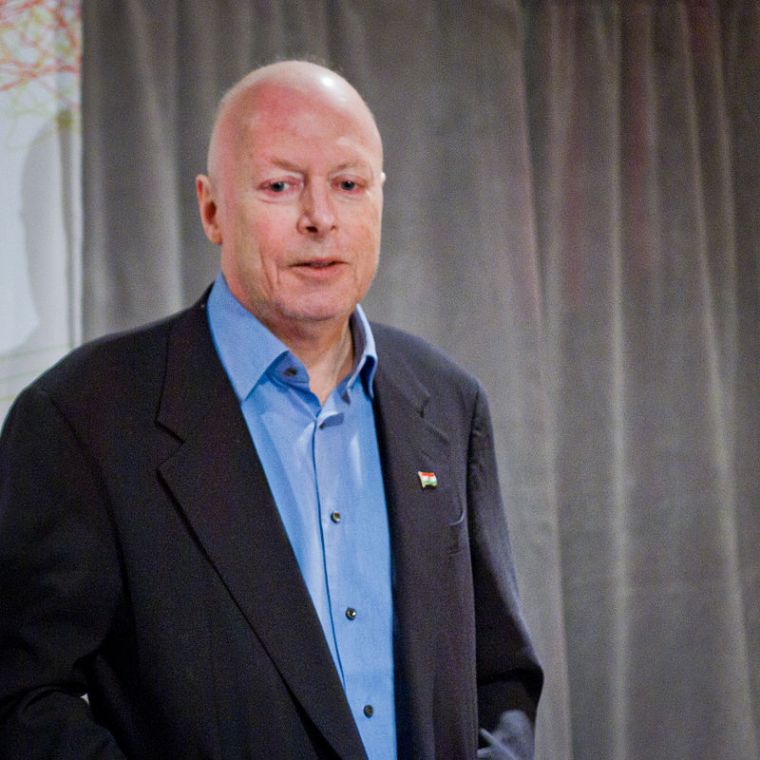
Christopher Hitchens (1949-2011), English-American writer, orator, social and literary critic
Christopher Hitchens (1949-2011), English-American writer, polemicist, social and literary critic

“I am no prophet—and here’s no great matter;
I have seen the moment of my greatness flicker,
And I have seen the eternal Footman hold my coat, and snicker …”
The Love Song of J. Alfred Prufrock, T.S. Eliot

I was reminded once again of Hitch when his name came up in conversation at our last book club meeting on June 26th. CHRISTOPHER “HITCH” HITCHENS died in December 2011 of esophageal cancer. He was sixty-two. Famous or infamous – depending on your view – for his atheism among other things, he was a writer who wrote well and prodigiously, was unapologetic for his views and his lifestyle, and who died gracefully. When faced with death, he made it clear that he hadn’t amended his opinion as expressed in his best-selling book of 2007, God Is Not Great: How Religion Poisons Everything,

His opinions are controversial and debatable and that’s part of what makes him fun. How dull when there are no differences. Life would be an intellectual wasteland. As long as we take our differences to the debate halls (Hitchens was splendid at debate), the op-eds, the magazines/newspapers/blogs and the voting booth and not to the killing fields, it’s okay. When we know who we are, we are not easily shocked or threatened by perspectives and opinions that differ from our own.

I appreciate Hitch’s honesty and acuity. Nonsmoking teetotaler I am, yet I admire the spirit in this – quoted from his New York Times obituary – “He also professed to have no regrets for a lifetime of heavy smoking and drinking. ‘Writing is what’s important to me, and anything that helps me do that…'” He was true to himself right to the end even as he admitted that his lifestyle contributed to his illness.

In his writing and in debates, Hitch did attack our sacred cows. Hitch’s gift was to make us re-examine our dusty old assumptions and the positions we sometimes take for granted, having been spoonfed them since childhood by parents, clergy, teachers and culture.  Indeed, upon examination, there is much that comes up lacking, needing to be abandoned, reformulated or expressed in a more coherent manner.

Perhaps more than anything, I admire the grace with which Christopher Hitchens lived with dying. He did a more principled and dignified job of it than many of us in our faith communities. He was diagnosed in June 2010 and wrote about this journey in his Vanity Fair columns. The “cynical contrarian” had heart, perhaps even a kinder more tolerant and generous heart than many an avowed theist.

I sometimes wish I were suffering in a good cause, or risking my life for the good of others, instead of just being a gravely endangered patient.”

He wrote that the …

Prospect of death makes me sober, objective.”

He pursued his craft right to the end.

‘Cancer victimhood contains a permanent temptation to be self-centered and even solipsistic,’ Hitchens wrote . . .  but his own final labors were anything but: in his last 12 months, he produced for this magazine a piece on U.S.-Pakistani relations in the wake of Osama bin Laden’s death, a portrait of Joan Didion, an essay on the Private Eye retrospective at the Victoria and Albert Museum, a prediction about the future of democracy in Egypt, a meditation on the legacy of progressivism in Wisconsin, and a series of frankgraceful, and exquisitely written essays in which he chronicled the physical and spiritual effects of his disease. At the end, Hitchens was more engaged, relentless, hilarious, observant, and intelligent than just about everyone else—just as he had been for the last four decades.” Vanity Fair

He wrote with excruciating honesty.

Like so many of life’s varieties of experience, the novelty of a diagnosis of malignant cancer has a tendency to wear off. The thing begins to pall, even to become banal. One can become quite used to the specter of the eternal Footman, like some lethal old bore lurking in the hallway at the end of the evening, hoping for the chance to have a word. And I don’t so much object to his holding my coat in that marked manner, as if mutely reminding me that it’s time to be on my way. No, it’s the snickering that gets me down.

“On a much-too-regular basis, the disease serves me up with a teasing special of the day, or a flavor of the month. It might be random sores and ulcers, on the tongue or in the mouth. Or why not a touch of peripheral neuropathy, involving numb and chilly feet? Daily existence becomes a babyish thing, measured out not in Prufrock’s coffee spoons but in tiny doses of nourishment, accompanied by heartening noises from onlookers, or solemn discussions of the operations of the digestive system, conducted with motherly strangers. On the less good days, I feel like that wooden-legged piglet belonging to a sadistically sentimental family that could bear to eat him only a chunk at a time.” Except that cancer isn’t so … considerate.” MORE [Vanity Fair]

Thank you, Hitch, for making us think and rethink.

Thank you, Vanity Fair, for hosting Christopher Hitchens so regularly for us to read.

© 2016, Jamie Dedes All rights reserve; portrait courtesy of Andrew Rusk under CC BY-SA 3.0 license

THE ART of Living Hugely

320px-Jung_1910-crop

585px-Carl_Jung_signature.svg

We must not forget that only a very few people are artists in life, that the art of life is the most distinguished and rarest of all the arts. Who ever succeeded in draining the whole cup with grace? So for many people all too much unlived life remains over— sometimes potentialities which they could never have lived with the best of wills, so that they approach the threshold of old age with unsatisfied demands which inevitably turn their glances backwards.” Carl G. Jung

Through the past several weeks, I have once-again turned my glances backward over the practical space-saving necessity of shedding and shredding some more of the notebooks and files of one small lifetime. I found that quote of Jung’s written on note almost as if from my younger self to my older self. After some forty or so years, I no longer remember from which of his works it was clipped and I left myself no hint. In those days I always trusted my memory as reliable, something I can no longer do.  I’m guessing the quote might have been from his Stages of Life.

The art of life is surely the superior art, but without art – whatever ours is by interest, vocation or avocation – poetry and literature, music, theater, painting or photography – much more of our lives might be “too much unlived” and the glass drained without the hope of any grace. It is our art or arts that help us to savor beauty and to understand – or at the very least sooth – pain and double joy.

Jung said further that “The creative mind plays with the objects it loves.” We come to a specific art as a lover attracted to what appeals most: words, sound, story, vision. Through these gifts of the spirit our lives are enriched and we practice the art of living hugely.

©2016, Jamie Dedes, All rights reserved; Hand-colored photograph of Jung outside Burghölzli in 1910 from the U.S. Library of Congress Commons File and in the U.S. public domain; the signature formatted in vector is by  Screwing and is in the public domain.

CELEBRATING AMERICAN SHE-POETS (21): Alice Walker, on the way to being daffodils

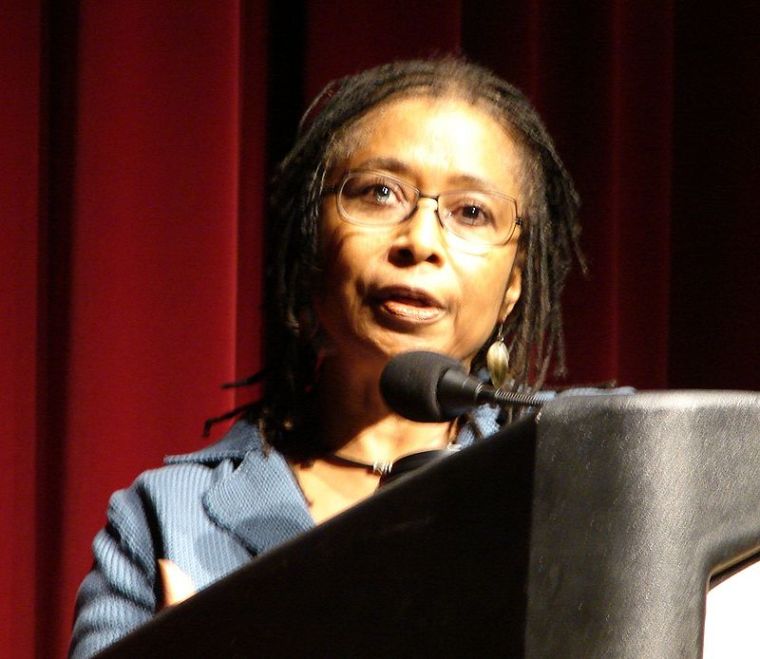
Writer, Poet and Activist, Alice Walker (b. 1944)

Speaking of death
and decay
It hardly matters
Which
Since both are on the
way, maybe –
to being daffodils.

excerpt from Exercises on Themes from Life in Once: Poems (Harcourt Brace Jovanovich, 1968)

This celebration is a rain-drop next to the ocean of ongoing world-wide applause for Alice Walker (Alice Walker’s Garden). Her roots are in Putnam Country, Georgia where her family subsisted financially on earnings from sharecropping, dairy-farming and her mother’s part-time employment as a maid.  Ms. Walker seems to come by her spunk and savvy honestly. When a white plantation owner told her mother that black people had “no need for education,” she replied …

“‘You might have some black children somewhere, but they don’t live in this house. Don’t you ever come around here again talking about how my children don’t need to learn how to read and write.’ Her mother enrolled Alice in first grade when the girl was four years old.”  Evelyn C White in Alice Walker: A Life (W.W. Norton, 2004)

51-dZyRDSyL._SX318_BO1,204,203,200_

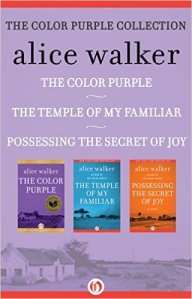
Alice Walker is perhaps most well-known to some for her fiction especially The Color Purple, The Temple of My Familiar and Possessing the Secret of Joy (Open Road Media, 2012 – Kindle edition).  The Color Purple won her the National Book Award and The Pulitzer Prize. It was adapted for theater, both screen and as a musical stage play. The latter won the 2016 Tony Award for Best Revival of a Musical and the 2016 Drama League Award for Outstanding Revival of a Musical. Alice Walker was the first African-American woman to win the Pulitzer for fiction. (Gwendolyn Brooks was the first African-American woman to win it for poetry.)

41I+GqM1XdL._AC_US160_

Once:Poems was Alice Walker’s debut poetry collection, written during a 1965 trip to East Africa and her senior year at Sarah Lawrence College. The book established her as an A-list poet and Muriel Rukeyser (among many others) gave it a thumbs-up saying, “Brief slashing poems – Young, and in the sun.”

In Kampala
the young king
goes often to Church
the young girls here
are
so pious.

excerpt from African Images, Glimpses from a Tiger’s Back in Once:Poems

Her other collections include: Hard Times Require Furious Dancing: New Poems (2013); The World Will Follow Joy: Turning Madness into Flowers (2013); Her Blue Body Everything We Know: earthling Poems 1965-1990 (2004); and Absolute Trust in the Goodness of the Earth: New Poems (2004).

With Gloria Steinem on the Fall 2009 Cover of Ms. magazine

No celebration of Alice Walker’s work would be complete without acknowledging her ceaseless efforts on behalf of the poor and marginalized. She is an advocate for peace and understanding. She was initially inspired by Martin Luther King, Jr. and worked in the civil rights movement and by Howard Zin. She dedicated Once:Poems to Mr. Zin. Wherever people are oppressed in this world, you will find Alice Walker fighting the compassionate fight.

If you are viewing this from an email subscription, you’ll have to link through to the site to view this video of Alice Walker in Palestine in August 2010.

Ms. Walker regularly posts new poetry at her site Alice Walker’s Garden along with opinion pieces and updates on her own work and that of others.  Her Amazon page is HERE.

portrait © Virginia Bolt under CC BY-SA 2.0; Ms. cover © Ms. Magazine under CC BY-SA 2.0.