Page 4 of 7

SOLIDARITY: 100,000 Poets (and Artists/Musicians/Friends) for Change, for Raising the Collective Consciousness

“The opposite of love is not hate, it’s indifference. The opposite of art is not ugliness, it’s indifference. The opposite of faith is not heresy, it’s indifference. And the opposite of life is not death, it’s indifference.” Elie Wiesel


In 2011, The Bardo Group Beguines (The BeZine and Beguine Again) collected poems and other works that addressed the need for, the desire for, and prospective paths toward peace. We were inspired by a global movement that was founded by poets Michael Rothenberg and Terri Carrion called 100,000 Poets for Change.

The following year we connected with that global movement and hosted a virtual 100,000 Poets for Change so that folks from anywhere in the world could participate in this extraordinary event even if they were homebound or if there was no event being hosted in their area. It wasn’t long before drummers, mimes, musicians, artists and clergy joined this global initiative.  Followers and supporters included people who aren’t in the arts but appreciate the power of the arts to raise the collective consciousness and to foster sensible and compassionate action and policy.

SAVE THE DATES

This year The BeZine September issue  (September 15) will be devoted to social justice and on Saturday, September 29, we’ll host 100,000 Poets and Friends for Change on The BeZine site in concert with off-line efforts to be sponsored by communities all over the world.

I hope you’ll join us at the Zine in September.

Perhaps you’ll decide to host an event in your town or region. For details on that connect with Michael Rothenberg on Facebook or sign-up HERE.

Here’s a message Michael Rothenberg and Terri Carrion asked me to post for you earlier today:

“100 Thousand Poets for Change began in 2011. It was an initiative that spread by word of mouth across the globe.

“Poets in nearly 100 countries around the world expressed their outrage at war, ecocide, gender inequality, police brutality and a slew of other issues that were not being addressed. Up to then, poets as a community had been fragmented and silenced by the corporatization of the arts and peer pressure that insisted poetry should not be political, that poetry and art did not matter in changing the world.

“Now, 8 years later, it has been regularly demonstrated that poetry and the rest of the arts are a powerful resource in broadcasting the need for positive change. This could be in a very small part because of the effect of 100 Thousand Poets for Change.

“However, I believe that, mostly, there was a paradigm shift in regard to the need for protest and engagement in the world. Many individuals and organizations came to the realization that silence is complicity.

“Today you can hear voices raised against injustice everywhere. It has become part of the curriculum. But sadly, it seems that these voices are not loud enough or strong enough, that although the poetry community has unified in many ways and pushed forward in expressing opposition to injustice, situations have gotten worse.

“War continues and expands, militarization continues and expands, children are gunned down in schools, neo-nazis and white supremacists are emboldened, gender inequality is still the norm, and at this very moment we are witnessing a country that professes to be the most democratic and freest country in the world, the USA, tearing children out of the arms of their parents and putting them in cages as part of their immigration policy.

“My heart is broken.

“Some days, I feel like disconnecting entirely from the horrifying news. I can hardly stand to hear it any longer. But then there are the poets and artists who keep up the fight, who continue to speak out, the beautiful souls who refuse to be broken, and go on against all odds.

“So I go on.

“September 29 is the next global 100 Thousand Poets for Change Day. I am convinced this is an initiative worth continuing. Poets and artists must continue to rally and bond, connect, create and speak out in unison against the daily horrors. For each other and for our very own sanity, we must continue and grow.

“The 100 Thousand Poets for Change initiative saves me and keeps me focused and sane.

“I invite you to join hundreds, maybe hundreds of thousands, of other poets globally on this day, September 29, to gather and unify. If you can’t organize on September 29, pick any other day in September or October and let me know where and when you will organize.

“I will spread word of your event to the global poetry community for change, and together we can be empowered to re-write the narrative of civilization to a sustainable alternative. There is strength in numbers. Together we can raise our voices for peace.

“We can do this!”

Love, Michael and Terri, 100 Thousand Poets for Change.

The World as I Remember It and 100,000 Poets for Change, 2018


“It is from numberless diverse acts of courage and belief that human history is shaped. Each time a [wo]/man stands up for an ideal, or acts to improve the lot of others, or strikes out against injustice, he sends forth a tiny ripple of hope, and crossing each other from a million different centers of energy and daring, those ripples build a current that can sweep down the mightiest walls of oppression and resistance.” ~ Robert F. Kennedy South Africa, 1966


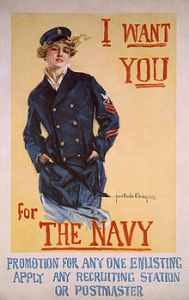
I was born smack-dab in the middle of the last century when military men and women had come home from fighting the Second World War and when it seemed that most women on the home front took up childbearing and housekeeping again, leaving their paid employment to the men. Many ex-military went back to school – to college – on GI loans. Families moved from the cities to newly blossoming Levittowns and “atomic” kitchens were all the rage. Ambitious young people relocated from the country to the city to find employment and foster careers. In that post-war America, everyday citizens were doing their best to heal and to modernize for both good and ill. Life is never easy or fair though for the poor and minority.

Emmett Till before and after the lynching on August 28, 1955. He was a fourteen-year-old boy in Chicago who went to spend the summer together with his uncle Mose Wright in Money, Mississippi, and was killed by white men for allegedly whistling at a white woman. Photographs courtesy of 5EmmettTillAfter under CC BY 2.0 license

Family farms were still going concerns and our food system was  in the relatively early stages of its current degradation. I don’t remember the morbid obesity of today. Our world wasn’t as rife with allergies, gluten enteropathy, inflammatory disease, auto-immune disorders or diabetes 2 or 3. Our food then was still comparatively clean. So was the air, the land, the oceans and the rivers. We could fish and go swimming in places where you wouldn’t dip a toe in the water now. Roundup – Glyphosate -didn’t hit the ground until 1977.

The big supermarket chains that were founded in the late 1800s and early 1900s were expanding. Our first Safeway arrived when I was seven. This huge, fancy well-lighted store introduced us to TV dinners and frozen food, so-called convenience foods with all their dangerous chemical additives. This monster-sized store was the beginning of the end for the little mom-and-pop neighborhood groceries run by friends and neighbors who would sell to us on credit, using an index card file to keep a tab on each family’s debt. I have a vague – perhaps inaccurate – memory of Harold Robbins writing rather poignantly about the loss of family run groceries in the introduction to one of his books.

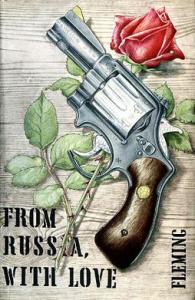
First Edition, 1957

The recession that started in 1948 flowed into the third quarter of 1950. Another recession came in 1953. There was the Korean War and the Vietnam War and, unforgettably, that geopolitical tension we call the Cold War. It inspired some thrilling espionage novels and movies. My mother wasn’t a reader and didn’t track my reading habits. Left to my own devices, I cut my spy-novel teeth on Ian Flaming’s work. Meanwhile, poor boys in skin-tight black pants sang a capella on our street corners at night.

As we moved into the ’60s the neighborhoods and occupational arenas were still as strictly delineated as a checker board. Some neighborhoods were referred to as “dark,” meaning browns and blacks lived there.  Shrafft’s hired “Irish girls just off the boat” to wait on elderly white women with silvery-blue rinses in their faded hair. The kitchen “help” was generally “colored.”  At Nedick’s and other food purveyors the food prep and wait-staff were always black or brown. If you could pass for white you probably did. It’s about survival. Management was uniformly white male wherever you went.  Women got low-paying clerical jobs in pink-collar ghettos.

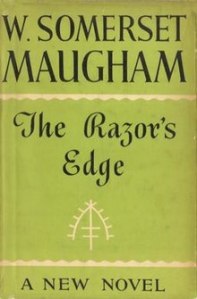
First Edition, 1944

Sometime in the early to mid sixties I read an article about W. Somerset Maughm in Life magazine. The author referred to Maughm as a misogynist. I had to look the word up. How, I wondered, could someone write a good story if he or she hated half of humankind? To see, I got copies of The Razor’s Edge and Of Human Bondage. It turned out, of course, that “misogynist” was code for homosexual and sadly disrespectful of this compassionate and talented man. But the times they were ‘a-chaining.

The African-American Civil Rights movement that began in ’54 gained traction with sit-ins and marches and the continued heroic and dedicated work of Dr. Martin Luther King, Jr. and others.  There were heart-rending events but there was also some legal and social progress.

Betty Friedan (1921-2006) American writer, activist and feminist

In ’63 Betty Friedan’s The Feminine Mystique was published by W.W. Norton. The reaction was mixed. Women who were minorities and/or poor or lower middle-class (that would be me and mine) found it difficult to sympathize with Friedan’s privileged suburban housewives. Nonetheless, the book is credited for initiating the “second wave of feminism.”

The late sixties was marked by “consciousness raising,” a style of activism encouraged by American feminists. Things did get better. Not everyone appreciated diversity in their neighbors and coworkers, but many did and learned to work for and with “others” and to hobnob in racially/ethnically mixed neighborhoods and social organizations. Windows opened and employment, education and housing became certainly not perfectly fair but more equitable opportunities then they’d been in the past.  People were aware and vocal in their moral objections to inequality, to racial/ethnic, sexual and sexuality prejudice, to environmental degradation, to wars and conflicts. So many of us were dreamers and we had hope that one day “the world will live as one.”

Though the world continued to reflect human imperfection, we retained a certain optimism. We’d made progress that enabled us to envision and work for even more gains toward peace, social justice, environmental stewardship and environmental justice. These days, we need to remember our history. We can’t let  optimism die in the face of the fallout from the last U.S. election and the violence we see in so many areas of the world. If we do, all is lost and that guy, his cronies and others who think like him will win.

We poets, writers, other artists and our friends and supporters have a powerful vehicle for old-fashioned consciousness-raising and change: 100,000 Poets (and other artists and friends) for Change, a global movement founded by Michael Rothenberg and Terri Carrion in 2011.  Michael and Terri are wonderful at creating opportunities for activism and advocacy. Link HERE to learn more about what they’re doing and HERE to the official site. Become involved. Touch hearts. Speak truth. Embrace hope. Small steps – as our history teaches us – can lead to progress. Poem on …


RESIST, REIMAGINE and REFORM: 100,000 Poets for Change honor the Students from Marjory Stoneman Douglas High School and address gun control; PEN World explores pathways through turmoil

“It is no measure of health to be well-adjusted to a profoundly sick society.”  Jiddu Krishnamurti


USING OUR WORDS: Michael Rothenberg and Terri Carrion, cofounders of 100,000 Poets for Change, are wonderful at finding ways for us gather online and off and to use our words to raise awareness of justice issues, encourage one another, make connections with like-minded, become a force for positive change, and show those in turmoil that we are present.

Michael announced today ..

“So far Coconut Creek, Miami, Orlando, Tampa, Jacksonville, St. Augustine, and Tallahassee have scheduled 100 Thousand Poets for Change associated readings as tribute to the students murdered at Marjory Stoneman Douglas High School in Parkland. These readings will be held in March and address the topic of gun control. We are waiting for confirmation for Pensacola, St. Petersburg and Gainesville and welcome additional organizers in Florida and around the country who wish to participate in this initiative.”

Look for events near you or publish your event info on 100,000 Poets for Change Communication Hub.  You are also welcome to post events on The BeZine 100,000 Poets for Change, 2018 Discussion Page and A World with Peace, A Place to Lament and Resist Gun Violence.


PEN America presents the 2018 PEN World Voices Festival: Resist and Reimagine, this year’s incarnation of the renowned international literary festival, which will bring together the world’s foremost authors and other luminaries at a time when many are turning to literature and the arts not for escapism, but as a guide to navigate contemporary crises.

Salman Rushdie founded the festival in the isolationist aftermath of September 11, 2001, to fortify links with the rest of the world; now again the need to connect and draw inspiration from beyond America’s borders is pressing.

PEN America Festival Director Chip Rolley explains, “For the first time in its history, we are deliberately training the Festival’s wide lens on America itself, probing the fissures and inconsistencies in our own culture, alongside those of writers visiting from overseas. We will examine different kinds of resistance—the internal and the external, the political and the personal—and tap into the imagination that is at the core of the best fiction, nonfiction, and poetry, joining together in a week that reaffirms our faith in the power of the word to transform our society, our politics, and our daily lives.”

The Festival will unfold across sixty-plus events in dozens of venues in four of the five New York City boroughs, April 16-22. It kicks off on April 16 with Resist and Reimagine: Opening Night in Three Acts. Colson Whitehead will speak about applying one’s imagination to elucidate historical truths, as the novelist did for his “carefully built and stunningly daring” (The New York Times), Pulitzer Prize-winning novel The Underground Railroad.

Novelist Leila Slimani—a Muslim immigrant from Morocco to France whose novel The Perfect Nanny won France’s prestigious Prix Goncourt—will speak with New Yorker staff writer Adam Gopnikabout how worlds can be reimagined by bending the lenses of ethnicity and geography.

Australian performance poet and author Maxine Beneba Clarke will read from “A Letter from Manus Island: A Refugee Resistance Manifesto,” by Behrouz Boochani, the Iranian Kurdish poet and journalist who has been held for over four years in Australia’s detention center on Manus Island while awaiting asylum. Boochani writes here about how “the refugees were able to reimagine themselves in the face of the detention regime.”

In a separate opening night event, Dave Eggers will talk with Mokhtar Alkhanshali, the Yemeni-American historian, community organizer, and coffee innovator whose aim to revitalize Yemen’s coffee industry through worker empowerment is the subject of Eggers’ latest book, The Monk of Mokha.

The resistance embodied in the disclosures of the #MeToo movement has inspired a number of events in this year’s festival, which extend the examination of gender and power begun in the 2017 festival. On April 20, critically acclaimed, best-selling author Roxane Gay will speak with #AMtoDM co-host and BuzzFeed Books founding editor Isaac Fitzgerald on the intersecting subjects her writing famously tackles. Zeroing in on the ongoing fight for female autonomy, Handmaid in America (April 21) will bring together a group of women writers, including Siri Hustvedt and Leni Zumas, who will discuss literature and its responses to encroachments on women’s reproductive rights. On April 17, Us Too, a powerful program of poetry, readings and conversation about violence against women will include Tishani Doshi, Maxine Beneba Clarke, Dunya Mikhail, and Mona Eltahawy. These open conversations on the traumas the female body endures strive to liberate women during this movement of reckoning.

With The M Word: Hasan Minhaj and Wajahat Ali (April 22), comedian and Daily Show senior correspondent Minhaj and writer/lawyer Ali will speak about the varieties of Muslim American experiences, the pressures of being public ambassadors for a vastly multifaceted group that America just as vastly generalizes, and how comedy and creativity have changed under Trump. The M Word: No Country for Young Muslim Women (April 18) will see Sudanese-Australian author/mechanical engineer Yassmin Abdel-Magied and MuslimGirl founder Amani Al Khatahtbeh—both of whom left their home countries, Australia and America, respectively, due to harassment and vilification—discussing the complexities of being Muslim and female in Western countries. Abdel-Magied will also speak with Sick author Porochista Khakpour, and Anita Sarkeesian, the feminist media critic who endured a barrage of #GamerGate harassment and death threats in Take Back the Net: Fighting Online Hate (April 21). Looking into the real-world impact of virtual bullying, those who have refused to be silenced will discuss productive means for resisting and reimagining the Internet as a free and fearless space.

Addressing authorship and cultural alienation, Cry, the Beloved Country (April 19) will unite Ryszard Krynicki, Serhiy Zhadan, Marcos Aguinis, Domenico Starnone, Ngugi wa Thiong’o, Hwang Sok-yong, Basma Abdel Aziz, and Negar Djavadi to articulate the particular rage of oppressed populations in their home countries. Meditations on Exile (April 20) will feature Chinese novelist Xiaolu Guo, Iraqi-Assyrian poet Dunya Mikhail, and Iranian screenwriter/novelist Hossein M. Abkenar. They will discuss their experiences of having fled their home countries to avoid censorship and the potentially severe repercussions of their self-expression, and how these experiences have shaped the way they write about place. The Trick of Translation (April 21), will speak to a more formal means of border transcendence—the attempt to capture the spirit of a work in another language. Jhumpa Lahiri will talk with Domenico Starnone about Starnone’s novels Trick and Ties, translated from Italian to English by Lahiri.

The chronicled lessons from the past can act as living guides, particularly as threats to key rights swell. Taking a moment to look back to America’s most fearless activists and writers, Jelani Cobb, Nikole Hannah-Jones, and Pulitzer Prize-winner Gregory Pardlo mark the 50th Anniversary of Martin Luther King Jr.’s assassination in Where Do We Go from Here? (April 20), which asks, with hope at its core, the titular question of Dr. King’s last book. Looking further back in history, biographer Ron Chernow talks to MSNBC host and author Chris Hayes about Ulysses S. Grant, one of our most underappreciated presidents, who worked for justice and the political enfranchisement for African Americans. Exploring what should be inalienable rights, Mother Jones reporter Ari Bermanand historian Carol Anderson will delve into racialized voter suppression in Killing Democracy (April 19). One of the festival’s central aims is to defend and provide a platform for open discourse; Masha Gessen, Patrisse Cullors, and PEN America Executive Director Suzanne Nossel will shed light on first amendment tensions in America today in Resistance Report Card: Grading the Groundswell(April 21).

In Legacy of an LGBTQ Countercultural Icon (April 21), translators Bonnie Huieand Ari Larissa Heinrich and poet Eileen Myles will examine the work of the late Qiu Miaojin, whose cinematically experimental novels dauntlessly depict lesbian life in Taiwan long before any form of queerness was socially accepted. While she was writing up through the 90s, to this day, globally queer communities remain vulnerable.

As so much of what literature explores politically and personally is inherently connected to place, several events will probe location’s distinct impact on personhood. The city of New York has functioned as an iconic and figurative setting across myriad art forms: in New York Stories (April 21), Salman Rushdie,Sergio De La Pava, and others will talk about encapsulating the city in fiction. With a more panoramic gaze, in America, Real and Imagined (April 22), authors from different corners of the country will discuss their shared interest in the American landscape’s profound ability to shape identity. Francisco Cantú—a former-border-patrol-agent-turned-author—will join acclaimed Sunshine Stateauthor Sarah Gerard and poet/author Joy Harjo, a member of the Mvskoke Nation whose memoir Crazy Brave won the 2013 PEN Center USA prize for creative nonfiction. Cantú, who wrote the “sharply political and deeply personal” (New York Magazine) The Line Becomes a River, will also look into a particularly fraught section of the American landscape, the Mexican-United States border in Borders of Our Imagination, where he will speak with novelist and essayist Valeria Luiselli and playwright and DREAMer Amalia Rojas (April 20).

Young people are just as likely as adults to be curious about the often puzzling, sometimes troubling, world around them, and there is a growing body of books and other publications that cater to this curiosity. For the first time in its history, the festival will feature a day of storytelling, interactive events, comics and freestyle poetry workshops for children, tweens, and young adults as part of its new Next Generation Now series curated by Meg Lemke of MUTHA Magazine. Little Activists: A Workshop and Mini-March (April 21) will encourage children to express their own ideas of democracy, equality, and freedom, and learn how to translate their thoughts into political engagement. Leila Sales, who will lead he workshop, created The Little Book of Little Activists after being inspired by children in the Women’s March. R.J. Palacio, author of the best-settling novel Wonder (recently adapted as a live-action film with Jacob Tremble in the leading role) will speak on the importance of acceptance, and the pivotal lessons that literature can teach us from a young age. Tony Medina, Ilyasah Shabazz, and Toni Blackman are also among the featured Next Generation Now authors.

PEN America Executive Director Suzanne Nossel says, “While the present political moment in the United State feels unprecedented and unparalleled, when we turn toward the rest of the world the tide of revanchism we are enduring is neither new nor confined to our own borders. International writers and thinkers offer a well of lessons and insights on how to thwart and protest, to sustain and nurture resistance, to shore up threatened values, and to look beyond the present impasse. PEN America has always worked as a bridge across cultures and geographies, forging relationships and solidarity that are a counterweight against hatreds and polarization. In the digital age, with so much of our discourse reduced to tweets and sound bites, face-to-face conversation across cultures about how to realize a different collective future is essential. If frayed relationships between the world’s governments are ever to be repaired, it will be because we nurtured relationships, empathy, and understanding among peoples—that’s what the PEN World Voices Festival does.”

Peter Barbey, President and Chief Executive Officer of The Village Voice, which co-sponsors the 2018 PEN World Voices Festival, says, “This year’s theme, Resist and Reimagine, couldn’t be more timely or topical.  It resonates here at The Village Voice since those very same principles have been reflected in our mission since our inception in 1955, at the beginning of an American cultural revolution. As Official Media Sponsor of the Pen World Voices Festival, we call on all New Yorkers to join the conversation.”


ABOUT

SUNDAY ANNOUNCEMENTS: Calls for Submissions, Contests, Events and Other Information and Special News About Taking a Stand Against Gun Violence


CALLS FOR SUBMISSIONS

Opportunity Knocks

ACUMEN, Poetry Prose Reviews is published three times a year and editors seek poetry and feature articles. Submission by email or by postal service.  Details HERE.

BOABAB PRESS is currently considering Creative Non-Fiction, Short-Story, Novel, and Comic manuscripts. Comic manuscripts will not be considered without artwork. Poetry will re-open March 7th, 2018. Details HERE.

THE BROKEN CITY is currently accepting submissions of poetry, fiction, essays, comics, illustrations, photography, music/book reviews for its 2018 edition. Previously published work is acceptable. No prose exceeding 3,000 words. No submission fee. No payment. Deadline: June 1, 2018. Details HERE.

CONTRARY MAGAZINE, the journal of unpopular discontent is published on the South Side of Chicago and welcomes submissions of original fiction, poetry and commentary from writers anywhere in the world. No submission fee. $20 payment. Details HERE.

THE COSSACK REVIEW “accepts electronic submissions of new work all year. We respond within 60 days, usually much sooner. Work submitted will be considered for upcoming print and online issues.”  It has a rolling deadline. The review includes fiction, nonfiction, translation and poetry (3-6 poems in a single submission.) Details HERE.

RINKY DINK PRESS, micropoetry for the people: “poems delivered in a 2.75 x 4.25 format … so bigger than a credit card, but smaller than a postcard” that contains six pages.   The press is a “rotating collective of advanced creative writing students and established poets from the Phoenix area dedicated to promoting lyrical yet concise micropoetry, compact little messages with a punch.”   DETAILS HERE.   

SOUTH/85 is a semi-annual online literary journal of the Converse College Low-Residency MFA Program is accepting submission for consideration through May 1. This journal publishes fiction, non-fiction, poetry, reviews, and art by new, emerging, and well-established writers and artists. The editors say “we are especially interested in pieces that demonstrate a strong voice and/or a sense of place.” Details HERE.

THE NORMAL SCHOOL, a bi-annual online and print literary journal featuring nonfiction, fiction, poetry, criticism, journalism, author interviews, and multi-media texts. The editors like energetic and quirky and “work by historically under-represented and marginalized voices.”  The Normal School accepts submissions of creative nonfiction, fiction and poetry for consideration from through April 16 for the next edition. $3 submission fee. Details HERE.

THE NOTTINGHAM REVIEW, an international short-story and flash fiction literary journal that has been online since fall of 2015 and will publish its first print edition this year. Fiction from 100-3,000. Nothing previously published. No submission fee unless you want an “expedited” (7-day response). Details HERE.

THE OFI PRESS MAGAZINE, International Poetry and Literature from Mexico City is open for submissions of previously unpublished  poetry, short stories, as well as non-fiction, interviews and reviews from diverse writers but are also interested in work from Latin American and Mexican writers. No submission fees. No payment. Details HERE.

THREE DROPS FROM A CALDRON, poetry and fiction ~ myths, folklore, legends and fairy tales will open for submissions of poetry (1-6 poems) and fiction (up to 1,000 words) on 30th March 2018. Will consider reprints. No submission fees. Payment a possibility. Details HERE.


CONTESTS

Opportunity Knocks

CREATIVE NONFICTION, True Stories, well told.  The theme is Intoxication and the editors say: “Seeking altered states might be one of the oldest human hobbies—for better and for worse—and we’re looking for stories that capture the widest possible range of experiences and voices. Whether you (or someone else) were tipsy or wasted, soooooooo drunk or just a little high—on life, or love, or power, or something else—we want to hear your story about being under the influence.” Must be previously unpublished. Cash award $1,000 for best essay and $500 for runner-up. $20 reading fee. Mail in submissions must be postmarked February 26. You can also submit online by 11:59 p.m. DETAILS HERE.

NARRATIVE Winter 2018 Story Contest  for short shorts, short stories, essays, memoirs, photo essays, graphic stories, all forms of literary nonfiction, and excerpts from longer works of both fiction and nonfiction. Cash awards: $2,500 for first prize, $1,000 for second prize, $500 for third prize, and $100 each for the ten finalists. Submission fee: $26 per entry. No previously published work. Deadline: March 31, 2018. Details HERE.


EVENTS

  • WORLD POETRY DAY,  Tuesday, March 21, 2018 celebrates and supports poets and poetry around the world.  It is an initiative of the United Nations Educational, Scientific, and Cultural Organization (UNESCO). Details HERE.
  • StANZA 2017  (Scotland) is scheduled for 7-11 March, 2018. The themes are The Heights of Poetry and On the Road.  Details HERE.
  • POETRY NOW is a weekly four-minute radio series featuring poets who offer an acoustically rich and reflective look into a single poem. Produced in partnership by the Poetry Foundation and WFMT. Link HERE.


POETS AND OTHERS STAND AGAINST GUN VIOLENCE

At this writing, according to the Gun Violence Archive in 2018 there have been 6,975 incidents, 1,922 deaths, 3,330 injuries, 71 children killed or injured, 377 teens killed or injured, 32 mass shootings, 41 officers shot or killed, 312 subject or suspect killed, 235 home invasions, 192 defensive use of guns, and 229 unintentional shootings in the United States.

MAR21

A World With Peace: A Place to Lament and Resist Gun Violence

100,000 Poets for Change Co-founder, Michael Rothenberg and The BeZine team member, Michael Dickel, have initiated a day for poets to gather wherever they are in the world to resist violence, especially gun violence, and raise awareness of the need for appropriate gun legislation in the United States and elsewhere. Beguine Again founder and another member of The BeZine core team, Terri Stewart, Guns Don’t Save People, Poets Do founder Evelyn Agusto and I support the effort and encourage you to organize events. To publicise your events post your event on the 100,000 Poets for Change Facebook Communication Page and on The BeZine 100TPC Facebook Discussion Page. I’ll do my best to catch all and post them to The Poet by Day Facebook Page and The Bardo Group Beguines (publisher of The BeZine) Facebook Page. Post to  Evelyn’s Facebook Page as well.  March 21 is also World  Poetry Day.


NATIONAL SCHOOL WALKOUT

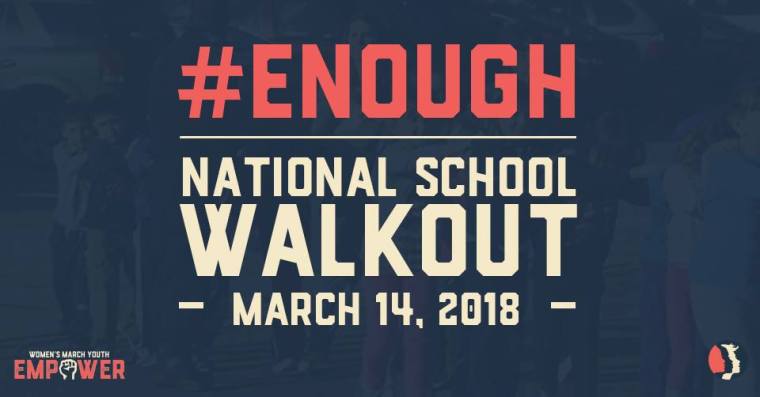
Women’s March Youth EMPOWER is calling for students, teachers, school administrators, parents and allies to take part in a #NationalSchoolWalkout for 17 minutes at 10am across every time zone on March 14, 2018 to protest Congress’ inaction to do more than tweet thoughts and prayers in response to the gun violence plaguing our schools and neighborhoods. We need action. Students and allies are organizing the national school walkout to demand Congress pass legislation to keep us safe from gun violence at our schools, on our streets and in our homes and places of worship.

Students and staff have the right to teach and learn in an environment free from the worry of being gunned down in their classrooms or on their way home from school.

Parents have the right to send their kids to school in the mornings and see them home alive at the end of the day.

We are not safe at school. We are not safe in our cities and towns. Congress must take meaningful action to keep us safe and pass federal gun reform legislation that address the public health crisis of gun violence. We want Congress to pay attention and take note: many of us will vote this November and many others will join in 2020.

Join us in saying #ENOUGH!

Add your event to the map or find one near you here: https://www.actionnetwork.org/event_campaigns/enough-national-school-walkout


I AM NOT A SILENT POET

UK POET, REUBEN WOOLLEY hosts a zine, I Am Not a Silent Poet, and a Facebook Discussion Page. You may post to the later and submit to the zine.  There are already some anti-gun violence/pro-legislation pieces shared. Check them out.

“I am not a silent poet welcomes quality poems of protest. We have been seeing such increasing evidence of abuse recently that we felt it was time to do something. I am not a silent poet looks for poems about abuse in any of its forms: colour, gender, disability, the dismantlement of the care services, the privatisation of health services, the rape culture, FGM, our girls in Nigeria are just some of the examples that come to mind at the moment. It is not a site for rants.

“Please send all contributions for consideration to: reubenwoolley52@gmail.com. I would prefer attachments (especially for poems with unusual formatting and graphic material. You can add a brief biographical note and/or link to your website or blog.” Reuben Woolley


Accessible anytime from anywhere in the world:

  • The Poet by Day always available online with poems, poets and writers, news and information.
  • The Poet by Day, Wednesday Writing Prompt, online every week (except for vacation) and all are invited to take part no matter the stage of career (emerging or established) or status (amateur or professional). Poems related to the challenge of the week (always theme based not form based) will be published here on the following Tuesday.
  • The Poet by Day, Sunday Announcements. Every week (except for vacation) opportunity knocks for poets and writers.
  • THE BeZINE, Be Inspired, Be Creative, Be Peace, Be – always online HERE.  
  • Beguine Again, daily inspiration and spiritual practice  – always online HERE.  Beguine Again is the sister site to The BeZine.

THE RESISTANCE POETRY WALL

A reminder about this. I just noticed no one’s posted since October 2017.  Go for it. Have your say.

100tpc20122

The RESISTANCE POETRY WALL “We want your poems! Share this information.”

A MESSAGE FROM 100TPC cofounders Michael Rothenberg and Terri Carrion.

“The RESISTANCE POETRY WALL has been opened in response to the call by many for an open place to post poetry about the recent USA elections. Poets from around the world are invited to post. Feel free to share this link. Post your poems in the comment box at the bottom of the page. Your poem will appear on the WALL in approximately 1 hour.”

En Español:
“Se ha abierto el MURO DE POESÍA EN RESISTENCIA como respuesta al reclamo de muchos por un espacio abierto donde publicar poesía relacionada con las recientes elecciones en los Estados Unidos. Se invita a poetas de todo el mundo a publicar aquí. Por favor compartan esta liga. Entren a la página y peguen sus poemas en la caja de comentario (‘comment’), al calce. Su poema apareceré en el MURO en aproximadamente 1 hora.”

“The poetry and art posted on the WALL are not limited to the USA elections. There are many issues that concern us all and we welcome your contribution.”


YOUR SUNDAY ANNOUNCEMENTS may be emailed to thepoetbyday@gmail.com. Please do so at least a week in advance.

If you would like me to consider reviewing your book, chapbook, magazine or film, here are some general guidelines:

  • send PDF to jamiededes@gmail.com (Note: I have a backlog of six or seven months, so at this writing I suggest you wait until June 2018 to forward anything. Thank you!)
  • nothing that foments hate or misunderstanding
  • nothing violent or encouraging of violence
  • English only, though Spanish is okay if accompanied by translation
  • your book or other product  should be easy for readers to find through your site or other venues.

TO CONTACT ME WITH ANNOUNCEMENTS AND OTHER INFORMATION FOR THE POET BY DAY: thepoetbyday@gmail.com

TO CONTACT ME REGARDING SUBMISSIONS FOR THE BeZINE: bardogroup@gmail.com

PLEASE do not mix the communications between the two.


Often information is just thatinformation – and not necessarily recommendation. I haven’t worked with all the publications or other organizations featured in my regular Sunday Announcements or other announcements shared on this site. Awards and contests are often (generally) a means to generate income, publicity and marketing mailing lists for the host organizations, some of which are more reputable than others. I rarely attend events anymore. Caveat Emptor: Please be sure to verify information for yourself before submitting work, buying products, paying fees or attending events et al.


ABOUT THE POET BY DAY