WRITERS AND THEIR CAFÉS
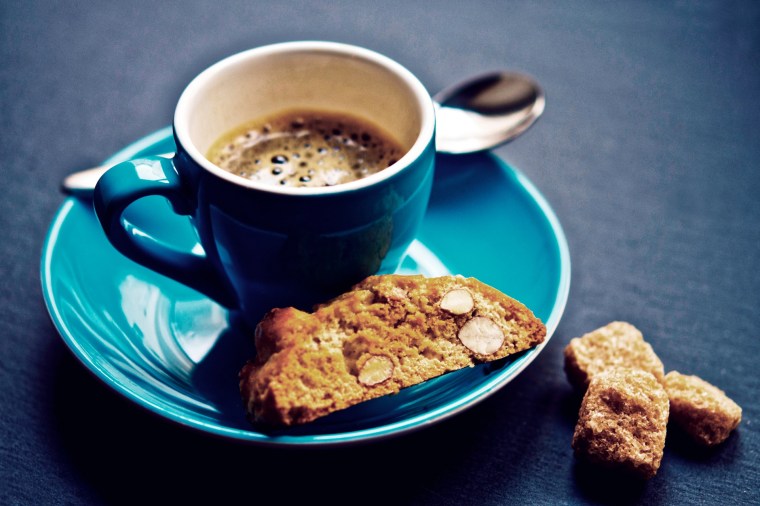 WRITERS AND CAFÉS go together like coffee and a biscotto. Perhaps the connection started in the place where coffee houses first evolved, Ottoman Turkey. There it is said the men met over small, sweet cups of Turkish coffee to socialize and entertain one another with backgammon and poetry.
Later, when coffee came to Europe, the Viennese cafès were de facto office sites of many well-known writers. The Austrian journalist, Alfred Polgar (1873-1955), admired for his witt at Vienna’s Café Central, wrote that coffee houses were “a place where people want to be alone, but need company to do so.” Maybe writers needed the noise and the caffeine to keep up the will and energy to face one white page after another.

CAFÈ CENTRAL, Vienna
Boris Vian (1920-1959), the French polymath (his abiiities included writing and poetry) claimed that “if there had not been any cafés, there would have been no Jean-Paul Sartre.” That’s an exaggeration of course, but one with which we might agree makes its point. I’ve read that Sartre and Simone de Beauvoir hung-out in Paris at Les Deux Magots and Café de Flore. The former was also a favorite of Rimbaud.
We are told that Pushkin found courage in coffee – not alcohol – before his last and fatal duel in 1837 at The Literary Café in St. Petersburg. Byron, Casanova and Henry James had their favorite coffee houses in Vienna. Lorca met Dalí at the Cafe de Oriente in Madrid, and Kafka worked on Metamorphosis at the Café Stefan in Prague. Oscar Wilde was famous in coffee houses throughout Europe, though perhaps not for having pen in hand.

HEMINGWAY, HADLEY and Friends, American Ex-pats in Paris
The connection between writers and coffee houses was well established by the time the lost generation was meeting in Paris in the 1920s. Hemingway wrote about Cafe La Rotonde and Le Dome Cafe in The Sun Also Rises. He also frequented the Dingo Bar along with F. Scott Fitzgerald and Djuna Barnes.
The Pedrocchi Cafè (1831) in Padua, like many of the old coffee houses, is still in operation and is one of the world’s largest. It was Stendhal’s home-away-from-home …
… and so the affinity continues into recent times. The Elephant House in Edinburg is the “birth place of Harry Potter.”

THE ELEPHANT HOUSE, Edinburg, “the birthplace of Harry Potter”
Photo credits ~ Header photograph courtesy of Keven Phillips, Public Domain Pictures.net. Next photo courtesy of morgueFile. Cafè Central and Hemingway and Friends are in the public domain and via Wikipedia. The Elephant House Cafè is courtesy of Nicolai Schäfer licensed under Creative Commons Attribution-Share Alike 3.0 Unported license via Wikipedia.
THE WORDPLAY SHOP: books, tools and supplies for poets, writers and readers
LITERATURE AND FICTION oo Editor’s Picks oo Award Winners oo NY Times Best Sellers


 Jamie Dedes' THE POET BY DAY Webzine