Page 2 of 5

When Sexual Violence Goes Public, an essay by Michael Watson, M.A., Ph.D., LCMHC

Regular Wednesday Writing Prompts will resume on January 3, 2018. This thoughtful piece is shared here with Michael’s permission. It was originally published on his blog, Dreaming the World.

Well, the weather turned warm again, with a bit of rain; now the temperature is dropping slowly and there are hints of blue through the overcast. There are rumors of a snowstorm next week and more before Christmas. We shall see.

Here in North America we tend to forget how pervasive sexual violence is, and how retraumatizing public conversations about sexual abuse and harassment can be for victims of sexual crimes.

This was brought home to me again yesterday while speaking with a colleague in Boston. She works with severely traumatized individuals and spoke about her clients’ experiences of retraumatization due to the recent flood of sexual assault accusations against prominent men. We agreed the resulting, much-needed, public discussion about sexual assault has resulted in a cascade of memories and fear for our clients. This adds to the retraumatization caused by the behavior of government officials who seem Hell-bent on glamorizing sexual assault while destroying the social framework. We also agreed we are experiencing much increased anxiety as we try to understand how to provide some sense of safety to our clients and ourselves in an increasingly difficult social environment.

Not surprisingly, our culture’s focus on sexual assaults and intimidation by males has felt isolating for clients who were abused or harassed by women. Somehow we as a society appear to have once again lost sight of the uncomfortable fact that women can also be abusive. Perhaps there is less attention to assaults by women simply because abuse and harassment at the hands of women appears to be underreported in general. In addition, men, particularly, report experiencing more shame when speaking of being abused by women and are, thus, more reticent to report being assaulted.

The sad truth is that people of all genders are capable of harming others when given the opportunity. Further, such abuses become more frequent when openly, or tacitly, accepted by communities. I’m sure we will hear much more about sexual abuse by persons with power in the days to come. How we respond is crucial.

© 2017, Michael Watson, essay and photograph, All rights reserved


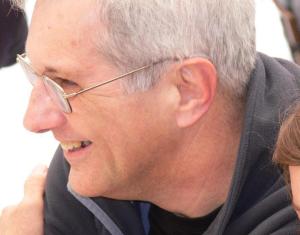
Michael Watson

MICHAEL WATSON, LCMHC (Dreaming the World) is a poet of the spirit, if not of the pen, and a contributing editor to The BeZine, an essayist and a practitioner of the Shamanic arts, psychotherapist, educator and artist of Native American and European descent.

Michael lives and works in Burlington, Vermont,where he is retired from his teaching position in undergraduate and graduate programs at Burlington College. He was once Dean of Students there. He also had wonderful experiences teaching in India and Hong Kong, which he’s documented on his blog, Dreaming the World. In childhood Michael had polio, an event that taught him much about challenge, struggle, isolation, and healing.


ABOUT THE POET BY DAY


“Beware” … and other responses to the last Wednesday Writing Prompt


Here is our collection from last week’s writing prompt, into the great yawning, November 8: what should we do, what should we ask for, when we know that vision has died and lunacy is on the rampage?  It garnered such an interesting, pointed and passionate response.

The great joy of themes and prompts is that there are always surprises.You just never know where people are going to take an idea. It’s always a jumping off point to something that’s been nagging – perhaps even raging – from each writer’s unique perspective.

I never hold people strictly to the theme or the prompt, which I recognize is an irritation to some … or, at least, that’s what I’ve been told recently. The thing is: art comes from sacred space. That has to be honored. So if the piece is linked by a thin silken thread or was written before the prompt went up and the poet/writer is inclined to share, so be it. Amen, I say.  This is, after all, an informal exercise meant to inspire, work the writing muscle, offer a venue for worthy ideas and writers, and to provide a chance to get to know others who share our passions. Enjoy!

… and thanks to Colin Blundell, Sonja Benskin Mesher, Paul Brookes and Juli. Bravo! Your ideals are real.

The next Wednesday Writing Prompt will post tomorrow. All are welcome to join in no matter the status of career: beginning, emerging or pro.


beware

the Abstraction Monster
roughing its way
through pompous discourse
whose wifflers maybe don’t realise
quite how they destroy
all purchase on the sticks & stones
of things – real apples ripening
towards August drainage systems
against water on the brain…
George Washington’s Birthday
done by Charles Ives
complete with jaw harp
dissolving into glorious dancing

freedom justice beauty
our country (usually wrong) money –
Abstraction Monster friends
death-dealing to the tip
of the iceberg thought

real thinking dwells in all the open doorways
and river basins of the wide wide world

© 2017, Colin Blundell  (Colin Blundell, All and Everything)

This comes from my 2016 ‘101 apolitical poems’ (ironical!) in which the poem (posted here not necessarily as a contribution, just for amusement), headed by a quotation from my favourite long-dead politician, is: “No amount of cajolery, and no attempts at ethical or social seduction, can eradicate from my heart a deep burning hatred for the Tory Party. So far as I am concerned they are lower than vermin.” Aneurin Bevan (1948)

lower than vermin

therefore not really vermin at all –
not worms (Latin vermis = worm) or snakes
or miscellaneous bugs
not reptiles not fleas or flying ants
not wild animals not insects of any kind
difficult to control in large numbers

but maybe ghouls that go bang
in some dark pit at dead of night
at the centre of an impenetrable forest
whose trees are constructed
out of piled up old rancid dustbins
that haven’t been emptied for months
where not even rats will go
for a Sunday afternoon promenade
for fear of the calculated potholes

I wonder if ghouls that go bang
in the night really are lower than vermin –
there may be something even lower

ridiculous demons if they weren’t
so terrifyingly malevolent

© 2017, Colin Blundell  (Colin Blundell, All and Everything)


a vision requested.

early while driving.                     omen repeating

sometimes the sun comes lower after the crest

one moment

imagine them marching,           slow & white.

will you name them?

in the wake all things come clear.

slow & white.

later below the peaks i tell him. he said it is

the dark crystal.

© 2017, Sonja Benskin Mesher  (Sonja Benskin Mesher, RCA and Sonja’s Drawings)


Don’t Get (From A World Where 2)

involved. Distance yourself.
Else you’ll be wound in,

A fish on a line, handed
responsibilities you can’t handle.

Care for those you help will absorb
all the time you can spend with yourself.

Stay sane. Hold folk at arms length.
Others who can afford it will fill the absence

You make with your lack of response
When a person falls, injures themselves.

Be assured their are professionals our society
employs who can deal with it better than you.

© 2017, Paul Brookes  (The Wombwell Rainbow, Inspiration, History, Imagination)

Our Insanity (From A World Where 2)

is healthy. Hurt others,
hurt yourself. Hospitals

widen wounds. Firemen
are firestarters. Doctors

avidly spread disease.
Dementia is encouraged.

Helpfulness and reasoned action
is criminal. Thought for others

will get you referred to a psychiatrist.
Multiple personality is encouraged.

Not knowing who you are is wellbeing.
Celebrate murder, envy, greed, selfishness.

© 2017, Paul Brookes (The Wombwell Rainbow, Inspiration, History, Imagination)

The Offering

of your place for theirs.
A seat for those who cannot stand.

An arm for those who need support.
An empathetic word for those who grieve.

Warmth for those cold as marble.
A smile for those downcast.

Small acts of give amongst the take.
Your strength amongst the enfeebled.

© 2017, Paul Brookes  (The Wombwell Rainbow, Inspiration, History, Imagination)


The Exponential Demise of our Well-Being

You know that sudden speeding montage of thoughts and images you get when a torrent of information flashes through your mind and your consciousness grasps their thematic connections and creates a glimpse of the bigger picture? It only lasts seconds but it’s revelatory and dramatic and, when it produces a physical resonance, can be said to reveal truth – be it the individual’s recognition of a personal truth or of an external reality. You shiver, feel sick, overwhelmed perhaps, or optimistic, even excited if the epiphanous moment is positive. It’s the kind of high frequency, moment of clarity that sparks creativity, spurs innovation and signposts direction – and of course, it can also incite utter panic. The fact that it’s not an everyday occurrence – besides probably making such events all the more meaningful – is likely a good thing: there is such a thing as ‘too much’ and systems, mechanical or biological, do not really appreciate being overloaded.

But what about the low frequency hum of the mundane? The unnecessary, interminable tension imposed by the government and its agents, who intervene for our own good like stereotypical missionaries: they’re enough to drive the sanest people to distraction. For a party which professes ‘small state’ governance, they’ve made spectacular inroads into nearly all levels our daily lives, with their micro-management and moral prescriptions. They’re like all-enveloping smog, systematically choking the goodwill, the patience and the hope out of an entire nation.

This bass resonance features large in our everyday domestic arrangements too. Life is a journey of relationships, private, public and overwhelmingly political in nature. Government is in your face; so is media hype. But maybe, so are your neighbours, members of your family, your friends, your boss, your ‘clients’… we are all someone intruding in another’s space. As the infrasound increases pitch and pierces the surface, the customary dynamics dance under intensifying friction with random acts of ‘true colours’ and out-of-character behaviour.

People are living precariously under perpetual and pernicious stress. (Sorry for the ‘Ps’) You don’t need me to tell you about the growing surveillant, authoritarian management-style; the stark poverty living side by side with gluttony; religious oppression and paranoia; conflict and invasion; economic malfeasance – the list is almost as endless as it is global – and the cost of such dis-ease, as we all know, is far more than monetary. We are being worn down by failure and blame and uncertainty. People can’t help but project their hopes and fears into the future, but how much can you channel or manage them when you are the puppet of puppets?

I see the low frequency as starting to have the same impact as the high. We are overwhelmed and panicked and most people are either fighting it off, drowning under it or veering between the two. This is a fight or flight lifestyle and it is unsustainable: you can’t operate indefinitely on adrenaline, can you? Not without serious repercussions to your physical, mental and emotional health. That would be like perpetual war…

Mental health is a spectrum. We’re all on it. We travel its width in both directions for the length of our lives and, if we avoid the pain at its extremes, it is surely by some merciful grace? But this does not mean that the rest of us are healthy individuals, communities or nations. Not when we live in a state of constant dis-ease.

For as long as they can, people cope as well as they can, with whatever resources they can muster and with varying degrees of success. It might be instinctive but it’s exhausting and dispiriting to exist rather than to live, so it doesn’t take any genius to understand why some will chose denial rather than face reality or the unknown; that many of those who cannot unsee and unknow, will seek intoxication as respite; and that recklessness will become attractive to some while others will withdraw and become frozen.

And people snap. Everyone has a breaking point – though I must confess: it’s somewhat reassuring in the UK, to know you are at least unlikely to be shot at. But, facetiousness aside – I don’t know about you, but I don’t want to discover where my snapping point is – I can’t help but imagine we will see and hear of many implosions, both in our personal spheres and in the News at large. There’s an ever increasing number of people who live every day at the threshold of a breakdown: people who are grateful if they merely find themselves no worse off at the end of their day than at its start. Every day. With no seeming end.

Lives of such fragility are surely unsustainable: they are certainly an obscene mark on a modern world. I fear that, in a climate of continual manipulation and confusion, gifted by the accelerating machinations of a powerful few, the exponential demise of our well-being is almost certain. But, just as pain and anger can be warning signals that something is wrong, so too is the hum and it is screaming at us to make the madness stop: to pay attention to real meaning and create meaningful solutions

© 2017, Juli [Juxtaposed] (Subject to Change)

A frozen spring

The behaviour of our world leaders is extraordinary. These creatures trot out one ridiculous line after another about whatever and whoever, seemingly oblivious to the irony of their expedient relativism, all the while projecting as if theirs was the light and the way. They make policies based on any outlying prediction of convenience that their hypothetical histrionics can fashion and these become as the self-fulfilling prophesies of their tragic little imaginations. I’d say you couldn’t make it up but I reckon they do.

The scope for all manner of catastrophe by their obnoxious, cynical hands is horrifying. And we keep being told that there’s no alternative; that it’s competence or chaos; mainstream or radical fringe; with us or against us; deserving or undeserving; ally or monster; either-or. Always either-or… To do this they oversimplify each issue and circumstance, scapegoating or sexing up, until it is reduced to a catchy, polarizing meme and then they feign consternation over all the threats and distress they’ve conjured. Or do they conjure up a load of threats and distress and then simplify them to polarize everyone…?

How are we continuing to tolerate such an industrialised scale of hypocrisy and hubris? How on earth are we still bearing their cold indifference to cause and consequence; the expedience of their cruel, misguided pragmatism? How do we stomach the interminable provocations and funnelled paranoia? I don’t believe our modern species is so readily predisposed to such superficial extremes. I think we’re far too full of contradictions and nuance once you get underneath the first couple of layers. Why are these creatures still being allowed to get away with their obscene behaviour? At what point will we admit we are complicit and have learned to love our chains? For, if we are not; have not: where are our blazing pitchforks?

And Mainstream News’ content and delivery? It mostly seems to collude to serve the Powerful. We get fed shallow headlines followed by even shallower analyses; celebrity big-up or tear-down; something about someone, who apparently should know better, not toeing the latest line; a report about a report on something so appalling that people cannot understand how it could ever have happened at all, must ‘never again’ but probably will; a few temporary and meaningless economic numbers, followed by even more meaningless analysis; another story of hair-raising incompetence or fraud, quickly justified or deflected; another populist policy to tempt, punish or placate, framed as anything but the tinkering that it is; merit given to sheer electioneering mischief… And on and on. Every day more surreal and yet so sterile.

There are moments, some days and some whole days when it’s as though my outrage and numbness have been whisked into a solid fusion. It’s like I’m flung, for a period, into suspended animation. The passion of impotent protest, crowding in and freezing my whole being. I know it’s a fleeting overwhelm of emotion and thought but, well, it’s visiting more often and staying longer. Sometimes I think I’m only saved from losing ‘it’ due to lashings of healthy irreverence, an eye for the wry and a great deal of there but for the grace of… And I wonder at the leadership which creates and depends on a world of fight or flight for its profit; at all those around the world for whom this designed overwhelm is an imposed, perpetual constant. How are there not more people running around, demented, with wild eyes, pulling their hair out? Or curling up in a corner and rocking? I think we are, though, in our souls. Is it just me being temporarily consumed by the fanned extremes of my own angst or am I tripping into the angst of collective consciousness?

For the global atmosphere is a heavy fog of fear and denial, so widespread, so deep, so prevalent that, whether consciously or subconsciously, it must overshadow and infiltrate every individual to some degree. Even if you’re paying only a little attention to national and international affairs and conditions, you surely cannot fail to be at least uneasy about the interminable, mind-blowing ineptitude that has put our world in such a state – however you measure yourself by pressing ideological instruments. And they are pressing, aren’t they? In this reckoning coming – for reckoning is our current trajectory – there will be teeth-gnashing and hand-wringing for everyone.

And yet…

I have hope. It’s in that inextinguishable light contained in Humanity’s heart and mind and an enduring faith in our capacity for enlightenment and generosity of spirit. And I tell my shadow self that this grotesque age, too, shall pass. That the People will rise. That these monsters of narrow, selfish ideology will surely be slain lest our doom be sealed because, simply, it’s the grotesque or the rest of us. And I tell myself that, whether I’ll still be sane (please smile at that) or even still around for our healing, it matters little. Others will be. However long it takes. And that those generations will conduct themselves a bit better, perhaps for longer, next time around.

© 2017, Juli [Juxtaposed] (Subject to Change)

‘especially in times of dark‘

Always
but especially in times of dark,
encroaching space,
my hope alights and leans
on an enduring faith
in the human spirit
and the myriad illumined pockets
of kindness and enlightened thought.
They are as the stars in a night sky:
escape the density of beamed artifice
and they are constant; visible.
For the heart sees what it looks for
as much as does the mind’s lensed eye.

© 2017, Juli [Juxtaposed] (Subject to Change)


ABOUT THE POET BY DAY

Ramble Tramble … a BeAttitude from poet and writer, Joseph Hesch

Joseph Hesch
Joseph Hesch

“Each day I squeeze the contents of my heart over whatever expression I’m wearing & imprint it onto a notebook page–my version of St. Veronica’s veil.”

Joseph Hesch (A Thing for Words) lives in a beautiful region, upstate New York, at the confluence of my own beloved Hudson River and the Mohawk River.  It’s a fine setting for a poet.

This is a prequel to this month’s The BeZineIt’s on theme by a slender thread but profoundly supports the core objective of the Zine, which is to recognize that “other” isn’t other at all and to respect and honor all humanity. Enjoy! … and visit The BeZine on the 15th for our November edition, HUNGER, POVERTY AND THE WORKING CLASS AS SLAVE LABOR. Read more about our core-team member,Joseph Hesch, HERE.


When you’re in the middle of it, living and learning, learning about living, living as a means of learning, you don’t notice how you might be different from (or the same as) some guys across the ocean or across the room. You don’t notice much about anything but what’s inside the three inches of air surrounding your body.

They are Them, There, Then. You are You, Here, Now. Context is but a ghost, barely a specter of a concept through which you  your place in a wider world. You accept ideas, tenets, the virtual castle walls within which you secure your position as the center of the Universe. You don’t question. God just IS, He is a He and you need to toe his line in order to win the lovely parting gifts they hand you for completing the Home version of this dicey Game of Life.

The other day, I asked myself not only who I am, but what, forcing myself to look beyond myself as this sack of meat, its spark of intellectual and essential energy and the possessor of opposing thumbs that answers to Joseph, Joe, Joey and any of a hundred or so discrete alphanumeric identifiers that differentiate me from you. And you and you, as well.

I saw such a small thing, a cluster of cells both good and ill, beneficial and malignant, functional and inert, held modestly upright by some universally accepted beliefs that inherently make me superior to so much of the rest of the inhabitants of this blue marble upon which we stand as it falls, rises, or circles in the vastness of the Universe.

And so much of what I see is just a matter of dumb luck, some bit of kismet that Valentine met Maria and Patrick loved Lizzy and they all somehow decided to leave their homes in Europe to come to this coast-to-coast set of geographic coordinates that may make this the most varied and valuable piece of real estate on the planet. They came to this place where people can be free to become the monarchs of their own existence. Here in this nation established upon the premise that all men are created equal.

Except, of course, if you were on the wrong end of our “peculiar institution,” where white men owned black men who did the physical labor that either built or buttressed the Whites’ socioeconomic standing. And that sin was committed even in my hometown, tucked up here in the upper right corner of your map, which is the oldest chartered municipality in the country.

And also except if you were a member of the class of original inhabitants of this breadth of the continent. Then you were crushed in the essentially forgotten, if considered at all, dirty little secret of American’s Manifest Destiny, which included eviction, subjugation, military intimidation, interdiction and an open-air type of incarceration. And, quite often, our Euro-America’s God-blessed version of the final solution to the “Indian problem,” eradication.

Which brings us rambling back to my original premise. When you are so busy trying to make it from First to Twelfth Grade, from freshly minted believer to elder keeper of whatever Word you follow, from allowance grabber to worker bee and then retirement check-cashing senior, you don’t think of these things. You pretty much have to live within your insulated little castle keep, those walls of ideas and ideals I spoke of before.

It’s human nature. Self-preservation, self-centeredness, selfishness, maybe even a selective selflessness, draw blinders around us from which we might occasionally sneak a peek outside ourselves. Then we pull our heads back within the silken bonds of our own spiritual and intellectual cells. There in the comforting darkness we see house-of-mirrors reflections of ourselves, warm and fuzzy, clean and bright, dark and angry, volatile and violent. And we accept them or reject them with but a blink, a wink or a meditative, prayerful closing of the eyes.

Please forgive me this tedious ramble. I’ve been reading again, something I haven’t done as much as when I was younger. Back then it was hardcore youthful inquisitiveness, feeding the insatiable intellectual beast as much trivia, possibly necessary minutiae and winning team history it could take. Now, it’s my own version of sticking this silver-pated gourd out of the dusty crust of virtual Hesch topography to see what I missed. In my old age I’ve become another type of Self-something. Self-aware. It’s embarrassing and painful, yet somehow freeing.

I see the mistakes, poor judgments and failures I’ve made. I see the victories, loves and lucky guesses, too. On electronic and physical pages I’ve cast them out there like stars across a desert sky. And now I see how they tell stories and give necessary direction, even if I have almost reached my ultimate destination.

I just thought I’d pass this on to you, since you’re traveling that way, Slán abhaile.  Auf wiedersehen.  Safe travels.  Ramble Tamble. Down the road I go.

This started its life as a poem, then grew like some good ol’ southern kudzu, spilling all around the page, seemingly taking over everything from my writing hand to better judgment. By the way, Ramble Tamble is the title of the first cut on Creedence Clearwater Revival’s  classic 1970 album, Cosmo’s Factory. It’s one of the rockingest songs I know, a great road song and might be as good a fit for our current times as it was for my youth.

© 2017, essay and photograph, Joseph Hesch.


ABOUT THE POET BY DAY


“Dr. Jernail S. Anand (Poet), Writing in the Virtual World” by Aprilia Zank, Ph.D.


POETRY & SOUL IN CYBERSPACE

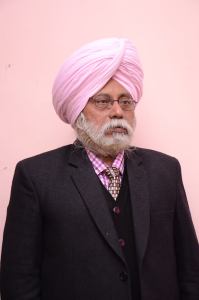
Living more and more trapped in cyberspace (statistics can attest that we spend daily more hours in the virtual than in the real world), we may at a certain point be inclined to demonise it, but the fact of the matter is that the virtual space does offer us an unparalleled range of opportunities. Through it, I have been bestowed the privilege of coming into contact with a large number of amazing personalities from various fields of culture and creativity, among whom I am happy to mention Dr. Jernail S. Anand, an Indian poet, philosopher, teacher, educator, to name just the main aspects of his proliferous career.

Dr. Aprilia Zank

Due to both my profession and my passion for literature and art, I had been familiar with creative people before the Internet, but it was the sort of closeness which one finds in the seclusion of libraries, museums, university halls and the like. With the new generations ‘born’ with notebooks, tablets or smartphones in their hands, the encounter with knowledge or creativity acquires new coordinates. The notion of reception needs to be reshaped and reconstructed. What sounds like self-evidence at first view needs though critical questioning. Do we really experience and process literary and artistic contents in a new way in the virtual space? Does it make a difference if I hold a paper book in my hands, or if I read it on a screen, or is its impact on me the same? Perhaps we need indeed to pay new consideration to Marshall McLuhan’s declaration that “the medium is the message.” Extensive research is necessary, and scientists of all domains are busy attempting to transmute their findings into relevant statistic data, but beyond all scholarly devices are the unique literature and art recipients with their particular premises for the reception and processing of literary writings and of works of art.

My encounter with Dr. Anand has taken place – so far and I hope it will change soon – in the virtual space only. I have had no opportunity to meet him in person, yet I have the feeling that we are good old friends. Furthermore, we both belong to a tremendous network of friends and friends’ friends who are in a permanent and immediate encounter and exchange of information, opinions and critical views. For there is no denial of the fact that accessibility of all types is practically borderless in cyberspace. A sheer number of readers can and do access Dr. Anand’s poems, essays and philosophical work in bits or as full books on the Internet. This unparalleled intercourse occurs within our beloved social networks in which communication is possible at any time, from every place and with everybody. But what sounds like a tremendous achievement in general and a huge chance for writers and artists in particular comes at a price. It is precisely the easiness of accessibility that renders the encounter with e-media contents accidental, fugitive, and often enough perfunctory. Under the ‘burden’ of the stupendous offer we are confronted with in cyberspace, we race from stimulus to stimulus in a feverish attempt to absorb as much information as possible. Under these circumstances, we run the risk of being superficial in our assimilation and, accordingly, far from optimal in our response.

Dr. Jernail S. Anand

Dr. Jernail S. Anand

Now, Dr. Anand is a renowned personality with a remarkable retinue of followers and admirers who always search for his presence and newest publications in the virtual world. And he does indeed regale them with exquisite poetry, thought-provoking quotes, or deep-reaching philosophical musings. The readers’ response is there, but it has evolved into a new language, semiotic to a great extent. We use ‘like’, ‘love’, ‘angry’, ‘sad’ and more signs to save time, or in the best case, we type ‘excellent’, ‘profound’ ‘congratulations’, to attest due consideration. Can this be a satisfactory type of feedback? On looking at Dr. Anand’s literary items shared the day I am writing this article, I spot a poem titled “HOW POOR IS THIS LIFE”. A quick analysis reveals that a response is there: 23 readers have liked and/or loved the poem, two have provided comments of one and of four words respectively, but that is about all. I miss some, to my mind, almost compulsory remarks, e.g. a reference to the Eliotian echo of the lines:

I write so much yet the feeling …
of half fulfilment stays.

or a few words of appreciation for the exquisite metaphors below:

I could not digest the winds
I could not drink the seas

The poet further complains about the unsatisfactory living we are trapped in:

Life! How poor you are!

It is, of course, the spiritual poverty he is is weary of, a recurring theme in Dr. Anand’s writings and a major potential starting point for a debate among the readers of the poem. Decay of traditional values, lack of genuine communication with one’s own kind, failure in the attempt to connect with God – it is all there craving for introspection and deliberation. But here, too, things seem to be doomed to fail to meet expectations:

Things remained half loved
Hence half lived.

Is there any chance left for mankind to find its way back to primeval joy? In the poem “JOYS PAINS”, Dr. Anand emphasises the inextricable duality of joy/pain by using stylistic devices such as capitalisation and the juxtaposition of words with no punctuation, thus almost creating a proper name with a single ‘signifié’. The last three lines convey one more cry-out-loud testimony of the shallowness of inter-human relationships in a world devoid of true communication:

Nobody listens to the shrieks
Which issue from silent lips
Coated with red smiles

A look at the feedback on these major issues present in the poem reveals a poor echo to such a challenging piece of writing: a few semiotic ‘likes’, a ‘sad’ sign, and a positive remark illustrated by a line of the poem. No truly deep consideration offered to major existential questions posited in other poems either. Weirdly enough, this is by no means lack of appreciation or interest, since Dr. Anand is well-known as one of the most widely acknowledged contemporary Indian poets and philosophers. It is rather a peculiar aspect of the nature of reception in this kaleidoscopic world which is the virtual space. Aside from the already mentioned fast-paced character of this medium, which urges us to move on and on to the next items of interest, further components come into play or better said interplay among its users. Visibility and transparency, which per se are positive features of the virtual space, may become inhibitory under the realisation that people ‘can read your mind’ when you express your ideas, opinions and the like on various issues. Direct comparison with other minds can occur, with an uncertain outcome. A reason for many to refrain from a too obvious display of their own facets of spirit or intellect.

Luckily, Dr. Anand’s prolific work has been extensively and skilfully dealt with by scholars who have assuredly taken more than a glance at his literary and philosophical writings. For there is no doubt that thorough reading and rigorous research is still being practised, even in our high-speed world and in the fugacious virtual reality.

Summing up, I think there is no point in trying to solve the quandary whether the virtual world with its social networks are a blessing or a curse. Living without it has become unthinkable, so why not make the best of it. The possibility to display your work and creativity in it, to enjoy borderless visibility and access, and to have the chance of getting feedback from the most unexpected corners of the virtual but also of the real world is priceless. And in this respect I am grateful to have had the opportunity to meet the tremendous personality of Dr. J. S. Anand in this scintillating world. This notwithstanding, I am of course looking forward to an early encounter with the man in person.

– Aprilia S. Zank
October 12th, 2017
Munich, Germany

© 2017, essay and photo portraits, Aprilia S. Zank; Originally published in Galaktika Poetike “ATUNIS” and republished here with Aprilia’s permission


DR. APRILIA ZANK is a lecturer for Creative Writing and Translation in the Department of Languages and Communication at the Ludwig Maximilian University of Munich, Germany, where she received her PhD degree in Literature and Psycholinguistics for her thesis THE WORD IN THE WORD Literary Text Reception and Linguistic Relativity. She is also a poet, a translator and the editor of two anthologies: the English–German anthology poetry tREnD Eine englisch-deutsche Anthologie zeitgenössischer Lyrik, LIT Verlag, Berlin, 2010, and the anthology POETS IN PERSON at the Glassblower (Indigo Dream Publishing, April, 2014). She writes verse in English and German, and was awarded a distinction at the “Vera Piller” Poetry Contest in Zurich. Her poetry collection, TERMINUS ARCADIA, was 2nd Place Winner at the Twowolvz Press Poetry Chapbook Contest 2013. Aprilia Zank is also a passionate photographer: many of her images are prize-winners and several have been selected for poetry book covers.


DR. JERNAIL S. ANANAD is the author of two dozen books in English poetry, fiction and non-fiction, Dr. J. S. Anand is an established name in the field of education, philosophy, and spirituality. Born on 15th Jan., 1955, he hails from village Longowal [Distt. Sangrur,Punjab, India]. He got his school education from the best schools in Ludhiana, the highly industrialized city of Punjab, famous for its hosiery and cycle parts industry. He was a student of famous Govt. College, Ludhiana, during his graduate studies, and he did his M.A. in English literature from Punjabi University, Patiala, securing 2nd position in the University. His doctoral thesis, submitted to Panjab University, Chandigarh, was on “A Comparative study of Mysticism in the poetry of Walt Whitman and Prof. Puran Singh”. Dr. Anand is an educationist, an able administrator, a talented writer, a novelist, a poet, and a philosopher, who is a multi-dimensional personality, particularly, in view of his interest in Saving the Earth. He planted around 20 thousand saplings in and around Bathinda. He has also delivered lecturers on Spirituality, Human Rights, and Moral Values. “We are inheritors of the wealth of this earth and this sky, and it belongs equally to us all” – Anand

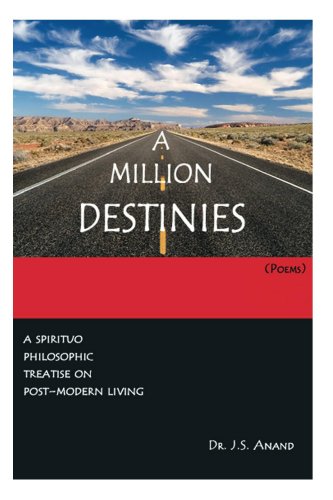
A Million Desitines is Dr. Anand’s English language collection.


ABOUT THE POET BY DAY