Page 4 of 6

Life, Poetry, Art and the Wired Universe

An interview of Dr. Aprilia Zank, poet, artist and lecturer for Creative Writing and Translation in the Department of Languages and Communication at the Ludwig Maximilian University of Munich, Germany, by Dr. Jernail Anand, poet, writer and an established name in the field of education, philosophy, and spirituality. Originally published in Galaktika Poetike “ATUNIS” and shared here with both Aprilia’s and Dr. Anand’s permission. Enjoy! It’s rich.

LIFE, POETRY, ART and the WIRED UNIVERSE

ANAND: Zank, how do you look upon yourself essentially. Do you consider yourself a poet or a teaching professional who is conscientiously touched?

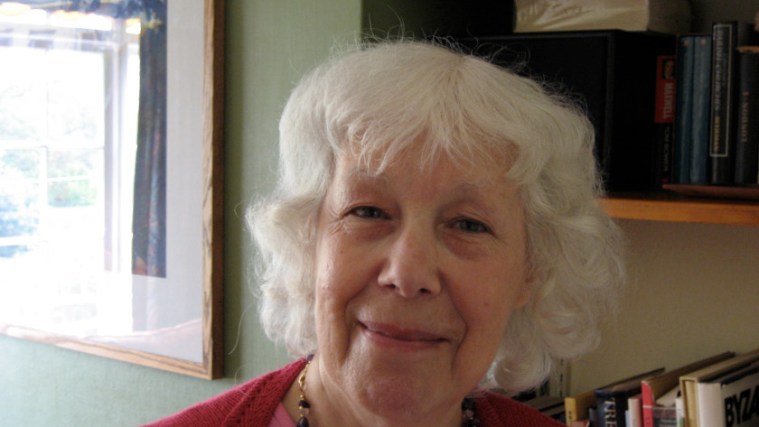
Dr. Aprilia Zank

ZANK: I consider myself a many-faceted humanist. I graduated university as a very promising professional, but I did not hesitate to put back my career ambitions for a while for the sake of child raising and education. Transmitting humanistic values to young generations, whether your own children or your students, is possible through both writing and teaching poetry. I was lucky to have the chance to do them concomitantly. Being a poet myself has been an optimal prerequisite for a better understanding of the creative process, and enabled me to select the most appropriate manner of approaching poetry in class.

ANAND: Let us know how you stumbled into poetry. Is there any parental legacy behind your interest?

ZANK: My affinity to poetry and literature dates back to my school time. I was fortunate to enjoy a thorough education both at school and at home. My parents’ professions were not very poetic, they were both judges, but they held literature and art in great esteem. We had a considerable collection of books at home, which offered me the possibility to get an early contact with universal literature. Furthermore, my mother, who had an amazing memory, used to recite poems and quote prose fragments from the most various books and authors. Thus, the challenge was early there for me to try and find my own poetical voice.
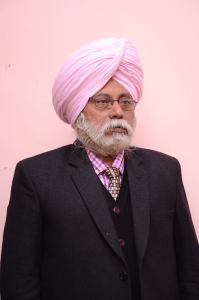
Dr. Jernail Anand

ANAND: You are a multi faceted personality. How do you align one aspect of your personality with the others? Don’t you think they overlap at times?

ZANK: My range of interests is indeed very wide. To my main occupations, teaching and writing, I must add my passion for photography, which I experience as a form of art and a most creative act of deciphering the world. There is poetry in photographic images, as well as pictorial effects in verse. I am pleased to say that many of my photos have been awarded in various competitions, and several have been used for poetry book covers or have served as prompts in poetry workshops, or paired with poems in various publications. Further hobbies are travelling, gardening, dancing – to mention just a few.

ANAND: Can you define the role of the poet today? Is it enough that they pour out their art and heart, or do you find a political angle to whatever is being written? Is everything that we write political? Can an author be neutral in a wired universe?

ZANK: There are two main points in this question. The first relates to what T. S. Eliot called the “turning loose of emotions”, a poetic attitude which I absolutely reject. I think there is too much “I” and too much “heart” in the poetic scene, virtual as well as real. Nothing against sentiments in poetic creations, as their denial would contradict the very essence of poetry, but there is too much raw, metaphorically unprocessed feeling in today’s verse. There can be no poetic originality where there is no filtering of emotions through stylistic refinement. That is why many poetic voices sound very much alike.

As for the question whether poetry and politics have anything in common, I must say that being political or not is a matter of definition. Nobody is completely apolitical. Even non-involvement with politics can be an attitude of either rejection and refusal to comply, or tacit agreement to what is going on. Happily enough, there are many poets who overtly challenge social and political issues. Nevertheless, in the same way in which many people nowadays are more concerned to take selfies than to capture the reality around them, a great number of aspiring poets have both ears open for the sighs of their own hearts more than for the cries of humanity.

ANAND: If I say all art, poetry included, is autobiographical, will you contradict my statement? Can you imagine a toy of clay without the presence of clay in it?

ZANK: Each act of creation emerges from a complex interaction of factors which shape one’s personality – it is therefore autobiographical to a certain extent. But no true creator of art or poetry will remain trapped in their own shells. It is the ability to transcend one’s personal feelings and experience in order to reach a dimension of universality that makes art viable and everlasting. Here again I must quote T. S. Eliot with his famous line, “Let us go then you and I”, which points to the “oneness”, to the synthesis of author and reader. Basically, we walk similar ways, we have the same needs and longings, and often enough similar victories and defeats. But then what makes a poet different from one who pens his or her bits of life in a dairy? It is precisely that particular skill of turning personal emotions and experiences into original but generally applicable patterns with which the readers may fully or partly identify and recreate themselves.

ANAND: You are an artist also. How are a poetic work and an artistic creation different?

ZANK: They are only different in the materials used for the end products. The impact, both spiritual and aesthetic, on the receptor can be comparable to a large extent. It is a common place to say that you can paint with words, or tell stories with images and colours. One talks of visuals in poetic lines, as well as of the poetry of photographic or painted images. And of course we can extend these observations to music, too.

ANAND: What are your views on feminism? Is it essential for a woman writer to write against their menfolk? How can you reconcile feminism with home?

ZANK: Feminism is a word of many shades, depending on the time, place and intention of its use. I am not a programmatic feminist. When necessary, I am a combatant against injustice, abuse, exploitation in all domains. I speak up on behalf of children as well as of adults irrespective of gender; I am also active in animal protection. And when wrong is done by men, I raise my voice against those particular men, not against menfolk as a whole. Unfortunately, women are still underprivileged in many cultures, and I am positive you know it better than I do, so they need lots of loud voices to bring about the necessary changes for fair chances and equal social acceptance.

ANAND: Most of poetry erupts out of a broken mindset and the major role in it is played by love rejection, dejection and disruption in marital affairs. Who after all is at the centre of your poetry?

ZANK: There are indeed many examples of literary geniuses with distorted mindsets, but this is in no way a must for brilliant creative works of any kind. Marital, or more often extra marital dramas, also play a role, but when literature focusses on this alone, it is not, in most cases, truly great art. As far as I am concerned, it is not about who, but about what is important in poetry. Love? Again, it depends on the semantics of the word. There are tons of poems and anthologies dedicated to love – one must wonder why, with so much love around, there are so many conflicts in the world. Maybe precisely because most people keep rotating around their one-and-only own self, with no intention or ability to look beyond and above it, to cast a glance to other realms of human love and life, or even further, to other issues of this poor blue planet with its multitude of problems. And, back to your question, there is no central concern in my poetry, but the attempt to explore and feature as many facets of our existence as possible.

ANAND: Every author exhales a feeling of half fulfilment. What more do you think you wish to accomplish?

ZANK: Basically, artists of all kinds are never content with their accomplishments. But then neither are scholars, scientists, educators, even honest politicians. There are many things I would still like to do, foremost activities in collaborative projects with poets and artists from around the world. My experience so far has shown that these intercultural exchanges are most enriching in every respect: not only literary, artistic and scholarly targets are met, but also the cherishing of great humanistic values such as friendship, peace, harmony within the mankind and in people’s relationship to nature and environment.

ANAND: How do you react to the idea of virtual literature? Can it be considered literature proper? How you relate it to the futuristic projections of literature?

ZANK: I think there is no such thing as virtual literature, not yet anyway. Literature is always real, only the new media of transmission are different. More and more literature reception happens in the virtual space with its amazing availability and visibility. But, as I have already stated in a previous article, it is precisely this easiness of accessibility that renders the encounter with e-media contents accidental, fugitive, and often enough perfunctory. Will we from now on write with this awareness in mind? Will the cyber-space engender new stylistic and aesthetic dimensions? Let us hope that we will live to see it. I think there is no point in trying to solve the quandary whether the virtual world with its social networks are a blessing or a curse. Living without them has become unthinkable, so why not make the best of it. The possibility to display our work and creativity here, to enjoy borderless visibility and access, and to have the chance of getting feedback from the most unexpected corners of the virtual but also of the real world is priceless.

© 2018, Dr. Ananad and Dr. Zank


DR. JERNAIL S. ANAND is the author of two dozen books in English poetry, fiction and non-fiction, Dr. J. S. Anand is an established name in the field of education, philosophy, and spirituality. Born on 15th Jan., 1955, he hails from village Longowal [Distt. Sangrur,Punjab, India]. He got his school education from the best schools in Ludhiana, the highly industrialized city of Punjab, famous for its hosiery and cycle parts industry. He was a student of famous Govt. College, Ludhiana, during his graduate studies, and he did his M.A. in English literature from Punjabi University, Patiala, securing 2nd position in the University. His doctoral thesis, submitted to Panjab University, Chandigarh, was on “A Comparative study of Mysticism in the poetry of Walt Whitman and Prof. Puran Singh”. Dr. Anand is an educationist, an able administrator, a talented writer, a novelist, a poet, and a philosopher, who is a multi-dimensional personality, particularly, in view of his interest in Saving the Earth. He planted around 20 thousand saplings in and around Bathinda. He has also delivered lecturers on Spirituality, Human Rights, and Moral Values. “We are inheritors of the wealth of this earth and this sky, and it belongs equally to us all” – Anand

A Million Desitines is Dr. Anand’s English language collection.
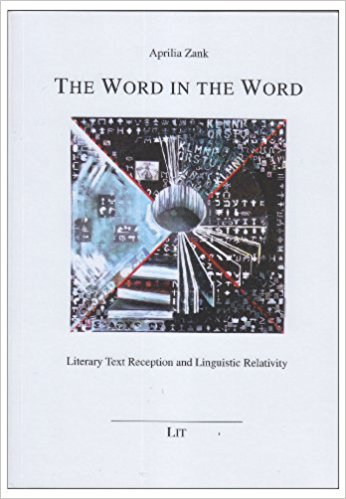

DR. APRILIA ZANK is a lecturer for Creative Writing and Translation in the Department of Languages and Communication at the Ludwig Maximilian University of Munich, Germany, where she received her PhD degree in Literature and Psycholinguistics for her thesis THE WORD IN THE WORD Literary Text Reception and Linguistic Relativity. She is also a poet, a translator and the editor of two anthologies: the English–German anthology poetry tREnD Eine englisch-deutsche Anthologie zeitgenössischer Lyrik, LIT Verlag, Berlin, 2010, and the anthology POETS IN PERSON at the Glassblower (Indigo Dream Publishing, April, 2014). She writes verse in English and German, and was awarded a distinction at the “Vera Piller” Poetry Contest in Zurich. Her poetry collection, TERMINUS ARCADIA, was 2nd Place Winner at the Twowolvz Press Poetry Chapbook Contest 2013. Aprilia Zank is also a passionate photographer: many of her images are prize-winners and several have been selected for poetry book covers.


ABOUT THE POET BY DAY

DREAMING THE WORLD, An Interview with Michael Watson, M.A., Ph.D., LCMHD

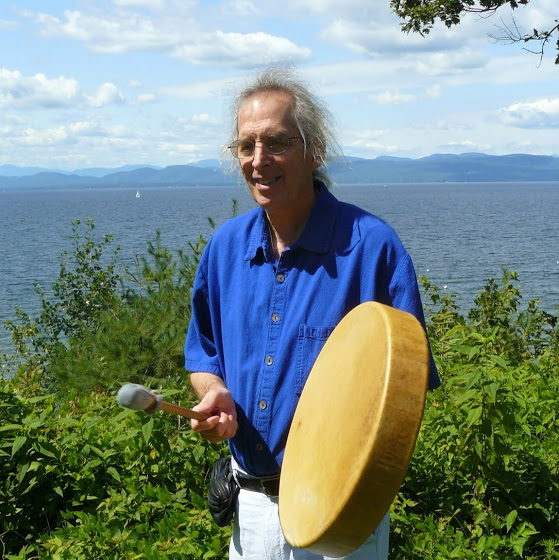
Michael Watson
Michael Watson

MICHAEL WATSON, M.A., Ph.D., LCMHC is a poet of the spirit, if not of the pen, and a contributing editor to The BeZine, an essayist and a practitioner of the Shamanic arts, psychotherapist, educator and artist of Native American and European descent.

Michael lives and works in Burlington, Vermont,where he recently retired from his teaching position in undergraduate and graduate programs at Burlington College,. He was once Dean of Students there. He also had wonderful experiences teaching in India and Hong Kong, which are documented on his blog. In childhood Michael had polio, an event that taught him much about challenge, struggle, isolation, and healing.

This interview was originally featured in the June issue of The BeZine.

JAMIE: I often tell people that if they have time for only one blog, it should be yours, DREAMING THE WORLD. You bring such a wealth of understanding, experience and education to your posts, so gently delivered and so healing. Thank you! You write a lot about nature. Did you grow up in the country?

MICHAEL: Thank you, Jamie. I am deeply moved and honored. My dad was in the Air Force so we moved periodically. He hailed from Southwest Indiana, from a hillside farm overlooking the Ohio river. My mom grew up on a farm in Texas, a couple of hours west of Dallas. The upshot was we tended to be stationed near one family or the other. When I was six or so, we lived in rural Lincolnshire, England, on an estate, complete with a game warden, where I spent untold hours in the woods with friends. Then we moved to rural Illinois, where we lived on the edge of a small town, and I was free to roam the countryside. From there we spent a year in suburban Ft. Worth, Texas, then we lived in urban Ohio while I finished high school and college. No matter where we were my parents had a garden, and made sure we kids had access to Nature. Given the option, I would head for the forest or prairie. I spent quite a few fabulous summers on my uncle’s farm in the fertile Ohio river valley near Madison. My dad’s family encouraged me to understand myself as part of the Natural world.

JAMIE: How did you get interested in therapy as a profession?

MICHAEL: I had a good therapist in college, then was clinical coordinator for a large “Free Clinic”. After working for the Soil Conservation Service for a while (I had a splendid job where I was outside most of the time, often in wilderness), I realized my legs were not going to tolerate the demands on them, and I had best find a more sedentary job. I already had an MA in Studio Art, and was offered a position as a community based artist, so I grabbed the opportunity to explore engaging people in arts for healing. I also went back to school to get a degree in counseling. During that time I provided some services to patients in the local university medical center, and when I finished my degree they offered me a part-time position, as did an outpatient clinic in town. One of my teachers worked in the clinic, and when he decided to leave his private practice, he essentially gave it to me.

JAMIE: What spurred your interest in shamanism?

MICHAEL: My dad’s side of the family has always identified as Native, although they steadfastly refused to tell us our tribal identity. One of my cousins, who is a genealogist, has tried several times to trace our family, without success. There are birth certificates for family members that go back three or four generations, then there is simply no record. All the birth certificates list us as being Caucasian. Indiana was a very nasty place for Native people during much of the last two centuries and it was very common for light skinned Natives to pass. My grandmother used to say, “We must protect the children.”

Anyway, I mostly didn’t think much about Natives, except to identify with the cowboys when we kids played cowboys and Indians. I could never figure out why my dad got upset with me for being a cowboy! Then in college there were all these books about Native American healers and shamans. A lot of those books turned out to be fraudulent but they got my attention. When I went to New Mexico for grad school I had many Native friends. I ran a small ranch in the mountains so I could afford school, and got a real hit of the sacredness of that country. Eventually I moved to California, then back East. I kept meeting Native elders who offered to teach me something. I’d protest that I wasn’t Native and they would look at me as though I was completely out to lunch. Often they would say, “We know more about you than you do.” I guess they were right.

When I was living in northern California I had a vision that turned my life upside down, and set me to trying to understand what I was being asked to do. That was forty years ago. I still ask the Powers what they want, and I’m still not the best at engaging with them.

JAMIE: You have lived virtually all your life with polio: traumatic, painful and disabling. I know you’ve thought a lot about disability, about cultural misconceptions and about meaning. What is the most important thing you think we need to know as a culture about the nature of disability and the impact – not so much of the disability itself – but of the assumptions that are made about people with disability?

MICHAEL: I was seven when we came back from England. I started school, second grade, and after a week we had the Labor Day weekend holiday. I developed Polio during that weekend and spent the next year trying to recover. I was in the iron lung and had significant paralysis; I made a rapid recovery (one of those “miraculous” recoveries that happened fairly often) and left the hospital after only a bit more than three months. We Polios were encouraged to believe we were not disabled, but many of us were. Much later, we discovered there is a correlation between the severity of the illness, the degree of one’s recovery, and the disabling that comes with Post-Polio Syndrome. PPS had been studied for about a hundred years, but everyone conveniently forgot about it once the vaccines arrived and the epidemics ended. (The same thing happened with us Polios, we were forgotten, even by the March of Dimes, an organization that had promised to support us, and our families, for as long as we needed them.)

Being an enlisted person in the military means one is not well paid; a lot of military families are on food stamps! As it turned out, I most likely survived Polio only because I was in a military hospital, and the Air Force literally did whatever was necessary to support me during the acute phase of the illness; they even flew in two top Polio docs to help me.

Being a closet Native and a Polio who tried, rather unsuccessfully, to pass as able, I learned a lot about the way our culture attends to people with disabilities. There is a strong Calvinistic streak in the culture, one that subtly, or not so subtly, places the blame for disabling events on the disabled person and their family. There is a strange cultural belief that disability is a moral failure, rather than an act of Fate; there is also a belief that physical disability implies cognitive impairment. (There are more reportedly Ph.D.s among Polio survivors than any other segment of the population.) There is also a willful refusal to notice and address all sorts of physical and cultural barriers that greatly affect disabled people.

I have worked on issues of disability throughout my adult life. When I am teaching about the experience of disability I remind students/participants that disability is largely a social construct; even the medical definition of disability is socially constructed, a fact many doctors forget. (Actually, younger physicians tend to be much more aware of this.) I often ask those present to speak about the experiences that disable them; I find it immensely useful to aid individuals to understand the experience of being disabled by locating parallel experiences in their own lives. The truth is, most of us have had moments when someone else’s attitudes, behaviors, or beliefs are/were disabling to us. Disability is created!

Oh, one more thing. There is, in North America, a cultural expectation that persons with disability will be either unceasingly cheerful or despondent. We should never be angry. Well, what is one to say to that? I have a wide array of responses to my experience, certainly including anger.

[I very much appreciate this written by Michael on his blog: “We find it useful to define disability as a lack of access to the social and/or physical environment, a lack created by the beliefs and behaviors of self, or, especially, others. While many disability activists and theorists find this definition overly broad, we believe it aids people to understand the experience of disability, building empathy and community.”

JAMIE: You also have been involved in education at the university level for good part of your life. How do you feel about the current emphasis on vocational vs. liberal arts/humanities? What price do we pay or will we pay for this?

MICHAEL: I have long encouraged students to explore widely, to engage the fine and liberal arts, and to create internships and other avenues for applying their learning in the everyday world. Being educated in the fine/performing arts, and the liberal arts, gives one models for being creative, and understanding historical and cultural context, as well as opportunities to learn about human nature. Hopefully, one also gets enough science to be able to understand the broader ecosystem implications of one’s behavior. Unfortunately, those who have overly specialized training tend to be lacking in tools.

JAMIE: What is the major work or interest of the next year for you?

MICHAEL: I’m dealing with progressive Post-Polio Syndrome, and approaching seventy, so I am practicing becoming more choosy about the projects I take on. I will continue to see clients in my counseling and healing practices. I have a list of photographic and writing projects, and Jennie, my wife, and I are working on new toy theater shows. Now that I am no longer classroom teaching, I’m also working to create time to read for fun!

© portrait and answers to interview questions, Michael Watson, All rights reserved

CIRCLING THE CORE & WRITING MY WAY THROUGH CANCER: An Interview with Myra Schneider

Award Winning British Poet, Myra Schneider (b. 1936), Writer, Writing Coach, Consultant to Second Light Nework of Women Poets

This interview was first published on February 14, 2011, not long after I “met” Myra (Myra Schneider’s Poetry Website). I’m publishing it again in honor of Myra’s 80th birthday this month and because there is value in it. You can see that the career of a poet and writer must evolve like any other career.  It takes time to be noticed by public and publishers, to find your voice, your subject, your niche and a way to promote your work with dignity. It is an evolution that requires self-awareness, patience and perseverance.

Myra and many of the other featured poets on this site make excellent – inspiring – role models. They also demonstrate that there is no waiting for outside validation. First you have to be “poet” or “writer” or the practicioner of whatever is your chosen art. The rest will follow, which doesn’t necessarily mean you will have a huge following and a best-selling collection. You will have a following though, people who support you and appreciate your work, share your values and your love of poetry.

Another more recent interview of Myra,  A Life Immersed in Poetry, is HERE.

– Jamie Dedes

51dg9SOhnHL._SX318_BO1,204,203,200_

This is a tentative world. Ahead the ground
rises, unrolls slowly into distance. Grass
straggles from sparse clumps. The only sound
is silence. On trees thin as bird legs: a fuss
of feathers. Maybe the smudged chimney and roof
are figments of imagination. But the wall
has a solidity which would support grief,
guides the walker and her dog up the hill,
reaches beyond the point eyes can see
into the future’s opaque sky. The way
is planted with snares but they’ll plod to its end
and the dog will linger to sniff the moment’s petals,
the wall will shield the woman from the wind
as she hugs her thoughts, their jet darks, opals.

Excerpt from Wall (for Jennifer), in Circling the Core

INTERVIEW 

JAMIE: YOU STARTED OUT WRITING FICTION FOR CHILDREN AND YOUNG ADULTS AND THEN MOVED TO POETRY. WHAT INSPIRED THE TRANSITION AND WOULD YOU WRITE FICTION AGAIN?

MYRA: My first published work was fiction for children but the story of my writing life is quite complicated. During my teens and while I was at university I was sure I wanted to be a poet. When I left college – we’re talking about a long time ago 1959/60 – there were not the workshops and openings which we now have in the UK. I was invited to join a group of well-known poets but what they were writing didn’t seem to connect with the  poetry I loved from the past and the 20th century. Their poems struck me as pretentious and I felt like a fish out of water. As I found almost nothing to counterbalance this I soon stopped writing poetry and for a few years wrote rather bad adult novels, none of them were published.

When my son was small he kept asking me to tell him stories and after writing down some of these I tried writing a full-length children’s novel. The third one, Marigold’s Monster, was accepted by a well-known publisher who later commissioned me to write two novels for teenagers. By this time I had started writing poems again and had one or two accepted in magazines. At the end of the 1970s there was a cut in library spending in the UK and because of this I didn’t receive a contract for a third novel which the publishers were interested in. I started writing a lot more poetry and after three years I was lucky enough to find a small press publisher. By the mid-1980s I knew that poetry was my real metier and I stopped writing fiction in prose.

What I retained though was a love of narrative and I have written a number of narrative poems.  These range from poems of two or three pages to poems of thirty pages or more. Some deal with contemporary life both relationships and social issues and draw indirectly on my own experience. Examples of these are Voice Box in my book, Multiplying The Moon and Hotel in Circling The Core. Others draw on myths or known historical material and  explore themes which interest me. The most recent of these is the The Minotaur which has just come out in the Long Poem Magazine. I have also written Becoming which is published as a short book by Second Light Publications. This draws on difficult personal material and presents it in a parallel situation. I love writing narrative poetry – it’s almost a different medium from lyrical poetry and it allows me to approach material in a very different way.

JAMIE: IT IS NOT WELL KNOW THAT THE GREAT AMERICAN NOVELIST, PEARL BUCK, WROTE POETRY AS WELL AS PROSE. A SMALL, ELEGANT COLLECTION OF HER POEMS WAS PUBLISHED POSTHUMOUSLY. ONE POEM CALL ESSENCE IS OF SPECIAL INTEREST:

I give you the books I’ve made,
Body and soul, bled and flayed.
Yet the essence they contain
In one poem is made plain,
In one poem is made clear:
On this earth, through far or near,
Without love there’s only fear.

– Pearl Buck

WOULD YOU SPEAK TO THAT PLEASE AND WRITE ABOUT WHAT YOU SEE AS THE ESSENCE OF POETRY?

MYRA: This spiritual poem is an expression of what Pearl Buck feels is at the heart of living and writing – love. Without it life would have no meaning, nothing to offset the negativity, dangers and fears of living. What I understand too is that in all else she has written, all she has given body and soul to, love is the essence. I’m glad she used the word essence because for me the poetry that really matters – both what I read and what I write – is spiritual poetry, poetry which searches below the surface for meanings . This is not say that I write or look for poetry which is very solemn or far removed from the everyday or humorless – rather that I want to explore what lies beneath the ordinary, what raises it, makes it not ordinary.

JAMIE: WHY DID YOU AND JOHN KILLICK WRITE WRITING YOU SELF, TRANSFORMING PERSONAL MATERIAL?

MYRA: We wrote the book because we believe that personal writing is very potent both for the writer and the reader, because some of the greatest literature is rooted in personal material. We both became aware years ago that many people feel a strong need to write about their lives and feelings and even when they go to writing workshops without recognising this need it is quickly apparent that it is the driving force behind what they write. What we think is key to the book is the range of personal subject matter which we have examined and the widely different approaches writers have used. We believe the firsthand accounts by a number of writers and also ourselves about how we tackled personal material make the book unique. It also mattered to us to include powerful writing by little-known and unknown writers as well as work by those with high reputations. The second part of the book offers many different techniques and suggestions for tackling personal experience. It also looks closely at the difference between raw and finished writing, the validity of each, and includes ideas for developing work.

JAMIE: WRITING YOUR SELF IS JUST WHAT IT SAYS AND PROMOTES POETRY WRITING AS A HEALING ACTIVITY. YET, READING POEMS IS HEALING AS WELL. ALTHOUGH MANY OF YOUR POEMS DO NOT SEEM PERSONAL, I SUSPECT THEY ARE AND THE SHARED EXPERIENCE IS HEALING FOR US. IT MAKES ME WONDER WHAT YOUR PRIMARY GOAL IS WHEN YOU WRITE. DO YOU WRITE FIRST FOR YOURSELF OR FIRST FOR YOUR READER?

MYRA: Yes, reading, writing and sharing poems is healing and if one is to be fully involved in writing it is crucial to read poetry and read poems closely. Circling The Core, my most recent poetry collection includes a poem about very painful personal material, Room, but it has fewer directly personal poems than my earlier books. I have in fact written many personal poems, in particular about my difficult relationship with each of my parents and my experience of breast cancer. I also write many poems which I consider personal, or partly personal, about my response to situations, other people, my inner self and how I connect with the outer world. Writing, in fact, helps me make sense of my life, of the world we live in. I write poetry above all else because I feel compelled to write. If I didn’t write something central would be missing from my life. Communication with others, however, is very important to me so although I write out of my own need the reader and what he/she will receive is always in my mind as I develop my initial ideas.

iu

I wish I wasn’t putting such a strain on Erwin. I am afraid the breast cancer nurse, who is coming again tomorrow, will give me more information that will worry me. I have to hang onto the thought of friends and the relatives and friends of people I know who have survived for years and years after breast cancer. I owe it to myself to manage my panic and to make this a life experience not a death experience, to concentrate on possibilities, to grab every moment of life I can, to use what has happened for writing, to include the awfulnesses but also the plusses. I mustn’t forget the moments of joy: the sun lying in swathes on the grass, the sharp clean cut of the air, the disc of the sun on water. I must keep the words that came into my head about the snowdrops I saw in a garden when we walked to the shops a couple of hours ago. I think it’s the starting point of a poem.” From Myra’s cancer notebook.

JAMIE: PAIN OFTEN MAKES US FEEL LIKE ISOLATING AND YET WE CREATE SOME FINE ART OUT OF THAT PAIN. IT’S HARD TO REMAIN ISOLATED WHEN YOU WRITE. YOU ARE REVEALED AND YOU TOUCH AND ARE TOUCHED. IS THAT – THE CONNECTION WITH OTHERS – PART OF THE HEALING PROCESS OF POETRY WRITING OR SIMPLY INCIDENTAL TO IT?

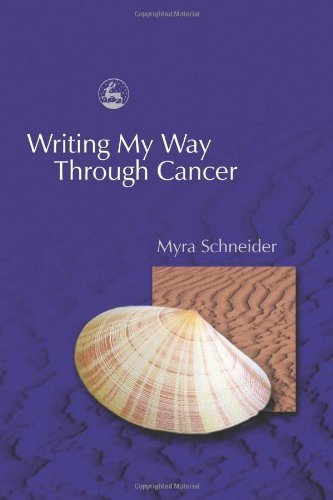
MYRA: Yes, for me, and I think most other people, making connection with others when one writes out of pain or distress, is part of the healing process. I was particularly aware of this when I was being treated for breast cancer. Being weak and having to spend much of my time at home and do very little work for several months made me feel cut off from life but writing my journal and, even more importantly, poems during those months supported me in a way which I found absolutely amazing even though I had always believed writing was therapeutic. While I was writing I felt l was my whole self and not my ill self and also I felt connected with the outside world. The reason I turned my journal, poem notes and poems into a book, Writing My Way Through Cancer was because I wanted to share the possibilities writing can offer anyone in times of trauma and difficulty. For this reason I added a section of therapeutic writing ideas. In total I felt all the writing I did during the year I was being treated for cancer was a way of creating something positive out of a negative experience. This was very uplifting.

JAMIE: YOU SAID YOU “KNIT WORDS INTO POEMS.” THIS SEEMS ALMOST TO IMPLY STRUGGLE. DOES POETRY COME EASILY FOR YOU? ORGANICALLY? OR, IS IT A LABOR?

MYRA: Ah now, writing organically is absolutely crucial if one is produce authentic poetry. If the poem does not come from the centre of oneself, if one is not totally engaged it isn’t possible to write a real poem. Exciting seeds of poems present themselves, often insist on my attention but transforming these visions into poetry – that is work, hard work, at times a struggle. This does not mean to say that it is tedious, unwanted toil. For me it is a compulsion. If it becomes monotonous slog to develop or revise then something has been lost and it is best to leave the poem until the impulse to work returns or if necessary to abandon it altogether. I find the later ‘work’ stages of writing as totally involving as noting down those first images and ideas. The moment of discovering what direction the poem should take when I have been uncertain, finding the way to write a line which has eluded me, is always exciting.  I don’t believe many poems find their final shape easily – so my answer is yes, ideas and parts of poems come easily and my writing is organic but it is also hard work, work which I am committed to.

JAMIE: I SEE THAT YOU TEACH AS WELL AS WRITE. DO YOU FEEL THAT TEACHING FEEDS THE CREATIVE MUSE OR IS IT A DISTRACTION? I GUESS WHAT I’M ASKING IS WHAT DO YOU GET BACK FROM TEACHING POETRY WRITING TO OTHERS AND IS THE REWARD NEARLY WHAT IT IS WHEN YOU WRITE?

MYRA: I love teaching. I run  two regular monthly courses/ workshops for the Poetry School in London and also one-off workshops which I do for a range of organizations all over England and occasionally in other countries. A few of the one-off workshops are residential. It is very satisfying to open doors which help writers generate ideas, also to run groups where rigorous but supportive feedback is offered not only by me but everyone in the group. Some of the people I work with are very talented and I feel them to be colleagues rather than students. Discussion of their work or of the work of published writers with these groups is always illuminating and the contact with people committed to their work and interested in the writing process feeds my own work. When I set writing exercises in my workshops I always write too and sometimes this triggers a new poem for me so this is another bonus. I am a firm believer in writing courses and workshops. Of course not everyone is going to become a professional poet or writer but everyone can gain more satisfaction from reading and writing poetry, everyone can develop their skills.

You can visit Myra HERE. Myra’s Amazon U.S. Page HERE.  Myra’s Amazon U.K. Page HERE.

This video version of Myra’s The Red Dress can’t be viewed from email. If you are reading this post in an email, you will have to come to the site.

© Myra Schneider, her responses, poem, portrait and bookcover art

CELEBRATING AMERICAN SHE-POETS (12): Sharon Frye, Last Chance for Rain

SharonSharon Gariepy Frye – a.k.a. Sharon Frye -is a photographer as well as a poet with one chapbook published, Last Chance for Rain (White Knights Press, 2014) and a new collection, Red Dashboard (Elizabeth Dillon, 51T8-CyhKSL._SX322_BO1,204,203,200_2016) to be published later this year, the exact date to be announced.

Last Chance for Rain offers us twenty poems. Each presents a compassionate look at the complex architecture of everyday lives – occasionally her own – with all their bays and battlements, their facades and their niches. Understanding comes with small intimate descriptions like this one of an elderly gentleman:

“She noticed his wrist, a small pear stone,
silver hair planted, bloomed over stone.”

excerpt from the Last Chance for Rain, the poem that lends its name to the book

When I first encountered Sharon’s poetry, I was impressed with the detail, the sense of a spiritual journey, and with her compassionate imagination, which is both her strength and her distinction. No surprise that Sharon was nominated for the Pushcart Prize for Poetry and most recently made the shortlist for the 2016 Blackwater International Poetry Festival.

JAMIE: Congratulations on making the Blackwater shortlist. It was so pleasant to see the announcement go up. I think it’s not the only award you’ve received. Bravo!

It seems to me your interests are as eclectic as most of us who read and/or are featured here: art and photography, music and dance, literature and poetry. I think I’m not alone in enjoying your nature photography. With the wealth of your interests, how and why did you come to focus on poetry?

SHARON: Thanks for the warm regards on making the Blackwater shortlist. I was a little surprised myself.

From an early age poetry dazzled me. I remember my first anthology of poetry was called Reflections on a Gift of Watemelon Pickle. I was mesmerized by the play and dance of words across the pages. I have been hooked ever since.

I began writing more as my children moved into adulthood, one by one. Now that I have an empty nest, I have more time to follow the muse. I have to say I am pleasantly surprised where it has taken me, from reading to FDNY firefighters, to Ireland and Sacramento…to various stops along Route 66.

JAMIE: This is a question people think is reserved for women, but I ask it of everyone I interview: How do you do it? How do produce a fair amount of poetry, well-crafted and well-considered, and juggle all your interests, your job with the U.S. Postal Service and your family responsibilities?

SHARON: It’s not easy, all this juggling… and I get frustrated. I try to be a good daughter to my aging parents, a good parent and an active grandmother. I also work full time as a rural mail carrier and am an active member of a local writing club. I think the experience and interaction with what has become my focus is also what inspires and serves as a catalyst to express – or record – some of my feelings and observations that result from these experiences.

I once wrote about the Asian man who was giving me a pedicure. I felt my heart expand as I considered what his life and history might have been. It’s a good practice, trying to perceive the worldview of those you come into contact with throughout the day. It gives the gift of empathy, which then always circles back to gratitude, always.

JAMIE: Do you find inspiration in the landscapes of Wyoming, where you come from, and Oklahoma, where you live now?

Jamie, you are a keen observer. I do love the landscape of my birthplace Wyoming and now those in my home of Oklahoma. There is just as much beauty in an Oklahoma sunset as there is on a snow-capped range nestled in the pines. I have learned to love Oklahoma’s red-dirt roads and often meander on a Sunday afternoon, taking pictures of abandoned farms and rusted Studebakers, forgotten in fields.

JAMIE: If I’m not mistaken, you have a strong affinity with what is probably your ancestral country, Ireland. You come honestly then by your love of and gift for poetry. Who is your favorite Irish poet and why?

SHARON: You are right, my maternal grandmother’s family hailed from Kilkenny. Of the Irish poets, I love Seamus Heaney, the earthiness of his words. You spoke of landscape: Heaney seemed to meld the inner landscape with the outer world in a mystical way. I also like some of Yeat’s work…The Stolen Child and A Prayer for my Daughter.

JAMIE: Tell us about Writing Knights and Equador Das Coisas.

SHARON: Writing Knights Press is an independent publishing company in Ohio. They publish many aspiring poets’s chapbooks, as they did my book, Last Chance for Rain. I was pleased that the publisher, Azriel Johnson, nominated one of my poems, Dollar Store Princess for a Pushcart Prize in 2015.

O Equador Das Coisas (the equator of things!) is a lovely journal of art and literature from Brazil. Editors Carol Piva and Germano Xavier have invited me to be a regular contributing poet, with my own page in the journal. Carol translates my poems from English to Portuguese for this endeavor… Oh, sometimes the world is so wonderfully small, you know? 😊

Poverty Line

It started with my back tooth,
much cheaper to extract wisdom.
Now tongue swirls in dark abyss
around black cavity, nothingness.

I feel unbalanced as I walk
one molar gone, orthodontic
shift in class, the have­-not caste,
one millstone followed by another.

How much grinding bore holes
in enamel, uprooting the bed?
Babies sucked from natal stream
drained the marrow, shriveled the bone.

Frayed blue collar underscores
my lopsided, one­-less­-tooth smile
while white starched collars
curl below rows of faultless teeth.

—Sharon Frye

Here is a slide show of Sharon’s photography ~

This slideshow requires JavaScript.

You’ll find some of Sharon’s poems in past issues of The BeZine. (Just type her name into the search feature.) We are sharing some of Sharon’s poems in the April issue – due out on the 15th – which celebrates poetry month.

© 2016, poem, words and photographs, Sharon Frye, All rights reserved