PLEASE JOIN US: Beginning at 7 p.m. PST this evening, we are celebrating Valentine’s Day with love – not the love of and for another person – but our love for our mother planet ….
WE INVITE ALL writers, poets, artists, photographers, musicians and other creatives to join us at The Bardo Group for our Valentine’s Day event, BLOGGERS IN PLANET LOVE. Link in your work that shares your appreciation for the beauty of nature or your concern for environmental issues. You can share the url to your post via Mister Linky, which will stay up for seventy-two hours. Corina Ravenscraft (DragonDreams) hosts. I’ll visit sites and comment. We hope you will also visit others and comment on their work, lending support and encouragement and making connection.
If tonight is date-night for you, remember that you do have seventy-two hours to link your work in. It doesn’t have to be a new or recent piece, just something in the spirit of the event, something that expresses your love of our planet.
See you there. Meanwhile, HAPPY VALENTINE’S DAY! 🙂
♥
Photo credit ~ Tropical Rainforest, Fatu Hiva Island, Marquesas Islands, French Polynesia by Benutzerseite: Makemake via German language Wikipedia under CC A-SA 3.0 Unported license.
Thank you for sharing your love of words. Comments will appear after moderation.
Oh! the brilliant suns,
the gyrating galaxies
strumming the music of the Universe,
its coruscating rhythms,
they’re all of a piece
infiltrating life
finding the interstitial places
filling every emptiness,
etching essential patterns
onto everything and into each
expression of our being
January is on the wane
leaving behind early dark and champagne hopes
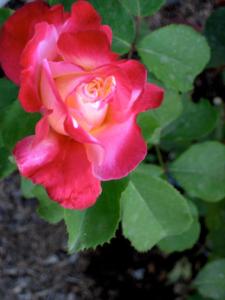
for the genus Rosa. Wild or tame, they’re lovely.
Garden roses need pruning, solicitous cultivation ~
Layer shorter under taller, drape on trellises
and over pergolas, the promise of color and fragrance,
climbers retelling their stories in ballet up stone walls,
an heirloom lace of tea roses, a voluptuous panorama
rhymed with shrubs and rock roses in poetic repetition.
Feminine pulchritude: their majesties in royal reds
or sometimes subdued in pink or purple gentility,
a cadmium-yellow civil sensibility, their haute couture.
Is it the thorned rose we love or the way it mirrors us
in our own beauty and flaw and our flow into decrepitude?
They remind of our mortality with blooms, ebbs, and bows
to fate, a noble death to rise again in season, after Lazarus.
Divinely fulsome, the genus Rosa, sun-lighted reflexed ~
And January? January is ever on the wane.
The work that was the jumping off point for my poem is one by the Mexican nun, Sor Juana Inés de la Cruz (1551-1695), who lived during the time when Mexico was a part of the Spanish empire. She belonged to the Order of St. Jerome.
Sor Juana was a writer, playwright and a Baroque poet. She was hungry for learning and was self-educated. From childhood, she set her own demanding educational goals. These three famous quotes of hers are telling:
“I don’t study to know more, but to ignore less.”
“One can perfectly well philosophize while cooking supper.”
“…for there seemed to be no cause for a head to be adorned with hair and naked of learning…”
I am enamored of Sor Juana’s work and find her life interesting. She was brilliant, independent and nonconforming.
Here is her poem Rosa in Spanish and in English.
Rosa divina que en gentil cultura
eres, con tu fragrante sutileza,
magisterio purpureo en la belleza,
enseñanza nevada a la hermosura.
Amago de la humana arquitectura,
ejemplo de la vana gentileza,
en cuyo ser unió naturaleza
la cuna alegre y triste sepultura.
¡Cuán altiva en tu pompa, presumida,
soberbia, el riesgo de morir desdeñas,
y luego desmayada y encogida
de tu caduco ser das mustias señas,
con que con docta muerte y necia vida,
viviendo engañas y muriendo enseñas!
Rose, heaven’s flower versed in grace,
from your subtle censers you dispense
on beauty, scarlet homilies,
snowy lessons in loveliness.
Frail emblem of our human framing,
prophetess of cultivation’s ruin,
in whose chambers nature beds
the cradle’s joys in sepulchral gloom.
So haughty in your youth, presumptuous bloom,
so archly death’s approaches you disdained.
Yet even as blossoms soon fade and fray
to the tattered copes of our noon’s collapse –
so through life’s low masquerades and death’s high craft,
your living veils all your dying unmasks.
– Juana Inés de la Cruz
Illustration and poem in the public domain. Source of translation unknown.
Thank you for sharing your love of words. Comments will appear after moderation.
Tomorrow Writers’ Fourth Wednesday Challenge resumes for 2014 on The Bardo Group. It is hosted by writer, poet and novelist, Victoria C. Slotto. You are all invited to join the fun. The prompt will go up at 7:00 p.m. PST and will stay open for seventy-two hours for you to share your work. Victoria and I will visit and comment. I hope to see you there and hope also you will visit and comment on the work of other participants as well.
This slideshow requires JavaScript.
Thank you for sharing your love of words. Comments will appear after moderation.
 PLEASE JOIN US: Beginning at 7 p.m. PST this evening, we are celebrating Valentine’s Day with love – not the love of and for another person – but our love for our mother planet ….




 Jamie Dedes' THE POET BY DAY Webzine