Photo courtesy of Johannes Jansson/norden.org under CC BY 2.5 dk
“You think your pain and your heartbreak are unprecedented in the history of the world, but then you read. It was books that taught me that the things that tormented me most were the very things that connected me with all the people who were alive, who had ever been alive.” James Baldwin
Last month a federal court ruled that the Arizona Department of Corrections was overly broad in restricting certain publications to people in state prisons, and ordered the department to establish clearer rules that are consistent with the First Amendment. The decision stems from a 2015 lawsuit brought by the magazine Prison Legal News, which alleged that state corrections officials were unfairly withholding the magazine from incarcerated subscribers.
“The ruling out of Arizona is a significant step forward for the First Amendment and for our fight for access to literature in sites of incarceration,” said Nora Benavidez, director of U.S. Free Expression Programs. “The court was right to recognize that Arizona’s policies towards book access give too much discretion to individual employees, who are then empowered to implement these policies in arbitrary or overly restrictive ways, and to demand narrow definitions for what content is prohibited.”
“PEN America has previously called for more explicit policies that more narrowly define the bounds for rejecting books, and we hope that Arizona’s revised policies will meet this mark,” Benavidez continued. “We need regulations that better enshrine the First Amendment within prison walls, and that recognize the importance of access to literature for our incarcerated population. We believe that this ruling can serve as an example for other jurisdictions to recognize the fundamental right to read where it remains threatened in American prisons.”
In September 2019, PEN America released Literature Locked Up: How Prison Book Restriction Policies Constitute the Nation’s Largest Book Ban. a research report on the state of the right to read in American prisons. The report concluded that “book restrictions in American prisons are often arbitrary, overbroad, opaque, subject to little meaningful review, and overly dismissive of incarcerated people’s right to access literature behind bars.”
Among the recommendations, PEN America concluded that state and federal officials should develop more explicit policies governing book restrictions; implement periodic review of their restriction policies; and ensure that prison officials strongly consider the literary, educational, and rehabilitative merit of any publication before determining its admissibility.
This post is courtesy of PEN America.
***
PEN America stands at the intersection of literature and human rights to protect open expression in the United States and worldwide. We champion the freedom to write, recognizing the power of the word to transform the world. Our mission is to unite writers and their allies to celebrate creative expression and defend the liberties that make it possible.
Jamie Dedes. I’m a freelance writer, poet, content editor, and blogger. I also manage The BeZineand its associated activities and The Poet by Dayjamiededes.com, an info hub for writers meant to encourage good but lesser-known poets, women and minority poets, outsider artists, and artists just finding their voices in maturity. The Poet by Day is dedicated to supporting freedom of artistic expression and human rights and encourages activist poetry. Email thepoetbyday@gmail.com for permissions, commissions, or assignments.
Used with the permission of Radio Free Asia, 2025 M St. NW, Suite 300, Washington DC 20036.
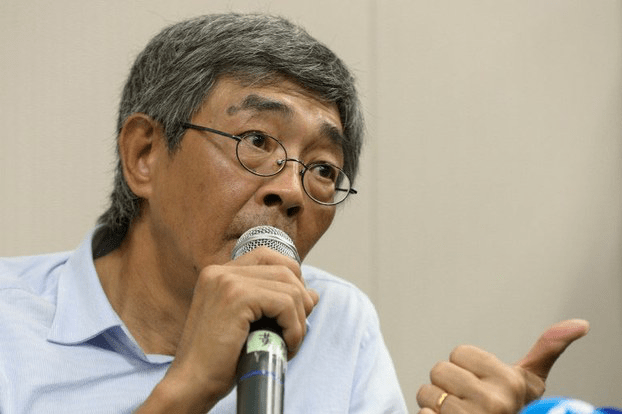
“We enthusiastically welcome the news of Gui Minhai’s forthcoming book of poetry, which will serve not only as a literary work but also as a reminder that Gui continues to be unjustly detained,” said James Tager, deputy director of Free Expression Research and Policy at PEN America.
Taipei Times and PEN America announced that Gui Mihai, Swedish publisher and poet, imprisoned in China since 2015 will have a collection of his poetry – purportedly smuggled from his cell – published next year. The volume is entitled I Draw Blood on the Wall with My Finger. It’s publication will coincide with Gui’s 56th birthday.
Gui Minhai has been in detention since Chinese state security agents kidnapped him from Thailand in October 2015. Gui is a member of the Causeway Bay Bookstore Five, a group of publishers and booksellers affiliated with Hong Kong’s Causeway Bay Bookstore, all disappeared by Chinese state agents in late 2015.
Causeway Bay Bookstore in Causeway Bay, Hong Kong; 3 January 2016
“We enthusiastically welcome the news of Gui Minhai’s forthcoming book of poetry, which will serve not only as a literary work but also as a reminder that Gui continues to be unjustly detained,” said James Tager, deputy director of Free Expression Research and Policy at PEN America. “Gui’s continued detention – more than four years after his abduction – serves as a representation of the Chinese government’s continued blatant disregard for human rights and international law. On the occasion of this announcement, we reiterate our call that Gui be immediately and unconditionally released, and allowed to rejoin his family.”
Numerous human rights and free expression groups – including PEN America – have continually decried Gui’s illegal detention. In October 2017, the conditions of Gui’s confinement were reportedly relaxed until January 2018, when Chinese state agents forcibly stopped him from traveling with Swedish diplomats for a medical examination in Beijing. Gui has reportedly exhibited symptoms of Amyotrophic Lateral Sclerosis (Lou Gehrig’s Disease), a degenerative neurological disease, and PEN America remains concerned for his health.
PEN America previously concluded in a November 2016 report that the Chinese government’s disappearance of the Causeway Bay Bookstore Five, as well as the conditions of their detentions – including a series of forced “confessions” from the booksellers that numerous observers have concluded were obviously scripted by state agents – constituted “a wide range of human rights abuses.”
RELATED:
Why is China afraid of this man?, Fred Hiatt, Editorial Page Manager, The Washington Post (There are samples of Gui Minhai’s poems in this feature.)
Editorial Note: This feature is complied courtesy of PEN America, Taipei Times, The Washington Post, and Radio Free Asia.
PEN America stands at the intersection of literature and human rights to protect open expression in the United States and worldwide. It champions the freedom to write, recognizing the power of the word to transform the world. Its mission is to unite writers and their allies to celebrate creative expression and defend the liberties that make it possible.
Jamie Dedes. I’m a freelance writer, poet, content editor, and blogger. I also manage The BeZineand its associated activities and The Poet by Dayjamiededes.com, an info hub for writers meant to encourage good but lesser-known poets, women and minority poets, outsider artists, and artists just finding their voices in maturity. The Poet by Day is dedicated to supporting freedom of artistic expression and human rights and encourages activist poetry. Email thepoetbyday@gmail.com for permissions, commissions, or assignments.
“I am a Zimbabwean, Zimbabwe is the country in which I was born. It is my country. I don’t have another home except Zimbabwe. I need to live freely in my country of birth. Why do I not get the freedom I need? I wait and watch people gambling and playing games with my life, my freedom, my peace, my health and any other freedoms.
“Political affiliation – I do not belong to any political party because of my job. My job is very much global and universal. I am a Poet, Writer, Blogger and Organizer of Events. I am supposed to work with anyone or everybody. I am supposed to relate and associate with every Zimbabwean irrespective of affiliation because I am apolitical in my standing.
“My problem – I have been seeing strange stalking, attacks and threats soon after the Lit fest of 2017. I was quiet after the first attack but now I felt it is getting scary, dangerous and life threatening. I need to open up to the government, Media, International Organisations and the Zimbabwe Human Rights Organizations because I don’t know who is doing this to me and who is planning to take my life and don’t know for what major reason.” Mbizo Chirasha, Tuck Magazine, February 2017 / the finer details of the threat are described HERE.
HERE’S WHERE THE RUBBER HITS THE ROAD
YES! This is a long-shot but all you have to sacrifice is a few minutes of time over your morning coffee to write two letters for Mbizo. If nothing else, it will show this man that people care. When he has safe harbor, he’ll continue his literary activism (as he does even now under threat) and he’ll be able to reach out a helping hand to others in peril. So please stand with us. Thank you!
LETTER WRITNG CAMPAIGN IN SUPPORT OF MBIZO’S APPLICATIONS FOR SERVICES and SAFE HARBOR:
We need two letters. Please simply throw your support behind Mbizo by encouraging these organizations to provide timely assistance.
International Cities of Refugee Network (ICORN) c/o Sølvberget KF,
Stavanger Cultural Centre
p.o. box: 310 4002 Stavanger
Norway ICORN’s mission is “protecting and promoting writers and artists at risk.” I’ve read Mbizo’s paperwork. Responses to his 2017 application for assistance repeatedly indicate that his paperwork is in process but no action has been taken by ICORN on Mbizo’s behalf over the two years since he filed for safe haven.
Artists at Risk Connection (ARC), a project of PEN America “Since its inception in 2017, ARC has assisted more than 181 individual artists from over 53 countries by connecting them to a wide range of services, most frequently including emergency funds, legal assistance, temporary relocation programs and fellowships. Thanks to a core network of over 70 partners, over 50% of them have already received direct support. Please write a letter in support of Mbizo’s application to an ARC partner agency. He will include it in his application package, which is being prepared now.
CONNECT:
Connect with Mbizo on Facebook or email him at girlchildcreativity@gmail.com about the letters.
The deadline is : 14th November 2019. Thank you!
~~~~~~
gofundme: Mbizo Chirasha: Zimbabwean Poet in Exile
One Thomas Block of Human Rights International organized this fundraiser asking for $575 to address some immediate welfare needs. Be aware that this is a bandage not a cure, so even if you find yourself able to donate (please!), we still need you to write letters of support. At the time of this posting, $150 has been raised. Link HERE for details and to donate.
OCTOBER 30, 2019:
“We in the United States cannot really understand how poetry can become a dangerous activity. But in societies around the world, our activist-artist colleagues risk their lives for justice and art. Just two days ago, Mbizo’s activist-art brother, Zimbabwean musician Platinum Prince was abducted and beaten in Harare. His crime? In September of this year Platinum Prince released a track entitled NDIYO YACHO HERE MR PRESIDENT in which he seemed to be questioning the President of Zimbabwe over the current economic situation. We stand with Mbizo.” Thomas Block, International Human Rights Art Festival Organizer
~~~~~~~~
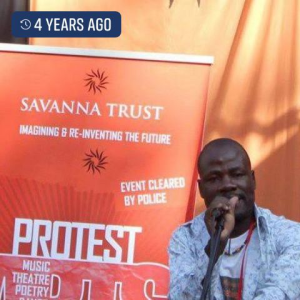
“We remain resilient in the quest for justice, freedom of expression and upholding of human rights through Literary Activism and Artivism. ALUTA CONTINUA.” Mbizo Chirasha
MBIZO CHIRASHA is a recipient of PEN Deutschland Exiled Writer Grant (2017), Literary Arts Projects Curator, Writer in Residence, Blogs Publisher, Arts for Human Rights/Peace Activism Catalyst, Social Media Publicist and Internationally Anthologized Writer, 2017 African Partner of the International Human Rights Arts Festival Exiled in Africa Program in New York. 2017 Grantee of the EU- Horn of Africa Defend Human Rights Defenders Protection Fund. Resident Curator of 100 Thousand Poets for Peace-Zimbabwe, Originator of Zimbabwe We Want Poetry Movement. He has published a collection of poetry, Good Morning President, and co-created another one Whispering Woes of Gangesand Zembezi with Indian poet Sweta Vikram
Jamie Dedes. I’m a freelance writer, poet, content editor, and blogger. I also manage The BeZineand its associated activities and The Poet by Dayjamiededes.com, an info hub for writers meant to encourage good but lesser-known poets, women and minority poets, outsider artists, and artists just finding their voices in maturity. The Poet by Day is dedicated to supporting freedom of artistic expression and human rights and encourages activist poetry. Email thepoetbyday@gmail.com for permissions, commissions, or assignments.
We’ve made the decision to stop all political advertising on Twitter globally. We believe political message reach should be earned, not bought. Why? A few reasons… A political message earns reach when people decide to follow an account or retweet. Paying for reach removes that decision, forcing highly optimized and targeted political messages on people. We believe this decision should not be compromised by money. While internet advertising is incredibly powerful and very effective for commercial advertisers, that power brings significant risks to politics, where it can be used to influence votes to affect the lives of millions. nternet political ads present entirely new challenges to civic discourse: machine learning-based optimization of messaging and micro-targeting, unchecked misleading information, and deep fakes. All at increasing velocity, sophistication, and overwhelming scale. These challenges will affect ALL internet communication, not just political ads. Best to focus our efforts on the root problems, without the additional burden and complexity taking money brings. Trying to fix both means fixing neither well, and harms our credibility” … Dorsey Status Update Tweets October 30, 2019 MORE
Twitter’s CEO Jack Dorsey announced yesterday that the platform will no longer accept paid political advertising. PEN America CEO Suzanne Nossel issued the following statement:
“We respect Twitter’s decision to take a pause from running political advertising, recognizing that such ads on social media can have powerful distorting effects on public discourse. We cannot risk a repeat of the 2016 election where the scourge of misinformation raised serious questions about whether the Democratic process could be trusted. As a private platform, it is reasonable for Twitter to take the time to figure out whether and how the manifest ill consequences of micro-targeted ads can be mitigated. While political ads represent an important part of our democratic discourse, online advertising methods pose unique concerns that lawmakers, companies, and civil society are only beginning to understand, much less address. We welcome Twitter’s willingness to put responsibility above revenue in seeking to prevent its platform from misleading voters and polluting the democratic process.
“Still, we recognize that there are many unanswered questions and that this policy may have some unintended consequences, including, for example, advancing incumbents who rely less on ads. While we reserve judgement on how it may play out, we commend the effort to protect democratic deliberations and emphasize the role of ideas, language, and creativity – rather than money – as tools in the battle of ideas.”
Zuckerberg in 2005 courtesy of Elaine Chan and Priscilla Chan – Derived from: File:MarkZuckerberg.jpg under CC BY 2.5
“Right now, the content debate is about political ads. Should we block political ads with false statements? Should we block all political ads? Google, YouTube and most internet platforms run these same ads, most cable networks run these same ads, and of course national broadcasters are required by law to run them by FCC regulations. I think there are good reasons for this. In a democracy, I don’t think it’s right for private companies to censor politicians or the news. And although I’ve considered whether we should not carry these ads in the past, and I’ll continue to do so, on balance so far I’ve thought we should continue. Ads can be an important part of voice — especially for candidates and advocacy groups the media might not otherwise cover so they can get their message into debates. And it’s hard to define where to draw the line. Would we really block ads for important political issues like climate change or women’s empowerment? Instead, I believe the better approach is to work to increase transparency. Ads on Facebook are already more transparent than anywhere else. We have a political ads archive so anyone can scrutinize every ad that’s run — you can see every message, who saw it, how much was spent — something that no TV or print media does.” Mark Zuckerberg in his Community Update and quarterly results MORE
This post is complied with details from PEN America, Twitter, Facebook, and Wikipedia
*****
PEN America stands at the intersection of literature and human rights to protect open expression in the United States and worldwide. It champions the freedom to write, recognizing the power of the word to transform the world. Its mission is to unite writers and their allies to celebrate creative expression and defend the liberties that make it possible.
Jamie Dedes. I’m a freelance writer, poet, content editor, and blogger. I also manage The BeZineand its associated activities and The Poet by Dayjamiededes.com, an info hub for writers meant to encourage good but lesser-known poets, women and minority poets, outsider artists, and artists just finding their voices in maturity. The Poet by Day is dedicated to supporting freedom of artistic expression and human rights and encourages activist poetry. Email thepoetbyday@gmail.com for permissions, commissions, or assignments.

 Jamie Dedes. I’m a freelance writer, poet, content editor, and blogger. I also manage The BeZine and its associated activities and The Poet by Day jamiededes.com, an info hub for writers meant to encourage good but lesser-known poets, women and minority poets, outsider artists, and artists just finding their voices in maturity. The Poet by Day is dedicated to supporting freedom of artistic expression and human rights and encourages activist poetry. Email thepoetbyday@gmail.com for permissions, commissions, or assignments.


 upholding of human rights through Literary Activism and Artivism. ALUTA CONTINUA.” Mbizo Chirasha
 MBIZO CHIRASHA


 Jamie Dedes' THE POET BY DAY Webzine