A drizzle, not wild rain
No drenching torrents
No puddles forming under
the palm and the birch
No soaking the dry brown earth
while I sit cozy inside
No squall, friend of solitude
to embrace the writing itch, just
a parched blue midnight
an effete sprinkle in the air
Nothing to stir the pen
or green the lawns
This must have been the poetic equivilant of a rain dance. Right after I wrote it we had a soaking downpour.
ZEN MASTER THICH NHAT HANH (his students call him Thãy) is a revered spiritual leader, a poet and a peace activist. Martin Luther King called him an apostle of peace and nonviolence and suggested Thãy for a Nobel Prize, which Thāy never received.
Thāy is sometimes called the other Dalai Lama. His key teaching is that, through mindfulness, we can learn to live peacefully in the present moment.
The featured poem (below), Please Call Me by My True Names, moves us to compassion. It reflects the Buddhist concept of interdependent coexistence for which Thāy coined the term “interbeing.” In it he seeks to remind us that we are one with each other and with nature. His poetry is gentle and his word-pictures and pacing tend to sooth and heal. His many published works include several poetry collections.
Thãy lives in Plum Village in France, where he is recuperating from a stroke.
Thích Nhất Hạnh (Nguyen Xuan Bao) b. October 11, 1926. Vietnamese Buddhist monk and peace activist.
Please Call Me by My True Names
Don’t say that I will depart tomorrow—
even today I am still arriving.
Look deeply: every second I am arriving
to be a bud on a Spring branch,
to be a tiny bird, with still-fragile wings,
learning to sing in my new nest,
to be a caterpillar in the heart of a flower,
to be a jewel hiding itself in a stone.
I still arrive, in order to laugh and to cry,
to fear and to hope.
The rhythm of my heart is the birth and death
of all that is alive.
I am a mayfly metamorphosing
on the surface of the river.
And I am the bird
that swoops down to swallow the mayfly.
I am a frog swimming happily
in the clear water of a pond.
And I am the grass-snake
that silently feeds itself on the frog.
I am the child in Uganda, all skin and bones,
my legs as thin bamboo sticks.
And I am the arms merchant,
selling deadly weapons to Uganda.
I am the twelve-year-old girl,
refugee on a small boat,
who throws herself into the ocean
after being raped by a sea pirate.
And I am the pirate,
my heart not yet capable
of seeing and loving.
I am a member of the politburo,
with plenty of power in my hands.
And I am the man who has to pay
his “debt of blood” to, my people,
dying slowly in a forced labor camp.
My joy is like Spring, so warm
it makes flowers bloom all over the Earth.
My pain is like a river of tears,
so vast it fills the four oceans.
Please call me by my true names,
so I can hear all my cries and laughter at once,
so I can see that my joy and pain are one.
Please call me by my true names,
so I can wake up
and the door of my heart
could be left open,
the door of compassion.
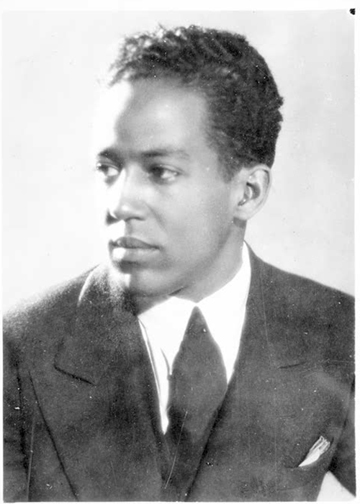
Langston Hughes (1902-1967), American Poet, Writer, and Social Activist
Even as I sorted through books one day – including cookbooks – in preparation for a garage sale to be held before moving into disabled-senior housing, a new cookbook enters. A gift from my son, it’s Oscar Tschirky’s (1886-1950) recipe collection. Oscar Tschirky was the famous maître d’hôtel at the Waldorf-Astoria, which has some special meaning for me. Occasionally my mom liked to go to the café there for blueberry pancakes. It was as close as she could get to being an elegant respectable lady as the world defines such. The book reminds me of her and the poem that follows.
Langston Hughes wrote the poem after walking past the Waldorf during the Great Depression. I’ve read that it was originally published in New Masses magazine, a long defunct American Marxist publication that was the literary organ of the cultural left during and after the Depression.
“The hotel opened,” Hughes wrote in The Big Sea: An Autobiography, “at the very time when people were sleeping on newspapers in doorways, because they had no place to go. But suites in the Waldorf ran into thousands a year, and dinner in the Sert Room was ten dollars! (Negroes, even if they had the money, couldn’t eat there. So naturally, I didn’t care much for the Waldorf-Astoria.)”
ADVERTISEMENT FOR THE WALDORF-ASTORIA HOTEL
Fine living . . . a la carte?
Come to the Waldorf-Astoria!
LISTEN HUNGRY ONES!
Look! See what Vanity Fair says about the
new Waldorf-Astoria:
“All the luxuries of a private home. . . .”
Now, won’t that be charming when the last flop-house
has turned you down this winter?
Furthermore:
“It is far beyond anything hitherto attempted in the hotel
world. . . .” It cost twenty-eight million dollars.
The famous Oscar Tschirky is in charge of banqueting.
Alexandre Gastaud is chef. It will be a distinguished
background for society.
So when you’ve no place else to go, homeless and hungry
ones, choose the Waldorf as a background for your rags–
(Or do you still consider the subway after midnight good
enough?)
ROOMERS
Take a room at the new Waldorf, you down-and-outers–
sleepers in charity’s flop-houses where God pulls a
long face, and you have to pray to get a bed.
They serve swell board at the Waldorf-Astoria. Look at the menu, will
you:
GUMBO CREOLE
CRABMEAT IN CASSOLETTE
BOILED BRISKET OF BEEF
SMALL ONIONS IN CREAM
WATERCRESS SALAD
PEACH MELBA
Have luncheon there this afternoon, all you jobless.
Why not?
Dine with some of the men and women who got rich off of
your labor, who clip coupons with clean white fingers
because your hands dug coal, drilled stone, sewed gar-
ments, poured steel to let other people draw dividends
and live easy.
(Or haven’t you had enough yet of the soup-lines and the bit-
ter bread of charity?)
Walk through Peacock Alley tonight before dinner, and get
warm, anyway. You’ve got nothing else to do.
– Langston Hughes
Langston Hughes’ photograph is in the public domain. The poem may be in the public domain too given when it was written.
Thank you for sharing your love of words. Comments will appear after moderation.
you left one winter day to balancé on sunbeams
and pirouette on the moon, artfully swirling
lunar dust and scattering it over our dreams,
sparking our lives with memory and a love of
dance, a legacy of delight for tiny ballerinas ~ see us now, as well-worn as your old toe shoes
Genius might be the ability to say a profound thing in a simple way.” Charles Bukowski
Growing old, the only way to escape it is to die young and most of us wouldn’t opt for that given a choice. Write a poem that juxtaposes and fond youthful memory with your current place in life. See if you can do it in brief. Brevity often lends itself well to clarity and deeper emotion.
I encourage you to share your poem with me and with other readers. Click on the Mister Linky icon below and enter you name and the link to your piece so that we may all read and enjoy. (Please DON’T enter the link to your blog. DO enter the link to the relevant post.) I’ll check back on this week’s Mister Linky for two weeks. You don’t need to link in something today if you’re not ready.
To read Renee Espiru’s poem in response to a Wednesday Writing Prompt link HERE.
Thank you for sharing your love of words. Comments will appear after moderation.




 Jamie Dedes' THE POET BY DAY Webzine