But do not ask me where I am going,
As I travel in this limitless world,
Where every step I take is my home. – Dōgen
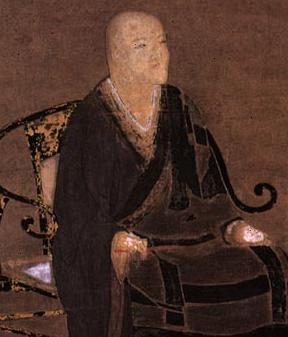
Japanese poet Dōgen Zenji (1200-1253), Kyoto, founder of Soto Zen in Japan
One of the great lessons in life – something that if we preserver we come to gracefully accept – is impermanence. This is a lesson Dōgen learned early in life. He lost both parents when he was a child.
When Dōgen decided to become a monk he join the Tendai Tradition and was ordained in it. With his strong questioning intellect, he became dissatisfied with Tendai. He left Japan for China to learn what he felt would be a more authentic Buddhism. After two years study Dōgen returned to Japan where he founded Soto Zen.
To what shall
I liken the world?
Moonlight, reflected
In dewdrops,
Shaken from a crane’s bill.
Dōgen was a prolific essayist and poet, his works much valued because of the esteem in which he was held as a religious leader of consequence, a creative thinker and refined literary mind. His work reflects his effort to express the inexpressible. That is something he does with excuisite grace as you can see from the poems included here. The Essential Dogen, Writings of the Great Zen Masterincludes some of Dōgen’s poetry and essays. It is a gentle book filled with peace, a nice vacation from trying times.
Fifty-four years lighting up the sky.
A quivering leap smashes a billion worlds.
Hah!
Entire body looks for nothing.
Living, I plunge into Yellow Springs.
Dōgen Zenji’s death poem
The recommended read for this week isPoems That Make Grown Men Cry: 100 Men on the Words That Move Themcompiled by the father and son team, Anthony Holden and Ben Holden. I have to thank my good friend Linda F. for this recommendation. A moving book and a unique perspective. This is a poetry anthology in which 100 men from diverse backgrounds share the poems that they can’t read without being moved to tears and they tell us why. The poems and poets featured span the centuries and the world. Definitely worthy of our time.
By shopping at Amazon throughThe Word Play Shop, you help to support the maintenance of this site. Thank you!
The WordPlay Shop offers books and other tools especially selected for poets and writers.
In a letter to Emma Lazarus about Alide, an episode of Goethe’s Life. the Russian novelist Turgenev wrote “An author who writes as you do is not a pupil in art anymore; he is not far from being himself a master.”
“Emma Lazarus is a new name to us in American poetry, but ‘Admetus’ is not the work of a ‘prentice-hand’; few recent volumes of verse compare favorably with the spirit and musical expression of these genuine effusions of Emma Lazarus.” The Boston Transcript, c 1871
“What Emma Lazarus might have accomplished, had she been spared, it is idle and even ungrateful to speculate. What she did accomplish has real and peculiar significance. It is the privilege of a favored few that every fact and circumstance of their individuality shall add lustre and value to what they achieve. To be born a Jewess was a distinction to Emma Lazarus, and she in turn conferred distinction upon her race.” Josephine Lazarus, Emma’s elder sister who gather her poems together and published them in two volumes, The Poems of Emma Lazarus, 1881
“Until we are all free, we are none of us free.” Emma Lazarus
EMMA LAZARUS, poet, writer and activist, was by all accounts shy and she died at thirty-nine years, much too young. Nonetheless she accomplished a lot in addition to that for which she is most well-known, The New Colossus, the sonnet that is on the pedestal of the Statue of Liberty (Liberty Enlightening the World) in New York Harbor, having been installed there in 1903.
Unveiling of the Statue of Liberty Enlightening the World (1886) by Edward Moran. Oil on canvas. The J. Clarence Davies Collection, Museum of the City of New York.
“The copper statue, designed by Frédéric Auguste Bartholdi, a French sculptor, was built by Gustave Eiffel and dedicated on October 28, 1886. It was a gift to the United States from the people of France. The statue is of a robed female figure representing Libertas, the Roman goddess, who bears a torch and a ]a tablet evoking the law upon which is inscribed the date of the American Declaration of Independence, July 4, 1776. A broken chain lies at her feet. The statue is an icon of freedom and of the United States, and was a welcoming sight to immigrants arriving from abroad.” [Wikipedia]
In fact Lady Liberty greeted my own father and maternal grandparents and their children as they entered the harbor just as she probably did for the families of those reading here today. Their children and grandchildren learned the poem by heart in school. I suspect the majority of us took the ideals expressed as our own.
The bronze plaque inscribed with Emma Lazarus’ poem, The New Colossus.
A hymn to America, the “Mother of Exiles,” The New Colossus, was written to raise money for the construction of the pedestal for the Statue of Liberty.
The New Colossus – 1883
Not like the brazen giant of Greek fame,
With conquering limbs astride from land to land;
Here at our sea-washed, sunset gates shall stand
A mighty woman with a torch, whose flame
Is the imprisoned lightning, and her name
Mother of Exiles. From her beacon-hand
Glows world-wide welcome; her mild eyes command
The air-bridged harbor that twin cities frame.
“Keep, ancient lands, your storied pomp!” cries she
With silent lips. “Give me your tired, your poor,
Your huddled masses yearning to breathe free,
The wretched refuse of your teeming shore.
Send these, the homeless, tempest-tossed to me,
I lift my lamp beside the golden door!”
– Emma Lazarus
Emma came from a large Sephardic-Ashkenazi family, the father’s side from Germany and the mother’s side from Portugal. Her maternal great-grandmother was also a poet. Emma’s first book of poems was published by her father when she was fourteen and apparently showed much promise. She continued to write poetry and eventually wrote a five-act play, a novel and a short-story as well. She was a linguist, editing and translating works from the German, notably those of Goethe and Heinrich Heine. She wrote fourteen essays entitled Letters to the Hebrews. She was a forerunner in advocating a Jewish homeland, predating Theodore Herzi. She was friends with and an admirer of the American political economist, Henry George, who was instrumental in the birth of several reform movements of the Progressive Era. Essentially, George believed that workers should own the value of what they create, while the land should be held in common. Ralph Waldo Emerson was both friend and mentor.
Emma Lazarus received many posthumous awards. The Emma Lazarus Statue of Liberty Award is sponsored by the American Jewish Historical Society (New York and Massachusetts) and P.S. 268 in Brooklyn is named for her.
Life and Art
Not while the fever of the blood is strong,
The heart throbs loud, the eyes are veiled, no less
With passion than with tears, the Muse shall bless
The poet-sould to help and soothe with song.
Not then she bids his trembling lips express
The aching gladness, the voluptuous pain.
Life is his poem then; flesh, sense, and brain
One full-stringed lyre attuned to happiness.
But when the dream is done, the pulses fail,
The day’s illusion, with the day’s sun set,
He, lonely in the twilight, sees the pale
Divine Consoler, featured like Regret,
Enter and clasp his hand and kiss his brow.
Then his lips ope to sing–as mine do now.
With the largest number of migrants the world has ever seen – 244 million in 2015 – people who are displaced by exile, violence, poverty and environmental issues resulting from climate change, it’s hard not to think of poets like Darwish who lived or live large portions of their lives in exile from their homelands.
“. . . he says I am from there, I am from here, but I am neither there nor here. I have two names which meet and part… I have two languages, but I have long forgotten— which is the language of my dreams” Mahmoud Darwish’s farewell to Edward Said (1935-2003), professor of literature at Columbia University, a public intellectual and founder of the field of postcolonial studies. Said was educated in the Western Cannon. He was a Palestinian-American born in Mandatory Palestine and a citizen of the United States through his father, Wadie Saïd, a WW 1 U.S. Army Veteran
Born in Mandated Palestine, Mahmoud Darwish has been called a poet of peace in times of war. He was a regarded as the Palestinian national poet. Darwish used Palestine as a metaphor for the loss of Eden, birth and resurrection and he wrote of the anguish of dispossession and exile. He has been described as incarnating and reflecting “the tradition of the political poet in Islam, the man of action whose action is poetry.”
You can hear the lovely lilt of Arabic even in the English translations of this internationally know and recognized award winning poet. His awards included the Ibn Sina Prize, the Lotus prize from the Union of Afro-Asian Writers, France’s Knight of Arts and Belles Lettres medal, and the Prize for Cultural Freedom from the Lannan Foundation.
I didn’t apologize to the well as I passed by it.
I borrowed a cloud from an ancient pine and squeezed it
like an orange. I waited for a mythical white deer.
I instructed my heart in patience: Be neutral, as though
you were not a part of me. Here, good shepherds
stood on air and invented the flute and enticed
mountain partridges into their traps. Here, I saddled
a horse for flight to my personal planets, and flew.
And here, a fortuneteller told me: Beware of asphalt roads
and automobiles, ride on your sigh. Here, I loosened
my shadow and waited. I selected the smallest stone
and stood wakefully by it. I broke apart a myth
and got broken myself. I circled the well until
I flew out of myself to what I’m not. And a voice
from deep in the well spoke to me: This grave
is not yours. And so I apologized. I read verses
from the wise Qur’an and said to the anonymous presence
in the well: Peace be with you and the day
you were killed in the land of peace and with the day
you’ll rise from the well’s darkness
and live…
– Mahmoud Darwish
Darwish has many published collections, which are available through his Amazon page.
Photo credit: Mahmoud Darwish at University of Bethlehem in 2006 by Amer Shomali under CC BY-SA licence.
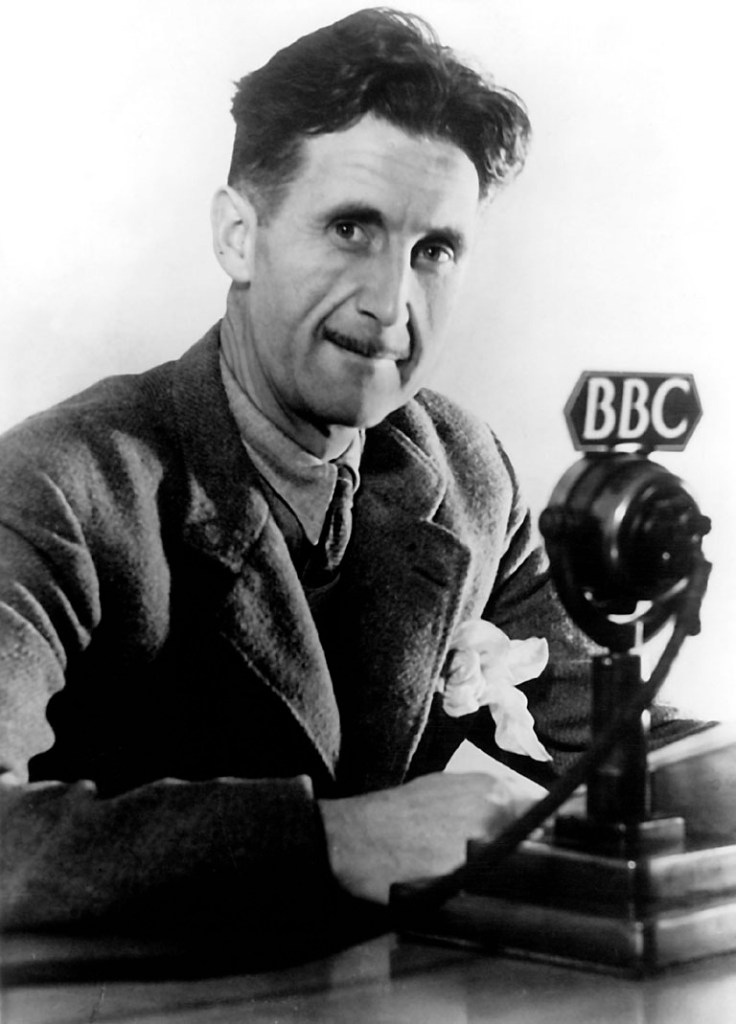
George Orwell (1903-1950), BBC Photograph in the public domain, curtesy of Penguin Books, India
A LITTLE POEM
A happy vicar I might have been
Two hundred years ago
To preach upon eternal doom
And watch my walnuts grow;
But born, alas, in an evil time,
I missed that pleasant haven,
For the hair has grown on my upper lip
And the clergy are all clean-shaven.
And later still the times were good,
We were so easy to please,
We rocked our troubled thoughts to sleep
On the bosoms of the trees.
All ignorant we dared to own
The joys we now dissemble;
The greenfinch on the apple bough
Could make my enemies tremble.
But girl’s bellies and apricots,
Roach in a shaded stream,
Horses, ducks in flight at dawn,
All these are a dream.
It is forbidden to dream again;
We maim our joys or hide them:
Horses are made of chromium steel
And little fat men shall ride them.
I am the worm who never turned,
The eunuch without a harem;
Between the priest and the commissar
I walk like Eugene Aram;
And the commissar is telling my fortune
While the radio plays,
But the priest has promised an Austin Seven,
For Duggie always pays.
I dreamt I dwelt in marble halls,
And woke to find it true;
I wasn’t born for an age like this;
Was Smith? Was Jones? Were you?
– George Orwell
POWER IS NOT A MEANS. IT’S AN END.
The current state of affairs has many pulling 1984and Animal Farmoff their bookshelves, dusting them off and reading them again, probably for the first time since school days.
“Now I will tell you the answer to my question. It is this. The Party seeks power entirely for its own sake. We are not interested in the good of others; we are interested solely in power, pure power. What pure power means you will understand presently. We are different from the oligarchies of the past in that we know what we are doing. All the others, even those who resembled ourselves, were cowards and hypocrites. The German Nazis and the Russian Communists came very close to us in their methods, but they never had the courage to recognize their own motives. They pretended, perhaps they even believed, that they had seized power unwillingly and for a limited time, and that just around the corner there lay a paradise where human beings would be free and equal. We are not like that. We know that no one ever seizes power with the intention of relinquishing it. Power is not a means; it is an end. One does not establish a dictatorship in order to safeguard a revolution; one makes the revolution in order to establish the dictatorship. The object of persecution is persecution. The object of torture is torture. The object of power is power. Now you begin to understand me.” George Orwell, 1984
Eric Arthur Blair (pen name George Orwell) “was born in 1903 in Motihari, Bengal, in the then British colony of India, where his father, Richard, worked for the Opium Department of the Civil Service. His mother, Ida, brought him to England at the age of one. He did not see his father again until 1907, when Richard visited England for three months before leaving again until 1912. Eric had an older sister named Marjorie and a younger sister named Avril. With his characteristic humour, he would later describe his family’s background as “lower-upper-middle class.” MORE

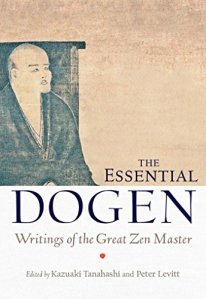 Dōgen was a prolific essayist and poet, his works much valued because of the esteem in which he was held as a religious leader of consequence, a creative thinker and refined literary mind. His work reflects his effort to express the inexpressible. That is something he does with excuisite grace as you can see from the poems included here. The Essential Dogen, Writings of the Great Zen Master includes some of Dōgen’s poetry and essays. It is a gentle book filled with peace, a nice vacation from trying times.
 The recommended read for this week is Poems That Make Grown Men Cry: 100 Men on the Words That Move Them compiled by the father and son team, Anthony Holden and Ben Holden. I have to thank my good friend Linda F. for this recommendation. A moving book and a unique perspective. This is a poetry anthology in which 100 men from diverse backgrounds share the poems that they can’t read without being moved to tears and they tell us why. The poems and poets featured span the centuries and the world. Definitely worthy of our time.




 Jamie Dedes' THE POET BY DAY Webzine