Page 17 of 31

THE BELLE OF AMHERST, a one-woman play

BelleOfAmherst

“PHOSPHORESCENCE. Now there’s a word to lift your hat to… to find that phosphorescence, that light within, that’s the genius behind poetry.” Emily Dickinson

If you are a lover of poetry and theatre and looking for some budget-wise charm this weekend, order some Chinese food, set out the candles and wine, and stream William Luce‘s one-woman bio-play on Emily Dickinson, The Belle of Amherst, with Julie Harris. I don’t see it on iTunes, but it is on Amazon Instant Video.

Based on the life of poet Emily Dickinson from 1830 to 1886, the play is set in the family home in Amherst, Massachusetts. It incorporates her work, diaries, and letters in a reenactment of her life with family, close friends, and acquaintances. Enchanting and often funny.

After one preview, the original Broadway production, directed by Charles Nelson Reilly and starring Julie Harris, opened on April 28, 1976 at the Longacre Theatre. It ran for 116 performances. A Wall Street Journal reviewer wrote

With her technical ability and her emotional range, Miss Harris can convey profound inner turmoil at the same time that she displays irrepressible gaiety of spirit.”

In The Belle of Amherst Harris portrays fifteen characters and won a Tony Award for Best Actress in a Play, earned a Drama Desk Award nomination for Unique Theatrical Experience, and won a Grammy Award for Best Spoken Word Recording. She appeared in a televised PBS production and toured the country with the play for a number of years [sources: Wikipedia and NY Times]

Luce and Harris collaborated on other wonderful plays including Bronté.  A broadway playwright, Luce also wrote Barrymore, which with family I was fortunate enough to see on stage starring Christopher Plummer many years ago. That was a bit of heaven.  Luce wrote Lucifer’s Child based on the writing of Karen Blixen (Isak Dinesen), Lillian about Lillian Hellman and Zelda, which became The Last Flapper, about Zelda Fitzgerald. If script writing is one of your interests, you could probably do worse than reading a few of  Luce’s plays.

Cover art © publisher and/or playwrighter 

THE INTERFAITH CENTER FOR SUSTAINABLE DEVELOPMENT IN ISRAEL hosts a Poetry Slam, poet Michael Dickel presents

c The Interfaith Center for Sustainable Development‎Interfaith Eco Poetry Slam صدى المناظرة الشعرية بين الاديان האקו-פואטרי סלאם הבין דתי
c The Interfaith Center for Sustainable Development‎ Interfaith Eco Poetry Slam صدى المناظرة الشعرية بين الاديان האקו-פואטרי סלאם הבין דתי

The ICSD staff and participants from around Jerusalem gathered in Tmol Shilshom to perform and speak about faith and ecology through the art of poetry on June 30.  Michael Deckel discussed the human relationship with God and how we want a connection but cannot have one without striving to create meaning in the world.

En Gedi — Wadi David Photograph ©2015
En Gedi — Wadi David
Photograph, Michael Dickel ©2015
En Gedi

Even lizards hide from this scorched heat.
Tristram’s grackles pant in the shade of skeletal acacia.
Fan-tail ravens float on rising currents like vultures.

David hid from Saul in the strongholds of En Gedi;
along the wadi now named for him, waterfalls
drop warm water onto maidenhair ferns into tepid pools.

Any stippled shade provides shelter from the scathing sun
when hiding from midday heat or close pursuit:
Tristram and Iseult, David, seek shade, ferns, sparkling droplets.

We escape, fugitives from kings
into what little shade we find, wade
into green puddles of desert water,

for brief respite, solace,
a bright glimmer sliding down
an eroding rock face.

– Michael Dickel

© 2015/2016, poem and Ein Gedi photograph, Michael Dickel;2012, portrait (below) Aviva Dickel

RELATED:

dickelheadshot3x4-1MICHAEL DICKEL (Fragments of Michael Dickel), a poet, fiction writer, essayist, photographer, digital artist, and educator is a contributing editor for The BeZine, was associate editor and contributing editor of The Woven Tale Press, managing editor of arc-24 (2015) and arc–23 (2014), and co-edited Voices Israel Volume 36 (2010). His latest book of poems is War Surrounds Us. Previous books include Midwest / Mid-East and The World Behind It, Chaos, an eBook from “why vandalism?” that is no longer available online. Dickel is the Chair of the Israel Association of Writers in English.

Dickel’s work was short-listed for the Wisehouse 2016 Poetry Award and has appeared in literary journals, anthologies, art books, and online for over twenty years. His photographs and poems have appeared in: THIS Literary Magazine, Eclectic Flash, Cartier Review, Pirene’s Fountain, Sketchbook, Emerging Visions Visionary Art eZine, Poetry Midwest, Fotógrafos En La Calle (Street Photographers), why vandalism? [1, 2, 3, 4], Poetica Magazine—Reflections on Jewish Thought, Zeek: a Jewish Journal of Thought and Culture and Abramelin: the Journal of Poetry and Magick, among many others (a selection of recent publications can be accessed on the Links page). Two of his poems received first and second place in the 2009 international Reuben Rose Memorial Poetry Competition.

He has also worked with documentary film productions, writing everything from fund-raising proposals to research to treatments and scripts. Working with David Fisher, he wrote a successful proposal for a U.S. National Endowment for the Humanities Bridging Cultures through Film Development Grant.

Michael (Dickel) Dekel, Ph.D., holds degrees in psychology, creative writing, and English literature. He has been teaching college and university for over 25 years—writing and literature courses in the United States and Israel – as well as courses in media and English Education in Israel. He directed the Student Writing Center at the University of Minnesota and the Macalester Academic Excellence Center at Macalester College (St. Paul, MN). He currently lectures at Kibbutzim College (Tel Aviv). Dr. Dickel has published articles, presented conference papers, and led workshops on writing and the teaching of academic writing. He currently lives in Jerusalem, Israel.

CELEBRATING AMERICAN SHE-POETS (#22): Jane Hirshfield, a human poet

Jane Hirshfeld (b. 1953), poet, essayist, translator
Jane Hirshfield (b. 1953), poet, essayist, translator

I always feel a slight dismay if I’m called a “Zen” poet. I am not. I am a human poet, that’s all.” Poet Jane Hirshfield on the Mystery of Existence, Spirituality & Health Magazine, Mar./Apr. 2013

When I think of Jane Hirshfield, I think first of her kindness to my friend, Bay Area poet, Ann Emerson (poet #9 in this series), who died a few years back and who received compassionate and generous guidance from Jane at a conference some years ago. It meant a lot to Ann and was a high-point in her six-year journey through cancer with poetry. Once having read Jane Hirshfield’s work, you can’t conceive of her as being anything but kind. The empathy expressed in her poetry is vast.

I admit to being one of those who also thinks of her as a Buddhist poet. Her poetry is Zen-like in its attentiveness, its inward-looking meditative quality, a quality of the ineffable given expression. Jane Hirshfield is a Zen practitioner, lived for several years at Tassajara and is ordained in Soto Zen.

Immersion in the life of the world, a willingness to be inhabited by and to speak for others, including those beyond the realm of the human, these are the practices not just of the bodhisattva but of the writer.” Jane Hirshfield in Nine Gates: Entering the Mind of Poetry

Another New York girl who eventually migrated to the San Francisco Bay Area, Jane Hirshfield was famously graduated from Princeton University’s first class to include women. She is the author of eight collections including The Lives of the Heart (Harper Collins, 1997), which won the Bay Area Book Reviewers Award and Given Sugar, Given Salt: Poems.

51LEMWRIG0L._SX326_BO1,204,203,200_

TREE

It is foolish
to let a young redwood
grow next to a house.

Even in this
one lifetime,
you will have to choose.

That great calm being,
this clutter of soup pots and books —

Already the first branch-tips brush at the window.
Softly, calmly, immensity taps at your life.

– ©Jane Hirshfield (from Given Sugar, Given Salt, Poems)

Originality requires the aptitude for exile.” The Question of Originality in Nine Gates

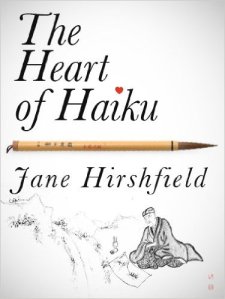
Her two collections of essays (must reads, no pedantry here) are Nine Gates: Entering the Mind of Poetry (Harper Perennial, 1998) and Ten Windows: How Great Poems Transform the World (Knopf, 2015). She also translated a collection of poems by Japanese women with Mariko Aratani: The ink dark moon : love poems by Ono no Komachi and Izumi Shikibu, women of the ancient Court of Japan (Vintage Classics). Her study The Heart of Haiku is available in Kindle Edition.

51oJEaBJOEL._SX373_BO1,204,203,200_

Reading Jane Hishfield’s work is both a joy and education for your writerly self and a balm for your spirit. If by some incalculable misfortune you haven’t met her yet, seize this day.

© 2016, words, Jamie Dedes; photograph by A. Phillips and generously released into the public domain

ON THE ANNIVERSARY OF PABLO NERUDA’S BIRTH: Everything Exists in a Word

Pablo Neruda (1904-1973), Parral, Chile
Pablo Neruda (1904-1973), b. Parral, Chile

“You can say anything you want, yes sir, but it’s the words that sing, they soar and they descend ….. I bow to them . . . I cling to them, I run them down, I bite into them . . I love words so much … The ones I wait for greedily … they glitter like colored stones, they leap like silver fish… They are foam, thread, metal, dew … I stalk certain words… They are so beautiful that I want to fit them all into my poem… I catch them in mid-flight, as they buzz past, I trap them, clean them, peel them, I set myself in front of the dish, they have a crystalline texture to me, vibrant, ivory, vegetable, oily, like fruit, like algae, like agates, like olives… And I stir them, I shake them, I drink them, I gulp them down, I mash them, I garnish them …. I leave them in my poem like stalactites, like slivers of polished wood, like coals, like pickings from a shipwreck, gifts from the waves … Everything exists in the word.” Pablo Neruda in his Memoirs

Photo credit ~ U.S. Public Domain, 1966, Neruda recording his poetry