FORGING NEW-BORN CRIES OF HOPE: An In-depth Interview with Romanian Poet, Liliana Negoi
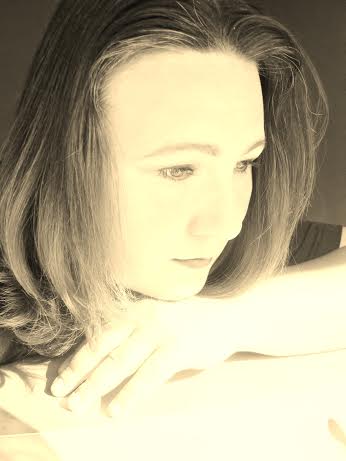
phoenix (a tanka)
rising from my heart,
bathing in my soul’s ashes,
proud of my fire…
i’m burning words with my thought,
forging new-born cries of hope…– Liliana Negoi
I got to know Liliana Negoi a.k.a. Lily (Endless Journey and curcubee în alb şi negru), her gentle refined spirit and her intelligent and well-crafted work years ago when we collaborated on a poetry project. We still keep in touch – it must be at least five years now – and Lily agreed to join The BeZine team and is a regular contributor of poems and essays to that peace-through-the-arts forum. Here today you have an in-depth interview with this thoughtful poet and samples of her work. Enjoy!
JAMIE: How did you come to poetry and when did you start writing it?
Although I was a big fan of reading (prose and poetry), poetry began to flow from my pen rather late – by “late” I mean when I was about eighteen years old. The thing that triggered the birth of my first poem was that my philosophy teacher from my final high school form almost died Someone told us that he was in hospital, all alone, without anyone to be there for him. This idea of profound loneliness managed to touch a “sleeping layer” in my conscience. thus my first poem, Anonymous Will, was born.
Despite that first poem coming out though, I didn’t consider writing poetry in a serious manner until much later, at first because I didn’t feel that my texts were good enough, and then because people around me didn’t seem to be much interested in poetry or writing. Also, at that time I was caught up with my music studies I paid more attention to those. A couple of years later though, I discovered the Internet (yeah, I was rather late in discovering it), and via the Internet, the English poetry websites. Eighteen years ago Romanian poetry websites were less developed, and since I wasn’t frequenting literary circles, what I found online was of much help.
At first I translated some of the poems I had already written. Later I simply began to write directly in English. The rest was a matter of time; the passion for poetry was already there. And in all this time, the creations of well-known Romanian poets like Nichita Stanescu, Marin Sorescu, Ana Blandiana, Adrian Suciu, but also foreign ones, like Pablo Neruda, Walt Whitman, and lately Nikola Madzirov, were (and are) a splendid lesson to me, with regard to understanding and writing poetry.
I also write haiku and tanka, as you know, but for some reason, despite the fact that these are also poetry forms, to me they were always on a different plan than the rest. Maybe because their spirit is of a different nature, and it took me more time to “crack the nut” and understand them.
I still see myself as a beginner in many ways, when it comes to poetry, but poetry chose to come to life through (however clumsily) me. I think this is one of my biggest joys in this life.
JAMIE: You are so productive: two blogs – one in English and one in Romanian – and five books of poetry in English and one in Romanian. I believe your children are still young … and you have your love of music and gardening to feed as well. How do each of these support and feed the others?
Yeah, I guess it sounds like a lot, if you sum it up like that :). But it was (again) all a matter of time. I didn’t do all those things at once. For instance, the first one that appeared was the English blog, when I felt that I needed something else than the poetry websites (on which I spent actually quite a few years, reading, learning, understanding – the international virtual literary community is a marvelous ground, if you know how to use it). Then came up the first poetry collection, in English, and despite the fact that there were mistakes in that process which I saw later, I think the greatest thing about that printed collection is that it made me more aware of what words truly are, and how they should be treated.
The Romanian blog appeared when a very dear friend of mine told me, with a lot of disappointment, that I should also write in Romanian, not only in English (I think I forgot to tell you that, after I started to write in English, for quite a long time I wrote only in that language). So I began to write again in Romanian, and to be honest, at first I felt like a toddler who was beginning to learn how to walk :). But then I found my way again among words, and it all fell into place.
The books…well, I guess they simply followed on the way, one by one.
As for the rest – yes, my two children are only eight and seven years old, so they do require a lot of attention. All these aspects of my life, including music and everything else, are merely the pieces of a puzzle – some bigger, some smaller, but all filling up the space of my life up to the smallest crack :). And when these things can’t fill those up, I have reading, which was the first passion in my life, starting at age four. But, again, it’s not a more crowded life than others’. It just requires (as in all cases) good time management. They are all connected – children to garden, garden to music, music to writing, or in any other order you prefer :).
JAMIE: You have said that you like to write in English. What about English is so appealing? How is it different from writing in Romanian?
I started to learn English when I was five years old, in kindergarten. Back then, Ceausescu was still ruling Romania; so, to have an English teacher in kindergarten was rare. My grandmother, with a spark of genius, wanted at all costs for me to start to learn this language in private, at home, so she arranged for lessons with that teacher. There were two things that I hated about it (or more like about the way of learning it): learning vocabulary by heart and learning grammar rules :).
Later, I stared English in school in my sixth form, when I was about twelve. The problems were the same. I simply didn’t understand that what I needed and wanted was to read more in that language. I think that happened about the time when I discovered the English poetry websites. I was lucky enough to talk online to English native speakers. That simple but constant contact with this language was the thing that enabled me understand what my teachers hadn’t – the inner mechanics of the language. I think it’s the same with any language – the more you read and speak it, the faster you understand and learn it, but the main thing is to read and speak about something you are interested in, not just didactical texts.
For instance, I fell in love with Nikola Madzirov’s poetry a couple of years ago, when I bumped into it by accident, while looking for something else. I read it in English back then, from his bilingual book Remnants of Another Age, but I heard some recordings of him reading his own texts in Macedonian. I was curious to see on my own how it sounded read in that language. Now, with Macedonian, the problem is the Cyrillic language, but I was fortunate enough to know most of the Russian letters from my grandmother, so I had an easier start with that. I began reading them, always comparing my reading with the English version, and listening to the several recordings of the author, and now I’m starting to slowly understand and learn Macedonian, even if my original intention was only to “feel the taste” of Madzirov’s poetry in my mouth :).
Going back to English (I’m sorry I have such a way of “expanding” my answers, please forgive me!), I think English provided me with a fluency I didn’t expect, and, for some reason, a fluency that, at the time when I began to write in English, I hadn’t found in my own native tongue. Sure, I speak Romanian without problems, but from many points of view English had a different impact on my writin and images were easier to “paint” with English words (and it happened to me to find many images that were better worded in English than in Romanain).
I think the real issue here is the musicality of a language in certain contexts; or, better said (because all languages have their own musicality), the way in which the musicality of a language resonates to the reality stimuli surrounding us. It’s the same with music. All music is beautiful, but you don’t listen to any kind of music in any given moment of the day – all languages are musical, but you can’t capture the beauty of a moment the same way in two languages. No matter how good a translation, Basho’s haikus will never convey the same feeling as in their native tongue, simply because that language has profound connections to that form and because that form responds best to that musicality. My inner structure resonates (or at least it used to resonate) better with the way English language sounds, thus my poetry, for years, flowed much better in that language.
JAMIE: What forms of poetry do you prefer and why?
I write mostly in free verse, white rhyme, or various combinations of rhyming verse, but in time I tried newer and older forms of poetry. From these, I eventually grew much attached to sonnets (especially Shakespearean sonnets), haiku and tanka.
I also have another form, the sestina, that’s dear to me, but with that one is more like a “love-hate relationship”, so to speak. One of the people who taught me online certain things about poetry made me literally try to write several forms, and at some point he mentioned the sestina, saying that a rhyming pentameter in that form was among the most difficult things to write, so in my mind I was like “challenge accepted” :))). I wrote three such texts, the first two not so bad, but of the third one (named “panta rhei”) I’m actually very proud of. I decided that even if I am able to produce a text in this form, I am not very fond of the fact that the virtuosity is strictly connected to the way one makes use of the same six end-line words all through the poem. It’s a whirling form, maybe even maddening one – and one needs much patience and determination, and above all, a VERY good motivation to write one. I only found that motivation three times so far, maybe I will find it again, but I couldn’t say when that should happen.
Sonnets, on the other hand, were something so elegant, from my point of view; they were like a time travel at first. And as with other things, I realized that not all imagery can be “stuffed” into this form. Normally a love poem, I found that love sometimes, when put in a sonnet, feels square, just like I found out that other aspects of life, when given the form of a sonnet, gain a certain nobility.
The haiku and tanka were two forms that appealed to me first due to their minimalism and strictness of rules. I’m not talking here about the 5-7-5 haiku rule – so many great haiku poems were written without respecting that rule. I’m talking about the fact that a haiku, for instance, is merely an observation of what surrounds you, as a poet, an observation of the delicate changes in the nature around you, of the delicate balance between nature and you. Haiku is not simple, precisely because it should be simple, and we, the European and American poets, don’t know how to keep things as simple as a haiku. I love haiku because it taught me to look deeper at things, but also to see the immediate beauty of everything. It’s there. You need no metaphor to acknowledge it – the beauty of life, in its entirety.
JAMIE: You’ve accomplished so much. What are your next steps, your goals for the future?
It’s hard to have steps in poetry. My only step (in this moment) related to this is to find the best way to bring words to life. Sure, I have some book projects, but I am not as disciplined in this matter as to sit down every day and tell myself “now I’m working on this or that book”. It’s a matter of inspiration, and yes, maybe some are able to summon inspiration at will. Lately though, I find myself basking in some sort of “laziness”, let’s say. I’m more like living than writing the poetry :). I definitely won’t stop writing; I just want to understand the connection between time and poetry, between time and words.
JAMIE: What advice might you have for others who self-publish their poetry, whether it be via blogs or books or both?
I think they should write for themselves, first of all, and learn to be objective. One must realize that you begin to become a poet only after you’re willing to “trim” what you create, to understand that not all words belong to one poem, just like not all poems belong to one book.
Then comes something that someone very dear to me told me at some point: do you want to publish a book in order for it to be commercial or in order for it to be good? Because it’s highly difficult to have both things at the same time nowadays. If they write for commercial reasons…I’m afraid they will have to take advice from some other person than me :).
If they don’t write for commercial reasons, then they should first of all write with profound honesty. They shouldn’t write for others to like what they pen. They should write with the awareness that those liking their poems today might not like them tomorrow, and that what matters if first of all their personal connection to what they write.
They should write with the awareness that people liking their work now will be gone in years to come, and what they write will be seen by a different generation, with different eyes, different brains and concepts. They must decide whether they want to write something that should be valid for a while or for ever. Evanescence is beautiful to talk about but difficult to assume.
Writing something that should be valid forever is not easy. For that, you must love to read – reading forms your vocabulary, your imagination, your inspiration. You must love to see things – not just look at them, but see them, in their entirety. You must love to write. Not only on a computer keyboard, but with a pen on a piece of paper. Form a connection with the words. See them inked on paper. See the poetry of the spaces in words, not just that of their letters’ lines. You must love to talk but also to listen to people. Form connections with people. Above all, if you want to write poetry, you must be willing to live it first with all that it implies.
The Talking Rose
I was talking on an evening to a purple velvet rose
that was reigning in a glass bowl on a shelf inside my house –
I was asking it to sell me out its soul, but I suppose
what I offered was too little,
what I offered was too useless,
what I offered was too shallow,
for I thought I heard it grouse
of how priceless was the perfume which it spread inside my house.
Feeling vexed by the contempt and pride affected by the bloom
I ignored all further whisper it attempted to convey –
‘til one night, when in the thickly warm and humid summer gloom
all I heard was just the silence,
all I heard was just the darkness,
all I heard was just my breathing
vainly searching for a say
from the rose which, in the meantime, hushed its scent and passed away.
So I tenderly beheld it – purple velvet turned to brown –
as it gracefully adorned the wooden shelf within my room –
now, that all the sweet aroma had resigned the rose’s crown,
what was left was just the stillness,
what was left was just an echo,
what was left was just a shadow
of the rose that met its doom –
and I missed – oh! how I missed! – the talking fragrance of the bloom…– Liliana Negoi
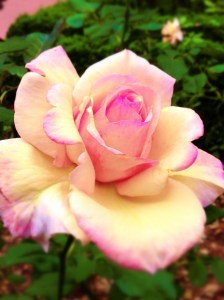
Liliana Negoi was born in 1979 in Craiova, Romania. She began to write poetry at the age of eighteen. She is the author of five collections of poetry in English (Sands and Shadows, Footsteps on the Sand – tanka collection, Cream of wordflakes, The Hidden Well and Amber Drops) and one in Romanian (aparenta curgere a lucrurilor). Texts of hers can be read both on her English blog Endless Journey and Romanian one curcubee în alb şi negru and she can also he heard reciting on SoundCloud HERE and HERE. She is also the author of a novel, Solo-Chess, available for free reading HERE. Many of her creations, both poetry and prose, have been published in various literary magazines. She is a member of the team publishing on The BeZine and established, together with Raluca Ioana Chipriade, an e-zine of Romanian art and culture named Din dragoste pentru arta.
© Liliana Negoi, poetry, interview responses, portrait and book-cover art; rose photograph, Jamie Dedes






 Jamie Dedes' THE POET BY DAY Webzine