Page 5 of 31

Part 1 of 3: Zimbabwean Poet in Exile: Award-Winning Mbizo Chirasha, A Life on the Run, Interview
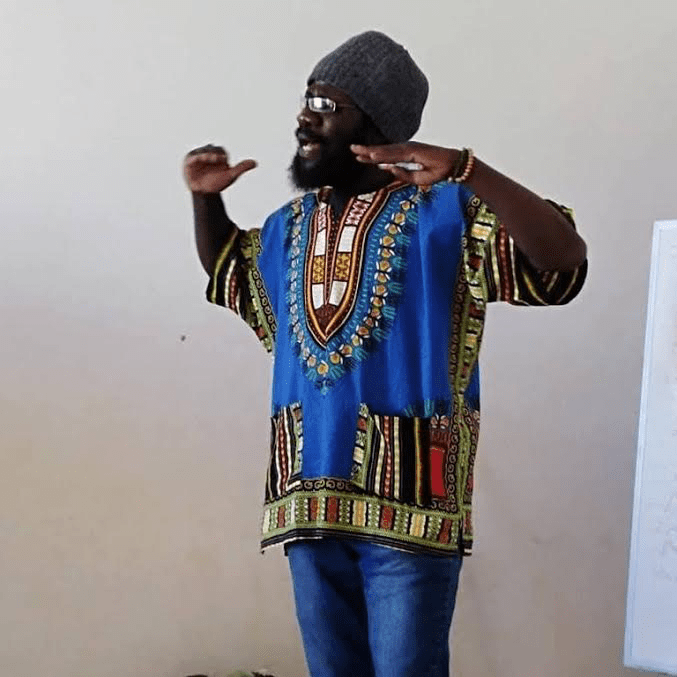
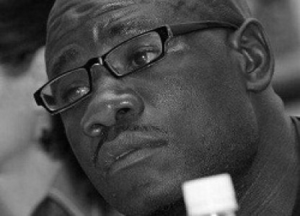
Mbizo Chirasha

“Mother Africa survived the trauma of clanging chains of captivity during slave trade, shackles of colonialism, and winced from beatings of hard bolt nut clenched fists of apartheid. Children and grandchildren of Mother Africa watched helplessly her sorrowful dance to the acoustics of sufferance. Still, Africa remains resilient … smashing punches from kindred’s of neocolonialism: global village, digital revolution and consumerism. Mama Africa’s groin is ripped apart by her triplets: totalitarian regimes, economic malaise and moral decadence. Today Mother Africa of pyramids, Africa of Nefertiti , Africa of Lumumba, Africa of Mandela, Africa of Kambarage , Africa of Lithium , Africa of diamond and Africa of uranium wallow in murky waters of poverty, chronic civil wars, and deadly epidemics.” Mbizo Chirasha, Editor, Brave Voices Poetry Journal.


Orthographic map of Africa courtesy of Martin23230 C BY-SA 3.0

When I was a junior in high school (circa 1966), our civics/history teacher said that Africa was a continent of much promise because of its diverse populations, its biodiversity, mineral resources, endless beauty, and its arts and wisdom traditions. She was right, of course. As a consequence, we spent several months of that school year studying the promise of Africa and its peoples.

For years after, Africa haunted me: Mosi-oa-Tunya, birds hitching rides on giraffeswhite rhinos, the rhythms of kebero drums and the swing-and-sway of folk dance, the injera, the wat, and the niter kibby.  But our teacher’s great vision of Africa’s promise was largely unfulfilled. Blame it on the fall-out from old-and-new waves of colonialism, apartheid, and corporate land-grab and land-rape. What could have been a place of hope and high expectation is rife with turmoil, poverty, and suffering. It is a place where poets who speak out against violent despots and greedy kleptocrats put themselves at great risk in doing so. Today, I have the pleasure of featuring Mbizo Chirasha, one such poet. He is dedicated to gender equity, environmental justice, and human rights and he is on the run . / J.D.
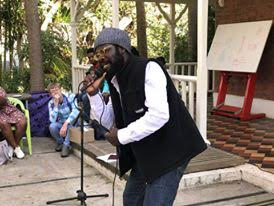
INTERVIEW

JAMIE: What were the events in your life that lead you to socially engaged poetry?

MBIZO: My father was a storyteller, an African traditionalist, a
singer and a village griot. I grew up listening to the sound of the
wind of the drum. Ritual and ancestral ceremonies were the norm
and usually accompanied  by spiritual song, dance, drum and chants. I
was introduced to words at a  tender age and more over to
sounds of chirruping birds, syntactic over night hooting of owls,
the rhythmic dove cooos, the dance and the smile of white moon. I am a
grandchild of African proverb.

I am a child of war. I was born during the Zimbabwean struggle for independence.
My ears sedimented to the clap of gun shots  and the thunder of death, the
thud of grenades, and heave of the Pungwe River’s songs. I read Achebe, Ngugi,
Marechera, Hamutyineyi, Neto, Senghor, Miriam Ba, Tsodzo, Chiundura Moyo, Makari,
Soyinka and more in my early teens. I became a school griot when I was seven.

JAMIE: Why is your life at risk?

MBIZO: I write the truth to any form of leadership: cultural, social and
political, My literary arts activism and my human rights and arts for
justice activities put me at risk.

I write feature articles that speak against dictatorship, injustice
and tyranny. Political leadership in Zimbabwe does not like the truth.
They want praise, which I think is a bad sign. We have violent goons
among leaders who thrive on silencing writers, artists, activists and
human rights defenders.

I am the Founder of the Zimbabwean We Want Poetry campaign, a global
literary activism campaign that exposed and is exposing political rot, poor
governance and corruption in Zimbabwe specifically and in greater Africa.

That campaign has led to the founding of the Brave Voices POETRY JOURNAL
and the Freedom Voices Poetry Writing competition. This in turn has lead to the
publication of more than 10,000 poems on various social media platforms.

My poetry in books and  journals is critical to fighting systems that oppress masses,
systems that violate human rights, systems that loot the economy and subject
masses to abject poverty .

My latest poetry collection, A Letter to the President, the title itself does not sit well with politicians, zealots, and charlatans who survive on political and economic strife, but the collection is a must  read.
It never mentions names but it speaks truth against injustice, corruption, violence and expediency and it got me in trouble: death threats, tailing, and haunting after the grand launch.

I don’t hesitate to write the truth. We have suffered under dictatorial leadership in Zimbabwe. We want the new leadership to reform and to refrain
from abductions, corruption, violence and looting. We need the purpose to live, to belong and to love our beautiful country. We want political violence
stopped. The abduction of artists and activists must stop.

JAMIE: What is the status of your situation now?

MBIZO: Exile has never been good but resilience is key. In exile you are both foreign to yourself and foreign to the land.  Accommodation, security, resources, communication, and other foundations of personal welfare and trust become first priorities and they are not easy to come by because one is not in his usual haven. The stalking is constant and exhausting. You sleep with an open eye or walk with your eyes above your shoulders.

JAMIE: You put in an application to ICORN* in 2017. What was the response?

MBIZO: I am not happy because the reply was really bad, I don’t know whether
they want you to loose a leg, a hand, or to die for them to accept your application
to be safe.

* International Cities of Refugee Network; ICORN’s mission is “protecting and promoting writers and artists at risk.”  I’ve read Mbizo’s paperwork. Responses to Mbizo’s 2017 application for assistance repeatedly indicate that his paperwork is in process but no action has been taken by ICORN on Mbizo’s behalf over the two years since he filed for safe haven.

JAMIE: What organizations have come forward to help you?

MBIZO: The main  and major organization that have stood by me since 2017
are the following
a)      PEN GERMANY 2017
b)      EU-AFRICA DEFEND DEFENDERS FUND
c)      ANDREAS WEILAND( WRITER/TRANSLATOR)
d)      ELKE LANGE- SPAIN /GERMANY
e)      INTERNATIONAL HUMAN RIGHTS ARTS FESTIVAL/THOMAS BLOCK
f)      FREEMAN CHARI OF DIASPORA FUNDS
g)      TRACY YVONNE BREAZILE
h)      HADAA SENDOO FROM MONGOLIA
i)      MICHALE DICKEL- WRITER IN ISRAEL

JAMIE: What is your plan now and how can we as part of the greater poetry community assist?

MBIZO: I continue with writing for justice, human rights, the truth, and with activism and literary activism. In this moment of madness, trials and hardships, poets must unite. Help me lobby resources, lobby institutions that offer assistance to writers-at-risk: PEN, UN Human Rights, Writers Centres, and Artists for Justice Centres for safety retreat.

We must all keep writing for truth, justice, and  good governance.

Editor’s note:  I want to get a letter-writing campaign going for Mbizo to help him attain safe haven. More on that in Part 3 on Monday.  Tomorrow (Sunday), you’ll have the opportunity to read four of Mbizo’s poems.  Stay with us in solidarity for free-and-open civil discourse, social justice and responsible governance. May all sentient beings find peace. 

© 2019, introductory text, Jamie Dedes; photos and interview text, Mbizo Chirasha

RELATED:

MBIZO CHIRASHA is a recipient of PEN Deutschland Exiled Writer Grant (2017), Literary Arts Projects Curator, Writer in Residence, Blogs Publisher, Arts for Human Rights/Peace Activism Catalyst, Social Media Publicist and Internationally Anthologized Writer, 2017 African Partner of the International Human Rights Arts Festival Exiled in Africa Program in New York. 2017 Grantee of the EU- Horn of Africa Defend Human Rights Defenders Protection Fund. Resident Curator of 100 Thousand Poets for Peace-Zimbabwe, Originator of Zimbabwe We Want Poetry Movement. He has published a collection of poetry, Good Morning President, and co-created another one Whispering Woes of Ganges and Zembezi with Indian poet Sweta Vikram.


Jamie Dedes. I’m a freelance writer, poet, content editor, and blogger. I also manage The BeZine and its associated activities and The Poet by Day jamiededes.com, an info hub for writers meant to encourage good but lesser-known poets, women and minority poets, outsider artists, and artists just finding their voices in maturity. The Poet by Day is dedicated to supporting freedom of artistic expression and human rights and encourages activist poetry.  Email thepoetbyday@gmail.com for permissions, commissions, or assignment

About / Testimonials / Disclosure / Facebook / Medium

Recent poems and short stories: How 100,000 Poets Are Fostering Peace, Justice, and Sustainability, YOPP! * The Damask Garden, In a Woman’s Voice, August 11, 2019 / This short story is dedicated to all refugees. That would be one in every 113 people. * Five poems, Spirit of Nature, Opa Anthology of Poetry, 2019 * From the Small Beginning, Entropy Magazine (Enclave, #Final Poems), July 2019 * Over His Morning Coffee, Front Porch Review, July 2019 * Three poems, Our Poetry Archive, September 2019


“Every pair of eyes facing you has probably experienced something you could not endure.”  Lucille Clifton

“On Living” and “Letters from a Man in Solitary,” poems by Nâzım Hikmet

“It’s this way:
being captured is beside the point
the point is not to surrender.
Nâzım Hikmet, Poems of Nazım Hikmet


On Living

Living is no laughing matter:
You must take it seriously.
So much so and to such a degree
that, for example, your hands tied
behind your back,
your back to the wall
or else in a laboratory
in your white coat and safety glasses,
you can die for people –
even for people whose faces you’ve
never seen,
even though you know living
is the most real, most beautiful
thing.
I mean, you must take living so
seriously
that even at seventy, for example, you’ll
plant olive trees –
and not for your children, either,
but because, although you fear death you
don’t believe it,
because living, I mean, weighs heavier.

Nâzım Hikmet, Poems of Nâzım Hikmet

Letters from a Man In Solitary 

1
I carved your name on my watchband
with my fingernail.
Where I am, you know,
I don’t have a pearl-handled jackknife
(they won’t give me anything sharp)
or a plane tree with its head in the clouds.
Trees may grow in the yard,
but I’m not allowed
to see the sky overhead…
How many others are in this place?
I don’t know.
I’m alone far from them,
they’re all together far from me.
To talk anyone besides myself
is forbidden.
So I talk to myself.
But I find my conversation so boring,
my dear wife, that I sing songs.
And what do you know,
that awful, always off-key voice of mine
touches me so
that my heart breaks.
And just like the barefoot orphan
lost in the snow
in those old sad stories, my heart
— with moist blue eyes
and a little red runny rose —
wants to snuggle up in your arms.
It doesn’t make me blush
that right now
I’m this weak,
this selfish,
this human simply.
No doubt my state can be explained
physiologically, psychologically, etc.
Or maybe it’s
this barred window,
this earthen jug,
these four walls,
which for months have kept me from hearing
another human voice.

It’s five o’clock, my dear.
Outside,
with its dryness,
eerie whispers,
mud roof,
and lame, skinny horse
standing motionless in infinity
— I mean, it’s enough to drive the man inside crazy with grief —
outside, with all its machinery and all its art,
a plains night comes down red on treeless space.

Again today, night will fall in no time.
A light will circle the lame, skinny horse.
And the treeless space, in this hopeless landscape
stretched out before me like the body of a hard man,
will suddenly be filled with stars.
We’ll reach the inevitable end once more,
which is to say the stage is set
again today for an elaborate nostalgia.
Me,
the man inside,
once more I’ll exhibit my customary talent,
and singing an old-fashioned lament
in the reedy voice of my childhood,
once more, by God, it will crush my unhappy heart
to hear you inside my head,
so far
away, as if I were watching you
in a smoky, broken mirror…

2
It’s spring outside, my dear wife, spring.
Outside on the plain, suddenly the smell
of fresh earth, birds singing, etc.
It’s spring, my dear wife,
the plain outside sparkles…
And inside the bed comes alive with bugs,
the water jug no longer freezes,
and in the morning sun floods the concrete…
The sun–
every day till noon now
it comes and goes
from me, flashing off
and on…
And as the day turns to afternoon, shadows climb the walls,
the glass of the barred window catches fire,
and it’s night outside,
a cloudless spring night…
And inside this is spring’s darkest hour.
In short, the demon called freedom,
with its glittering scales and fiery eyes,
possesses the man inside
especially in spring…
I know this from experience, my dear wife,
from experience…

3
Sunday today.
Today they took me out in the sun for the first time.
And I just stood there, struck for the first time in my life
by how far away the sky is,
how blue
and how wide.
Then I respectfully sat down on the earth.
I leaned back against the wall.
For a moment no trap to fall into,
no struggle, no freedom, no wife.
Only earth, sun, and me…
I am happy.

Trans. by Randy Blasing and Mutlu Konuk (1993) / Poem Hunter

RELATED:

Nâzım Hikmet

Nâzım Hikmet / courtesy of Bundesarchiv Bild 183-14809-0004, Berlin, Schriftsteller-Besuch.jpg under CC BY-SA 3.0 de

Nâzım Hikmet (1902 – 1963) was a Turkish poet, playwright, novelist, screenwriter, director and memoirist. He was acclaimed for the “lyrical flow of his statements”.  Since he was a revolutionary in his time, he seemed a good poet to present today, the day we celebrate Global 100,000 Poets and Friends for Change and The BeZine Virtual 100TPC. (Join us HERE and share your work. Read that of others.)

Additionally, he has always fascinated me, not only because of his poetry and the way he spent his life, but because he was born in the same time and place as my father, someone I barely knew.  I feel a bit like I get a glimpse at the times and culture into which my father was born when I read Hikmet.

Described as a “romantic communist” and “romantic revolutionary”, he was repeatedly arrested for his political beliefs and spent much of his adult life in prison or in exile. His poetry has been translated into more than fifty languages.

Despite writing his first poems in syllabic meter, Nazım Hikmet distinguished himself from the “syllabic poets” in concept. With the development of his poetic conception, the narrow forms of syllabic verse became too limiting for his style and he set out to seek new forms for his poems.

He was influenced by the young Soviet poets who advocated Futurism. On his return to Turkey, he became the charismatic leader of the Turkish avant-garde, producing streams of innovative poems, plays and film scripts. Breaking the boundaries of syllabic meter, he changed his form and began writing in free verse, which harmonized with the rich vocal properties of the Turkish language.

He has been compared by Turkish and non-Turkish men of letters to such figures as Federico García Lorca, Louis Aragon, Vladimir Mayakovsky, Faiz Ahmed Faiz and Pablo Neruda. Although Ran’s work bears a resemblance to these poets and owes them occasional debts of form and stylistic device, his literary personality is unique in terms of the synthesis he made of iconoclasm and lyricism, of ideology and poetic diction.[5]:19

Many of his poems have been set to music by the Turkish composer Zülfü Livaneli. A part of his work has been translated into Greek by Yiannis Ritsos, and some of these translations have been arranged by the Greek composers Manos Loizos and Thanos Mikroutsikos.

Because of his political views his works were banned in Turkey from 1938 to 1965.

Nazim Hikmet was awarded the International Peace Prize in 1950.


Jamie Dedes. I’m a freelance writer, poet, content editor, and blogger. I also manage The BeZine and its associated activities and The Poet by Day jamiededes.com, an info hub for writers meant to encourage good but lesser-known poets, women and minority poets, outsider artists, and artists just finding their voices in maturity. The Poet by Day is dedicated to supporting freedom of artistic expression and human rights.  Email thepoetbyday@gmail.com for permissions, commissions, or assignments.

About / Testimonials / Disclosure / Facebook

Recent and Upcoming in Digital Publications Poets Advocate for Peace, Justice, and Sustainability, How 100,000 Poets Are Fostering Peace, Justice, and Sustainability, YOPP! * The Damask Garden, In a Woman’s Voice, August 11, 2019 / This short story is dedicated to all refugees. That would be one in every 113 people. * Five poems, Spirit of Nature, Opa Anthology of Poetry, 2019 * From the Small Beginning, Entropy Magazine (Enclave, #Final Poems), July 2019 * Over His Morning Coffee, Front Porch Review, July 2019 * Three poems, Our Poetry Archive, September 2019


“Every pair of eyes facing you has probably experienced something you could not endure.”  Lucille Clifton

Joy Harjo’s Opening Reading as Poet Laureate, September 19, Will be Live-streamed by the Library of Congress; Joy Harjo reading “Remember”

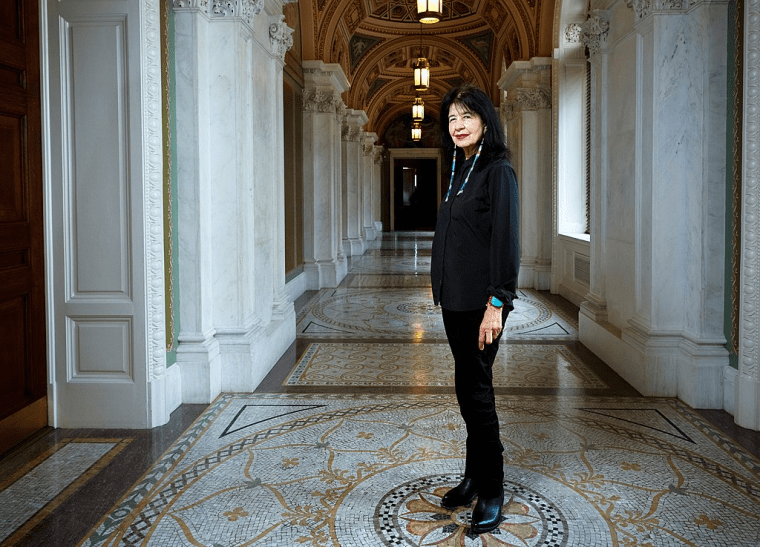
Joy Harjo, Poet Laureate of the United States. Photo by Shawn Miller, Library of Congress.

“I’ve always had a theory that some of us are born with nerve endings longer than our bodies”  Joy Harjo, In Mad Love and War


Harjo photographed by the Library of Congress in 2019, upon her nomination as Poet Laureate

Joy Harjo will give her inaugural reading as the 23rd Poet Laureate Consultant in Poetry at the Library of Congress at 7 p.m. on Thursday, Sept. 19. The event will take place in the Coolidge Auditorium on the ground floor of the Thomas Jefferson Building, 10 First St. S.E., Washington, D.C. A book signing will follow.

The program is free and open to the public, but tickets are required and there may be special restrictions. For more information and to secure tickets, visit this event ticketing site HERE.

Harjo’s reading will be live-streamed on the Library’s Facebook page and its YouTube site (with closed captions).

Joy Harjo is a member of the Muscogee (Creek) Nation. She is the first Native American to serve as U.S. Poet Laureate.


The official seal of the Muscogee (Creek) Nation by Muscogee Red under CC BY-SA 4.0

The Muscogee (Creek) Nation is a federally recognized Native American tribe based in the U.S. state of Oklahoma. The nation descends from the historic Creek Confederacy, a large group of indigenous peoples of the Southeastern Woodlands. Official languages include Muscogee, Yuchi, Natchez, Alabama, and Koasati, with Muscogee retaining the largest number of speakers. They commonly refer to themselves as Este Mvskokvlke (pronounced [isti məskógəlgi]). Historically, they were often referred to as one of the Five Civilized Tribes of the American Southeast.


The historic reading marks the beginning of Harjo’s laureateship, which traditionally launches the Library’s 2019-2020 literary season. This year, it is also part of the Library’s new National Book Festival Presents series, featuring high-caliber authors, their books and related Library treasures.

Photo courtesy of Joy Harjo. Photographer: Karen Kuehn

In addition to reading from her repertoire of poems spanning a 40-year career, Harjo, who is an award-winning musician, also will perform with bassist Howard Cloud and keyboardist Robert Muller.

Librarian of Congress Carla Hayden appointed Harjo the Poet Laureate Consultant in Poetry in June. Hayden says that Harjo’s poems tell “an American story of tradition and loss, reckoning and myth-making. Her work powerfully connects us to the earth and the spiritual world with direct, inventive lyricism that helps us reimagine who we are.”

Born in Tulsa, Oklahoma, on May 9, 1951, Harjo has written eight books of poetry, including Conflict Resolution for Holy Beings (W. W. Norton, 2015); The Woman Who Fell From the Sky (W. W. Norton, 1994), winner of the Oklahoma Book Arts Award; and In Mad Love and War (Wesleyan University Press, 1990), which received an American Book Award and the Delmore Schwartz Memorial Award. Her most recent book of poetry is An American Sunrise was published by W. W. Norton this month.

Joy Harjo’s memoir, Crazy Brave (W. W. Norton, 2012) won the 2013 PEN Center USA literary prize for creative nonfiction. In addition, Harjo has written a children’s book, The Good Luck Cat (Harcourt, Brace 2000), and a young adult book, For a Girl Becoming (University of Arizona Press, 2009).

AWARDS: Harjo’s many literary awards include the PEN Open Book Award, the American Indian Distinguished Achievement in the Arts Award, the New Mexico Governor’s Award for Excellence in the Arts and the Arrell Gibson Lifetime Achievement Award from the Oklahoma Center for the Book.

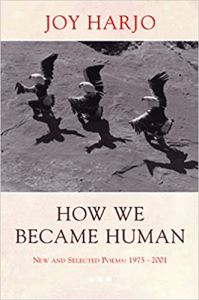
Harjo has received fellowships from the Guggenheim Foundation, the Witter Bynner Foundation and the National Endowment for the Arts. Her collection How We Become Human: New and Selected Poems 1975-2001” (W. W. Norton, 2002) was selected by the National Endowment for the Arts for its Big Read program. Her recent honors include the Jackson Prize from Poets & Writers (2019), the Ruth Lilly Poetry Prize from the Poetry Foundation (2017) and the Wallace Stevens Award from the Academy of American Poets (2015). In 2019, she was elected a Chancellor of the Academy of American Poets.

*


If you are reading this post via an email subscription, you’ll likely have to link through to the site to view it.


This post is courtesy of the U.S. Library of Congress, Amazon, Wikipedia, The Poetry Society, my bookshelf, and Joy Harjo.

The Library of Congress Poetry and Literature Center fosters and enhances the public’s appreciation of literature. To this end, the center administers the endowed Poet Laureate Consultant in Poetry position, coordinates an annual season of readings, performances, lectures, conferences and symposia; sponsors high-profile prizes and fellowships for literary writers; and offers a range of digital initiatives to further its mission and reach. For more information, visit.

The Library of Congress is the world’s largest library, offering access to the creative record of the United States — and extensive materials from around the world — both on-site and online. It is the main research arm of the U.S. Congress and the home of the U.S. Copyright Office. Explore collections, reference services and other programs and plan a visit at loc.gov; access the official site for U.S. federal legislative information at congress.gov; and register creative works of authorship at copyright.gov.


ABOUT 

Jamie Dedes. I’m a Lebanese-American freelance writer, poet, content editor, blogger and the mother of a world-class actor and mother-in-law of a stellar writer/photographer. No grandchildren, but my grandkitty, Dahlia, rocks big time. I am hopelessly in love with nature and all her creatures. In another lifetime, I was a columnist, a publicist, and an associate editor to a regional employment publication. I’ve had to reinvent myself to accommodate scarred lungs, pulmonary hypertension, right-sided heart failure, connective tissue disease, and a rare managed but incurable blood cancer. The gift in this is time for my primary love: literature. I study/read/write from a comfy bed where I’ve carved out a busy life writing feature articles, short stories, and poetry and managing The BeZine and its associated activities and The Poet by Day jamiededes.com, an info hub for writers meant to encourage good but lesser-known poets, women and minority poets, outsider artists, and artists just finding their voices in maturity. The Poet by Day is dedicated to supporting freedom of artistic expression and human rights.  Email thepoetbyday@gmail.com for permissions, commissions, or assignments.

Testimonials / Disclosure / Facebook

Recent and Upcoming in Digital Publications * The Damask Garden, In a Woman’s Voice, August 11, 2019 / This short story is dedicated to all refugees. That would be one in every 113 people. * Five poems, Spirit of Nature, Opa Anthology of Poetry, 2019 * From the Small Beginning, Entropy Magazine (Enclave, #Final Poems), July 2019 * Over His Morning Coffee, Front Porch Review, July 2019 * Three poems, Our Poetry Archive, September 2019


“Every pair of eyes facing you has probably experienced something you could not endure.”  Lucille Clifton

In My Craft or Sullen Art by Dylan Thomas

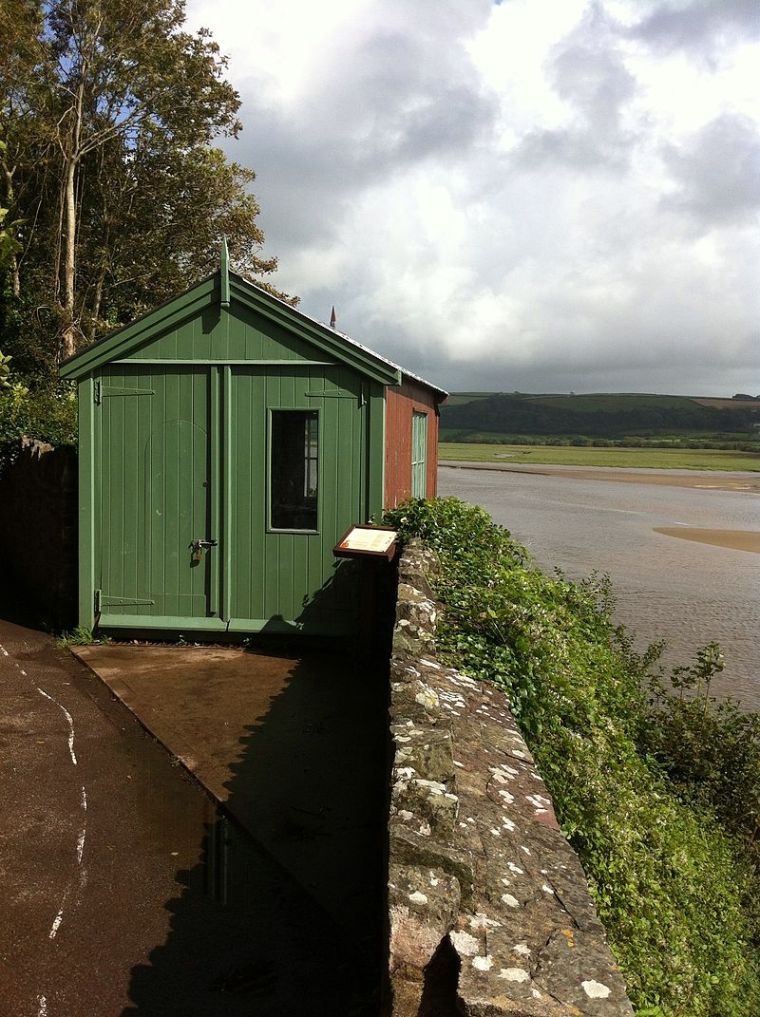
Thomas’s £5 writing shed in Laugharne, Carmarthenshire courtesy of wardyboy400 under CC BY 2.0

“He has been called a pagan, a mystic, and a humanistic agnostic; his God has been identified with Nature, Sex, Love, Process, the Life Force, and with Thomas himself.” Dylan Thomas: The Poet and His Critics, R.B. Kershner Jr. as quoted in a Poetry Foundation bio HERE.


In my craft or sullen art
Exercised in the still night
When only the moon rages
And the lovers lie abed
With all their griefs in their arms,
I labour by singing light
Not for ambition or bread
Or the strut and trade of charms
On the ivory stages
But for the common wages
Of their most secret heart.

Not for the proud man apart
From the raging moon I write
On these spindrift pages
Nor for the towering dead
With their nightingales and psalms
But for the lovers, their arms
Round the griefs of the ages,
Who pay no praise or wage

– Dylan Thomas

Excerpt from Death and Entrances (J.M.Dent, 2916)

Dylan Thomas’s writing shed in Laugharne, largely untouched since his death courtesy of Richard Knights  under CC BY-SA 2.0 license

Dylan Thomas (1914 – 9 1953) was born in Swansea, Wales. He was a poet and writer whose works include the poems Do not go gentle into that good night and And death shall have no dominion. He had a reputation for hard living, was popular in his lifetime and even after his early death in Manhattan in 1953.

Thomas left school at sixteen and for awhile worked as a journalist. His work was published while he was in his teens and and  in 1934 of Light breaks where no sun shines caught the attention of the literary world. He met and married (1937) Caitlin Macnamara when he was in London.  The settled in the Welsh fishing village of Laugharne and riased three children there.


ABOUT

Recent in digital publications: 
* Four poemsI Am Not a Silent Poet
* From the Small Beginning, Entropy Magazine (Enclave, #Final Poems)(July 2019)
* Over His Morning Coffee, Front Porch Review (July 2019)
Upcoming in digital publications:
* The Damask Garden, In a Woman’s Voice (August 2019)

A busy though bed-bound poet, writer, former columnist and the former associate editor of a regional employment newspaper, my work has been featured widely in print and digital publications including: Levure littéraireRamingo’s Porch, Vita Brevis Literature, HerStry, Connotation Press, The Bar None Group, Salamander CoveI Am Not a Silent Poet, Meta/ Phor(e) /Play, Woven Tale PressThe Compass Rose and California Woman. I run The Poet by Day, a curated info hub for poets and writers. I founded The Bardo Group/Beguines, a virtual literary community and publisher of The BeZine of which I am the founding and managing editor. Among others, I’ve been featured on The MethoBlog, on the Plumb Tree’s Wednesday Poet’s Corner, and several times as Second Light Live featured poet.

Email me at thepoetbyday@gmail.com for permissions, reprint rights, or comissions.


“Every pair of eyes facing you has probably experienced something you could not endure.”  Lucille Clifton