Write a poem about a poet, writer or artist you know. Capture their essence and, if you feel comfortable, share your work or a link to it in the comments below. All are welcome, emerging or established. Prompt inspired poems will be featured here next Tuesday.
Here is the collection of responses to the last Wednesday Writing Prompt, he’s a tumble weed, September 13. I’m quite pleased with the efforts of Renee Espiru, Paul Brookes, Sonja Benskin Mesher, Iulia Gherghi, Collin Blundell, and Kakali Das Gosh. Bravo, poets! Enjoy the reading, visit their blogs, and strike-up a friendships with other poets.
The next Wednesday Writing Prompt will post tomorrow. All are welcome to come out and play, no matter where in the world you live or where you are in your career, emerging or established.
Rainbow Lace Muses
dreams are like the sweet smell
of ambrosia not like
the bitter of coffee
before her
she sits by the restaurant window
staring at nothing
and seeing everything
perhaps she sees her life
without children running about demanding
time
time she doesn’t have and
does not have to give
for life should chord
space and quiet
life should be filled
with writing muses
laced with rainbows
filled with artist
paper
& tools for both
housed in a place
beneath
trees
sprinkled with star dust
a place with fields of
wild flowers so
she can commune
with nature
with her soul
she is lost in her thoughts
as the restaurant
comes to life
around her
with the laughter of
children
playing
she is reminded that life
hinges on choices
of ambivalence
In my high school years
I was addicted to one pub
Every day around six p.m.
I would take the dog out
The dog was the pretext of course
The pub was across the park, nearby the lake
His owner was like a brother to me
His entire family was my family for awhile
Their harmony, their happiness
Were my refuge
I was safe there in that glass pub
Soon enough I became a student
New places to explore
The pub on the top of the National Theatre
The pub of the University of Architecture, this one was more a club
For playing cards, all sort of games
The pub of the Literature University
Placed underground, with black oiled walls
We divided fairly our time between those three
I would start my day with a coffee in the Literature’ pub
Puff my cigarette while studying faces
The smoke would burn my eyes
But in that quasi darkness no one would notice
Lucky strike, no filters or some Romanian stuff, equally strong
I would always forget my lighter
So asking for a light would start a friendship
Next, at noon
Me and my friends would visit the Architecture’s pub
There the students were taller
Handsomer, intriguing
Here we would take our lunch
Being a far more light full place
And in the evenings, when some money grew in our pockets
We would join the roof crowd
On the top of The National Theatre
Where crème de la crème would meet
One or two pints of beer would grant the effort
When broke or during the exams
The nearby pub will greet us at 3 a.m. in the morning
What else but a beer to fixate your knowledge
Or to provide a blissful sleep
I wasn’t picky
Whatever would come first
Very soon the school was over
Life stuck its teeth on us
Devoured by our duties and responsibilities
We can afford only fast food restaurants now
Just before movie starts
The animation movie, 3D
With its special glasses that cover an
Underground slumber
forgetting for the moment that they
might be looking at us in the same way –
all those behavioural manifestations –
do we not impute to them
a kind of completion settled composure
compounded of what we take to be
definite things – arrangements of thought
intellectual substructure of identity & feeling?
take anybody you imagine you know
however they might be in themselves
do you not see a certain settledness
of body & mind spirit & dalliance
towards the world? look how they move
with dignity or resolve or shuffle their feet
with an uncertainty they might overcome
suddenly with intention direction & purpose
and how do they see you
mirror of themselves hearing about them
arranging a Bruckner symphony
for a hundred recorder-players?
like the man in the roadside café
I’d never met before
and am never likely to meet again
told me he’d just done
O !the rural cafe owner
Let me enjoy the blinding heavenly light
The accompanied whistling winds
I-a tumbleweed has ushered
your cafe
To pleasure an eternal liquor ,beer or wine of love
Let me escape from the crustfallen life
A chain of of diurnal routine
Let me recline at the front porch of your tavern
Enjoying a dirge quiescence
Let me exempt from the bricks and mortar ,chimney bellflower and clamorous clarion
O ! the rural cafe owner
Let me fly away from the anguish intolerable
May it be just for few moments
But I would sip the red wine of the loveable apple
Forever …….
Fragments—
Reflecting on anger
a sort of Introduction
i
I am trying to write a social justice-sustainability-peace song. This is as far as I have gotten.
Where have all the flowers gone, since the election? Where has the dialogue gone, now that we yell and scream? You may say it’s social media, typing, and not raised voices, But you know we’re all making some dissonant choices.
This divisiveness, it’s like some sort of infection, All the medicine won’t do any good, not pill or cream, You may say it’s someone else, spreading these angry voices, But you know we’re all making these dissonant choices.
Take care of others now, it’s time to give a helping hand, Find the empathy in your heart, spread it through the land, Stand up for justice, peace, sustainability, while you can, Find the common ground where all of us can stand…
ii
I am searching for interconnections and intersectionality between social justice, sustainability, and peace—how each affects the other. I don’t want to focus on the negative, but I do feel a need to say something that would get at the role of divisiveness and hate in our current anxieties and politics—not just in the November 2016 elections, not just between the camps, not just within the left. It is everywhere, infused with out morning hot drink.
iii
We must reach out our hands to each other. Yes, we can and should express our differences, speak our anger, listen to the anger of others. However, we cannot afford to weaponize that anger, to externalize it into missiles and nuclear warheads. Don’t let anger shoot, stab, run us over in an un-civil war of accusations and blame that wounds our souls. We cannot let this roiling rage keep us from joining together in common cause, which we all have—the need for peace, social justice, and environmentally-sustainable practices. We must use our real angers, somehow, as building tools, to join together to create more humane, just, sustainable, and peaceful structures in our world. We must harness the anger to make love, not war.
Even so, it will be an imperfect world.
But, if we find a way to work together, through our differences, it will be a better world, too.
Every woman has a well-stocked arsenal of anger potentially useful against those oppressions, personal and institutional, which brought that anger into being. Focused with precision it can become a powerful source of energy serving progress and change. And when I speak of change, I do not mean a simple switch of positions or a temporary lessening of tensions, nor the ability to smile or feel good. I am speaking of a basic and radical alteration in those assumptions underlining our lives.
I have seen situations where white women hear a racist remark, resent what has been said, become filled with fury, and remain silent because they are afraid. That unexpressed anger lies within them like an undetonated device, usually to be hurled at the first woman of Color who talks about racism.
But anger expressed and translated into action in the service of our vision and our future is a liberating and strengthening act of clarification, for it is in the painful process of this translation that we identify who are our allies with whom we have grave differences, and who are our genuine enemies.
Anger is loaded with information and energy. When I speak of women of Color, I do not only mean Black women. The woman of Color who is not Black and who charges me with rendering her invisible by assuming that her struggles with racism are identical with my own has something to tell me that I had better learn from, lest we both waste ourselves fighting the truths between us. If I participate, knowingly or otherwise, in my sister’s oppression and she calls me on it, to answer her anger with my own only blankets the substance of our exchange with reaction. It wastes energy. And yes, it is very difficult to stand still and to listen to another woman’s voice delineate an agony I do not share, or one to which I myself have contributed.
Why has this passage come to mind? Besides the fact that it remains relevant about privilege, more than 35 years later, it also speaks to the in-fighting among people who want to change the world positively, who have shared goals in making change—activists, if you will. The need to share our “grave differences,” but at the same time to work together as allies to resist—and overcome—”our genuine enemies.”
It seems to me that these are some of the tools and forces of our genuine enemies: greed, oppression, racism, ethnocentricity, genders-based bias, unfettered capitalism, and fascism. Also: war, famine, and destruction of resources. Also: hatred, division, rage. Also…
vi
Right now, my Facebook feed streams with angry posts between Clinton and Sanders supporters and third camp—fourth, fifth, sixth… camps—who attack both and each other, all arguing an election nearly a year old and few looking for ways to work together for the mid-term elections a little over a year away. People argue about the best way to resist, all the while they criticize and attack each other for not approaching a particular issue in the “correct” way.
What I don’t feel is a constructive analysis and dialogue emerging from this divisiveness. I don’t feel that the anger focuses on the genuine enemies. Instead, the angry posts shred our (potential) allies against those who would divide us on the way to grinding us up. At times, my paranoia rings its tocsin, suggesting that those who oppose positive, life-and-humanity affirming change—my genuine enemies—foment the pitched battles (especially those in social media). I feel that too many of us (yes, I would include myself) think we “understand” the problems we face, and that others “don’t get it.” We want to be correct. My way or the highway.
That path only leads to traffic jams.
vii
Lorde tells us, “Anger is loaded with information and energy.” Are we listening? I often bristle and respond with anger—I fire off a few well-aimed zingers, a few capable of carrying nuclear warheads. Or else, I turn away and don’t listen. I miss the opportunity to learn from the information in the anger.
I fight against the energy in the anger, draining us both, as I argue my point of righteousness. I don’t take in the energy in the “anger expressed” to help energize our (potential) alliance. I don’t look for ways to translate it “into action in the service of our vision and our future.”
Thus, by not listening and firing my “defensive” missiles, I miss opportunities for “a liberating and strengthening act of clarification.”
This is critical when listening across the social, racial, economic, regional, generational, religious, gendered, and so many other divides of the world. It is as critical when listening to the anger that appears ready to pull apart groups of people who want to make a positive difference. When we are torn apart from each other. Divided, we will fall.
Yet, to stand together, we will have to listen to each other, to engage in learning from each other, and to find ways to translate our anger, our pain, our fear for the future into “… the painful process” of this translation, so that we identify who are “our allies with whom we have grave differences,” and who are “our genuine enemies.”
viii
A storm hammers my brain—this tide of attacks without engaged dialogue hammers my brain—my brain hammers against the ways in which I fail to do all of the many right things that need doing. And in my frustration, I forget to try to do just some of those many right things as well as I can—even if not to the level of an ideal and perfect world.
And here is where I end up, stalled, frustrated, angry. But where I want to end up is caring for humanity with empathy at the intersections of social justice, sustainability, and peace. The writing, music, and photographs in this issue have at their heart, I believe, empathic caring for all of our fellow humans. This caring motivates the work you will find ahead. Yes, you will feel anger. Yes, you will hear anguish. But all of it comes from hearts full of a desire to create “liberating and strengthening act[s] of clarification.”
—Michael Dickel, Contributing Editor
100TPC PREQUEL ISSUE: PEACE, SUSTAINABILITY, SOCIAL JUSTICE
How to read this issue of THE BeZINE:
Click HERE to read the entire magazine by scrolling, or
You can read each piece individually by clicking the links in the Table of Contents.
To learn more about our guests contributors, please link HERE.
To learn more about our core team members, please link HERE.
changing cities
as easily as another might
switch coffee mugs or find a new cafe
with a different baker for pastries and
a different source for roasted beans
as if life
might change
at a new address
or on the single quaff of a new brew
as if he could find himself
in the company of strangers,
of unknown neighbors
sitting at anonymous tables
in silent camaraderie with
smart phones and tablets
he sits, stares
looking past – not at – his iPad
a woman walks by, shoots a smile
into the dark heart of his alienation
he receives it
like a dying man receives chest compression,
a jump-start to his imagination and he could
envision her that night, looking at the same
moon, mooning over the same stars and
revisiting dreams once thought dead
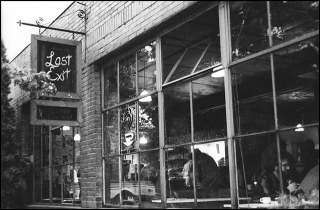
Cafés are wonderful places to observe human behaviour and the human condition as people visit, hold meetings, take a break, write, sit lonely or peacefully in the noise and crowd. Paint a word portrait in prose or poem of someone you noted and remember from a recent visit to a neighborhood café. If you feel comfortable, please share your response – or a link to it – in the comments below. All shared work will be featured here next Tuesday.



 September 15, 2017



 Jamie Dedes' THE POET BY DAY Webzine