“My imagination makes me human and makes me a fool; it gives me all the world and exiles me from it.”Ursula K. Le Guin
These responses to the last Wednesday Writing Prompt, the lesser being of a lesser god, June 13 certainly take us through time and geography, touch lightly or deeply on theme, all while warming our hearts and spinning our minds along the way. Enjoy! and Thanks! to Paul Brookes, Irene Emanuel, Sonja Benskin Mesher and Marta Pombo Salés. These poets seem always up for a challenge.
Thanks also and a warm welcome to The Poet by Day, Wednesday Writing Prompt to Debbie Felio, Carol Mikoda and Anne G. Myles, accomplished writers all. Debbie’s work was featured before on The Poet by Day but not for Wednesday Writing Prompt, so here she is introduced in this context.
Join us tomorrow for the next Wednesday Writing Prompt. All are welcome to share their work on theme.
Least of These
I find myself
in losing self
amid the grander
moments in creation
for why would I
settle as the larger
of the lesser
among so little
grant me the serenity
to seek the enormity
of a great God’s creativity
lesser me at the edge
of Grand Canyon’s
cragged colors
lesser me in the depths
and breadths
of roaring oceans
lesser me in the wonders
of rainbows and cloud banks
snowstorms and tornados
lesser me counted
as one of millions
stars and galaxies
never am I so grand
as when the Grandest
includes in His resume
the lesser me.
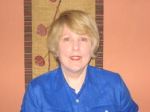
DEBBIE FELIO is a poet/witness living and writing in Boulder, Colorado
Death’s Immensity
Stand next to one wall, let’s say
the north side, of a massive
building. Look up into the
sky, noticing only a
few puffs of clouds. Sweep your eyes
back down, catching sight of this
wall — gray, smooth, unending — and
recall it.
Instantly, the personal fantasy of
existence disintegrates,
leaving only wisps. Lungs
empty,
breath sucked away.
Only flatness,
a loss of all
color and detail.
Once again,
know Death
and be
CAROL MIKODA teaches writing and new teachers in upstate New York. She lives in the country where she walks in the woods, studies the sky to photograph clouds, and grows vegetables and flowers. She also sings and plays piano, guitar, and bass. Although she enjoys travel, her cat, Zen Li Shou, would rather she stayed home.
ANNE G. MYLES, originally from the east coast, and now Associate Professor of English at the University of Northern Iowa, specializing in early American literature. You can find some of my earlier academic thoughts about Mary Dyer in her Wikipedia entry, as I recently learned to my surprise. I have been drawn back to my lost origins in creative writing in the past year or so, and poetry (the form in which I was trained) even more recently, including but not limited to working on a series of Mary Dyer poems. I hope to begin sending work out soon. I have a blog about matters related to my recovering my creative voice at “How public — like a Blog –,” annegolda.blog
*
My god is
Imperfect, a perfect image for me.
Humbled by its mistakes.
My god is a mistake.
A wrong answer,
Differently abled.
Its winters often in spring.
Its summers sometime in autumn.
My god is a fracture, a flaw.
Gender fluid. Defined by its
Inhumanity, it is complete
in its incompleteness. Aspires
not to aspire. My god is contradiction,
counter intuitive. Fresh in its decay.
Its more is always less. Thank god.
With ebbs and flows
like sea and lake waters
the ground was trembling,
magnificent earthquake
confidence was at stake.
Wanted to do your best
so never felt at rest
you are too self-demanding
so confidence faded.
Too much self-exigency
leave me please, let me be
tell it now.
That parent, sister, brother,
that relative of yours
or that good friend or lover
if not, the teacher you had
someone said: great, keep up
or someone said, instead,
I think you have no talent
you will not earn a living
you are now wasting your time.
Your confidence fluctuating.
Ghosts of self-exigency
ghosts of negative people
let them vanish.
Hateful comparisons,
like storms amid the sea
till everything seems awash,
like strong winds on Earth
till each house looks swept,
mercilessly taken.
What light dwells in your soul
what thoughts in your mind
this is not to be disregarded,
disrespected or dismissed.
From your uniqueness, your creation
comes as a true revelation.
Let the ghosts of comparison
fade away from the sea
from the land you inhabit.
As the sun shines on you
so will confidence.
“Without art, we should have no notion of the sacred; without science, we should always worship false gods.” W.H. Auden
Originally published d in The BeZine.
When we move on in the arc of our lives – to center – we cross the threshold into that place from which all things emanate – the sacred space of poetry and indeed all art and creativity. We leave behind the cacophony of assumptions and received wisdom to rest in Rumi’s field – a place he says is “beyond ideas of wrong doing and right doing.” We cross the threshold into a w-h-o-l-l-y, place – a place Rumi tells us the “world is too full to talk about.” The ideal of this field reminds me very much of Leonard Cohen’s Hallelujah, where all the hallelujah’s – broken or whole – are equal. And so it is with us and with our poetry, which as a spiritual practice brings balance and sacredness into our lives.
This business of taking up our pens involves more than learning the technical rudiments, the history of our craft and its key players. It requires of us a trust in ourselves. It requires letting go of the expectation of understanding everything. We learn to embrace mystery and ambiguity. We learn to sit with process and to sit with the poems we are drawn to or the poetry we write . . . or, perhaps which writes us. We allow the visions, the word-play, the colors, tones and cadence to work on us. Whether we share our poems with others or not, whether we are amateur or professional, is irrelevant. What matters is that we go on the hero’s journey and we come back with a gift.
When we write, we are like Rilke’s “Swan” …
“when he nervously lets himself down
into the water, which receives him gaily
and which flows joyfully under
and after him, wave after wave,
while the swan, unmoving and marvelously calm,
is pleased to be carried, each moment more fully grown,
more like a king, further and further on.”
Sacred space always reveals the unexpected. We are always changed, though the change may be subtle. What might come up are the daily concerns – how to make it through the day – or the current pain: the loss of a loved one, abandonment, ills of body and mind, concerns for children … Joy! and Gratitude! As we grow “more like a king, further and further on,” our sacred space may reveal something about the greater mysteries…
“does it matter after all, the curiosities
when fish and water are one
when light and dark are indistinguishable
when we are neither content nor discontent
when questions cease and ideologies melt
when there is no helping and no taking
And “this” is well represented by the Buddhist ensō illustrated above. It is meant to express that moment when the mind is still, allowing for creation. It symbolizes enlightenment. I’m sure all faiths have similar concepts. From a Christian perspective – perhaps the discussion would be about the “gaze of faith” and claritas (Thomas Aquinas) – “intellectual light,” illumination. In Buddhism, traditionally this ensō is done as a part of spiritual practice and it is a kind of meditation in the way that all creative efforts are meditation.
“Writing is a process in which we discover what lives in us. The writing itself reveals to us what is alive in us. The deepest satisfaction of writing is precisely that it opens up new spaces within us of which we were not aware before we started to write. To write is to embark on a journey whose final destination we do not know. Thus, writing requires a real act of trust. We have to say to ourselves: ‘I do not yet know what I carry in my heart, but I trust that it will emerge as I write.’ Writing is like giving away the few loaves and fishes one has, trusting that they will multiply in the giving. Once we dare to ‘give away’ on paper the few thoughts that come to us, we start discovering how much is hidden underneath these thoughts and gradually come in touch with our own riches.” Henri Nouwen REFLECTIONS ON THEOLOGICAL EDUCATION (unpublished) http://www.henrinouwen.org
So trust that through your poetry you will enter that field where there is no right doing or wrong doing and …
“The time will come
when, with elation
you will greet yourself arriving
at your own door, in your own mirror
and each will smile at the other’s welcome,
and say, sit here. Eat.
You will love again the stranger who was your self.
Give wine. Give bread. Give back your heart
to itself, to the stranger who has loved you
all your life, whom you ignored
for another, who knows you by heart.
Take down the love letters from the bookshelf,
DEBBIE FELIO is a poet/witness living and writing in Boulder, Colorado. This poem – profound for the way it showcases the insanity – is Debbie’s response to Baruch, The Baker.
Is she the last of a generation,
who lived through two centuries
of cataclysmic events and change;
a century that felt the consequence
of moving territories and boundaries.
From crowns to oligarchical republics,
from rags to riches beyond counting,
technological revolution, the benefits
of science, engineering and medicine,
a system of healthcare and welfare that,
despite the imposed failings of ideology,
looked after her so well … until she left.
Is she the last of a generation,
of whom we’ll be able to say:
“She’s the last of her generation”,
who fought childhood infection
by their own in-built immunity
– no pharmaceutical intervention
to compromise nature’s ways –
who fought for their country
with hope, fear and courage
as their constant companions
without leave for counsel or therapy
to help them through their days.
Malevolent, engineered conflict,
driven by and driving the revolution,
through deeply rooted anxiety
that keeps us at war with others,
with each other, with ourselves …
a continuum of change, so rapid
that we had no time to reflect on
its merits (or not) leading headlong,
steadily, insidiously, irreversibly..?
to a virtual, digital, designer world,
addicted to things that loosen our grip
on a life that once was, not so long ago.
A life more in touch with nature
in which they could roam free;
step out and walk wild for the day
in casual clothes and wellies, with a tin,
a packed lunch, made by their mums;
play games, whose names we forgot.
Walk shoulder to shoulder with a friend,
make daisy chains, mud pies and fish
with a stick in streams and wild rivers,
but virtual games carry young lives away,
so our smart phones all too often convey
in a digest of news, twenty four hours a day.
Is she the last of her generation,
gifted with ‘freedom’ from the toxic
stale air of hyperventilating media
or will we one day be able to say
in the eternity of time and space:
we are all unique, each one of us
was born of a time, from a special
exotic recipe of genes and place,
bringing our gift to the world by
the pull of the moon and the stars,
the physics and chemistry of life
that mould us into what we are …
[In her own words: “Born in Yorkshire in March 1919, Myrra Robb Anstie was educated at Southport Girls’ High School. She then won a scholarship for three years at Southport School of Art. She worked as a draughts-woman until the outbreak of WW2, when she enlisted to serve in the Women’s Auxiliary Territorial Service (A.T.S.). She lived, from the early 1960’s, in South Africa, New Zealand and Australia, where she worked as a teacher of Art, exhibited and sold her work. She returned to the U.K. in 1986, spending a few years teaching portraiture and oil painting for Adult Education in Leicestershire, before settling in Devon in 1991. She was then a member of the Exmouth Art Group. Her hobbies are golf, bridge, computers and sewing. Her favourite subject in art is portraiture.”
My words: Myrra was my step-mother, ‘mum’, and part of my life for nearly fifty years. She married my Father in 1963. I first met her in 1971. Born only a year after the end of WW1, she died in February just three weeks short of her 99th Birthday. She was a woman with a strength of character and opinion that made her a force of nature. She cites her hobbies as including golf. To say it was a hobby is a slight understatement. She was a very competitive golfer, in fact she was competitive at almost everything she did. She shared her passion for the game with my father for the 42 years they were married. Both of them had played from a very young age. She was also competitive as a Bridge player. Her mainstay, her profession, throughout her life was that she established herself as a talented artist, specialising in portraiture. She was a teacher as well as a practitioner of her art. My children and grandchildren benefitted from her teaching. She became a particularly major part of our lives after my Father died in 2005. She will be missed.
A few years ago, I wrote a poem for her that she was very rude about and told me never to write another one about her! I was offended, but, with hindsight, I confess and concede that particular poem was not my best work. To be kind, I guess she was applying her own high standards to my art, as she applied to her own. To honour her wishes, this poem is not about her; it’s about the age through which she lived. It is, nevertheless, dedicated to her.]
John Anstie
JOHN ANSTIE (My Poetry Library and 42) ~ is a British writer, poet and musician – a multi-talented gentleman self-described as a “Family man, Grandfather, Occasional Musician, Singer, Amateur photographer and Film-maker, Apple-MAC user, Implementation Manager, and Engineer”. He has participated in d’Verse Poet’s Pub and is a player in New World Creative Union as well as a being a ‘spoken-voice’ participant in Roger Allen Baut’s excellent ‘Blue Sky Highway‘ radio broadcasts. He’s been blogging since the beginning of 2011. He is also a member of The Poetry Society (UK).
Recent publications are anthologies resulting from online collaborations among two international groups of amateur and professional poets. One of these is The Grass Roots Poetry Group (Petrichor* Rising. The other group is d’Verse Poet Pub, in which John’s poetry also appears The d’Verse Anthology: Voices of Contemporary World Poetry, produced and edited by Frank Watson.
* Petrichor – from the Greek pɛtrɨkər, the scent of rain on the dry earth.







 Jamie Dedes' THE POET BY DAY Webzine