Page 6 of 17

Putting the “active” in activism: An interview with activist writer and blogger Kella Hanna-Wayne

The longest running peace vigil in U.S. history, started  in 1981. White House Peace Vigil, Lafayette Square, Washington, D.C. The peace vigil was started by activists Thomas and Concepcion Picciotto.  / Photo courtesy of moi 84 under CC BY-SA 3.0 license

“There may be times when we are powerless to prevent injustice, but there must never be a time when we fail to protest.”  Elie Wiesel


Toward the end of June this year I was introduced to Kella Hanna-Wayne’s (Yopp) work via a Facebook link shared by my colleague and friend, Michael Dickel, which he in turn received from his daughter. I subsequently included info on Kella and her post HERE. That’s the way the world moves these days. Though technology and social networking are mixed blessings in some respects, they’re effective tools for people like Kella and I who have work to which we are committed but deal everyday with serious physical disabilities that constrain (in my case prohibit) activity outside the home.

The link of which I speak was to a  post in which Kella provided some well-considered guidelines and resources for protesting the migrant travesties on the U.S. Southern Border. As I investigated Kella’s site, I was impressed with her thoroughness and clarity. I wrote to her about doing an interview on The Poet by Day for our activist poets, writers, and friends. She agreed. Here it is. Read on. / J.D.


JAMIE: Kella, you have taken on such a range of causes, all of them important, critical. Not everyone can do that. I hear people talk about “compassion burnout,” which is understandable but irritating. It’s a luxury oppressed people don’t have. I usually respond with “pick a cause. Pick one cause and focus on that.” What’s your advice?

KELLA: I think all of us, including activists, can agree that social justice is simply overwhelming. There are so many causes, there’s so much to learn about every cause, and to make things even more complicated, the needs of each cause are constantly progressing and changing. It’s a lot to keep up with.

But one of the fundamental ideas behind my blog is that there are a basic set of guidelines that you can follow that will help you understand any source of oppression. Instead of learning about male privilege, and then white privilege, and then financial privilege, why not learn how the concept of privilege works so that you can apply it to any new cause you learn about? There are so many challenges marginalized groups face that they have in common with one another: microaggressions, oppressive language, policing of their emotions/bodies, even difficulty accessing medical care. I think that if you learn the functionality of the oppressive systems that are at work and all the basic components of social justice, it enables you to support these groups of people much more effectively and thoroughly than if you were trying to learn one cause at a time from scratch.

I also think that even if you do choose to focus primarily on one cause, it’s important to be aware of the basics of the other ones because social justice issues are all inextricably connected to each other and ignoring the way intersectionality impacts the problems that we’re tackling tends to leave holes in our solutions.

JAMIE: What then are the steps activists can take to minimize burnout?

KELLA: No matter how narrow your focus, social justice issues are far bigger than any one person can solve. Because activism has to be a collective effort, I think it’s really important to recognize that completely fixing the problem is an impossible standard to hold yourself to. You are one piece in a much larger effort to create change. Even when you are focusing on what is within your personal power, you have to be realistic about what you can actually accomplish. If there are 20 different tasks that you could do as an activist and each one is individually within your ability to do, it’s likely doing all 20 of them is not. You have to choose what it is that you are going to do.

To make that choice, I recommend focusing on forms of activism that…

  • Are sustainable so that you can continue to do them over time
  • Are empowering to you so that you feel motivated to continue
  • Aren’t deeply upsetting or draining in such a way that the cost of the task is greater than the positive impact the action has
  • Feel right to you.

Which forms of activism meet those criteria is going to be different for everyone. For example, I believe that calling your representatives is an effective way to impact the future of our country but I find making phone calls incredibly anxiety-inducing and I have to spend a lot of energy to get myself to make one. That’s not a good use of my resources. On the other hand, writing comes easily to me, I find it rewarding, and it’s something that a lot of other people can’t contribute. I can accomplish way more by writing on behalf of activism than I could if I were using the same amount of resources to make phone calls. Whenever I feel the push to do more for a cause, I re-center on the importance of my writing and how much I’m offering in the work I already do.

A philosophy I carry around with me wherever I go is that everyone has something of value to offer. You have to find what your offering is.

JAMIE:  Tell us about Yopp Academy.

KELLA: Yopp Academy is a section of my blog that focuses on educational material. It’s where I’m outlining that basic set of social justice guidelines I mentioned earlier.

To distinguish the amount of prior knowledge that’s needed to understand a given article, I used a college-style course numbering system, so articles are sorted into 100 level, 200 level, 300 level, etc. If you’re brand new to social justice, you start with the 100 level articles and work your way up. It really does function like a set of college courses in that articles of higher levels directly reference ideas from the level 100 articles, so the more of them you read together, the better your understanding will be of the subject as a whole.

The articles I have published currently only go up to level 300 because I’ve been putting my focus on establishing all the basic concepts before adding more advanced stuff. I’m currently working on a lesson plan of over 40 educational articles to serve as a foundation of knowledge which you can use regardless of your level of involvement with activism, which will include higher-level articles in the future.

JAMIE: Tell us about your Facebook debates.

KELLA: I’ve always had a lot of friends on facebook who are into social justice and some of them have such large friends list that anytime they posted something controversial, it would spark a discussion/debate. I started jumping into these discussions and offering my opinion and I got a reputation for being good at explaining basic social justice concepts to people who weren’t familiar with them and for clearly outlining the problems in someone else’s argument.

I used Facebook debates to practice my writing, increase my own understanding of social justice, it introduced me to a bunch of other amazing people that cared about the same things, and because managing my disability/mental illnesses made traditional activism prohibitive, it gave me a way to be involved in causes I cared about. Spending so much time arguing with people who I disagreed with also gave me a lot of insight into the places people were most likely to have holes in their understanding of our social systems which in turn has really informed the content and the structure of my blog. I often say the reason I started a blog in the first place was that I got tired of writing out the same explanations/arguments over and over again, and just wanted to write out the article once to link to every time I came across the same issue again.

I know I differ from a lot of people in that I believe debates on social media, even the “unproductive” ones, are an important branch of activism. Not only do they spread information to larger audiences of people (while only 10 people might be commenting, 1,000 could be reading the comments) but they serve as a means of socializing bigots to understand that their bigotry will be met with hassle and frustration rather than easy acceptance like they’re used to. I think that practice has a lot more power than people think it does.

JAMIE:  So many people – like you and me – live with chronic, even catastrophic, illness. What can these illnesses teach us about social justice and advocacy?

KELLA: If you hold a conference for activism regarding chronic illness but you organize it in a similar way that you would any other business conference, your collection of speakers, organizers, and attendants are likely to be mostly healthy people rather than chronically ill people. If it’s energy-intensive to leave your house/travel, if you need frequent breaks or a special housing set up, if you have extensive food restrictions or you need to hire a carer to accompany you, it’s going to be very difficult, resource costly, and risky to go to a conference that healthy people can attend with ease. Even in attempting to center the chronically ill, if you organize from the perspective of a healthy person, you will leave chronically ill out of their own activism. That’s because the default systems that we have in place for most aspects of society make it very difficult for chronically ill people to participate let alone succeed.

Anytime you design a solution for the social issues chronically ill people face, you have to start by adapting your mindset and prioritizing accommodation of an experience that you’re not familiar with, or you’ll fail at your advocacy from the beginning.

And this idea is not at all exclusive to chronic illness. You see the same problem with white people organizing on behalf of people of color, cis people organizing for trans people, abled people organizing for disabled people, etc. You have to go in understanding that in order for your advocacy to be successful, you have to dismantle the relevant oppressive systems that are within your scope of power and create new systems, a new foundation before you attempt to build any kind of structure on top.

JAMIE: Your site is about eighteen months old as we work on this post. What are the goals for the next couple of years?

KELLA: I’m still very much working out what my ideal version of Yopp would be or what I want it to accomplish but so far, my concrete plans are:

  • Switch over to a new, more modern and accessible website
  • Finish writing the basic building blocks for Yopp Academy (all 40 of them!!)
  • Build up my Patreon supporter base– my first goal is $800 a month
  • Acquire enough sponsorships that I can publish up to 4 times a month

© 2019, Kella Hanna-Wayne

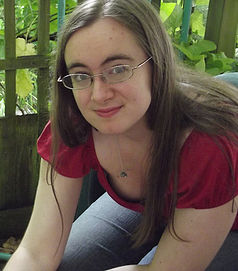
Kella Hanna-Wayne

KELLA HANNA-WAYNE (Yopp) is a disabled, chronically/mentally ill freelance writer who is the editor, publisher, and main writer for Yopp, a social justice blog dedicated to civil rights education, elevating voices of marginalized people, and reducing oppression; and for GlutenFreeNom.Com, a resource for learning the basics of gluten-free cooking and baking. Her work has been published in Ms. Magazine blog, Multiamory, Architrave Press and is forthcoming in a chapter of the book Twice Exceptional (2e) Beyond Learning Disabilities: Gifted Persons with Physical Disabilities. For fun, Kella organizes and DJ’s an argentine tango dancing event, bakes gluten-free masterpieces, sings loudly along with pop music, and makes cat noises. You can find her on Facebook, Twitter, Patreon, Medium, and Instagram.


ABOUT 

Jamie Dedes. I’m a Lebanese-American freelance writer, poet, content editor, blogger and the mother of a world-class actor and mother-in-law of a stellar writer/photographer. No grandchildren, but my grandkitty, Dahlia, rocks big time. I am hopelessly in love with nature and all her creatures. In another lifetime, I was a columnist, a publicist, and an associate editor to a regional employment publication. I’ve had to reinvent myself to accommodate scarred lungs, pulmonary hypertension, right-sided heart failure, connective tissue disease, and a rare managed but incurable blood cancer. The gift in this is time for my primary love: literature. I study/read/write from a comfy bed where I’ve carved out a busy life writing feature articles, short stories, and poetry and managing The BeZine and its associated activities and The Poet by Day jamiededes.com, an info hub for writers meant to encourage good but lesser-known poets, women and minority poets, outsider artists, and artists just finding their voices in maturity. The Poet by Day is dedicated to supporting freedom of artistic expression and human rights.  Email thepoetbyday@gmail.com for permissions, commissions, or assignments.

Testimonials / Disclosure / Facebook

Recent and Upcoming in Digital Publications * The Damask Garden, In a Woman’s Voice, August 11, 2019 / This short story is dedicated to all refugees. That would be one in every 113 people. * Five poems, Spirit of Nature, Opa Anthology of Poetry, 2019 * From the Small Beginning, Entropy Magazine (Enclave, #Final Poems), July 2019 * Over His Morning Coffee, Front Porch Review, July 2019 * Three poems, Our Poetry Archive, September 2019


“Every pair of eyes facing you has probably experienced something you could not endure.”  Lucille Clifton

“The BeZine” open for submissions to September issue, our solidarity with Youth Climate Strike, and our Virtual 100TPC event

“This is a space where we hope you’ll delight in learning how much you have in common with “other” peoples. We hope that your visits here will help you to love (respect) not fear.

“We acknowledge that there are enormous theological differences and historical resentments that carve wedges among and within the traditions and ethnic or national groups, but we believe that ultimately self-preservation, common sense, and human solidarity will empower connections and collaboration and overcome division and disorder.” excerpt from The BeZine Mission Statement


CALL FOR SUBMISSIONS FOR

Our Annual 100,000 Poets and Friends for Change Issue

September 2019

Calls for submissions of poems, feature articles, fiction, creative nonfiction, art and photography, music videos, and documentary videos on the themes of peace, sustainability and social justice is open now through September 10, 2019.

ART & PHOTOGRAPHY: Note we also are looking for something special to be the header for The Table of Contents Page.

Your original previously published work may be submitted as long as you own the copyright.

NO simultaneous submissions for September please.

Email submissions to bardogroup@gmail.com. Please note in your subject line: For Zine September 2019.

Among the guidelines: our core team, our guest contributors, and our readership are international and diverse. No works that advocate hate or violence, promote misunderstanding, or that demean others are acceptable.

The BeZine is an entirely volunteer effort. While we do not pay for content, neither do we charge submission or subscription fees.

The BeZine is featured by
pf poetry
Second Light Live newsletters, website, and magazine
Duotrope®


IN SOLIDARITY WITH THE GLOBAL YOUTH CLIMATE STRIKE

CALLING YOUTH & ADULTS

CALL FOR SUBMISSIONS of poems, feature articles, fiction, creative nonfiction, art and photography, music videos, documentary videos on climate change for The BeZine blog is open through September 10, 2019. In solidarity with the world’s youth, we’ll post work on Climate Change throughout September. Your original previously published work may be submitted as long as you own the copyright. NO simultaneous submissions.  Please note in your subject line: For the climate change blog. Email submissions to bardogroup@gmail.com. All honors to Contributing Editor Michael Dickel for coming up with this idea.


artwork for The BeZine 100TPC 2019 is by the multitalented Corina Ravenscraft dragonkatet

THE BACK STORY:

100 Thousand Poets for Change, or 100TPC.org, is an international grassroots educational organization focusing on the arts, especially poetry, music, and the literary arts. It was founded in 2011 by poet/artist/musician Michael Rothenberg and poet/translator/artist Terri Carrion, and focuses on a worldwide event each September.

This initiative crossed my radar in 2011 when it was founded. I fell in love with the idea of it, the world in solidarity for peace, sustainability and social justice. What could be more wonderful? Since I am disabled and homebound I couldn’t host an event or even attend one. I decided that there were probably others who would like to participate but for one reason or another could not do so. Thus, The BeZine Virtual 100,000 Poets and Others for Change was born. This makes it possible for anyone, no matter where they live or what their circumstance, to join in 100TPC as long as they have access to a computer. People can do a local or regional event and join with our virtual event as well should they care to do so.

About two years after we started doing Virtual 100TPC, I “met”  Michael Dickel and invited him to join The Bardo Group Beguines, our core team, and he soon volunteered to be our virtual 100TPC master of ceremonies. This has become one of our more delightful yearly traditions. Michael will also take the lead on the September issue of the Zine, which honors 100TPC themes.

Your Invitation

On Saturday, September 28, you are invited to visit The BeZine Blog and share your work on Peace, Sustainability, and Social Justice via Mr. Linky or in the Comments section.  Clear and detailed direction will be provided that day, but truly it’s an easy thing. You will, of course, also be able to read the work of others, which we hope you will do.  Michael and I will keep the event going for 24 hours or so beginning at 12:01 a.m. Pacific Time on September 28. If you are unsure when that would be in your time zone, check The Time Zone Converter.

On behalf of The Bardo Group Beguines
and in the spirit of love (respect) and community,
Jamie Dedes
Founding and Managing Editor

Our Core Team:
John Anstie
Naomi Baltuck
Cloaked Monk (Terri Stewart)
James R. Cowles
Jamie Dedes
Michael Dickel
dragonkatet (Corina Ravenscraft)
Chrysty Darby Hendrick
Joseph Hesch
Ruth Jewel
Lana Phillips
Charles W. Martin
scillagrace (Priscilla Gallaso)
Michael Watson


The BeZine: Be Inspired, Be Creative, Be Peace, Be

Daily Spiritual Practice: Beguine Again, sister site to The BeZine and a community of Like-Minded People

Facebook, The Bardo Group Beguines

Twitter, The Bardo Group Beguines

Facebook: The BeZine 100TPC social justice discussion group

Facebook: The BeZine Arts and Humanities Page (not just for poetry), a place to share your work


PEN America Calls for Trump Administration to Open Migrant Camp to Journalists’ Scrutiny; What You Can Do to Close the Camps by Kella Hanna-Wayne

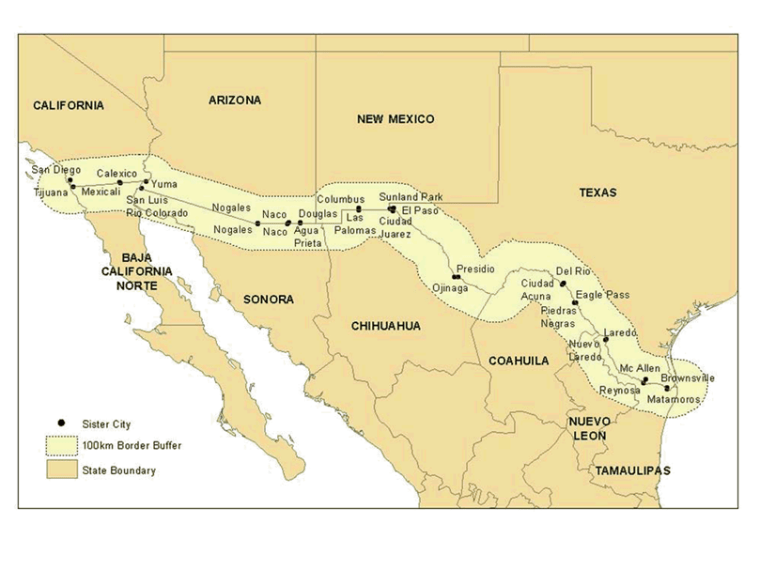
100-mile border region on the U.S.–Mexico border courtesy of the Environmental Protection Agency / Public Domain

“A crude age. Peace is stabilized with cannon and bombers, humanity with concentration camps and pogroms. We’re living in a time when all standards are turned upside-down, Kern. Today the aggressor is the shepherd of peace, and the beaten and hunted are the troublemakers of the world. What’s more, there are whole races who believe it!” Erich Maria Remarque, Flotsam


Climbing the Mexico–United States barrier fence in Brownsville, Texas courtesy of Nofx221984 and generously released into Public Domain

PEN America issued the statement [below] in response to The Washington Post’s report that the Trump Administration is blocking journalists from accessing migrant detention camps on the southern border to see the facilities for themselves and speak to children, who are reportedly held in squalid conditions.

“It is shocking that the American public largely must learn about the dangerous conditions at these detention centers not through reporters being able to cover the news, but through second-hand reports from lawyers and advocates granted access under a legal agreement with the U.S. border patrol,” said Nora Benavidez, PEN America’s Director of U.S. Free Expression Programs. “The fact that journalists are being sealed off and held behind a wall of secrecy, unable to show the American people the faces and voices of those who are suffering in squalor is one more unconscionable aspect to this epic horror story on the southern border.”

“Cutting the press off from this story to hide what is going on is unacceptable and unwarranted; professional journalists are well-equipped to handle issues of privacy and consent, and this should pose no barrier to press access. The American public has a right to see for themselves what is happening in these camps through first-hand accounts, images and video documented by professional journalists. Indeed, the fact that every story that does make it to a reporter galvanizes public attention and action demonstrates the importance of that reporting. PEN America calls on the Trump administration to open the camps to the scrutiny of the press–and thus, the American people–immediately, and end this effort to keep what is happening in the detention centers a secret.”

PEN America has previously spoken out and advocated about press access to migrant detention centers and the situation for journalists covering the immigration crisis on the border. In October 2018, it hosted a panel discussion at the Texas Book Festival entitled “Stories (Un)told,” featuring journalists speaking to the challenges of covering child detention issues and immigration more broadly. Following months of tracking and public comments on the situation of lawyers and journalists being surveilled at the southern U.S.-Mexico border, PEN America joined a coalition of human rights and media freedom organizations in sending an open letter to the Department of Homeland Security in May, 2019, expressing concern for the privacy violations and explicit targeting by Customs and Border Protection of journalists, activists, and lawyers working on issues around the “migrant caravan”. Following our letter, the Department of Homeland Security acknowledged it had engaged in the surveillance and tracking of these individuals. PEN America has also condemned the unacceptable practice of the government’s surveillance of journalists reporting on this issue and authored a petition urging the administration to stop monitoring journalists at the border. That petition has garnered more than 58,000 signatures to date.

*****

PEN America stands at the intersection of literature and human rights to protect open expression in the United States and worldwide. It champions the freedom to write, recognizing the power of the word to transform the world. Its mission is to unite writers and their allies to celebrate creative expression and defend the liberties that make it possible.


From Kella Hanna-Wayne, poet, blogger, activist

“Today, I read something terrible; a story that possibly upset me more any other news story from our current administration and it filled me with helplessness.

“Over the past year, Trump’s immigration policies have become increasingly strict and dehumanizing. Detention centers, separation of families without keeping records, poor hygiene, inadequate access to food, water, and medical attention, children in cages– these were all themes among reports of the horrifying conditions our government was signing off on for immigrants, regardless of their documentation.

“But in the last week, it came to light that not only is Trump using Fort Sill– the base used to hold Japanese-Americans in concentration camps during WWII– to hold immigrant children, but that our government is now using concentration camps as a strategy to manage the influx in immigrants coming to the US. “

Kella goes on from these introductory remarks to provide a comprehensive list of tips and resources: What You Can Do to Close the Camps. I particularly appreciate it when folks don’t just regurgiate the bad news we’re all reading anyway but who go on to provide tools for mitigating the travesties. Bravo, Kella!

Stay tuned for a comprehensive interview with Kella here on The Poet by Day.


ABOUT

Recent in digital publications: 
* Four poemsI Am Not a Silent Poet
* Remembering Mom, HerStry
* Three poems, Levure littéraire
Upcoming in digital publications:
* Over His Morning Coffee, Front Porch Review
* From the Small Beginning, Entropy Magazine (Enclave, #Final Poems)

A mostly bed-bound poet, writer, former columnist and the former associate editor of a regional employment newspaper, my work has been featured widely in print and digital publications including: Ramingo’s Porch, Vita Brevis Literature, Connotation Press, The Bar None Group, Salamander Cove,I Am Not a Silent Poet, Meta/ Phor(e) /Play, The Compass Rose and California Woman. I run The Poet by Day, a curated info hub for poets and writers. I founded The Bardo Group/Beguines, a vitual literary community and publisher of The BeZineof which I am the founding and managing editor.


“Every pair of eyes facing you has probably experienced something you could not endure.”  Lucille Clifton


#MeToo ~ Anita Hill, recipient of this year’s PEN Courage Award

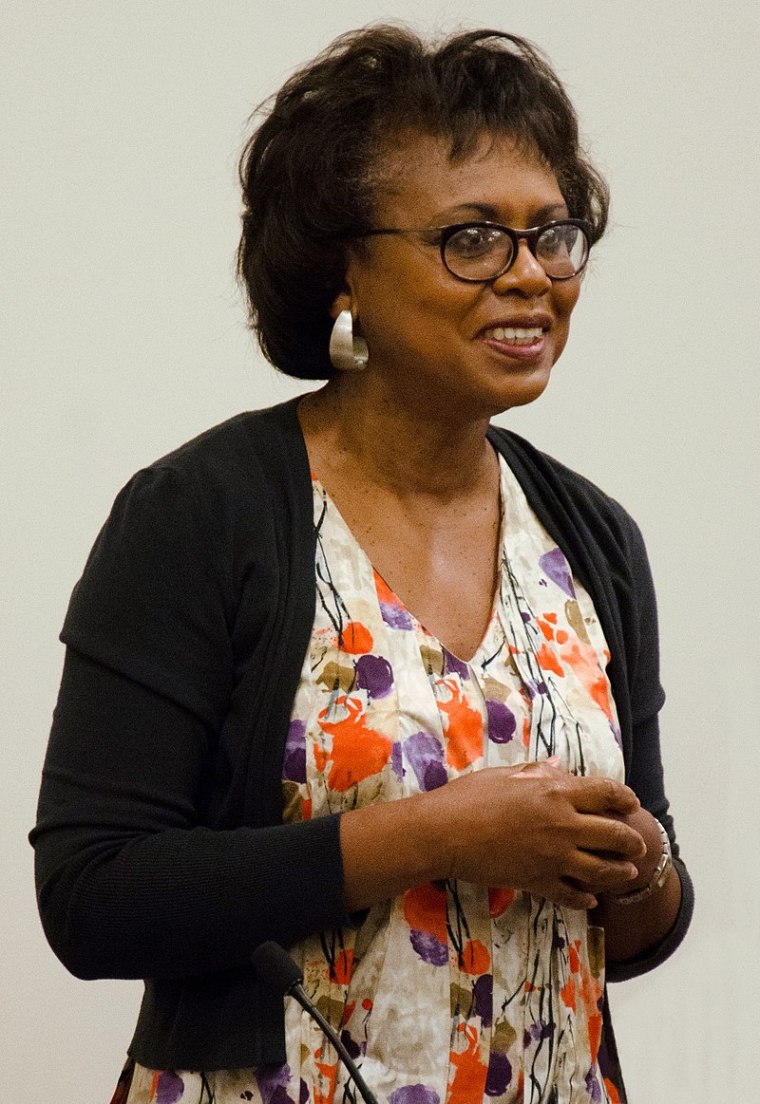
Anita Hill in 2014 speaking at Harvard Law School

“Women who come forward with sexual misconduct allegations are often portrayed as “crazy, vindictive, promiscuous or prudes,” reactions that explain why many don’t come forward sooner.” Anita Hill [MORE]


This week PEN America announced that professor, lawyer, and chair of The Hollywood Commission on Eliminating Sexual Harassment and Advancing Equality, Anita Hill, is the recipient of this year’s PEN Courage Award, conferred in recognition of her singular role in challenging sexual harassment in the workplace and the attendant abuse of power, and a career spent combating the silencing force of sexism. The award, which honors dauntless exercises of free expression, will be presented May 21 at the 2019 PEN America Literary Gala at the American Museum of Natural History in New York City.

“As a Yale Law School graduate pursuing a promising career as a legal scholar and lawyer, Anita Hill stepped alone into the glare of the public spotlight to call out abuses that others insisted be forgotten or overlooked. She has devoted her life since then to teaching, writing, and speaking out—in the process, helping to catalyze a global movement that is essential to the achievement of equality . . .

“Today, amid a worldwide reckoning over pervasive sexual harassment, Hill is leading a major effort to break the cycle of abuse and silence in Hollywood, rallying the entire entertainment industry to effect cultural change and establish accessible and clear channels of safety and accountability. As an organization that recognizes the pernicious force of inequality in eroding the right to free expression, and one that elevates those who take the greatest risks to speak out, PEN America is proud to honor Anita Hill.” ,” said Suzanne Nossel, Chief Executive Officer of PEN America.

In 1991, Hill served as a witness during the confirmation hearings of Supreme Court Justice Clarence Thomas. She gave her testimony before a Senate Judiciary Committee of fourteen white men and a global television audience. She described numerous instances of sexual harassment while working for the soon-to-be Supreme Court Justice in the U.S. Department of Education’s Office for Civil Rights and the Equal Employment Opportunity Commission. Other women who had made similar allegations against Thomas were not called to testify.

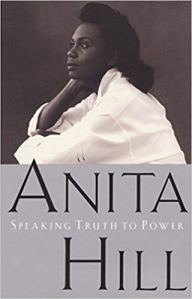
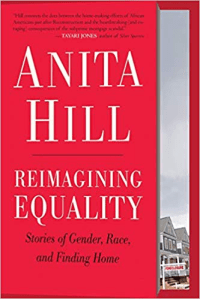
In her career as a university professor and scholar, Hill has been a steadfast champion of women’ rights. She joined the faculty of Brandeis University in 1998 and in 2015 was named University Professor of Social Policy, Law, and Women’s Studies. She is the author of two books (1997’s Speaking Truth to Power and 2011’s Reimagining Equality: Stories of Gender, Race, and Finding Home) and numerous opinion pieces (including a New York Times piece entitled “How to Get the Kavanaugh Hearings Right,” published during the confirmation hearings of Supreme Court Justice Brett Kavanaugh). In December 2017, Hill was appointed Chair of The Hollywood Commission on Eliminating Sexual Harassment and Advancing Equality, which was established by a coalition of Hollywood studios, television networks, streaming services, music companies, talent agencies, trade associations, and unions. In this role, she is leading an industry-wide effort to identify and establish best practices and solve problems related to harassment, bias, equality, and diversity in the entertainment community.

In addition to Hill, PEN America will honor other women’s rights champions at its May Gala: Saudi writer-activists Nouf Abdulaziz, Loujain Al-Hathloul, and Eman Al-Nafjan, imprisoned for opposing the male guardianship system in Saudi Arabia and the female driving ban in the region, will receive the 2019 PEN/Barbey Freedom to Write Award. Additionally, PEN America will recognize peerless investigative journalist Bob Woodward with the Literary Service Awardand Scholastic Chairman and CEO Richard Robinson for his outstanding leadership in publishing. Past Courage Award honorees include student activists against gun violence (2018) and organizers of the Women’s March (2017). The Gala raises essential funds that fuel PEN America’s free expression advocacy efforts. Comedian and political commentator John Oliverwill host this year’s event.

This feature is courtesy of PEN America; photo courtesy of Tim Pierce under CC BY 2.0.

If you are viewing this from an email subscriptions, you’ll likely have to link through to the site to view the video.

About the PEN Courage Award

The PEN Courage Award was established in 2015 to honor exceptional acts of courage in the exercise of freedom of expression. The Award is granted after consultations among PEN America staff and Trustees with specific relevant expertise on matters of freedom of expression. In some cases, outside expertise from PEN America’s membership, partner organizations, and network of contacts is enlisted to inform internal analysis and deliberations. All final decisions regarding Award determination and recipients are made by the Executive Committee of the PEN America Board of Trustees.

About PEN America

PEN America stands at the intersection of literature and human rights to protect open expression in the United States and worldwide. It champions the freedom to write, recognizing the power of the word to transform the world. Its mission is to unite writers and their allies to celebrate creative expression and defend the liberties that make it possible.